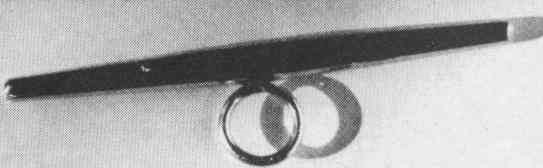
Kubotan Techniques for your library: download the PDF.
Who is Takayuki Kubota? >here<
What is a kubotan? A small hand-held impact weapon that is used as a “force multiplier” in order to facilitate locks and nerve plexus strikes. There are numerous historical and cultural precedents – yawara, kongou (vajra), tessen, shobo, pasak, etc.
The techniques illustrated are by no means unique but do serve as additional examples of basic controls and strikes that are widely taught and employed.
What is the practical application? Palm held multipliers are easily concealed and therefore ideal for self defense. However their prevalence and recognition makes it more difficult to carry them legally so please be sure to check local laws.
Use a kubotan – Silat Suffian Bela Diri
Additional related resources:
Stick Fighting by Masaaki Hatsumi is another good reference manual.
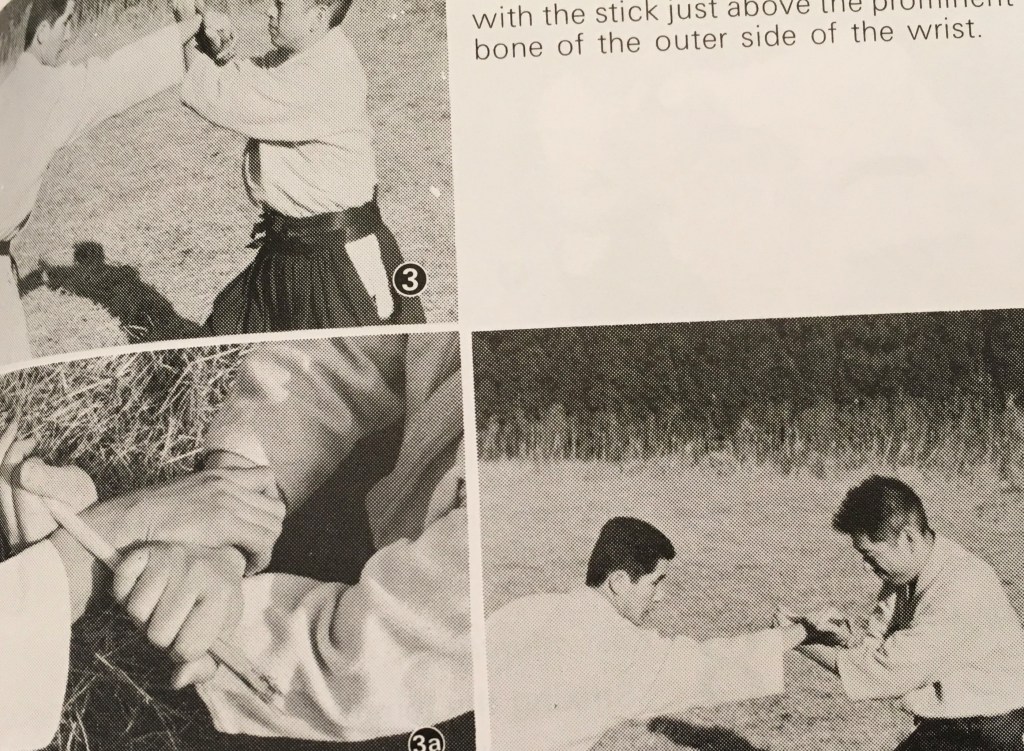
Well considered applications and thoughts from Don Rearic.
Yawara Stick resource page >here< by TiRod Tactical.
Purchase a “stinger” by James Keating from the source >here< or from >Amazon<
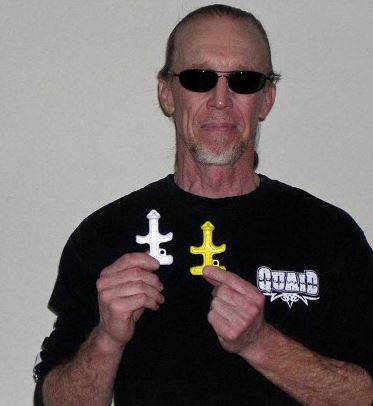
Pete Kautz’s very important overview on How to Use the Comtech Stinger is found >here< and excerpts from it are copied below for ease of reference.
_________________________
The Comtech Stinger Self Defense Tool
By Pete Kautz
Stinger Self Defense Tool History
The Comtech Stinger Self Defense Tool was designed by Master at Arms James A. Keatin based on a 19th century push-dagger that he had seen while researching the martial history of old New Orleans. Jim immediately saw the utility of such an item and devised a modern version made of lightweight high-strength injection-molded plastic. Designing his tool along the same lines, the Stinger Self Defense Tool protrudes between the top two fingers to focus the entire force of a punch into a tiny area about the size of a pencil’s eraser. Unlike the push-dagger of old, the Stinger Self Defense Tool is only meant to cause shock of impact and is thus a less-than-lethal striking option.
Stinger Self Defense Tool Colors
One interesting aspect of the Stinger Self Defense Tool is that they have been produced in numerous colors over the years such as red, yellow, green, blue, clear plastic, clear blue, and even clear purple (Laci Szabo’s Miami Beach model) in addition to good old black and tactical gray. While black is always a tempting choice for most guys, the diversity of color adds to the Stinger Self Defense Tool’s invisibility and utility for today.
What do I mean? Simply that a black one looks like a weapon, while a clear plastic (ice) or clear blue (blue ice) look more like a normal item upon quick examination.
S.T.I.N.G.E.R. 7-Point Safety Checklist
For the untrained person, simply holding the Stinger on a keychain at “key” transitional times (house to car to office, etc.) can act as an anchor to remind them to PAY ATTENTION to what is happening around them. I advise newcomers to self defense to do this whenever they touch or even think of the Stinger for the first few weeks they carry it, and it makes it a safety habit so in their minds Stinger Self Defense Tool = Pay Attention To What Is Happening!
What should you pay attention to? To make it simple, we’ve used the word “Stinger” to create a basic 7-point check list. There are more of course, but this is a start to get the untrained person thinking about these issues. (Readers here doubtfully need a reminder of the basic color codes of awareness or other such principles but can probably appreciate it when dealing with family members, friends, and so on.)
S – Surroundings – What’s going on around you? A bar, a subway, the street?
T – Time of Day – Early morning, afternoon, 2 am, when?
I – Intuition – If something “feels wrong” then pay attention! Trust yourself on this and act!
N – Neighborhood – Where are you? Someplace you know or not? How sketchy?
G – Groups – Whether formal (gangs, sports teams) or informal (bar patrons), groups act differently than individuals. A big group of rowdy drunk women usually just means bad tips for the bartenders where a big group of rowdy drunk guys could mean watch out.
E – Exits – What are the exits from any room or area you enter? Is there only one or are there more? Who is between it and you?
R – Reactions – Unusual reactions from people to normal situations can indicate trouble. If someone is wearing only shorts in December, gets unusually friendly or skittish, or flips out about something trivial then watch out.
So, if you run through the S.T.I.N.G.E.R. list and say “Hmmm…I’m at a party at 2am in a neighborhood I don’t know and have a funny feeling about this group of guys who got all quiet then were suddenly irritated after I walked into the room – you know what – IT’S TIME TO GO via through the side door over there!” Given that 7-point checklist failure, only a fool would stay, right? Obviously, this is an exaggerated example but I’m sure you get the idea.
Basic Grip
The Stinger Self Defense Tool is properly held between the top two fingers of the hand. This allows the thumb to lock down on the side of the fingers and secure the grip. It also promotes the same body mechanics as if you were firing a traditional punch with the top two knuckles of the fist or the ram’s head as it is known in some styles. Whether striking with the fist in a vertical Chinese manner, with a partial twist, or with a Japanese full twist this is a strong grip and will help protect your hand.
Some people, especially those with large hands, may instinctively grip the Stinger Self Defense Tool between the middle two fingers. However, while this can also work, it is not the preferred method as it does not promote correct striking mechanics or allow for a secured grip on the Stinger Self Defense Tool. Try both in the drills and see
 Protective Arts