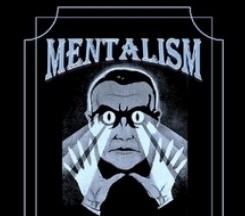
The real target always was, has been, and will be the mind of the opponent.
And so now we get to the crux of the matter – how do we control the mind of another? Leading the spirit, capturing ki, are just poor descriptors for what is now better labeled psychological operations (psyops)[1] or better still, magic. It may sound mystical and mystics have written about such matters, but following Master at Arms James A. Keating,[2] I would suggest that magic – stage magicians – are masters at controlling the minds of another. Sleight of hand, misdirection, all the ‘tricks’ of their trade are all paramount skills to learn. Watch David Blaine do street magic and realize that his ability to control the totality of the encounter often resides entirely within his ability to control himself. There are many paths to self-actualization/perfection.
How does this help to further our understanding of Aikido? The simple rote learning of form – the kata – is just the first stage. Next is the refinement of connection, ki-musubi. I would suggest the next step is using deception. That is the giving of visual cues (a slight shift of weight, or jerk of movement to throw off your true intent), a refinement of feints to lead your opponent to the position you want them to take. This is the “simple” trick O’Sensei deployed well with his atemi – he took the initiative away from uke to create the situation where blending action rather than destructive force can be employed. The subtle irony of violent first action becoming the life-giving sword.
But first you must know how to use the sword effectively. You must know how to use violence effectively. Once you know how to injure – that is how to act effectively – then we can make others react in a predictable manner. This knowledge should lead to confidence in action – confidence arising from mastery of self, which manifests in the ability to control the encounter: the shortest route to victory.
Magic has a high degree of applicability to what we do as martial artists. The best shihan create a purposeful aura of authority that enhances the effect of their technique. This is nothing more than stage presence – directing the attention of the audience.
In monomachy the use of misdirection, fakes, feints, miscues are critical skills to learn and employ. Magicians and fighters both need employ similar psychological skills: concealing our true actions and movements while reading those of the opponent; need cultivate a fluid grace and coolness of purpose that belies the arduous practice that was required; ultimately the practitioner seeks to direct the mind of the opponent. Pete Kautz well describes the importance of magic – and make sure to follow the embedded links.
Learning to control the mind of an opponent is important but learning to control your own is an absolute imperative.
Mental Fortitude
There has been much made of grit recently – the ability to see a task through to completion through sheer force of will. The will to win. These concepts suggest that will is primary and skill is secondary and are worth considering. Even the highly conditioned have physical limits that are only transcended by force of will. Read on the Barkley Marathon – an impressive physical feat but clearly physical conditioning is just a prerequisite. The real challenge is just pure will. So ask yourself – are you strong or are you tough?
_________
Be mindful! These techniques of mental manipulation should be studied deeply. Do not be a passive victim. Learn and inoculate yourself. Infect others. Knowledge is power.
_________
[1] If this is a new concept to you, please study the brilliant deception campaigns of the past: from the Trojan horse to Operation Fortitude to current manuals on warfare. Deception and discernment are critical skills in warfare. Odysseus was brilliant as the very first psyops specialist. Even as psyops to group combat, for the individual combatant, mental preparedness is a primary martial skill. Traditional ryuha incorporated psyops in their curriculum. One example is found in this discussion: 1509tin-Kajitsuka-tong
________
A more direct discussion on leading an opponent’s mind is the use of subliminal gestures.
[2] Subliminal Gestures
by James A. Keating
Subliminal Gestures Part I
http://www.donrearic.com/SignalsKeating.html
Part One: Subliminal Gestures (“SG” throughout the rest of the text.) are not really so mystical as they may initially seem. Agreed, they are not something found being taught in common dojos and studios. But, they are out there, if you care to look hard enough, they are out there in a large way. So much in fact that I bet you’ve experienced one of them without even knowing it! No kidding, more on this later as I explain the effect and cause of a well-executed SG. A truly well-timed (Timing is everything) SG first catches the attention (Vision). The doorway to the mind.
The mind is the key to the body. Now, it’s time to deceive the adversary’s mind. An SG is a fake or feint, a misdirection or draw. The SG is an exploiter of human psychology that has its roots embedded deep into our “Survival DNA.” So deeply that medical science is not fully aware of what these hidden trigger mechanisms are capable of in life or death situations.
An SG must pose a threat to the well-being, a problem that must be solved, an obstacle that must be overcame or something that leads their mind to the wrong conclusion or position to where they are easily taken. It will, for safety reasons, always be a part of an existing system. Acting as an augmentation to that existing system or an auxiliary back-up system or method. But almost never do you see an SG operating by itself. When you do, it’s a given the person doing it is one badassed SOB! Think of a timed move which has as its main goal the surprise or startling of the opponent (without touching them) and you have the basic concept of the SG.
Theatrics are involved with the execution of an SG. So are body language (position), facial expressions, direction of gaze and tonal inflections of the voice. (Hell, even something as simple as a well-timed and placed puff of air can be enough to augment an SG so that the opponent goes crashing). An SG may be performed with the hands-arms, legs-feet-footwork, fingers, eyes, weapons or clothing.
An SG must not touch the opponent. Once the SG makes physical contact with something (hand, foot, etc.) then it must by nature, automatically become either attack or defense. You may only touch the mind of the adversary with this sort of weapon.
Homework
Think of some commonly experienced SGs and then compare them with some I’ll provide you with in the next segment.
Subliminal Gestures Part II
Earlier I mentioned that some of you have probably already experienced the effects of some sort of subliminal action and you just did not recognize it. A classic example of this:
You are in your car at a stoplight. Fully stopped, unmoving and foot on the brake. Other cars all about you. The vehicle next to you lets the clutch out and rolls just a few inches backward. At that moment, in your car, you are seized with the feeling of this movement you perceive. You react, you push down on the brake but your car still seems to be moving…whoa…whoa…whoa…but it’s all an illusion. The senses have been tricked inadvertently. A well performed SG works off of the same covert manipulation of the peripheral vision. If you have felt this example (the car), then this should tell you, “Yes, this is a real phenomenon.” Now, take the concept and apply it.
More Homework
Some simple to grasp, easily found SGs are:
1. The action of tossing something toward the eyes or face.
2. Serpentine motion of any kind.
3. A backhand blow.
4. A lowering of the head and looking out the tops of the eyes.
5. Straightening or crouching the body.
6. Specific breathing patterns or breath related noises.
7. Making a “capturing” action with hands or arms.
SGs done in combination work well also, but that is a very advanced level. The basic concepts above work on a man or beast…largely universal in effect. Explore some! In installment III it gets stranger, you’ll get some real tools to work with
Subliminal Gestures II
Here is something you can experiment with. Be mature, give honest feedback and train safely (intelligently). This is not a test of any kind, it is a method to try these principles and concepts out. Then you build upon this understanding. This is an academic exercise, train together…do not compete.
Frame Shifting is a unique skill and it’s also a method to do a few reality checks. In other words, if you’re asking if this stuff is really workable or not, here is the check. Everything and everyone has to have a start somewhere…somehow. And this start is as good as any to introduce you to the general idea of what we are hunting for.
First, raise your hands (like a stick-up) and create a “visual framework” as your Guard. The Great Mas Oyama actually advocated this Kamae as one of the best! The two hands should be somewhat in front of your facial/upper torso area. The idea is to make the opponent see through this framework created by your arms. Yes, like a TV screen or picture frame effect! (You have seen the Photographer(s) put their thumbs together and hold up their hands to get a “picture-like” effect. Just do the same on a larger scale with your arms and hands.) The adversary sees you in this frame (Or on the TV, whichever analogy you prefer). This is where the fun starts!
· Shift the “Frame.”
· Shift the “Picture.”
· Shift the “Frame and Picture,” opposite directions.
OK, this is the picture…the “Frame” is the first step. Raise both hands just like you were being stuck-up. Hold the hands in front of you outstretched. Look at the opponent through this “Frame.” This unconsciously becomes his perceptual portal to you. You must remember that all of this is happening very fast. The opponent must not be touched, if you do, it becomes a physical parry (and the enemy can react or recover from such a cue).
To shift the Frame you employ a quick, lateral jerk of the frame as he punches. Always send the Frame in the direction of the body’s natural curve (inward). He will miss you by mere inches if done correctly. First passing by your ear. Learning this builds confidence. This leads to further sophistication of the skill. Be ready to parry if the Shift fails to draw them off target (your face). At that point…FIGHT!
To shift the Picture/Target means you leave the Frame still. It’s the Target that shifts in a sideways manner, out of the Frame. You duck out. They go through the Frame because they are visually bound to play that Line.
To shift Target and Frame in opposite directions is to employ both Frame Shifting concepts. Leads and Draws are similar. Found in the Aiki Arts more than other Arts, such techniques are unique in their benefits offered to the Practitioner. Kali utilizes leads, palm leads to be exact. Kali in fact teaches the empty hand fighting Guard not as a Boxing Guard, but just like a Frame Shifting Guard…could it be? Yes, it could, the higher adepts of Kali are also aware of this skill. (Nothing mystical, just sound science at work). Again I advocate your using Stage Magic as a study to enhance your knowledge of human psychology, illusion and of skills such as Frame Shifting.
Subliminal Suggestions I
Here is a progression formula for you to monkey around with. It’s logical and produces multi-level results with sincere, controlled practice.
The three methods of using Subliminal Gestures:
1. Block with SG.
2. Block and SG.
3. SG and block.
Progression:
· Blocking.
· Blocking with Circle.
· Block with SG.
· SG only.
· SG with tonal inflection (scream in specific key and tone).
· Voice only, tones, Kiaijutsu.
Pumping forward motion with the hands cause imbalance and unsettles the spirit.
Use in-computable circles to overload the CNS Survival Center.
The low growl immobilizes and stops, cause the opponent’s body to sink.
High, yipping screams cause the adversary to go upwards, sometimes they flip in the air, fish-like.
SG:
· Foot placement.
· Circle.
· Steal the balance at all times.
· Overload the senses.
An SG can be hidden behind another movement (this may or may not touch, either way it will play). This type of action creates a “Startle Response” in the opponent. These SGs are directed to the vision-eyes, but again do not touch unless they must. Whatever touches should be punished, either by destroying it or controlling it.
You can find fertile ground to discover more applicable SG-like movements in simple drills like Hubud-Lubud, most Traditional Kata and in some types of Sword Play. Consider that all things have a light side and a dark opposite (shadow). Please conceptualize the total yin side of what you already know in the Martial Arts. If a blow normally hits hard, then this yin type must not hit at all! OK, if an arm normally contacts the opponent’s arm on the outside of the forearm…then it must, in the yin phase lead the blow with the inside of the arm in a wave of capturing energy, towing the blow behind in a vortex of invisible energy. Like a very vigorous and controlled miss. Over-do the SG when you use them, we need the bad guy to really see it for the gesture to rack’em up deep in the mind-body-reaction-danger-vision zone like we want. Can you use an SG on a pet during play? Where are circles in The Big Picture of using magic, SGs and combat?
Subliminal Suggestions V: The Knife and Mor
The application of SGs in edged weapon combat is very profound. The knife heightens the sense of danger, the threat doubles. The reactions of the enemy are usually swift, coarse and sincere! This is because they are fighting for their very life. Because of this state of high-alert, the opponent can be faked even easier than before (as in the empty-handed fight mode). Yes, Subliminal Gestures (overt and covert) can fall into the Realm of Enganyo (faking) just as easily as do any of the other tricks and ploys from the SG Arsenal we discussed previously. Pete Kautz and his ongoing studies at Alliance Martial Arts should have augmented your grasp about this broad spectrum of study of that which seems to defy the rules of the physical world and combat as most men know it.
The knife itself often becomes an almost hypnotic-like icon to the adversary. In skilled hands the weaving actions employed are in effect like that of the classic snake and bird example. Snakes can paralyze their prey with gaze and intent. Powerful waves of subliminal command energy are like a Bio-Microwave System which all creatures possess, obviously some more than others, as in the snake’s case. I have personally seen Pit bulls hypnotize squirrels out of trees. Swaying, low moaning, intense staring and random shifting of position to keep the critter in their psychic Pit Bull sights. Pit Bulls not only bite one hell of a lot harder than a normal K-9, they also have a lot of intensity/psychic force about them. It is this aspect which makes them frightening, people feel it radiating off of them. So I think that a concentrated Warrior Mind is also capable of generating and projecting a strong psychic force and intent too. This natural gift, this intent or power (Kraft) should be used in conjunction with subliminal gestures, fakes and magic. It adds belief to the combat deception-murder mix. When you believe, you see, they believe too…every time. It starts with you.
Next:
Simple SG-based ploys you can try when using the knife.
· Knife x M/T Hand.
· Knife x Knife.
SG ideas for The Knife.
FIRST:
Here is one that is done almost as you would normally execute what is called a “scissors” cut to the opponent’s limb/arm. Ideally you would do this same motion but employ it as a high-speed lead. Taking care to have distance and timing well in hand before the feathers fly. (You are playing off of the peripheral vision-survival software in their head. That, you see, is where the game really takes place.)
A more advanced version could run somewhat like this…
· If you are using larger blades apply the Beat to the inside line of their blade.
· If you are using smaller blades, then snipe at the inside line of the opponent’s hands in place of the Beat.
SECOND:
· As they try to either parry-beat or cut back at you, roll off of their pressure. You have “motor set” them into a predictable pattern.
· Now as you roll away (disengage) with your blade, point in the same direction with your empty, opposite hand.
· As you roll around to the outside line (To Guard) immediately and smoothly point in the opposite direction with the empty/non-weapon bearing hand. Your blade begins to wind away swiftly in the opposite manner (If done right they will chase the empty hand in the direction you point, with their blade hand…only for a moment. That is your window of opportunity).
· This should launch you into a graceful and unstoppable in-Quartata thrust to his inside line.
This may seem implausible to some. When you see it done to another it appears to create a tornado like swirl of action/energy that “sucks” the adversary’s attention away momentarily. Destroys his Guard and his will to attack. Confusion. It leaves them ripe for a deceptive play at Arms. It only takes a second and some good timing and the fight is won! And…this level of SG is quite doable by almost anyone willing to practice a little and invest in their future.
THIRD:
Some things are transferable and may be “passed along” to others…think of yawning, one person in a car yawns and soon, everyone else is yawning too! Nervousness is transferable too…can you think of a way that “nervousness” can be spread to others? Confusion also passes between people, groups and programs very easily. What are the dynamics of confusion? How can such an element be applied covertly? Is this “Monkey Wrenching” or something else? “Monkey Wrenching” is another name for a type of illusion-terror…identifying and mastering the concept of “Transferable Things” is not Monkey Wrenching, but in the same family.
________
Let’s consider close up stage magic as an example.
This is also called “sleight of hand”. The trick behind most sleight of hand feats is always a simple one. A misdirect, a fast action, a visual cue and bang! The unwary “pilgrim” is thus deceived and “magic” is had! You can buy books and DVD’s and learn these tricks. You will know the secrets behind the tricks. But just knowing the secrets isn’t enough. Knowing and doing are two different things. Even though you “know”, you still cannot successfully pull off the sleight of hand sequence and make it appear as if magic. That may take years of practice!
In many ways martial arts are similar to stage magic and music (or anything that requires practice and dedication over a period of years). Martial art knowledge is now abundantly plentiful. Like no other time in history has so much martial material been shared, sought, disseminated and mismanaged as in this time we are currently in right now! Many advantages and disadvantages also come with this new found freedom of fact and fancy. While more martial resource data is being shared globally it also seems that the core aspects of many arts has been severely corroded by the same sharing resource. First “knowledge”, second “practice” …and third is “experience”. Nothing can truly replace experience. It’s a “hands on” level of learning that knowledge and practice flow directly into and help create the reality you seek.
Many of the seekers on the path have jumped the rails by skipping any one of these three levels of “doing”. Shortcuts are a myth, gain command over each of the three elements by simply “doing them”. Tricks can be taught in a short time, skill takes a little longer. Tactically the tricks and the skills combine to make a deadly fighter in any theater of combat. To deceive an opponent is best. You must bedevil him with fakes and cause him fits of frustration. With point posing threat you then swiftly pass through his guard using your skill (practice-training) and dispatch him with an accurate and well timed action. This describes the bullfighter too. His art is similar to the knife man’s. Their sanguinary goals are identical…. real life & death ~
__________
Related to the concept of psychological warfare is the extraction of information through coercive techniques. Henry Murray attempted to find means to protect soldiers against the enemy. But hubris is pernicious. Jonathan Moreno wrote about a particularly destructive test run by Henry Murray at Harvard. Murray’s arrogance and vanity arguably lead to the creation of Ted Kaczynski;
Harvard’s Experiment on the Unabomber, Class of ’62
An odd footnote to Kaczynski’s class reunion.
Posted May 25, 2012
The news that Ted Kaczynski was included in the 50th anniversary alumni directory has roiled the class reunion. Better known via his nom de plume (or “guerre,” as he might have it) as the “Unabomber,” Kaczynski listed his occupation as “prisoner,” his awards as “eight life sentences” and his publication as his 2010 manifesto “Technological Slavery.” How and whether his responses to the class questionnaire should have been published has caused a lot of finger-pointing and reflection in Cambridge. But his crimes were no joke. Kaczynski’s letter bombs killed three people and maimed another 23.
For all the reporting about the 50th anniversary reunion dustup, an odd twist to the Harvard Unabomber story has not been mentioned: During Kaczynski’s sophomore year at Harvard, in 1959, he was recruited for a psychological experiment that, unbeknownst to him, would last three years. The experiment involved psychological torment and humiliation, a story I include in my book Mind Wars: Brain Research and the Military in the 21st Century.
The Harvard study aimed at psychic deconstruction by humiliating undergraduates and thereby causing them to experience severe stress. Kaczynski’s anti-technological fixation and his critique itself had some roots in the Harvard curriculum, which emphasized the supposed objectivity of science compared with the subjectivity of ethics. Before his arrest, he demanded that the Washington Post and the New York Times publish a 35,000-word manifesto called “Industrial Society and Its Future,” a document that expressed his philosophy of science and culture.
Kaczynski believes that the Industrial Revolution was the font of human enslavement. “The system does not and cannot exist to satisfy human needs,” he wrote. “Instead, it is human behavior that has to be modified to fit the needs of the system.” The only way out is to destroy the fruits of industrialization, to promote the return of “WILD nature,” in spite of the potentially negative consequences of doing so, he wrote.
After Harvard, Kaczynski earned a Ph.D. in mathematics from the University of Michigan, then taught briefly at the University of California, Berkeley, after which he dropped out of society. For eighteen years, using homemade explosive devices, he terrorized those he viewed as agents of antihuman technology, especially anyone associated with universities or airlines. By the time he was arrested at his remote Montana cabin in 1996, Kaczynski left behind a trail of mayhem.
The man who conducted the humiliation experiment was the brilliant and complex Harvard psychologist Henry A. Murray. Though his fame has diminished since his death, Murray was among the most important scientists of his day, the pioneer of personality tests that are now a routine part of industrial management and psychological assessments. It is not too much to say that contemporary psychology would be far different without his contributions. (Full disclosure: Murray was a close friend and colleague of my father’s, but we knew nothing of this experiment.)
Henry Murray was a native New York blue blood who became a Boston Brahmin. He attended the finest schools, Groton and Harvard, and earned an M.D. from Columbia and a doctorate in biochemistry from Cambridge University. He dropped medicine and natural science for psychology after reading Carl Jung, publishing a landmark work in 1938 called Explorations in Personality. Before World War II, the U.S. government asked him to do a psychological profile of Hitler, and during the war he helped the Office of Strategic Services (later to become the CIA) to assess its agents. In the 1950s, Murray’s personality test, the thematic apperception test, or TAT, was used to screen Harvard students.
In yet another odd twist that shows why history is stranger than fiction, while Kaczynski was undergoing those humiliation experiments a young Harvard researcher named Timothy Leary was beginning his research career on psychedelics. In 1960 Leary returned from a vacation in Mexico with a suitcase full of magic mushrooms. Murray himself is said to have supervised psychoactive drug experiments, including Leary’s. According to Alston Chase, author of Harvard and the Unabomber, Leary called Murray “the wizard of personality assessment who, as OSS chief psychologist, had monitored military experiments on brainwashing and sodium amytal interrogation.”
These curious historical intersections remind us that, as William Faulkner put it in another context, “The past isn’t dead; it’s not even past.”
________
Opening the mind and increasing connections – some have suggested Soma or the food of the gods or >this< Remember the doors of perception.
Aldous Huxley is sadly prescient and sadder still that >this< was once the level of discourse presented on television, why no longer? But at least there are debates still being presented to the elite few.
 Protective Arts
7 thoughts on “MENTAL COMBAT”