Indexing. Conceptually indexing is a way to quickly act based on a limited amount of tactile information. In the ryotedori series it is easier to understand – the indexing almost can be seen as a logic-gate: if this, then that game.
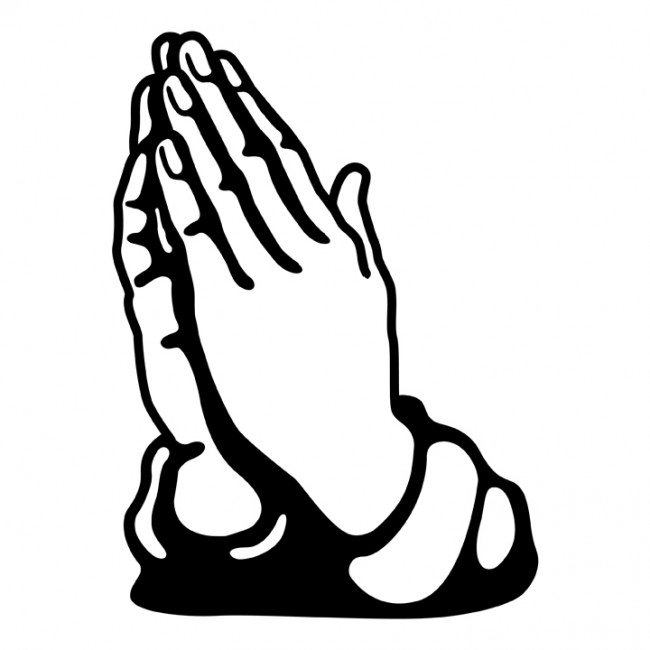
A broader tool to keep in your conceptual tool chest are prayer hands. By placing your hands palm to palm with the fingertips immediately in front of your centerline raised to eye-level you replicate seigan no kamae.
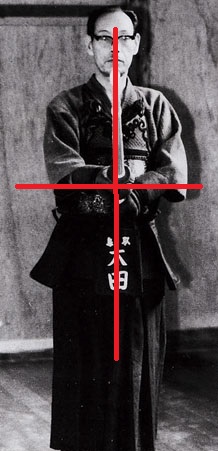
Prayer hands are valuable because any attack that comes at your vertical line (angles 1, 2, 12) will hit either your left or the right hand. This much should be obvious.

But your “go” signal is as follows – as soon as one hand is touched, the other should dart forward while the first hand touched remains in place to control uke’s initial attack.
_______
Some true self-defense systems take the indexing idea to its logical conclusion and created an entire (and effective) system predicated on basic principles. Study Tony Blauer to see how well he exploits this response. I encourage you to make a study of Blauer’s SPEAR concepts to further augment this indexing idea.
_______
Please recognize that this is a concept – a pedagogical tool to help develop a frame of reference. It is a concept. You have used it for years, perhaps without recognizing it.
In Aikido the yokomen strike forces this response. But in Aikido the challenge is to recognize the difference between shomen (angle 12) and yokomen (1 and 2) – and when the attack is done properly the difference is difficult to perceive. Hence the prayer entry: an exercise to feel the angle of attack without presuming it. I stated yokomen forces a prayer entry response: At the kihon level let us assume uke delivers yokomen with a right hand attack – nage will receive with the left and then control uke‘s center with nage‘s right hand. Yokomen is set up purposefully to teach a R-L / L-R response – as opposed to shomen which is a R-R / L-L concept.
But now revisit your conceptualization of yokomen and shomen – and assume you will not be able to perceive which form the attack will take. Therefore default to the prayer entry. Depending on the pressure and angle of uke‘s attack you will feel the uke‘s intent as being either yokomen or shomen. Once you have determined (through somatic – sensory information) then your responses can flow in accordance with uke‘s force. The distinction is best conveyed in real-time in a class room setting because the nuances will be lost otherwise.
Once you can visualize the prayer entry, then it may be a useful concept because it will allow you to move more quickly beyond kihon. Yokomen done kihon is almost universally taught as a RvL / LvR intercept with the nage‘s opposite (free) hand acting as the control. Shomen is by definition a RvR / LvL control and counter. Apply the prayer entry and you will better see why I suggest that yokomen (especially) properly executed requires a single hand response from nage. Shomen also becomes more plastic in its definition. We will explore more in person – these are just notes to remind us of the path.
___________________________
Brian Chilton pointed out that Master Keating posted about the Priest Style of Kung Fu, which I repost here in its entirety, in case the >link< does not work. Dive in and look for the connections:
The Priest’s Style:
Perhaps a “Missing Link” in the Martial Milieu:
The first time I had heard of this was in 1987. It was being spoken of by David Harris, Sid Woodcock and Fook Yeung. It came up during a conversation about some of Silat’s unusual entries and techniques. They seemed to all agree that it was a branch of ancient method called the “priest’s style”. Somewhat like Tai Chi Chuan in that it was a creation point sort of fighting art. A sun-source, versus an art that is a “version” of other arts or original creations. So many of these original methods have been lost to time. Since I had not encountered any references to this method I listened with great interest.
Later asking to be shown a bit of the Priest’s style by Sifu Harris so that I may grasp its essence. So I was given a substantial bit of knowledge about it. I continued to pursue this art, piece by piece over the entirety of my relationship w/ these three men. For me it was a spawning ground for new possibilities to come forth into real life.
An ancient way, magically new once again. This is called “re-birth” in kung fu parlance. The Phoenix – a fire bird from ashes thus springs forth alighting the way for the faithful as of old. As you already guessed, The name itself says that there is a religious context involved. Such as it may be this also indicates a doctrine of life – not death (killing). Meaning the bulk of what I experienced was not injurious or deadly to an aggressor. Like Tai Chi the idea is to “neutralize” the opponent rather than harm them. Respect for life once again. A high precept requires a high art to support it. Being a creation point art, that aspect was thoroughly ingrained into the skills at an appropriate tactical level. I can attest to it. No fanatical one, it is not a lost super-art or secret of the Siddhi’s. It is merely an art lost to time (or absorbed by another art(s) perhaps).
It is highly stylized in a classical type of format. If you are an impatient guy this may not be the art for you, heh heh. Today so much of martial arts is fast n furious, hi-speed and low drag. A “get in there and get’um” logic rules the day. This Priest method is not so eager in its manner of dealing with an enemy. Taking life is easy in a fight. Saving life is not as easy. This concept of saving life, non-destructive control over the adversary and maintaining a spiritual base appealed to me greatly. It still does – now echoes of the ghosts mix freely with the sounds of daily life. Fleeting images of ghost boxers in the night fog. Emissaries to the faithful. Golden pillars of light. Golden pillar boxers. The martial mardi-gras of masters past / still treasured as the masters they ARE in the afterlife doing their articulated techniques in the moonlight’s smoky haze.
I know, you think I dream, right? That I have gone mad. No, since my old friend Tarim Kim swept me into the Jianghu, a true reality has intruded and false dreams are no longer permitted. I speak of an accurized version of reality – poor old JAK can’t look back. There is no more “I”, only “we” and how we relate to “it”. I ask you: Which of us is the dreamer? Which of us is asleep? Which one is awake? Which path do we take? The Priest method is an esoteric journey of the self and of all which the self values. I have already said too much for this session I believe. Not wishing to make confusion. Perhaps I can write more in the future.
(Some have asked how to help support my efforts. This is an easy thing. Simply keep me in your hearts, share the spirit of life that lies within the core arts we all practice.)
Help others, have no negative thoughts in your being. Know that energy is eternal and cannot be destroyed. Good works continue past this mortal coil. You are here for a darn good reason.
He + art = Heart! – JAK
Priest Method Part Two:
A Followup on the Curious Priest’s Style of Kung Fu
The first installment drew some curious comments so I shall put forth a bit more on this subject. Some details, some critical correlations and universally recognized applications. The style itself is a rather clever way to understand / catalog the myriad movements the human body can accomplish. This in turn helps us learn the fighting arts and to excel in other area’s of life outside the martial path. The non-destructive arts have always interested me. The Priest’s style of kung fu embraces that element.
This Priest method looks quite benign. Innocent even. But there is that hidden core that is very serious. A fierce spiritual / intellectual shield of hidden strength is sometimes spoken of in relation to this particular method.
I had been training in Silat w/ Guro Jim Ingram, also learning Kali, Silat and JKD from Cliff Lenderman at the same time. Plus attending numerous seminars and events. It was quite a fast track on some specific arts. Mr. Harris and whichever guest teacher might be present always asked what I had learned at these other classes (particularly Silat). And so I’d show’em what I had picked up. Often done poorly as the material was still new to me. They’d look things over, make some comments – make cross references and begin showing me similar things from other arts.
It was during one of these amazing sessions where the Priest method first came up. It was Fook Yeung who mentioned it to Harris and then he to the class. So Dave did some cool demo’s of the system, evidently Fook had taught him the method years back. So anyway, that is where and how I kinda started to “see the light” of the universal way these men thought. A true gift.
Ok, back to our Priest style – some technical stuff – The number one basic position – “start up” is simply the standing prayer position. Feet together, back straight, palms pressed together near center chest. You see statues and paintings of deities in this pose. This is to “enter the fight like an arrow”. You ask: Is this unique to this method alone? No, it is also found in some types of Silat. They call it “dive” and it too is a primary entry tool or method of employing the same “prayer hands”. Off of “dive” (or prayer) lie circles of many kinds. This must be thoroughly understood and examined. As must the various “clasps” (mudras?) that occur throughout the style. Once I became more familiar w/ the Priest Style I too saw connections between it and Silat’s methods as the trio of teachers first pointed out (Silat more so than other arts or systems). Curious yes, but so it is!
Assume the Standing Prayer position. With right arm make outward circle and return to palm-prayer position. Repeat w/ left arm (hand). Next right arm makes inward circle and back to prayer position. Repeat on left side – balanced motions. For Kali people think of the “snake” disarms in the inside & outside lines. Boom, there it be, another correlation. Ok, yer doing Goood!
So can ya do the “snakes” again for me, but leave the hands clasped. Move’em on the circular path again as one unit. I know, I know but just do it eh? Yes you can. Figure it out dammit. Repeat that same material again, but on one leg this time. Switch legs as you switch above. And do remember, hidden in the moves, clasps, salutes (bows) and prayer positions are the combative elements.
Look for that connection if you happen to stumble upon the thought someday. You must: “Intuit to accrue it”! Haw Haw.. / Anyway since I practiced Okinawan Goju for many years I also see elements of Priest style in Seisan and Sanseiru kata’s. Not the whole forms, but pieces. Coincidence? Probably, but ya never know about how things worked in the olden days. This stuff got around, had a life of its own.
Religion is popular, Priests knew this art, they got around. It’s the way of religious men throughout history. Jesuits, Saints, Buddha’s, prophets and sages all “got around” (travel’in men) throughout history. Much more so than the common man of the same time. Lastly, it was shown to me one cold fall evening at the infamous Green Lake school where Red Boat Wing Chun (opera style) kung fu blended w/ the Priest style.
The trio of teachers has blended the two methods into one. I watched the demo Mr. Harris did of the blend and I must say, it was damn cool. But such things did not happen too often, only when something sparked inside them did such information come forth.
Andy Dale, a master teacher of Kung Fu himself still teaches there at the Greenlake School. It was told me early on in my training, w/ no buts or exceptions that it was ANDY DALE who’d take over the system if something “happened.” No one else. That is still honored by me and true today. Andy is the boss of that clan and of the system now. I don’t interfere. No matter who says what, it is that simple. He’s the boss and the rest of the group needs to say Yes Sir, and shut the fuck up. Hell, Andy may know even more about the Priest system. I never asked him. But I am honored to have been able to know such men. I lay no claim on a dead man’s fame (Mr. Harris) as have others from the group. I stand alone like I always have, upon my own merit. Not the merit of my teachers or the merit of others I merely knew while upon the path.
 Protective Arts
5 thoughts on “PRAYER ENTRY”