
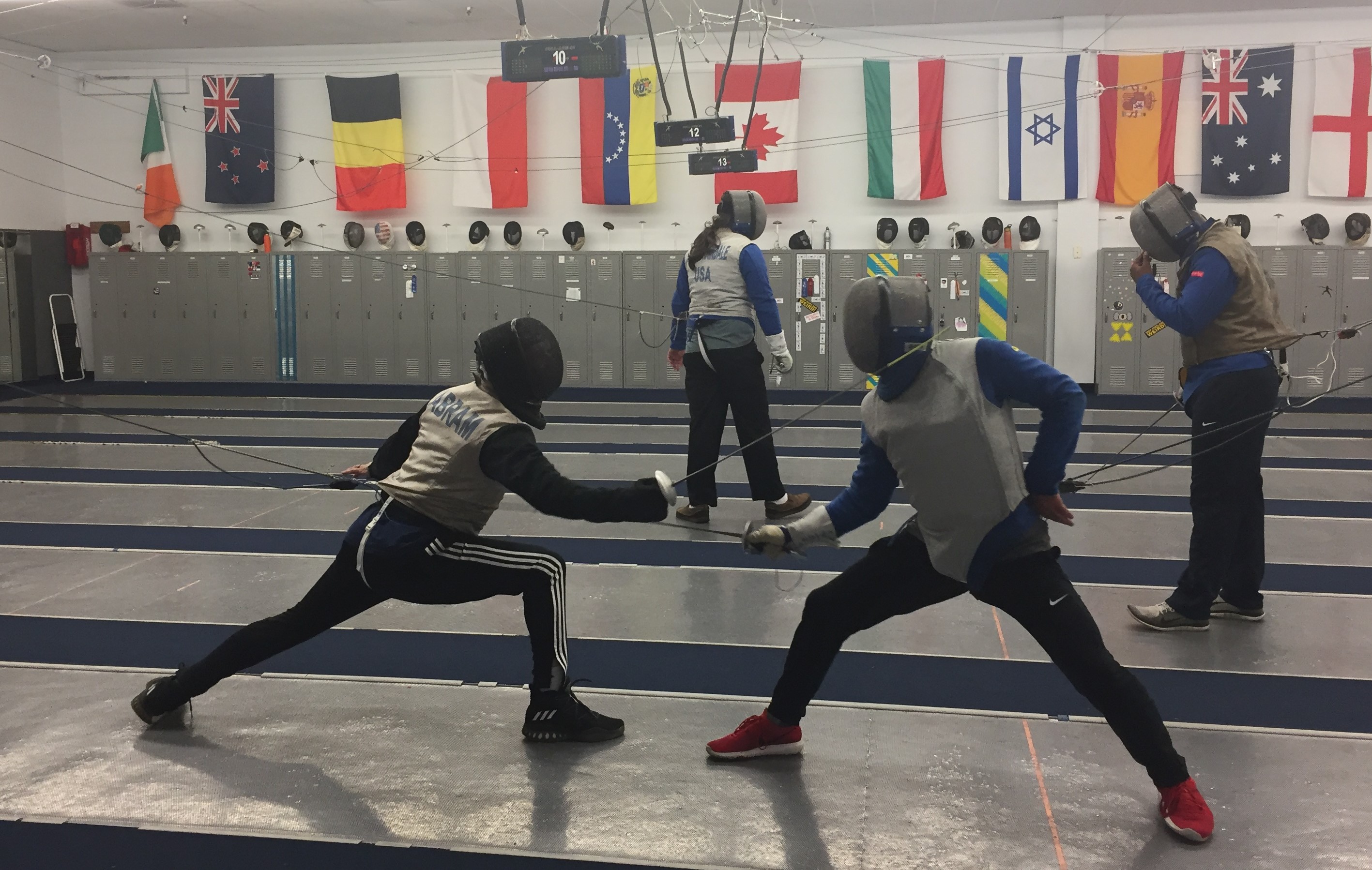
Saturday we were able to do a private seminar on the use of the point with Master Foiler Vincent Camillo at Northwest Fencing Center.
The use of the point – the straight thrust is a critical skill to add to one’s arsenal and foil is a great introduction. The limitation of the torso as a target forces point discipline – aim small miss small – and the rules of right away forces the players to clearly separate the roles of attack and defense.
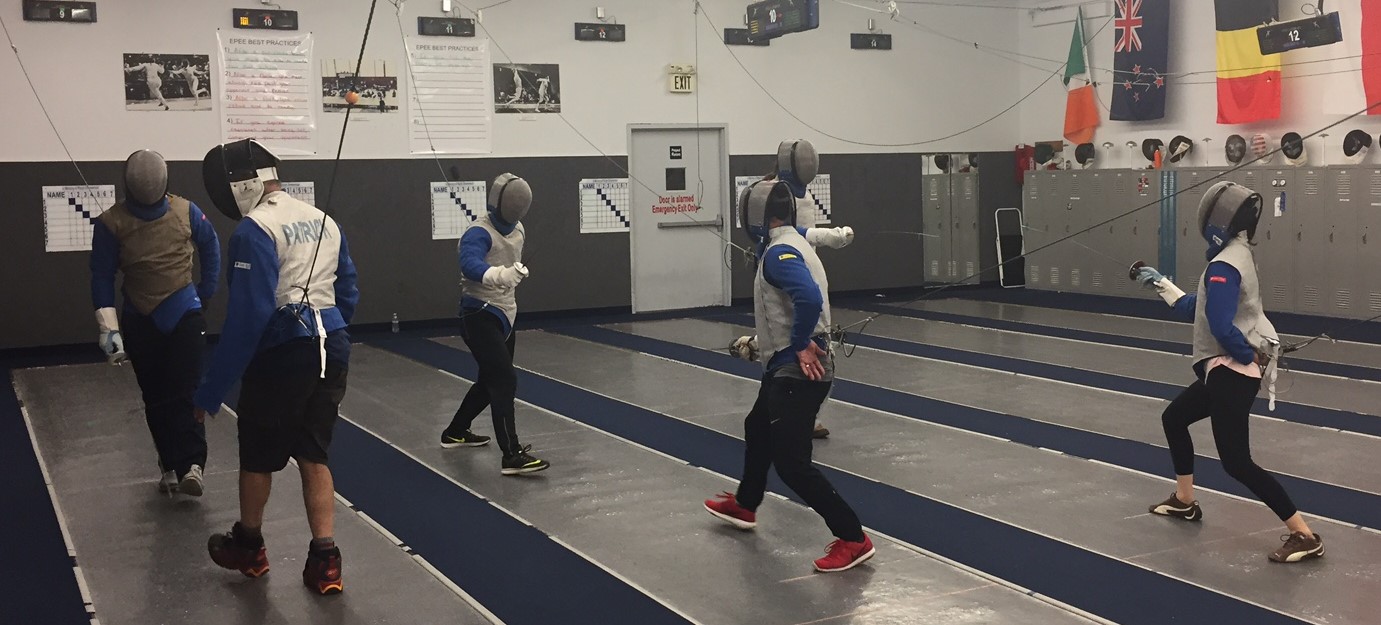
The constraints of the strip and the limitations of target forced us to play with ranges – how to close and bait with leg movement and keep control of the center with small movements of the hand.
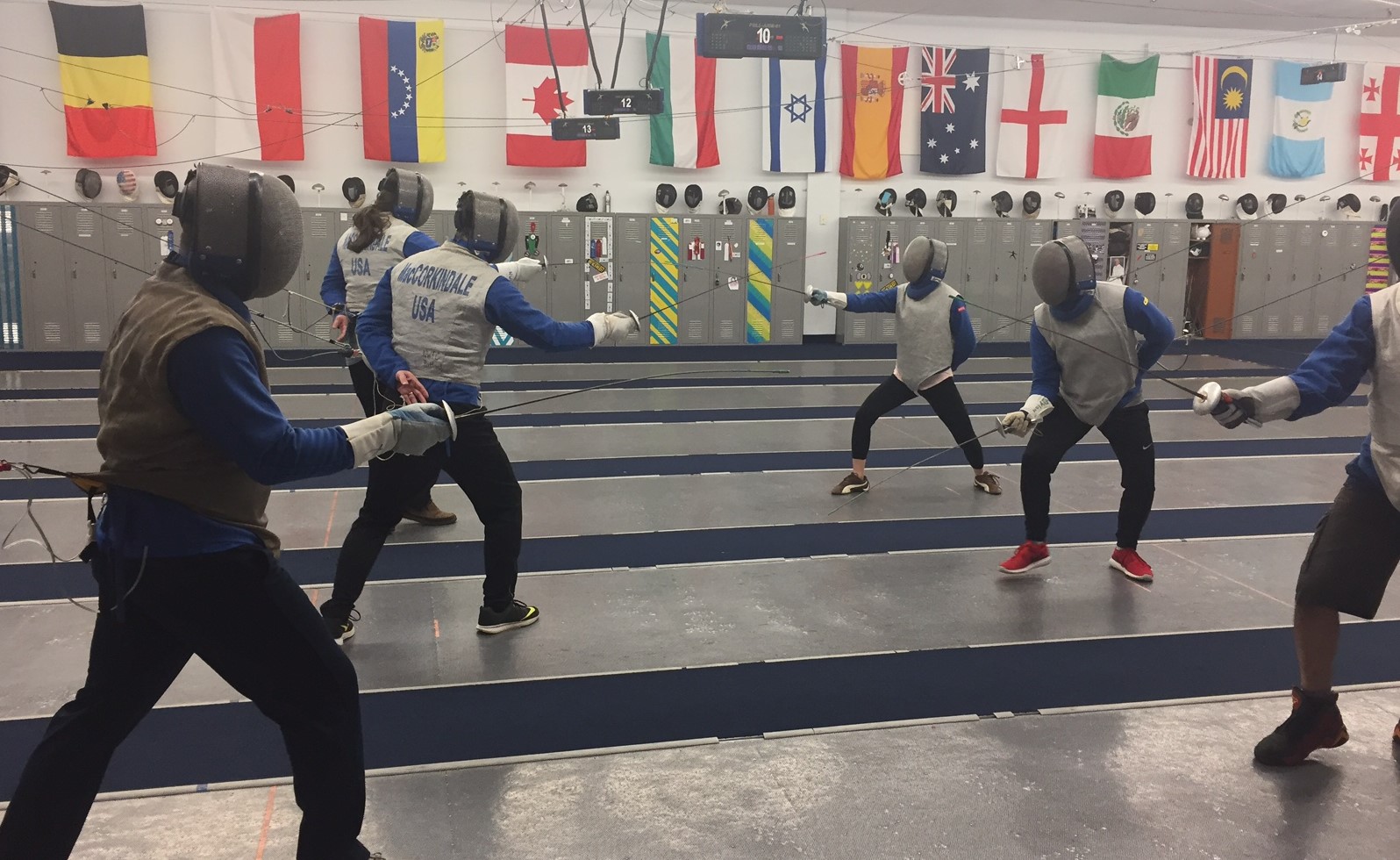
Right of way is a valuable tool to teach the attack – parry – riposte sequencing. As Aikidoists the idea of awaiting a committed attack before acting should be familiar and it was great to see the level of patience everyone displayed.
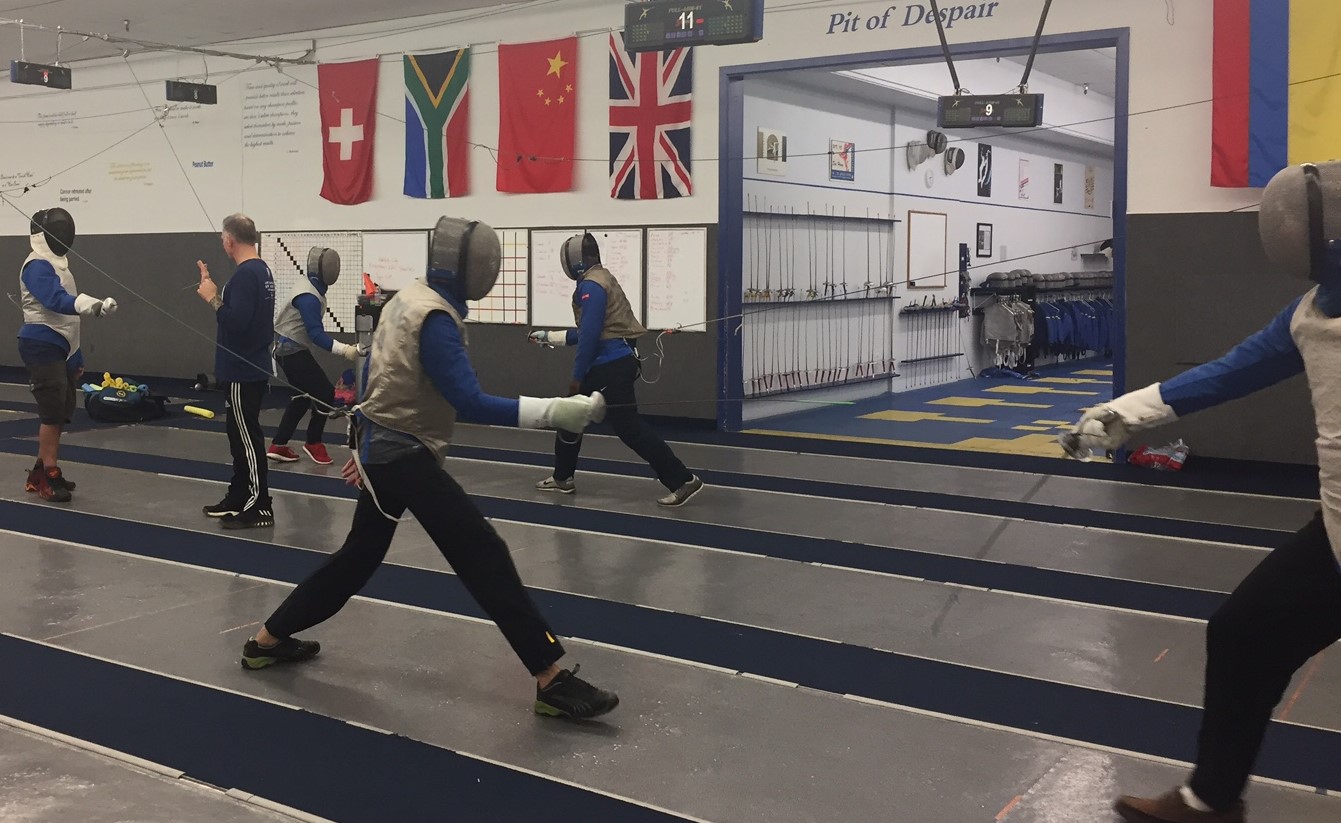
The gamesmanship and ploys in fencing to create opportunities for action shows the contextual limitation of Aikido. Because our art focuses entirely on the last committed action we miss the baits, feints, and general deceptions that are the very heart of personal combat (monomachy).
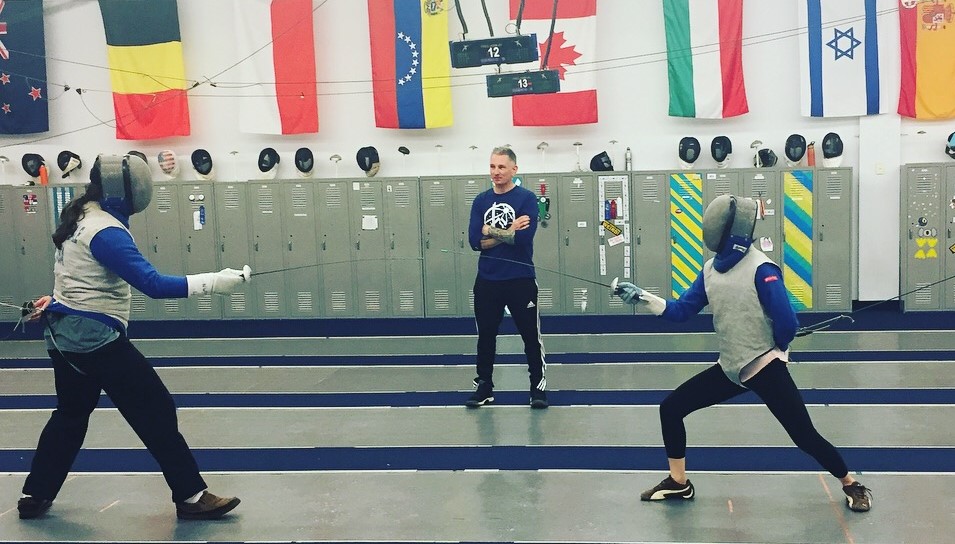
Everyone well acquitted themselves and readily adapted to a single-handed weapon. The thrust and its ability to control the center by simply not moving is a powerful tool to keep in your arsenal.
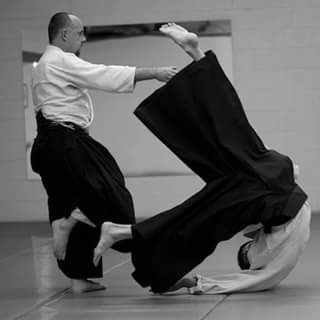
The techniques in Aikido at a casual glance favor the edge – shomen uchi and yokomen uchi are prominent edge attacks. The kumi-ken is edge dominant.[1] Even the kumi-jyo is heavy on clearing sweeps.
But look deeper and you should see that the use of atemi is nearly universally a thrust. In the Hombu-style the atemi is not emphasized because if done properly it stops uke’s action – thereby making the blend, kimusubi, irrelevant. Atemi is what JKD would call a stop-hit (neutralizing the attack) or a straight-blast.
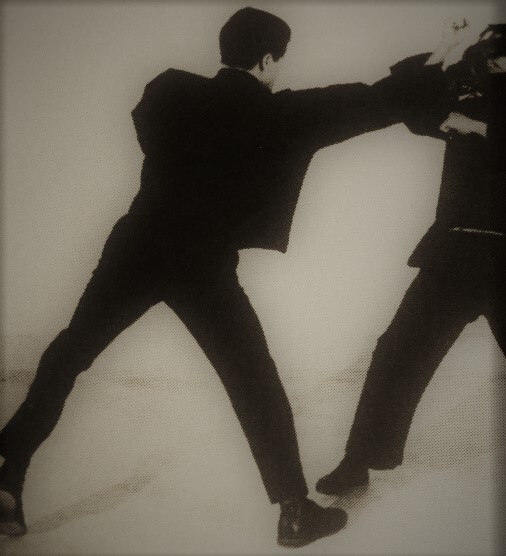
I point back to JKD because Bruce Lee was a brilliant student of human motion and developed JKD as a response to the shortcomings he found in traditional eastern martial arts and therefore added elements of western combat systems that he found effective: incorporating Jack Dempsey’s approach to boxing and the fencing style of Aldo Nadi.
Review The Tao of Jeet Kun Do and Bruce Lee’s other works and make a study of them with a new appreciation of a fencer’s use of point. The power and speed of a straight thrust. It is not a boxer’s jab.
_________________________
[1] The katana is a shallow-bellied saber wielded with two hands (look at the design consistency of the blade). As such its use emphasizes the edge over the point: the slash over the thrust. The edge vs the point is one of the oldest debates and western vs eastern methods of fence is just as pernicious. Search the web and you will see polarized and emotionally charged opinions – as vociferous as the 9mm v 45 debates in the handgun world. The simple fact is, when there are ‘best’ methods then those cultures with ascendant technology and strategies do in fact dominate – just read your history. But that is a macro-scale review. In monomachy it isn’t a contest of arts but of the individual skill of the combatants. A good summary of the recorded clashes between western swordsman and samurai indicates as much. Also make sure to review the excellent articles posted by Maxime Chouinard
________________________
Additional resources can be found at Martial Arts New York on the importance of fencing (their banner photos show an excellent use of the thrust with and without weapon).
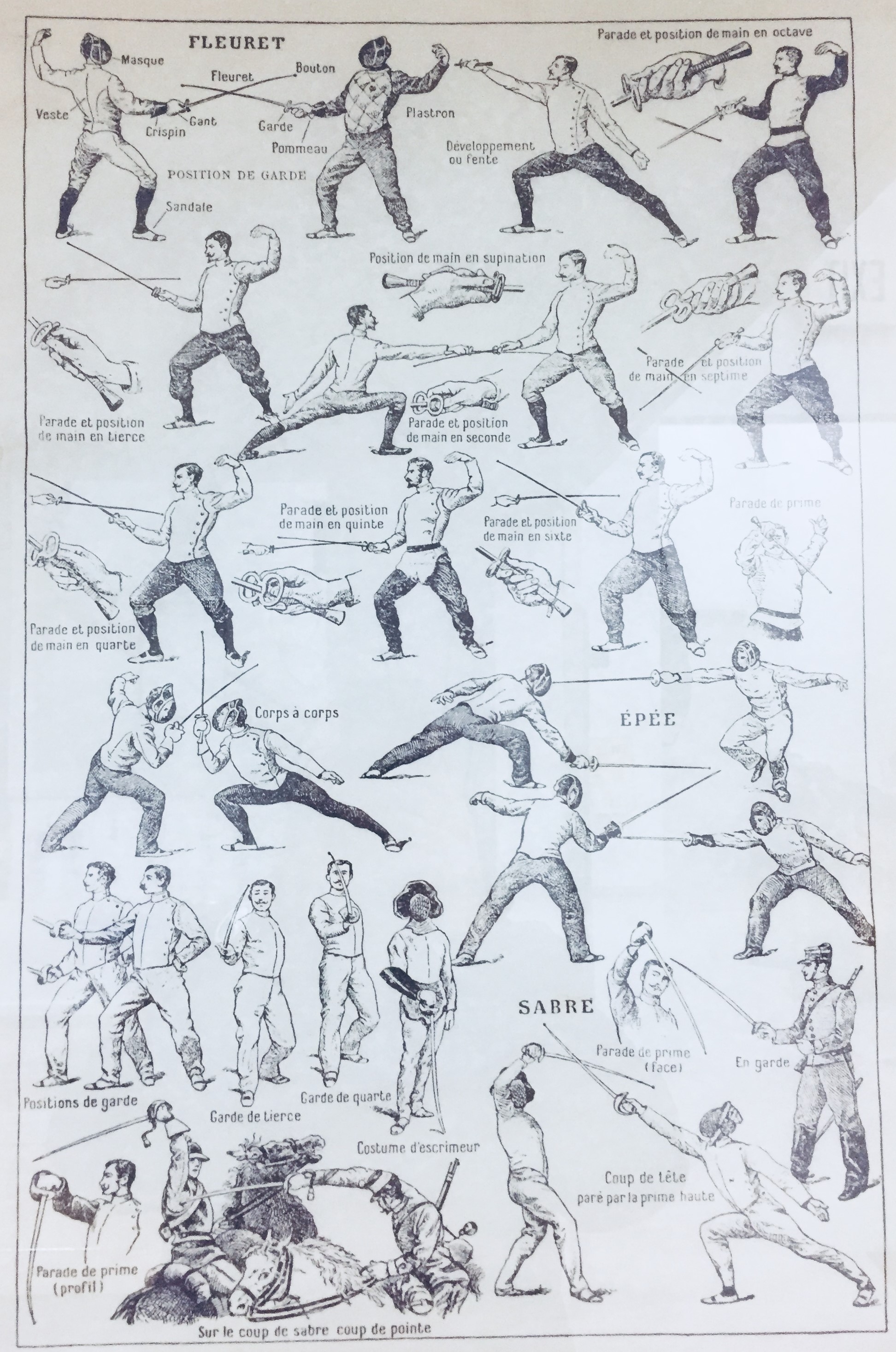
A nice comparison between ‘old school’ and ‘modern’ fencing flashing steel (1926)
To get closer to the origins – the Italian method from circa 1600 on rapier use.
A great example of the principles: study Charlie Burley (thank you Master Keating for that reference as well as for this article!)
________________________
One could argue the most successful armies have preferred the point. The Greek hoplite with the overhand thrust of the spear, the bristling-layered phalanx of Alexander, in close quarters the Roman Legionaries used the thrust of the gladius, the Parthians and Mongols were experts at mounted archery, the advent of the stirrup allowed the charge of the lance, and Patton’s calvary saber design emphasized the point. And it should go without saying that projectile weapons are nothing but the logical conclusion.
____________________________
Lessons from the Knife Coach – James A Keating
Le POINTE! There are times in life that require the edge of a knife to cut and there are other moments when you need the point of that knife to pierce. Commonly most people who have little or no training wield a knife much like they would a club or axe. Meaning they more or less hit (chop) with the knife rather than cutting (drawing) with it as they should. Believe it or not cutting requires more skill to execute than does the simpler, more intuitive thrust does. The cut can be disabled by a jacket or heavy coat. Also a cut requires a sharp edge (most men’s knives are dull as hell) in order for it to work effectively. A thrust has none of these issues or limitations, the point does its magic under nearly any circumstances that you may encounter. Ripping, tearing, picking and piercing. These are the ways of the point and this then is the topic of this session. Point Work and thrusting with point! The deadly “thrusting triangle” of Kali is a well-known example of the knife man’s usage of the point. In his quest for victory the knifeman must thoroughly understand the many levels of the mysterious thrusting triangle. Sumkete, sonkete… yes, good old thrusting mixed liberally with enganyo (faking). Also add a dash of slashing interspersed with the three thrusts, connect the dots so to speak. That should round out the game in your favor quite nicely. Now you have quite a sophisticated web of defense. It contains the elements of deception, the threat of the point, slashes that seem to appear out of the thin air! Now add the checking hand into the mix – Presto! You have the makings of a great means of personal protection from start to finish. Mind you, it’s not just the Filipino arts which employ these methods. All forms of edged weaponry share these traits. Sure they vary slightly from style to style, from teacher to teacher, but generally they are known by all methods and by all men. They are somewhat “instinctual”. Men will perform these actions with or without prior training. Unique to which we speak is the conceptual depth that these methods encompass. It is that very “depth” that many miss and settle instead for the most basic of understandings and applications (edge-ucated idiots). Stop looking AT the exercise and instead look INTO it. And just what are those things which you might find by looking deeply into the thrusting triangle method? Right off there are a myriad of disarms which await your study. They hide and reside within the thrusting triangle’s matrix of motion my friend. The retraction of the six and seven thrust actions are the key aspects. Right after the thrust is completed (or even if it is blocked) – now is the time to extract their blade from their trembling grip! And then follow-up with another thrust and a line clearing slash. The deed is done, you’ve won. Either exit the area in victory or apply aid to the injured as swiftly as possible. A thrust (Point) can be given in a fight for a specific reason. A case in point is armor. An armored opponent has taken away some of the better and more accessible targets. By doing so he has gained an advantage. The six and seven lines have the capacity to defeat armor. The line of attack itself can find and exploit an opening or gap in armor, modern or ancient armor, it matters little. The number five thrust or a common slashing cut do not have the same ability as the other two lines of your triangle. They struggle when armor is present. You must practice and understand “skidding” thrusts. They are meant to skid off the breastplate, gorget or forearm. They seek their targets by sliding over the surface of the body (in this case armor). In Kenpo such an action would be categorized as “contouring” (following the surface to your target). Such actions like contoured cutting will seek the bone and follow it in fights that lack armored combatants. Even the visceral vaunted backcut of the Bowie knife fighter can be performed upon the thrusting triangle. I know so for a fact for I’ve taught it successfully for years. Bill Bagwell himself also states that the backcut is “pointwork” (point oriented) and that it is not really a cut at all, but instead a form of ripping with the point. Like a raptors (eagle, hawk) beak. I totally agree. And I’ll also add that you must understand the true reason of the fighting design of the weapon’s butt. Some knives have spikes or sharp ridges on their butt ends. Hell yes, this then is another available point of contact / damage to employ upon the enemy in close quarters using “point” techniques. (Remember not all knives are suited to butt strikes. Use the right unit eh?) You must try the thrusting triangle with only butt strikes, then only with knife point, next with both point and edge (connect the dots). Lastly you may add a live hand check to the chest or shoulder (in lieu of the face or stomach) – once the live hand begins tossing 1/2 beat strikes on the triangle matrix as the knife simultaneously delivers full beat motions on the same triangle you’ll have reached a zenith of timing, skill and ability. It’s not about force, it’s about timing. The edge & point of the weapon are force enough. Learn this tried and true material in graduated levels, one step at a time. I’m looking forward to seeing your development soon. The prime directive of the KNIFE COACH is to help you achieve your goals and to make you better at whatever blade art you do. I am sincerely honored to work with you. Whether it be in person or via DVD or over YouTube, I know that together, we can do this! Please learn & never forget this knife fighter’s mantra from times past: “If your blade goes forth, withhold your anger. If your anger goes forth, withhold your blade.”
_____________________
An homage to the spike – the point of self defense!
A blade has greater utility, but the simple spike has advantages. An spike could be any acutely pointed metal rod – so it could be chopsticks, knitting needles, a screw driver, an ice pick. The purpose of a spike is penetration. A narrow point will punch effortlessly through clothing, including heavy motorcycle jackets and most body armor. With sufficient force, a metal spike will puncture bone and once through can be levered in a rotating pattern to cause tissue damage. Importantly, a small entry wound is a clean hole and vascular constriction means that a puncture does not bleed profusely. A slash will cause more external bleeding and therefore make a mess. Puncture wounds cause internal bleeding and are therefore cleaner. A puncture will hurt considerably and should persuade an assailant to stop his unlawful action.
 Protective Arts
3 thoughts on “FOIL: THE USE OF THE POINT”