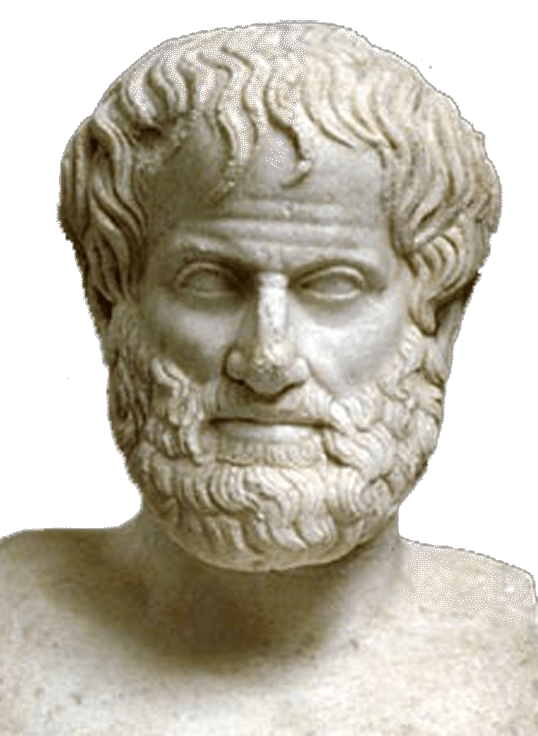
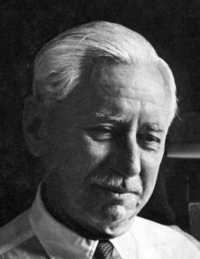
There is a great quote, often wrongly attributed to Aristotle, but is actually from Will Durant (who is very well worth reading) in his discussion of Aristotle (The Story of Philosophy, 1926):
Excellence is an art won by training and habituation: we do not act rightly because we have virtue or excellence, but we rather have these because we have acted rightly; “these virtues are formed in man by doing his actions”; we are what we repeatedly do. Excellence, then, is not an act but a habit.[1]
And the terse corollary: Practice doesn’t make perfect – perfect practice makes perfect.
But what will constitute perfect practice? Time on the mat is a scare resource and can be squandered. Shioda sensei commented about the state of Aikido:
Today’s aikido is so dimensionless. It’s hollow, empty on the inside. People try to reach the highest levels without even paying their dues. That’s why it seems so much like a dance these days. You have to master the very basics solidly, with your body, and then proceed to develop to the higher levels… Now we see nothing but copying or imitation without any grasp of the real thing….
…and he died in 1994. I fear that little has changed to correct that trend.
And so, with Durant’s reminder and Shioda sensei’s admonishment, as we focus on the kihon presentations, let us be mindful to practice rightly.
Practicing rightly does involve paying ones dues: a convenient short-hand for serious and vigorous training. There is a need to use one’s body to its fullest, both aerobically and muscularly to ensure that we can actually do what we train. That requires respectful testing of each other’s abilities in athletic competition: tease out our limits in order to transcend them.
These posts constitute my attempt to promote excellent training. Ultimately I cannot provide an excellent training environment that must be created by the dyadic agreement among each pair of students as they train with each other. A teacher can only provide context, inspiration and information. Excellence will only be achieved by doing, movement and repetition. And that requires that each of you jointly and severally compact with one another to train honestly.
The results of honest training are martial excellence.[2]
But ironically – to ensure honest training, the training concepts and structure must ultimately refer to a martial context. So how are we to identify a martial context? Master Keating suggests (with some hyperlink embellishments):
________________
The Curious Case of Identifying Things Most Martial:
Quien es mas macho, quien es mas martial? Ha Ha Ha!
Human movement is all ANY of it is. You may call it this or that, any style or name is good. After all most of us are a polyglot of crap from all over. Longgg gone are the days of anything “pure” or original. Replaced with the mad mix of many martial methods. At times these hybrid arts are really cool. But so often they turn out to be garbled train wrecks of confused, non-related pieces of combat. Lost in the swamp of too much martial. Gone are their primary values. Gone are guts of why and how. Dumbing down has happened everywhere.
Saying this I shall no doubt incur the wrath of many men who shall think that i am belittling their efforts to create a “super-system” like none before. (Right like no has ever thought of that before eh – LOL). Nothing could be farther from the truth though. Such men are always seeking some kind of conflict to bring attention to themselves (desperate). I applaud the work of many who improve and define the systems they teach, created and respect. But not all are equal. Know that and proceed with caution.
It is mainly theory you see, theory on how one should turn, act, snap to and respond. No matter what system you may currently use or be in love with it is all predicated upon the same motion base. IE: HUMAN MOTION. So now it becomes all about the thinking and contemplating parts of the method and art more so than it’s physical components. Let’s take an angle #1 downward diagonal strike. No matter empty hand or weapon, same action. Same path of travel. But then the secret philosophy aspects of the art kick in. (Are they practical for training or for fighting? Is about self-development? Is simply the crushing of an opponent)? Ok, let’s add some spice!
1.When making the action draw it back as you descend
2.When doing an angle one make it strike smartly with a snapping action
3.As you strike throw your body weight forwards into it, pushing the blow.
4.To make more power add torque, just roll the strike or blade upon impact
So it seems we can add things ad infinitum in order to “make it ours.” Each time we do it then adds one more layer of miserable martial mystery (confusion). These added MYSTERIES are then what make a style. The old sales pitch of “learn these three simple moves” and win any fight comes full circle. Since there really are no three simple moves to assure you of winning anything in real life it comes back to personal theory and systemized cult-like behavior. Why is my style better than yours? That is easy to answer, because it’s better. Boom, done! Such blanket belief systems and cults of non-reality always go hand in hand. Walk proud, head in a cloud, walk on, walk on lost warriors …
There is no human being, office worker, fighter, scholar or physician that does not employ human movement each hour, every day of their lives. We as martial men merely use our HUMAN MOTION for purposes of resolving conflicts (fighting). Other men employ the exact same motion base as we: e.g., tennis and badminton players always turn out to be great stick fighters. Same actions but different intent behind them changes the sport into martial art simply by how we think – our intent lends to those actions (all in the intent & theory).
Styles create division, ranks create division – sometimes this is good: I know who is a General, I know who is a Private. But in our normal world we are not in a martial situation. Thus such stuff has no real bearing on us other than to create a negative type of separation between people. This divides us both mentally and physically from not only others, but most of all from our selves. It dims the voice within. We are duped into allowing it to happen. Indoctrination is no vacation, but know your place, learn your station. It is all so pathetic, so sad to see conflict growing by leaps and bounds in the fighting arts. Yet, respect and understanding are left behind, old world values have no place here in the savagely stupid terrain of social media magicians and pundits of personal gain.
Razzle your dazzle motherfucker, LOL!
I shall leave thee with this: Make your best effort to grow up. Become a human being. Your dedication to your style etc is mere misguided loyalty. Open your heart first. Your mind will follow. It only works this way. Embrace yourself with humble appreciation of the creator’s handy work. This world, you yourself, your pet and all you see – all part of the great architect’s plan. Stop using “blinders,” see things for what they are. Avoid style, dodge the bullet of bias, be what you are. You are HUMAN. Not a dragon, cat or pony. Just accept what you do and what other species do. There is found balance. Now discover the miracles that are yours alone. See them across the spectrum of all things in this world. Recognize your original face. Martial arts are not about blindly following as some would have ye think. Nay friend, martial arts are the road to personal understanding and true freedom of the self in a world of slave-like obedience and mob rule. Fuck that shit straight up. Awaken! Once again I ask thee- yes, YOU AMIGO – AWAKEN and see clearly the world. Add a dash of maturity to your martial methods, grow up. It will be frowned upon by some children. Be the adult. Strong, patient, calm. Many of us are counting on you. YES YOU! You are the future. Many tomorrow’s await, ye can’t be late, do not hesitate. Go forth and enter the gate.
James Albert Keating
________________
I use Master Keating’s admonishment of “Don’t let others judge you by their shitty standards” as a reminder that their training failures should never limit your development and continued drive to excellence.
Keep training!
______________
[1] I enjoy making mercurial connections – so in thinking about moral excellence as a habituated practice, listen to the RadioLab podcast How to Be a Hero. Listen to RadioLab in general! The ancient Greeks labeled right behavior, moral excellence and practical achievement arête – excellence.
[2] On what a martial art dojo should be like – here is an interview with Takamura sensei.
______________
Update
The Art of Manliness has a good post on motivation over discipline as a means of developing excellence. One-sentence summary: remove barriers and distractions and do what you like to ensure constant motivation that leads to creating excellence!
______________
______________
Will Durant
 Protective Arts
10 thoughts on “EXCELLENCE”