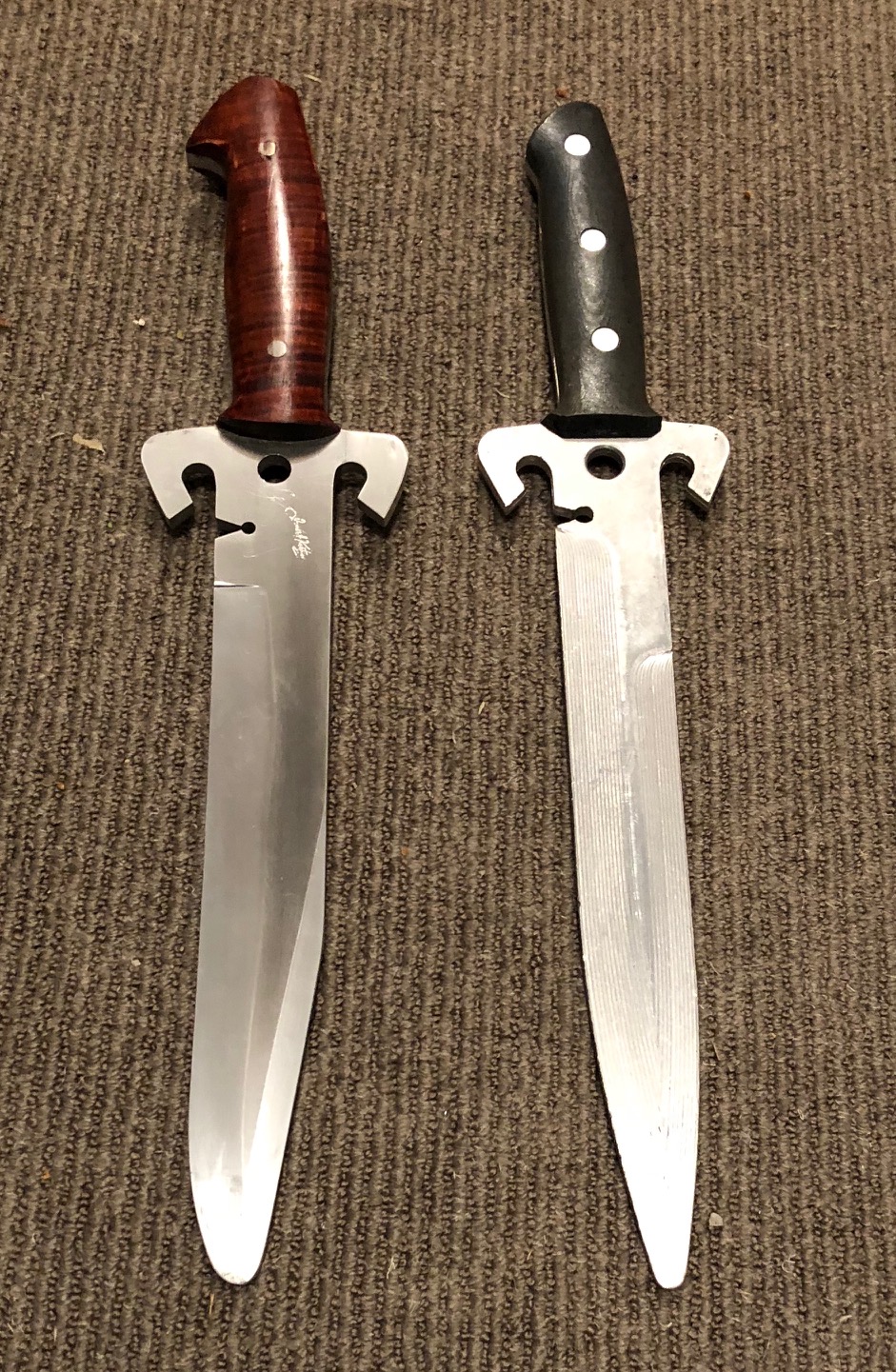
There is no substitute for a live edge when it comes to understanding how a weapon will act in the hand and to learn how the hand should employ the blade. A serious martial artist will need to own and use the weapons he purports to train and teach. (And must know the proper etiquette for handling them.) Selecting the appropriate equipment is important. Fortunately, the Portland, Oregon metro region is home to several great companies and artisan makers.
_______________
Knife Makers In Portland
________________
Portland benefits from numerous and quality knife makers all in close proximity. Gerber, CRKT, Benchmade, Kershaw, and Leatherman all headquarter in the metro area. Arguably, Coast Cutlery was the start in 1919. Twenty years later Joseph Gerber started Gerber Legendary Blades. Joseph Gerber was the founder of the Gerber advertising agency and founded Gerber Legendary Blades after giving away carving knives made by David Murphy as presents to clients at Christmas time. Gerber has served as the training ground for knife makers to later start their own companies. Al Mar, a designer at Gerber, left the company in 1979 to start his own company, Al Mar Knives. (Chris Clarke was married to Al Mar’s daughter.)
In 1974, former Gerber employee Pete Kershaw left to form his own company, Kershaw. And, in 1994 Columbia River Knife & Tool (CRKT) was formed by Paul Gillespi and Rod Bremer, both former employees of Kershaw. As companies grew, so did the number of local parts suppliers and machining companies, offering a reliable and skilled vendor base to the industry. As a result, several companies like Benchmade — founded in L.A. by Les de Asis — moved to Clackamas in 1989. There are also good independent knife artisans, like Murray Carter, who lives just outside Portland, and served as an apprentice to the Sakemoto bladesmith family in Japan. We also have established local resources for traditional Japanese sword fittings: Fred Lohman
Selecting a weapon is a very personal endeavor. Ultimately the blade in hand must feel right to you. Pricing usually correlates with quality and the type of steel is a large component of price. There are no end of opinions on weapon selection, but two very well-developed perspectives are Bill Bagwell‘s and Hank Reinhardt‘s.
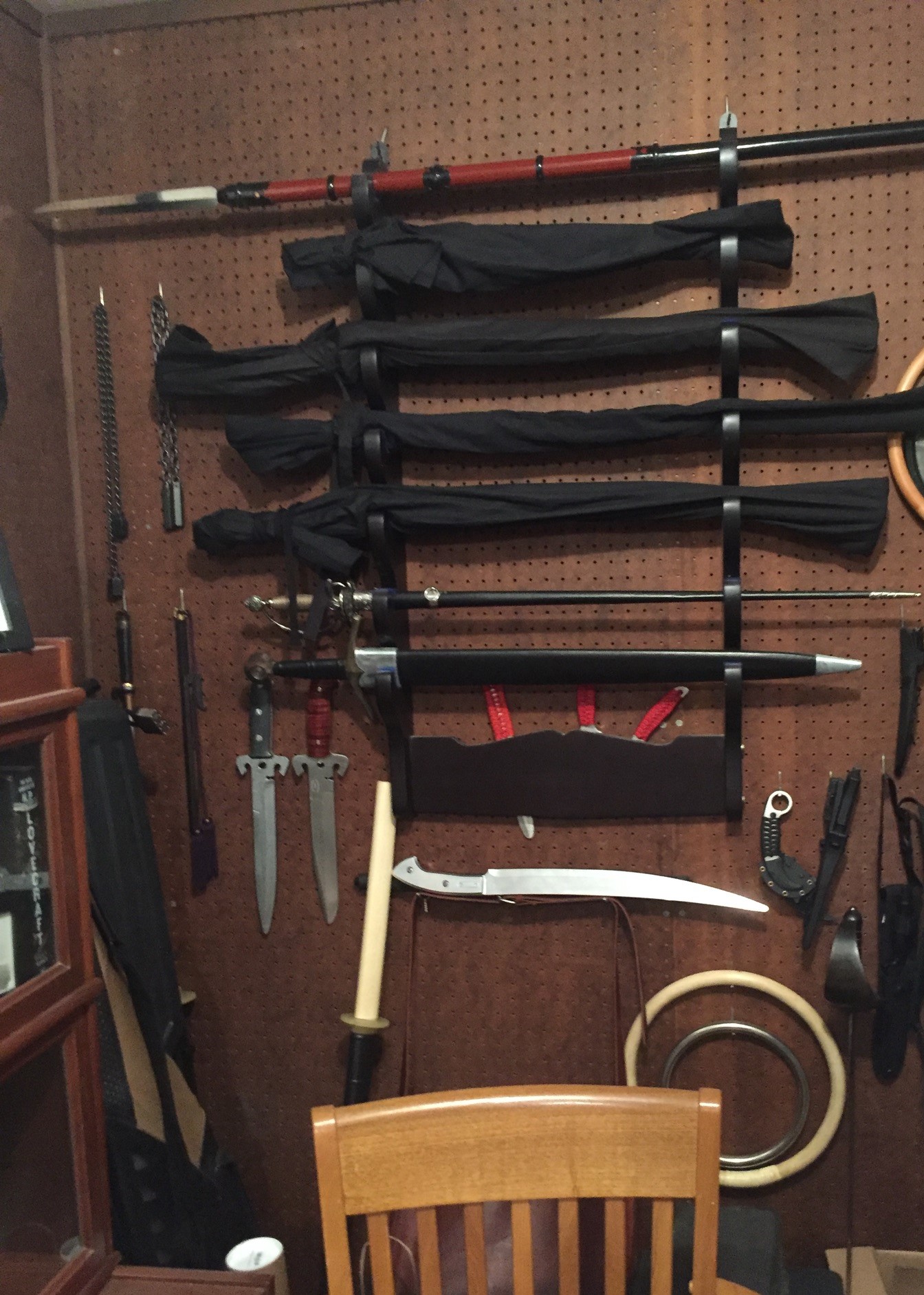
Armory
____________________________
JAPANESE
Katana
Paul Chen version – Practical Plus katana and wakizashi
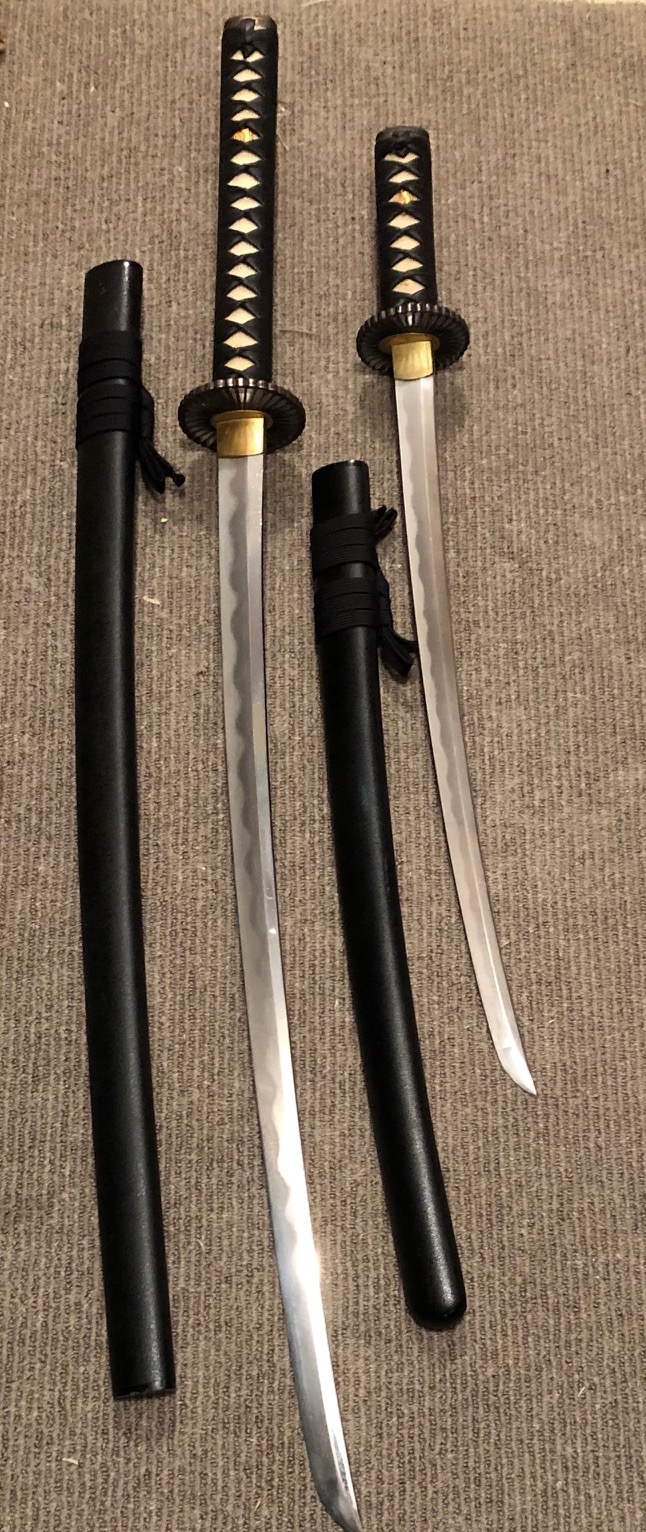
The Practical Plus Katana is forged and differentially hardened in the traditional claying method to produce a prominent hamon. The tsuka is wrapped in same (rayskin) and leather. The tang is long and double pegged. The fittings are of Japanese Dogwood with a dragon menuke. The tsuba is an iron sunburst.
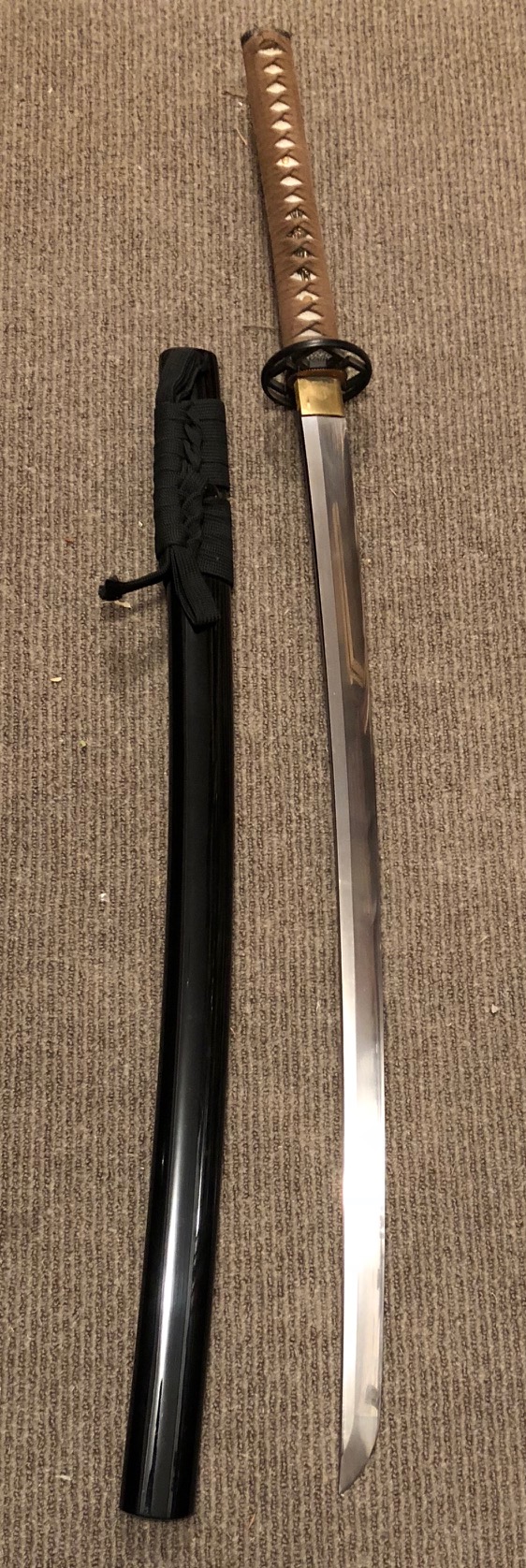
I failed to record the details on this purchase – the brown cloth wrapping on the handle and heavy blade construction should make it easy to identify.
Jutte
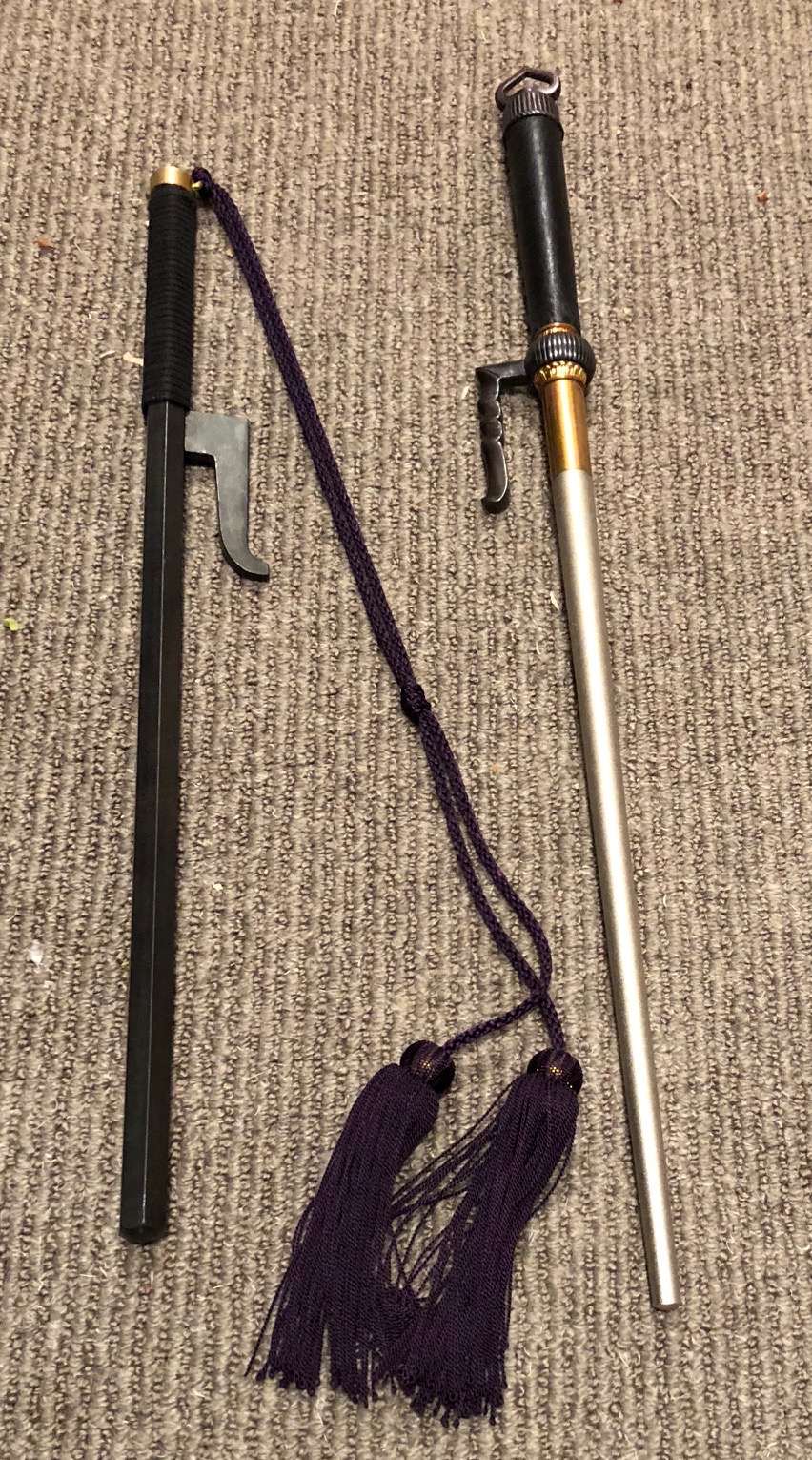
The jutte on the left is from Meirin Sangyo is made from solid iron and wrapped with ito on the handle. This jutte comes straight from Japan via Bugei. The jutte on the right is by Paul Chen, but is no longer in my collection.
Manriki gusari
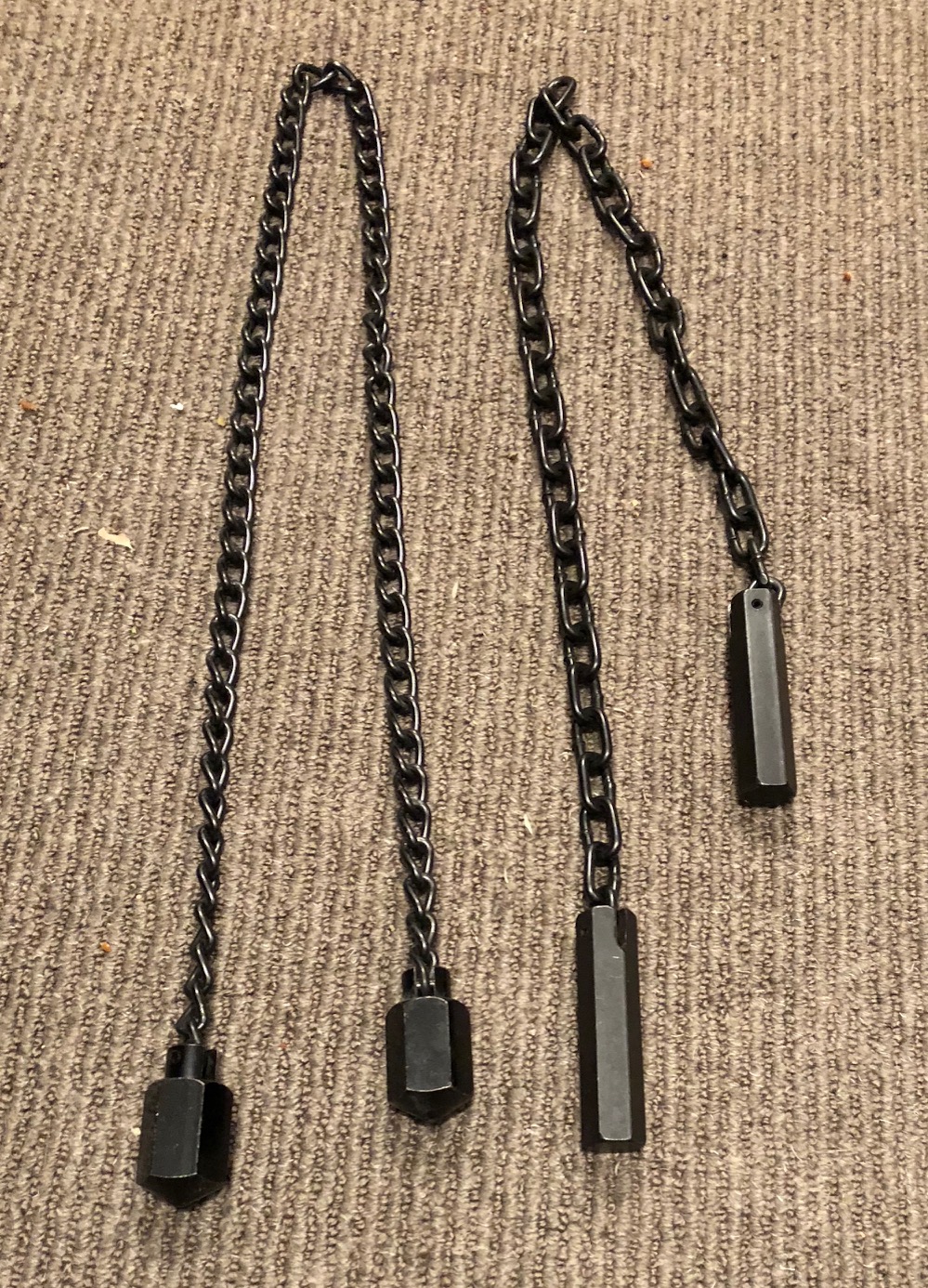
The manriki gusari is a chain weighted at both ends developed as a self-defense weapon but with considerable offensive capabilities. It is small, easily concealed in the palm of the hand. It is associated with Masaki Ryu. Masaki Toshimitsu Dannoshin was a guard at a Buddist temple in Edo during the 1600s who created the manriki-gusari so he could defend the gate without spilling blood and founded the school that teaches its use. These examples are both relatively short in length. Historically a manriki could range from 3 to 12 feet in length. The chain is called the kusari and the weights are fundo. Links >here<
I no longer own the version on the left which is readily available on line – the second is more accurate and better constructed.
CHINESE
Qi Jian

Perhaps my favorite, this Hanwei sword is no longer in production. The Qi Sword’s name originates with the Qi Nation, one of the many warring states that eventually formed modern China. Legend has it that Feng-Xuan, one of the Qi people, used the ringing sound of his one piece sword to seal his relationship with Lord Mengchang. The whole sword from pommel to tip, is forged from a single billet of steel. It is a functional sword of unparalleled strength and balance. The sword emits a clear bell-like tone when lightly struck.
EUROPEAN
Ceremonial Mason Sword
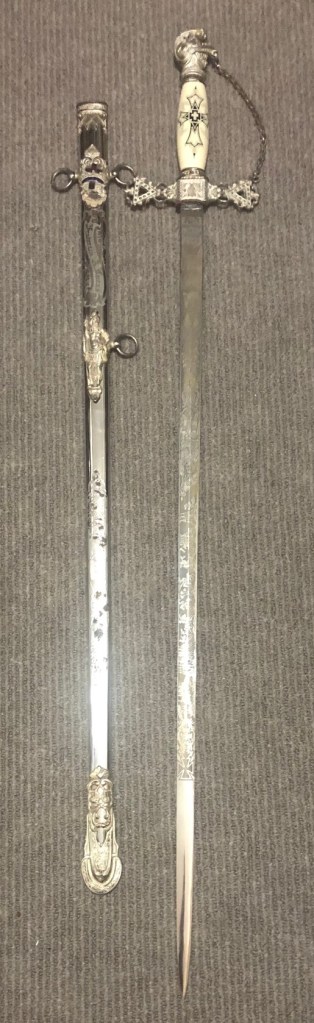
Not a functional sword but a family heirloom. This was Fred Lucas’ Mason sword after he had mustered out of the Army having served in the Civil War.
Long Sword
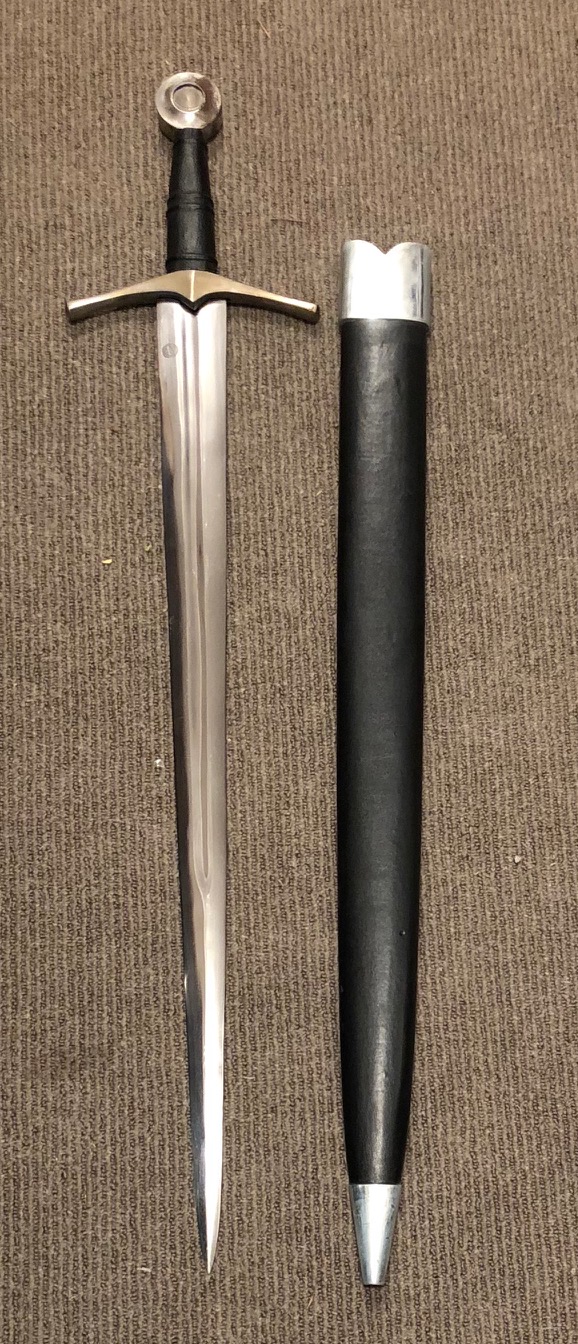
Medieval Knight Sword from 1275-1340 AD, Oakeshott Type XIV blade, based on the original in the Royal Armouries, Leeds and is the quintessential sword of the medieval period. This one from Darksword Armory. Also has the accompanying dagger (not shown).
Saber
These examples below are originals purchased from I Sell Swords.
1882
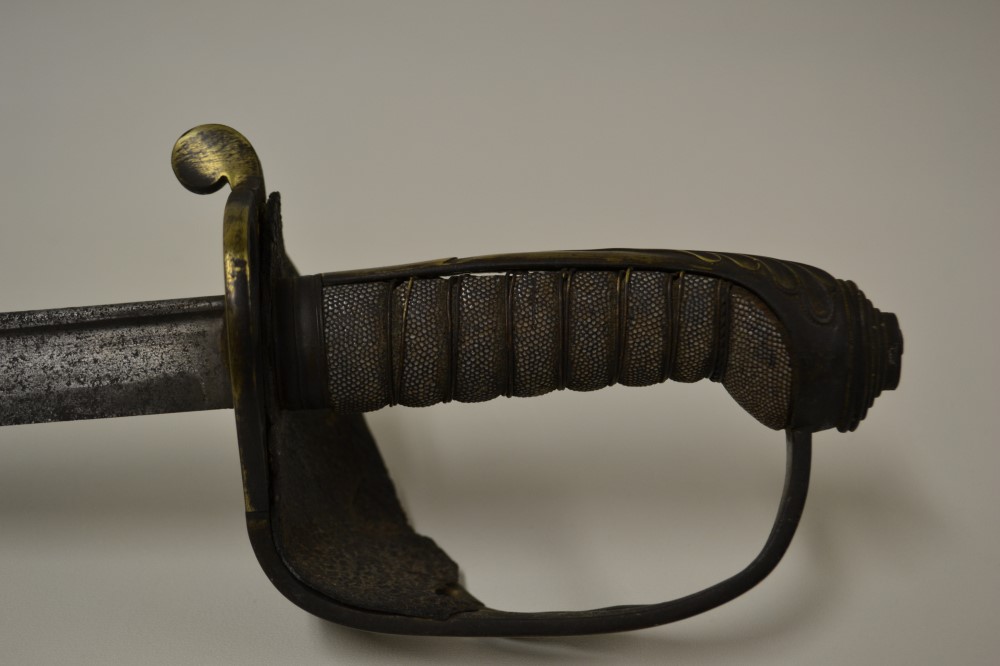
Picket weight 1822 infantry officer blade. It bears the cipher of Victoria, making it a late example of a pipe back blade and a few faint etchings remain visible on the blade which is moderately pitted; mostly at the point.
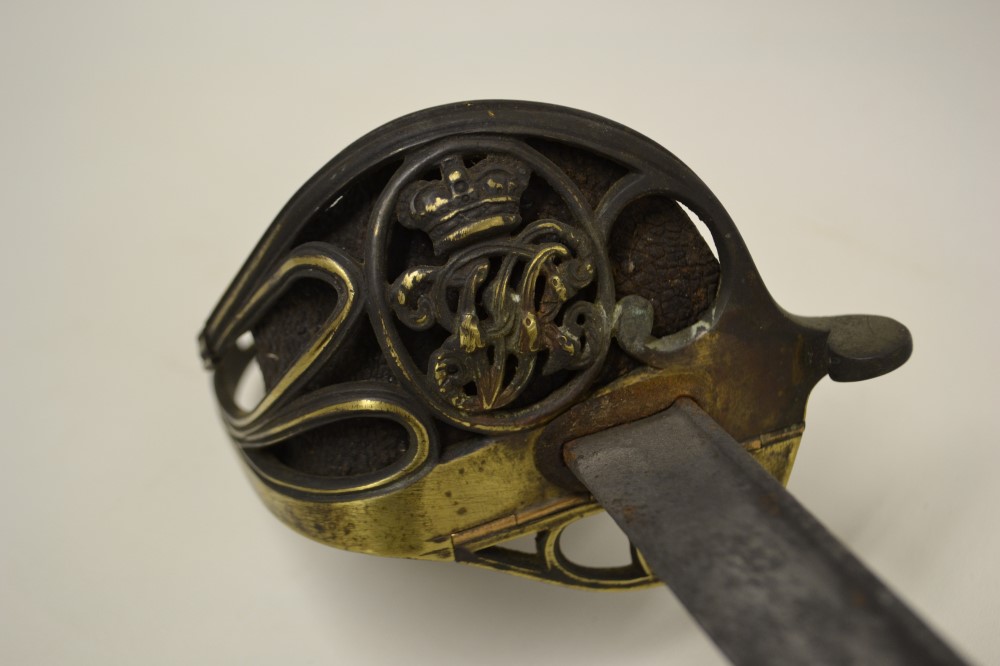
The grip is missing some of its wire and the guard has a sectioned branch. It is equipped with a leather liner inside the guard, which rarely survived.
MODERN KNIVES
Folders
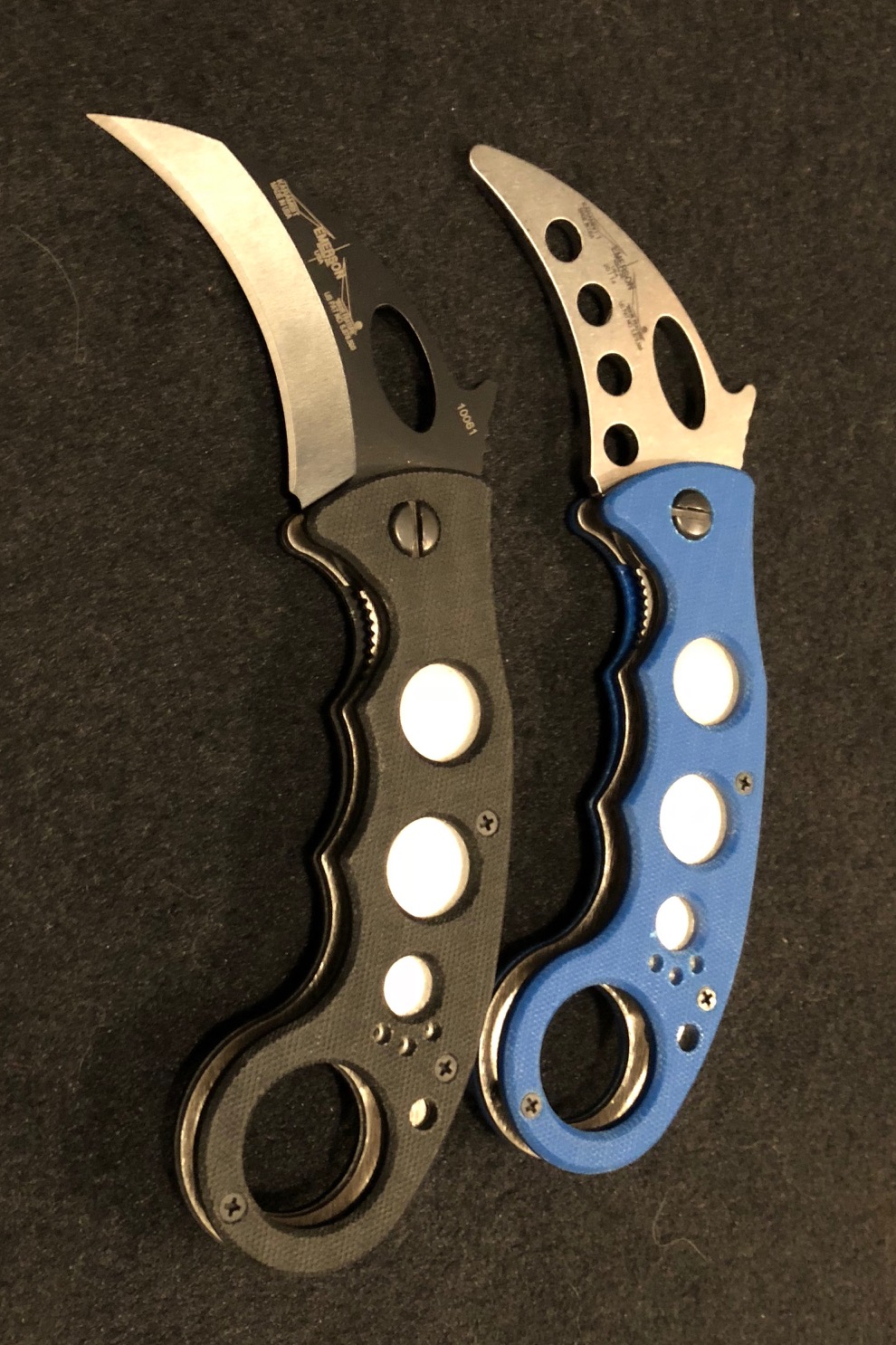
Ernest Emerson’s karambit and trainer. This model purchased before the reinforced tip model that is currently available.
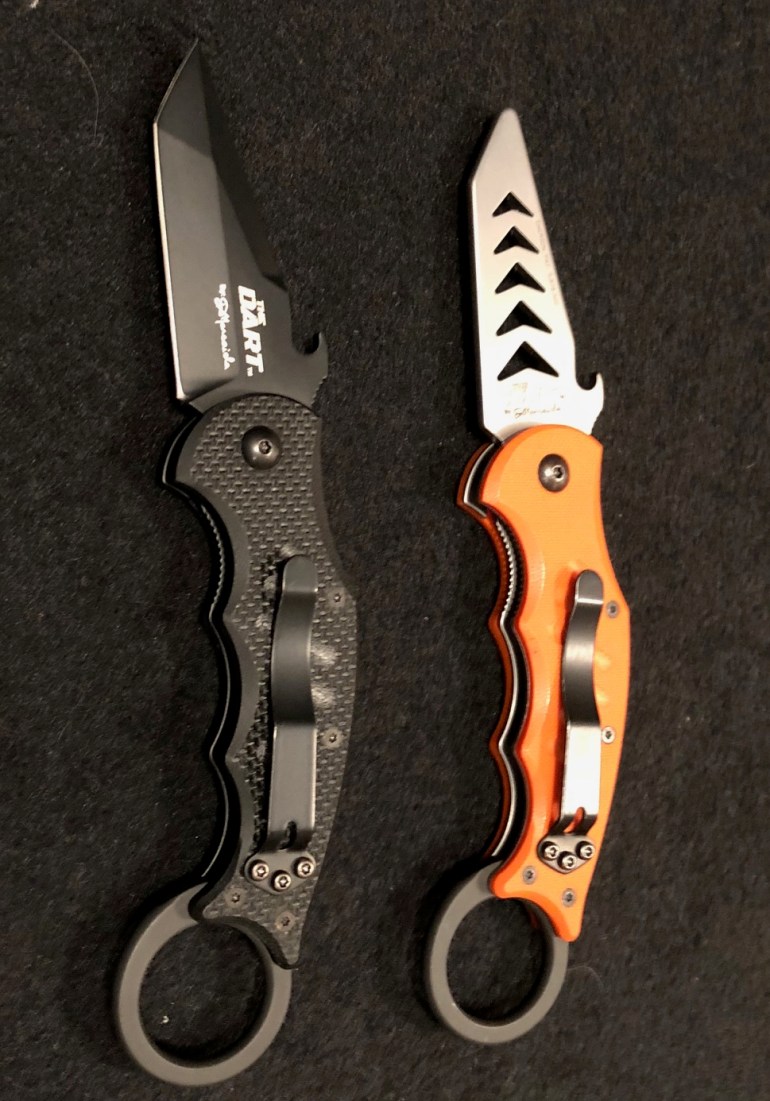
Doug Marcaida and Lad Mendiola developed the DART which is produced by Fox Knives in Italy. These are available >here< and are much lighter in weight than the Emerson blades.
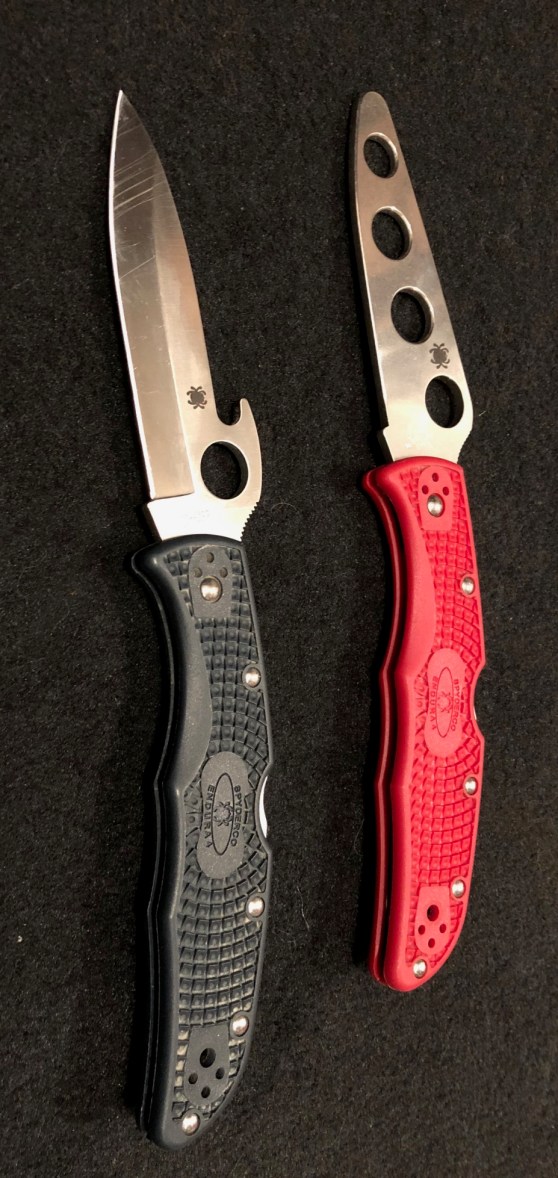
The Spyderco Endura is a classic every day carry option. The trainer is readily available so you can train with what you carry! The live blade has the Emerson wave opener for fast deployment straight from the pocket. The Delica model (not shown) is a slightly smaller version of the Endura.
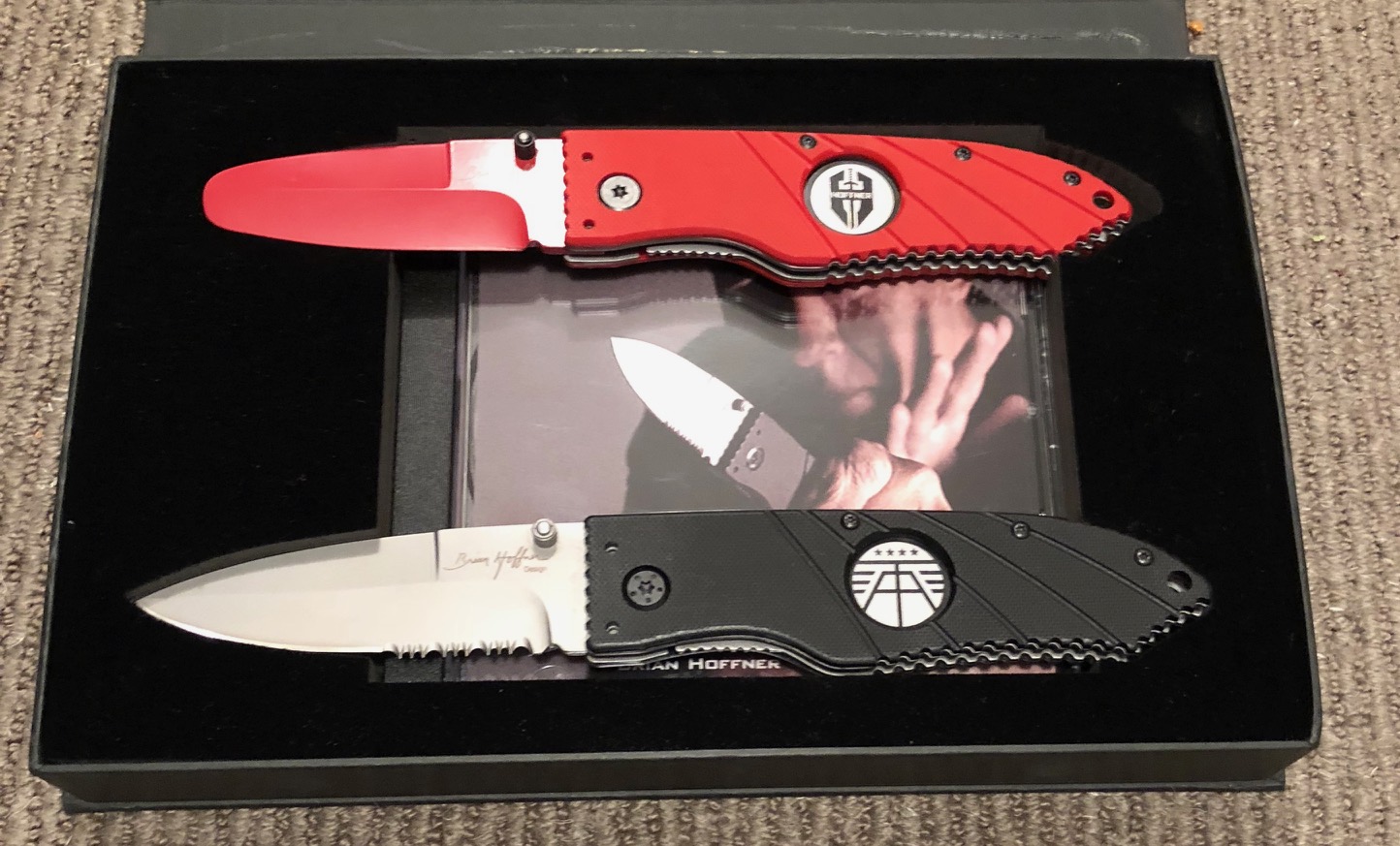
Brian Hoffner developed a carry-legal blade with a unique handle designed to facilitate a an extended grip range. A clever way to gain reach advantage. The carry method also makes a point down, reverse grip deployment fast and easy for quick shielding.
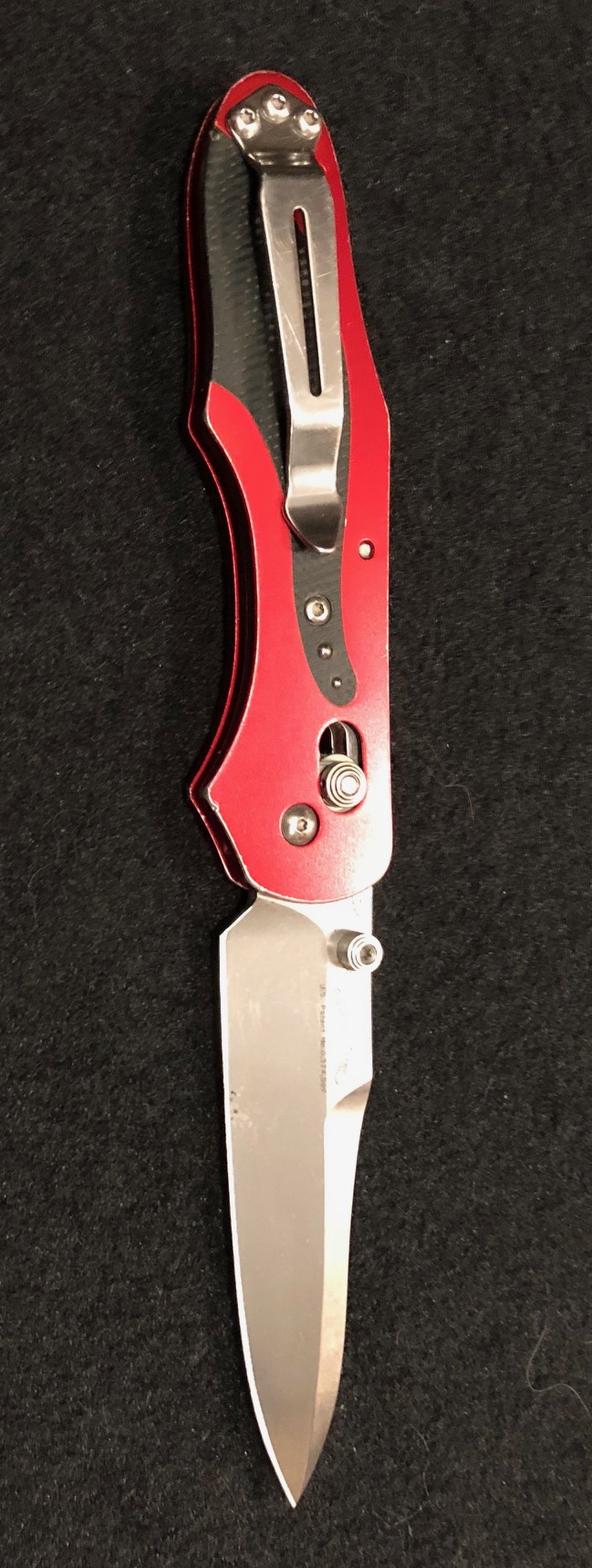
Benchmade knives. Great knives period. The axis lock affords a tight lockup and fast blade deployment. This was my EDC for years. The red aluminum scales makes it light, strong, and less threatening. But cost to replace this Warren Osborne designed knife made me nervous so I replaced it with a Kershaw.
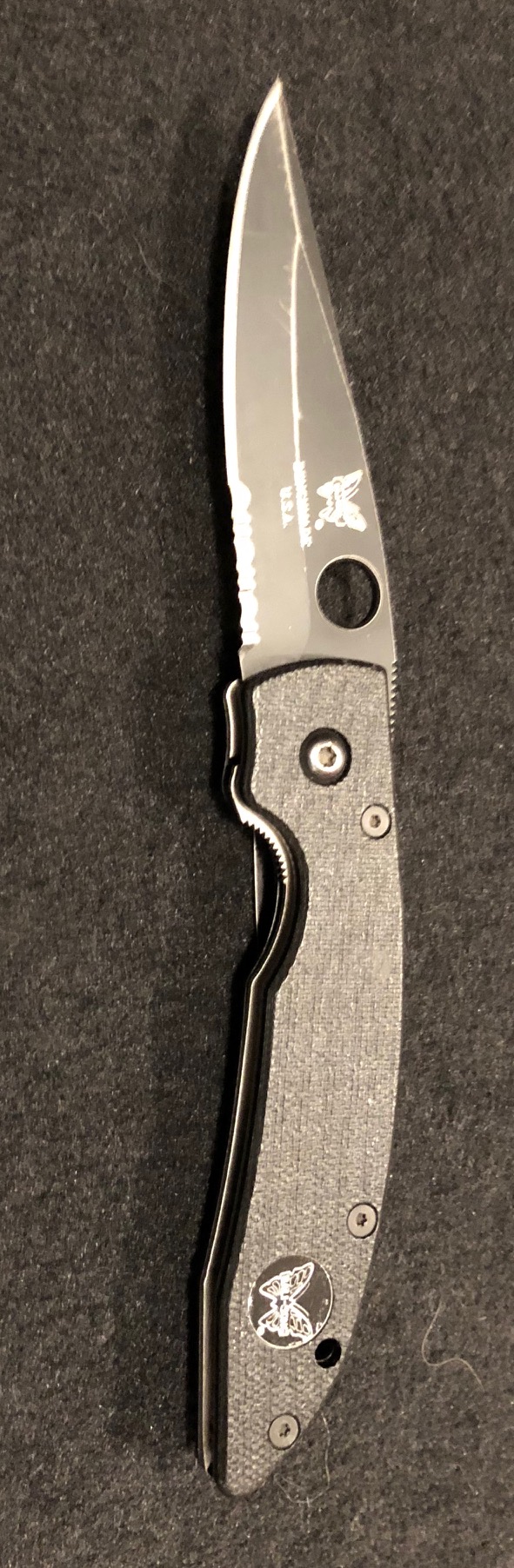
My first Benchmade and it is well-worn from years of every day carry. An older Osborne variant with liner-lock and a thumb-hole on the blade for deployment.
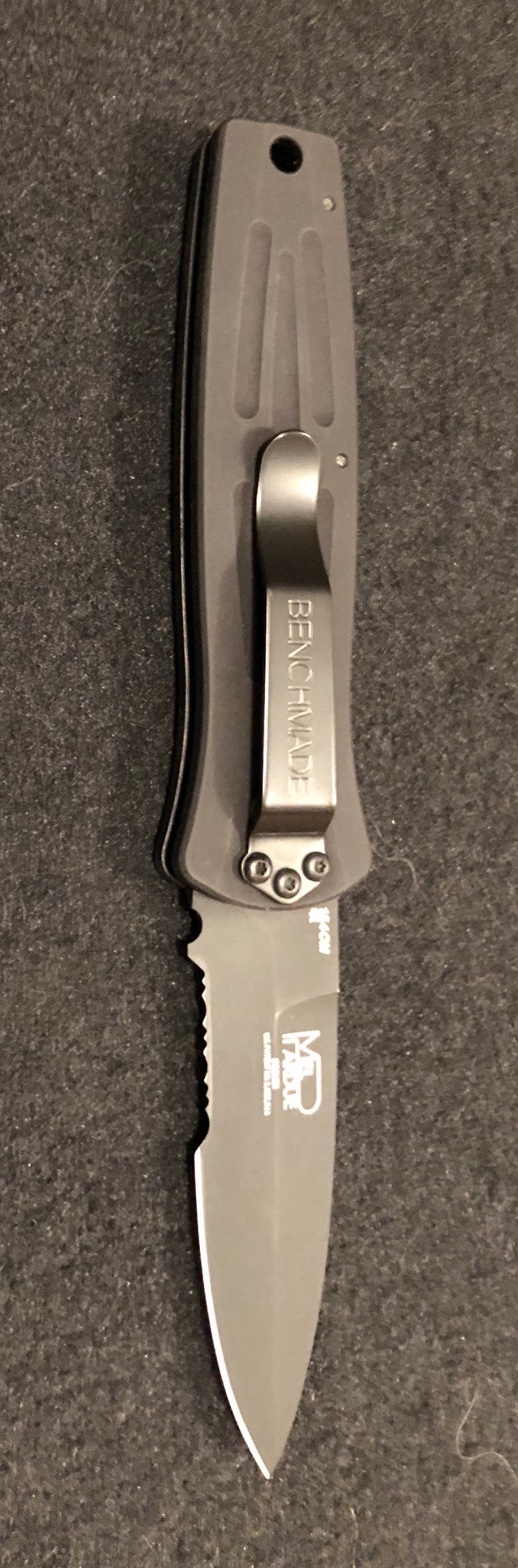
An assisted opening folder. Another Benchmade but one I have never used for EDC. A Mel Pardue design.
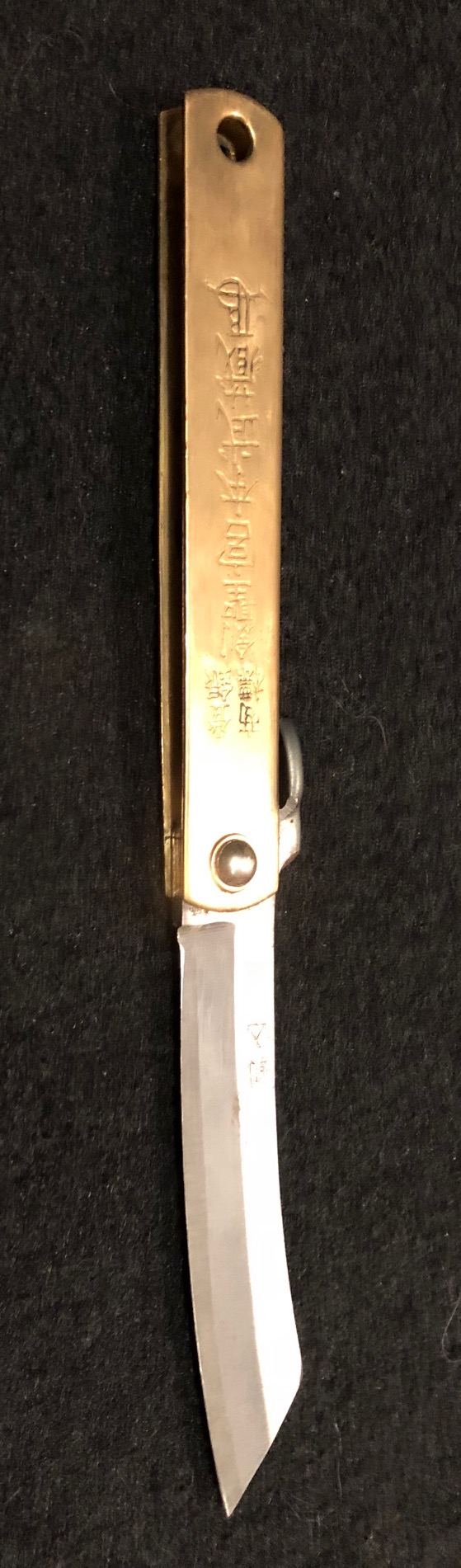
A non-locking razor design, this was a gift. Musashi is engraved on the scales.
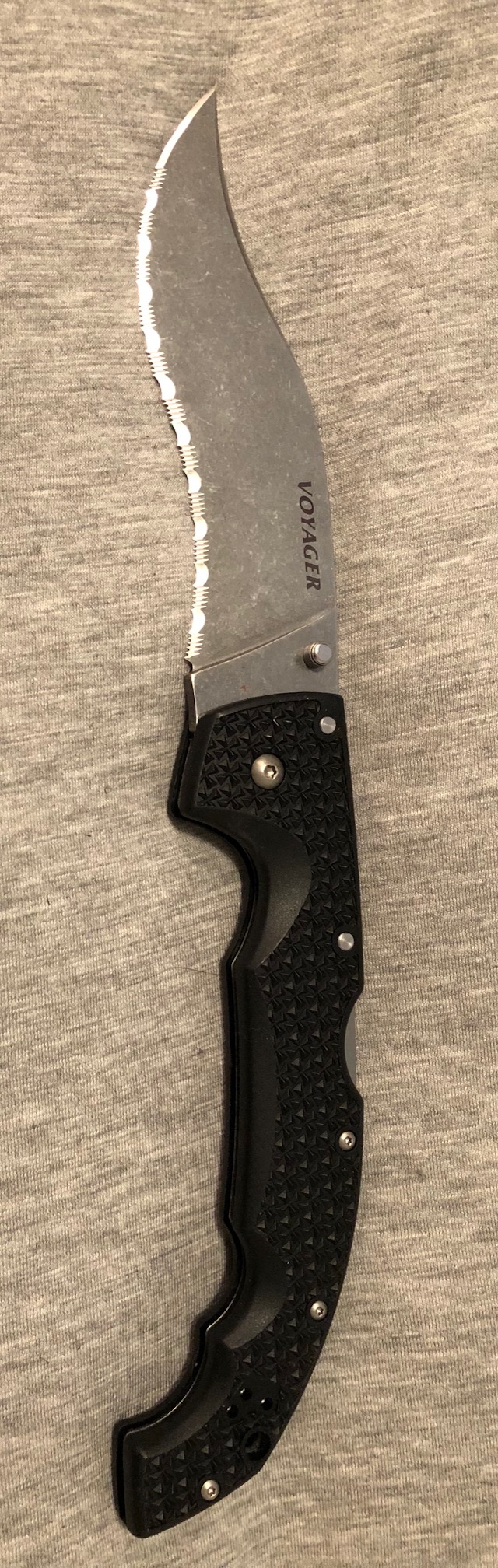
Cold Steel makes a great knife for the money. This is a larger Vaquero folder – one useful in cold climates when cutting through multiple layers is likely. While I am not overly fond of serrated edges, the cutting power of this knife is undeniable!
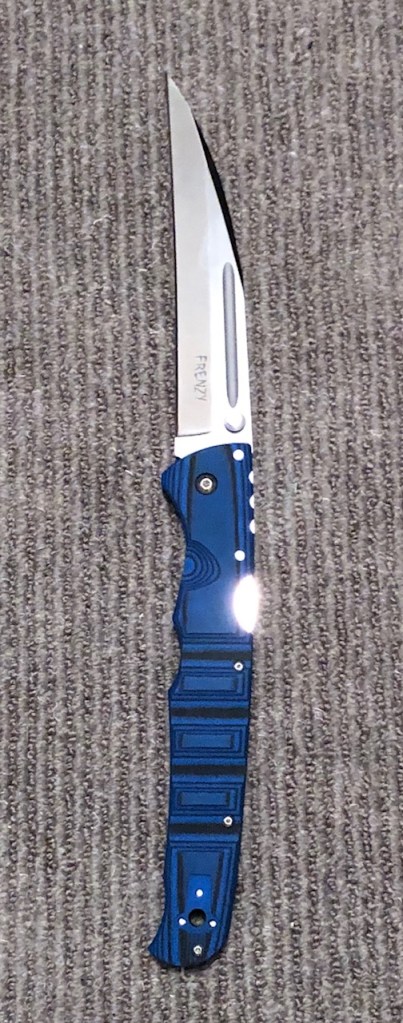
The Frenzy II from Cold Steel is designed by Andrew Demko and is inspired by the kabutowari. The spine is thick with a slender blade and needle-point. The steel is S35VN with a satin polish. The blade is 5.5″ with a 6.75″ handle and 12.25″ overall length.
Fixed Blades
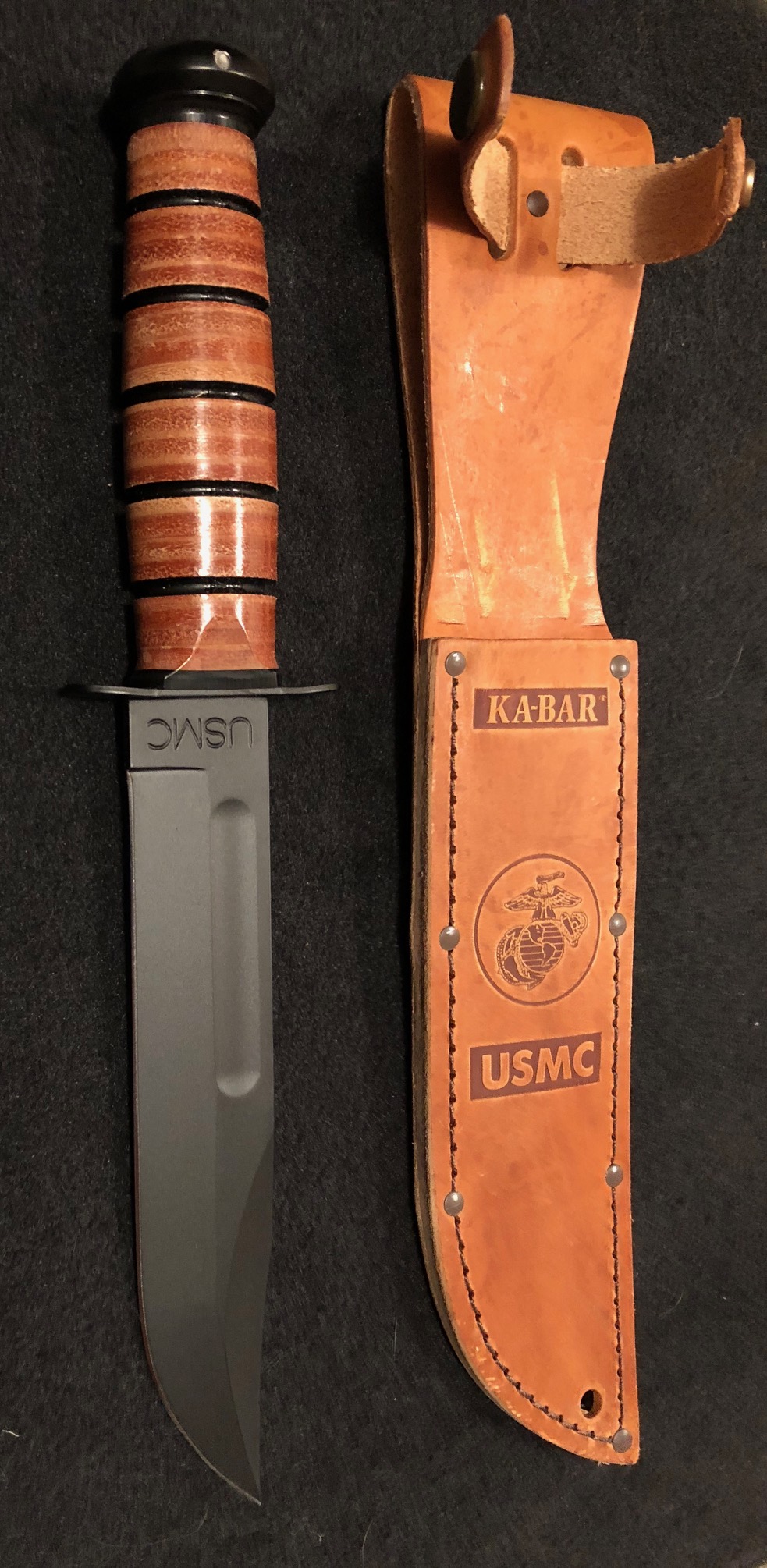
One of the most recognized knife designs, the Ka Bar marine fighting knife is featured in Cold Steel by John Steyers.
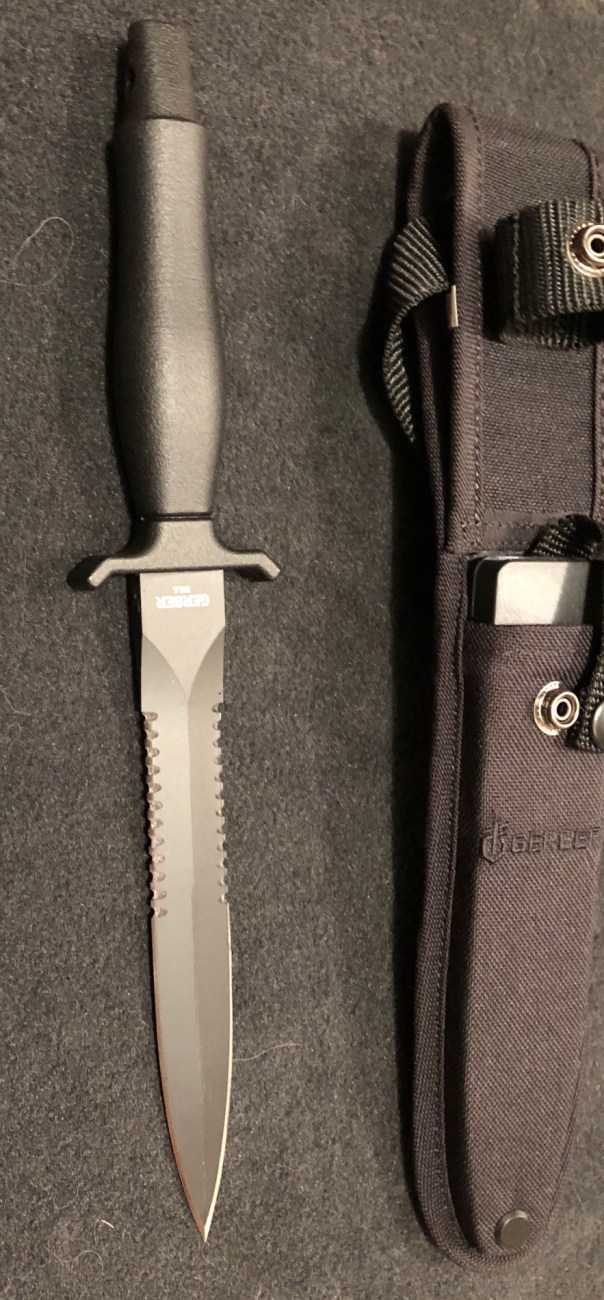
Gerber’s Mark II was introduced in 1966 designed for the Vietnam conflict with clear influences taken from Fairbairn and Applegate. One of the best-selling knives of all time, the Mark II has a the double serrated blade for maximum piercing capabilities and an exaggerated bolster for confident grip, with a 6.5” 420HC steel blade.
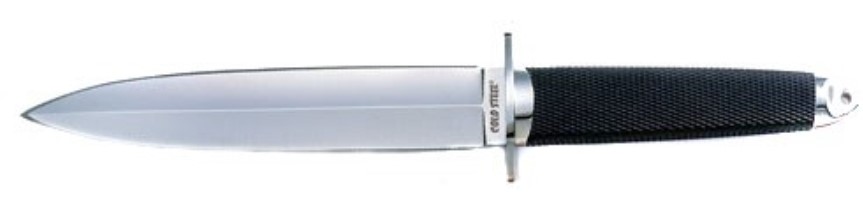
Cold Steel’s Tai Pan is an amazingly well balanced dagger

V42 Stiletto based on the Fairbairn-Sykes commando knife.
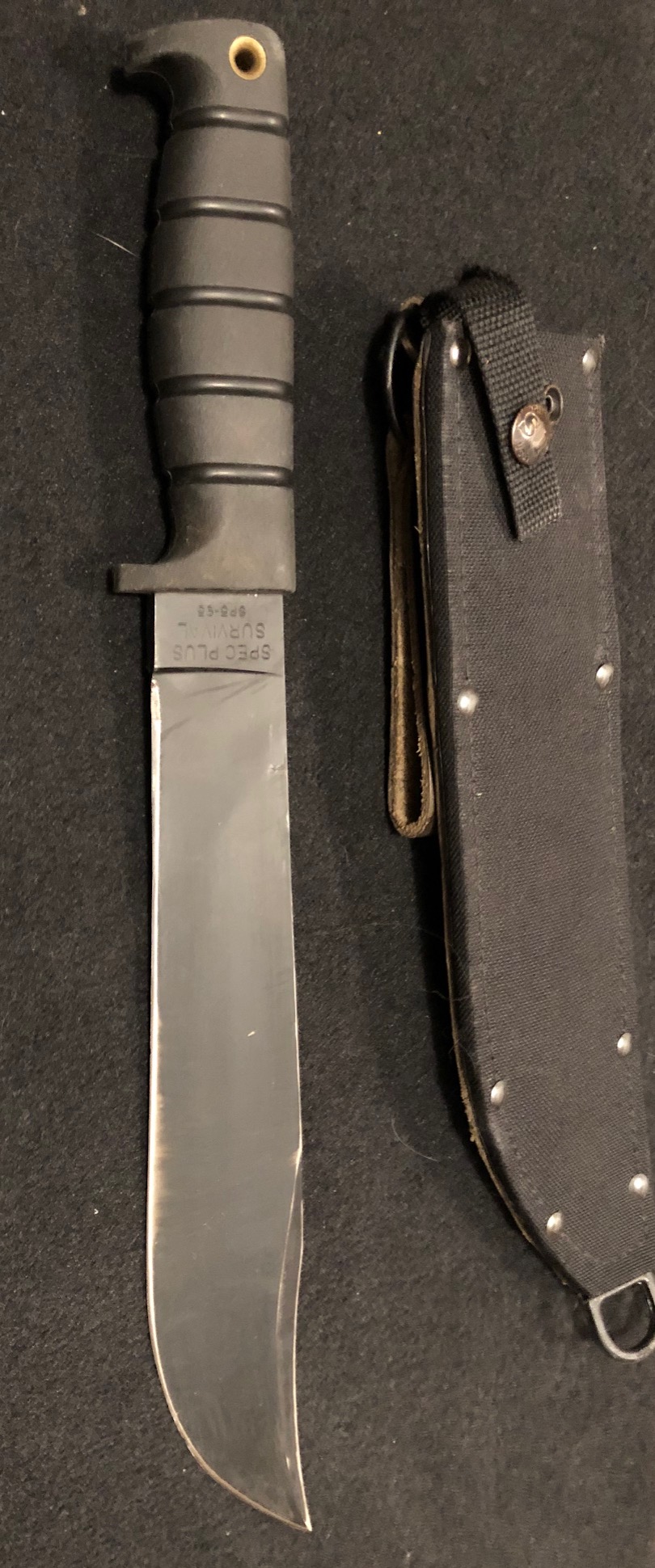
Ontario Knives survivalist Bowie design. A well-constructed and versatile knife. This is my go-to camp knife.
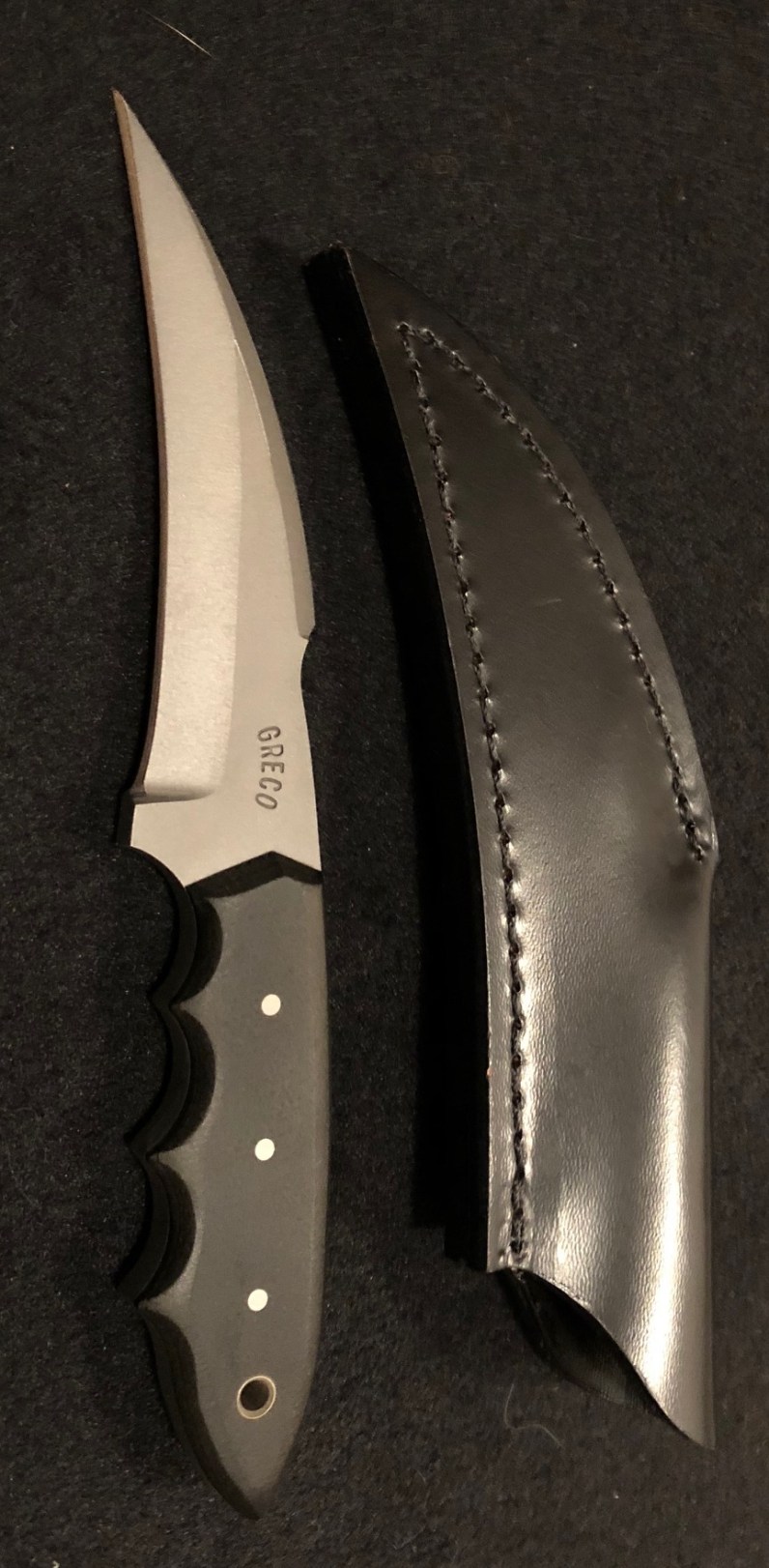
I picked up this John Greco Tactical Fixed Blade at one of James Keating’s Riddle of Steel format seminars. A heavy leather sheath fits the knife tightly and the thickness of the blade is surprising, making for a fearsome weapon.
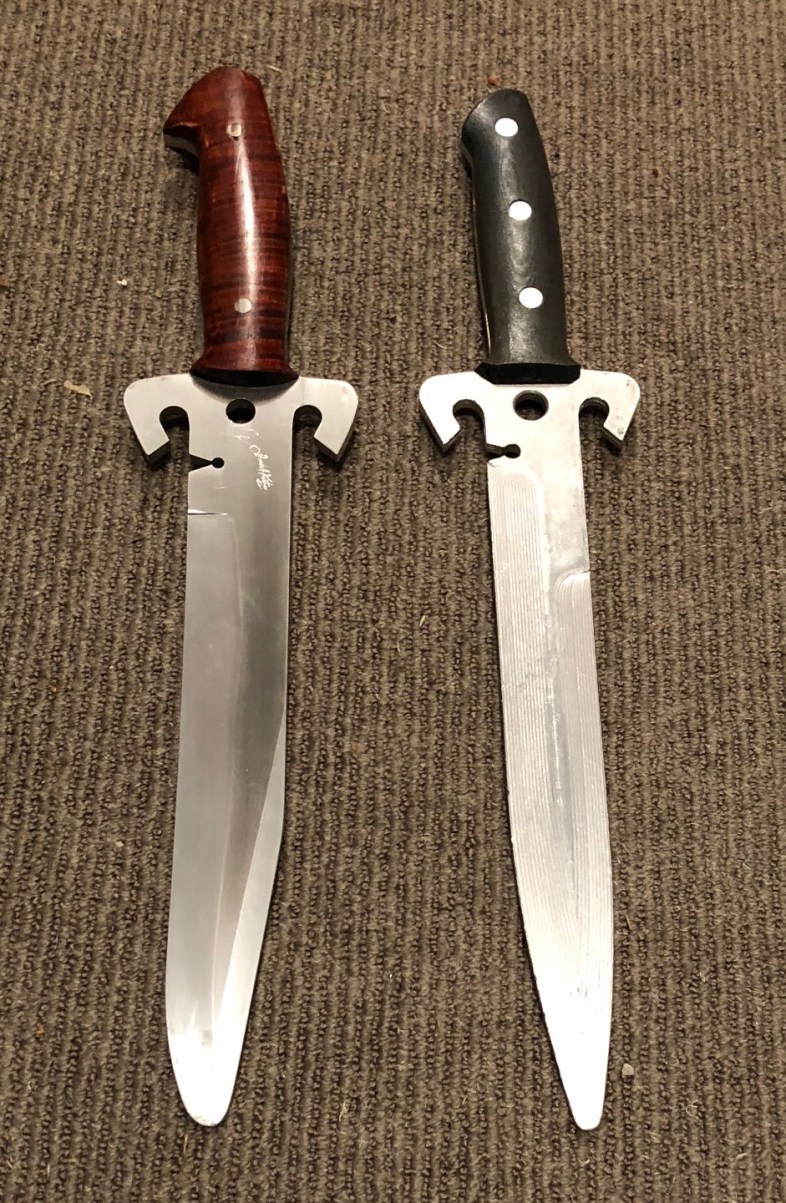
James Keating’s Crossada design: trainers in both the Bowie and the dagger variations.
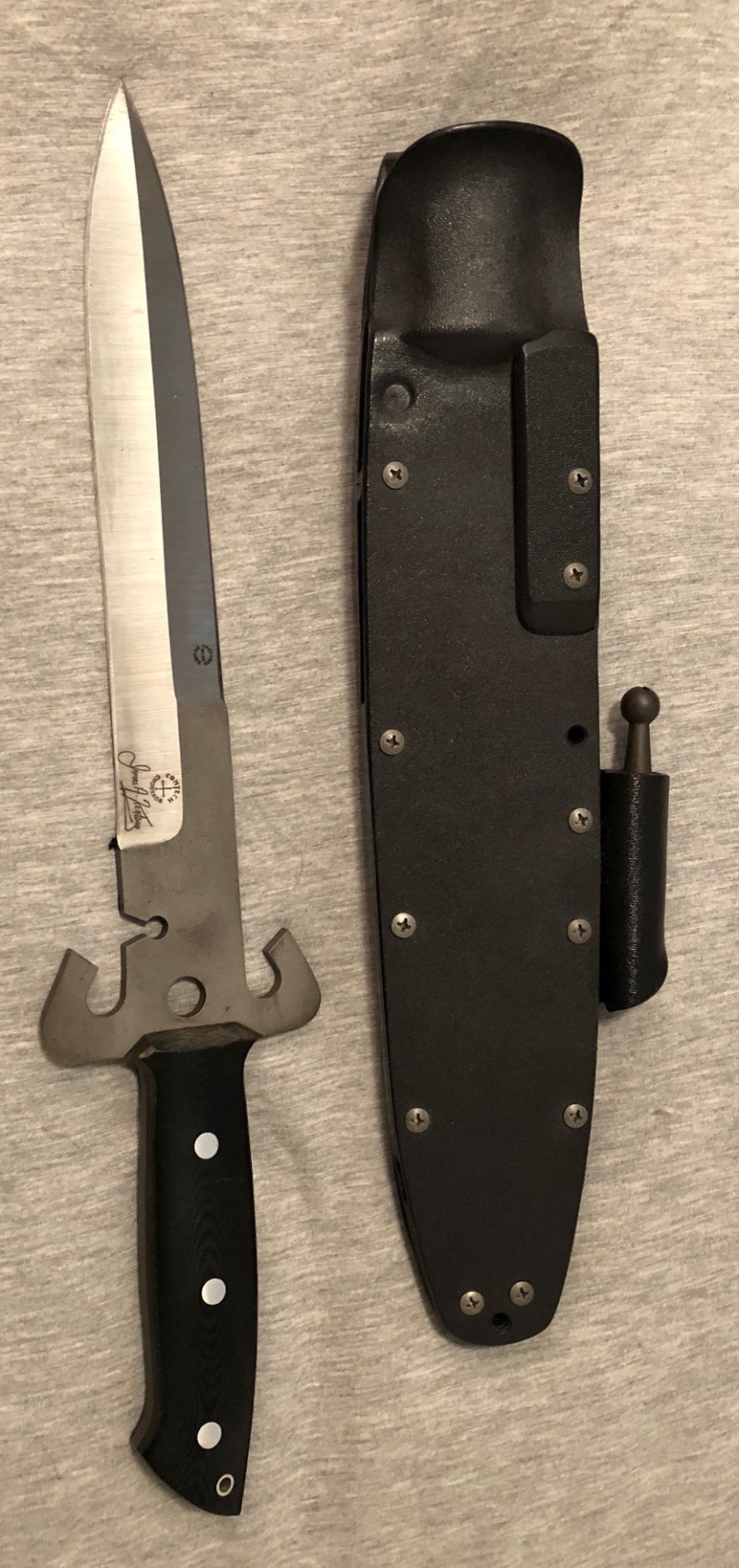
James Keating’s Crossada dagger design by Bob Dozier complete with kydex sheath and quillions.
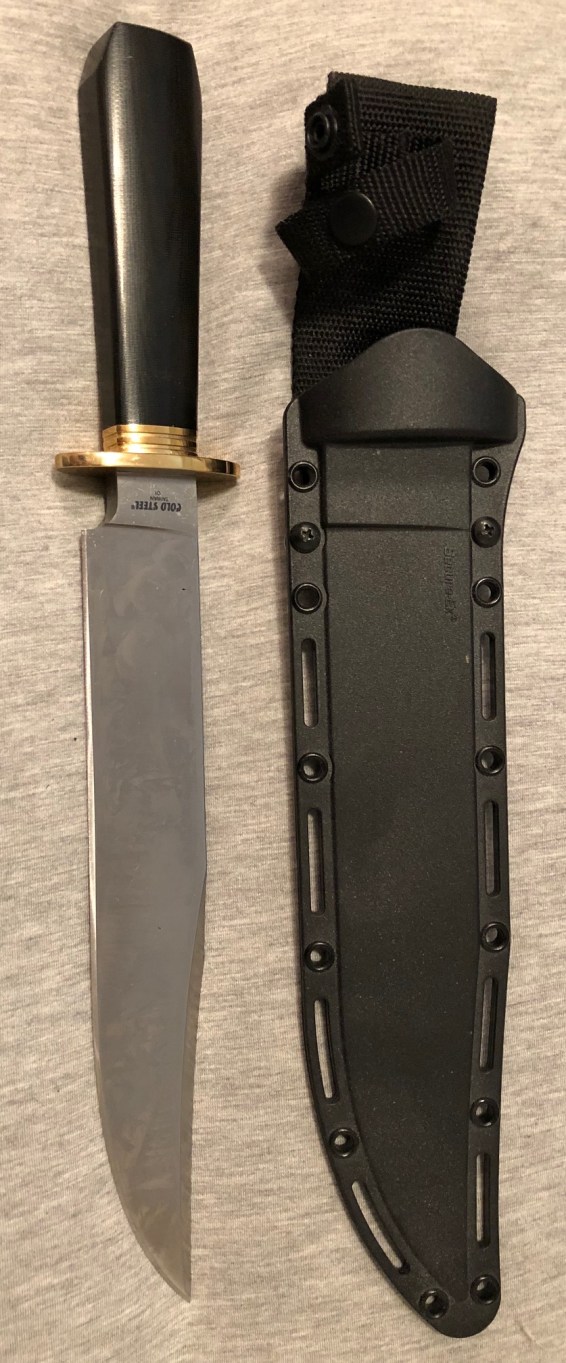
Cold Steel Laredo Bowie. The weight of this blade and its durability are commanding. A good Bowie, but not nearly as quick in the hand as the Bagwell series from Ontario. But the Ontario series is discontinued and are difficult (expensive) to find.
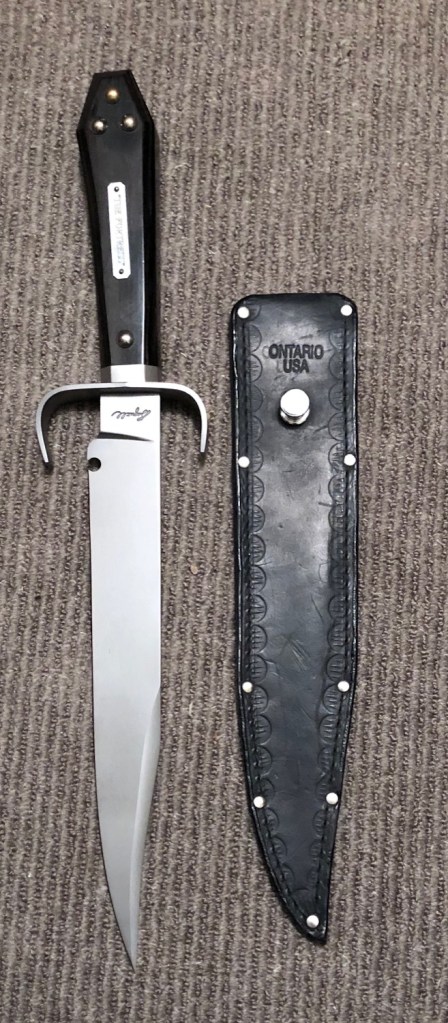
Ontario Bagwell Fortress. The blade is just over 10″ with a coffin handle providing a 16.25″ overall length. The steel is QS13 proprietary which lends to its exquisite balance and speed. A true dueling Bowie.
___________________________
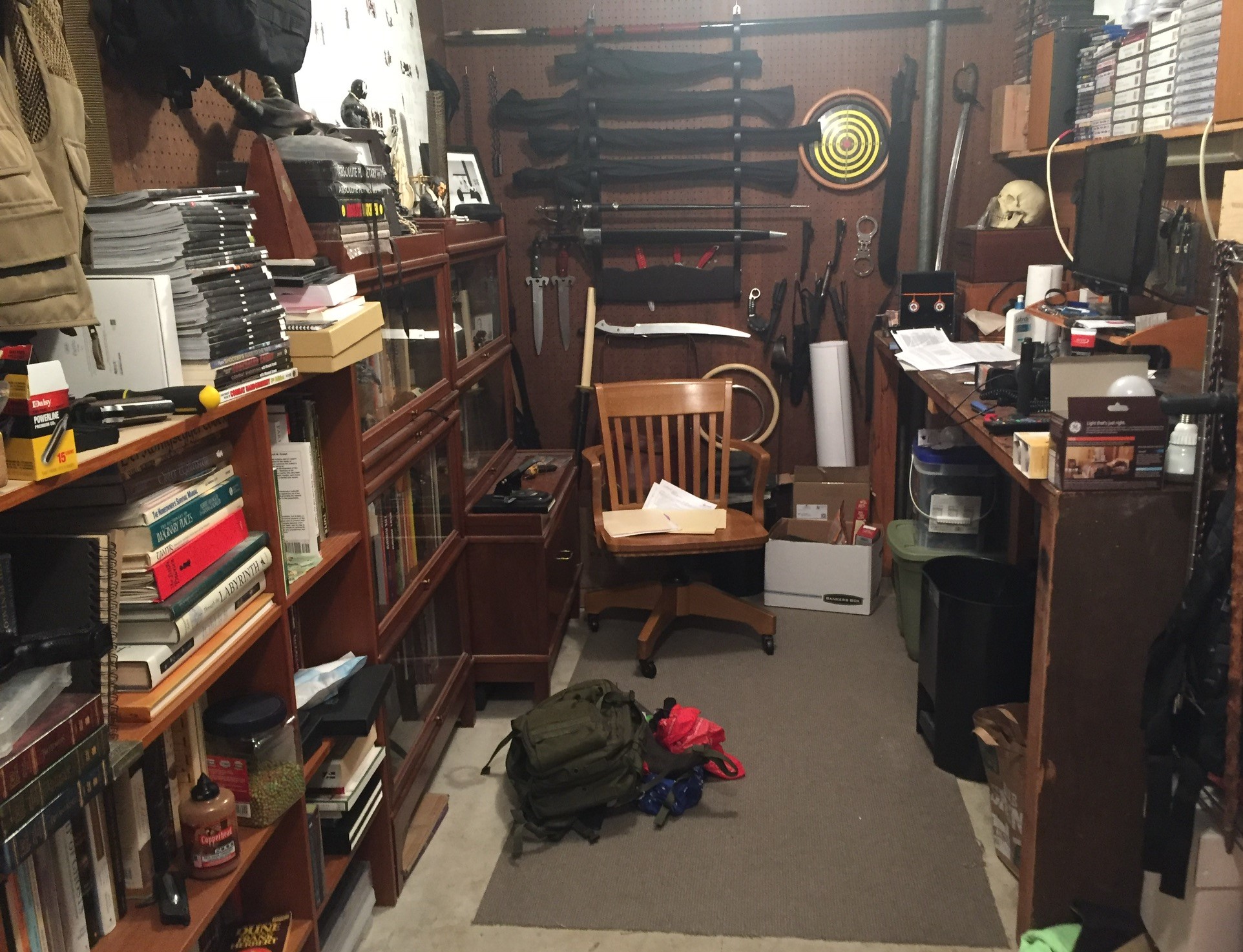
An armory and library are essential to the cultivation of a developed spirit
_____________
[1] Rockwell rating for steel hardness HRC – a quick overview >here<
 Protective Arts