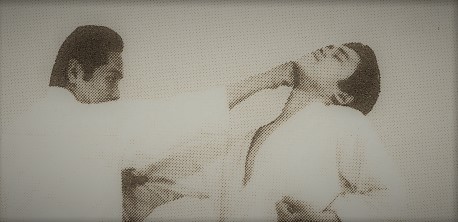
A punch to the face is what Mulligan sensei called a high affect encounter – jodan tsuki scares most people. Jodan and jodan tsuki are both covered in earlier posts.
This morning presented the classic Karate punch, meaning the fist is twisted at the final contact and the elbow is turned point out, forearm parallel to the ground. Martial artists will debate the specific variations and reasons for executing a punch with its myriad of variations – learn those details, the details are critically important. Nevertheless the basic distinction today was the fist thumb down, fist parallel vs. the thumb up, fist perpendicular – shorthand labels: Karate vs Aikido.
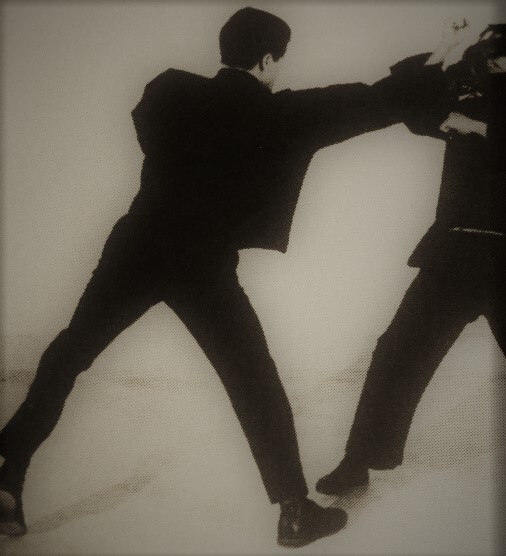
Solo exercise – jodan tsuki in place, then advancing across the mat, alternating L/R for bilateral development.
[Additional solo training follows a jodan, chudan, gedan pattern – the odd number count means you will be alternating L/R at each of the striking levels]
Partnered orientation – one partner strikes, the other slips advancing irimi sufficiently to avoid the strike but not deeply. The purpose is to inure each other to over-reacting to the punch. Train to condition a controlled action and overcome the flinch or startle response. Once the players can calmly assess an incoming strike and avoid being hit, then introduce indexing with both the front and back hand tap.
Intercepting hand – train to tap the incoming strike with either the front or back hand so as to assist the slip and simultaneously develop sensitivity and indexing. Sensitivity because the tap needs have sufficient power to prevent the strike from continuing to the target, but cannot be too strong that it changes the angle or adds energy to the strike. Indexing because by using both the front and back hand, the players are familiarizing themselves with all combinations: L/L, L/R. R/L, and R/R. (FMA gunting.)
Ikkyo – because the Karate punch puts the elbow point out, the flow to ikkyo will feel slightly different. Emulate the grace and smooth entry demonstrated by Tissier sensei >here< to develop the connection Aikido aspires to focus on. From the punch, enter with a traditional back hand rising intercept while the front hand thrusts past to uke’s back. Nage should be able to touch uke’s striking arm’s scapula and then with a wiping control take the triceps to control. The wiping action of the palm to the triceps while the back hand remains connected to the initial striking hand is makiotoshi. The action is on the outside line – meaning nage is entirely on the outside of uke’s striking arm. This morning I demonstrated the technique with a hip rotation (aka ura) but could just as readily presented a frontal entry (aka omote) but the distinction on how the lower body moves relative to uke does not change the dynamics of the upper body. The upper body executes the ‘technique’ whereas the lower body positions – hence there is no ura.
Irimi nage – by using the front hand to intercept the back hand rises to cut uke down irimi nage. Ikkyo is a back hand intercept. The rising intercept is akin to suriage or brushing action with the sword, but because both hands are free, nage’s front hand finds and taps uke’s fist which clears the path for nage’s back hand which will strike uke. This is a two-beat direct irimi-nage. From here we can explore the subtle variations. Blend with the hips sufficiently to lead uke forward to add connection in the hara to make the counter less ballistic (a simple response). Nage must drop the weight to break plane and drop uke’s center of balance. Nage’s back hand can now roll to present thumb (mune) down which now creates a one-beat encounter with the hands performing two actions in one beat.
Bunkai (1) – move to a three-beat: nage uses a front hand intercept and uses a back-knuckle (uraken) strike to the back of uke’s striking fist, then uses a back hand trap to keep the path clear for nage’s front hand to continue to irimi-nage. (FMA’s – de-fanging the snake because uke’s fist could always be loaded with a blade.)
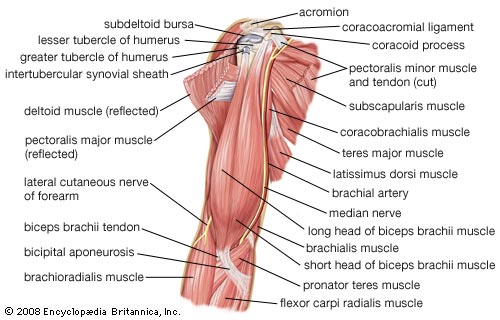
Bunkai (2) – staying with a three-beat, nage strike back of the attacking hand, then traps with the back hand and now rather than the initial front hand flowing to irimi-nage, nage folds his front arm to a downward elbow strike. FMA’s – hammer and anvil strike to the biceps. The combative application would use a rolling strike to drive the tip of nage’s elbow into uke’s median nerve and brachial artery, with Aikido’s emphasis on kimusubi, the strike becomes a connection point – the axis of the encounter – so that once the connection is made, nage shifts the balance point to the dead angle to break uke’s balance for the throw. What other arts would use as limb destruction, Aikido will use as a point of connection. But you must know how to properly target!
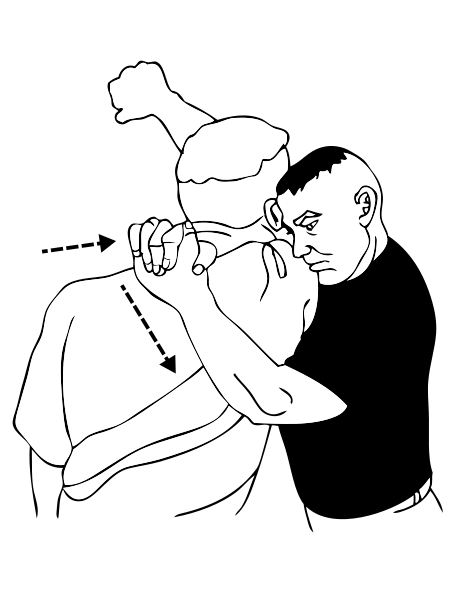
Split entry – thus far, ikkyo, irimi-nage, and the destabilization exercise are all approaches from the outside line. Next we moved to a split entry where nage kept one arm outside the striking hand and the other inside. As uke strikes, nage uses the front hand to shoot low to high whilst tapping uke’s strike with the back hand. This will direct uke’s strike just past the intended target and allow nage to trap the striking hand with the shoulder to throw irimi-nage direct. In the event the throw is ineffective, the fall back play is to then trap uke in a side choke. The side choke has the advantage of trapping uke’s striking hand and because nage’s radial bone will roll and compress uke’s neck and carotid artery, the choke is very effective. Be careful when training – avoid too vigorous applications and avoid the shearing action by rolling the forearm.

Inside entry – we did not get to cover the inside line in the first class, but we did explore an option the following Monday with a variant of Yokomen uchi sumio toshi. To explain the concept with a familiar technique, the inside line is met like yokomen direct (where nage remains bodily on the interior of the strike because uke’s attack is oblique). Nage’s back hand receives while entering and the front hand intercepts the elbow for the standard sumio toshi, or if nage enters more deeply, then the front hand can take uke’s striking arm shoulder/neck for a more dramatic version. But as a concept, the Aikido shorthand for the inside entry is ashi-sabaki. The FMA application is a gunting using the front-hand back knuckle to the median nerve while tapping with the back hand to keep uke’s strike from landing.
The inside line is a direct entry – for the Aikidoist, the play concentrates on a connected re-direct of uke’s attack with nage’s forearm and uke’s humerus – the bodily entry will take uke’s balance offline. FMA/JKD will stay online to focus on the limb destruction and trapping entry. Very similar bio-mechanics but with a philosophical difference in approach. Steal from the masters because the other arts are instructional – teaching proper targeting and application.
Because these are concepts to explore, the inside/outside/split entry is a referencing tool: what opportunities are afforded to me when I am in this relationship with my partner? Therefore, these are not techniques, rather they are keys to understanding. While this post discussed a highline straight attack (a punch to the face), every attack can be met on the inside, outside or with a split entry. Explore!
 Protective Arts
6 thoughts on “PUNCH TO THE FACE”