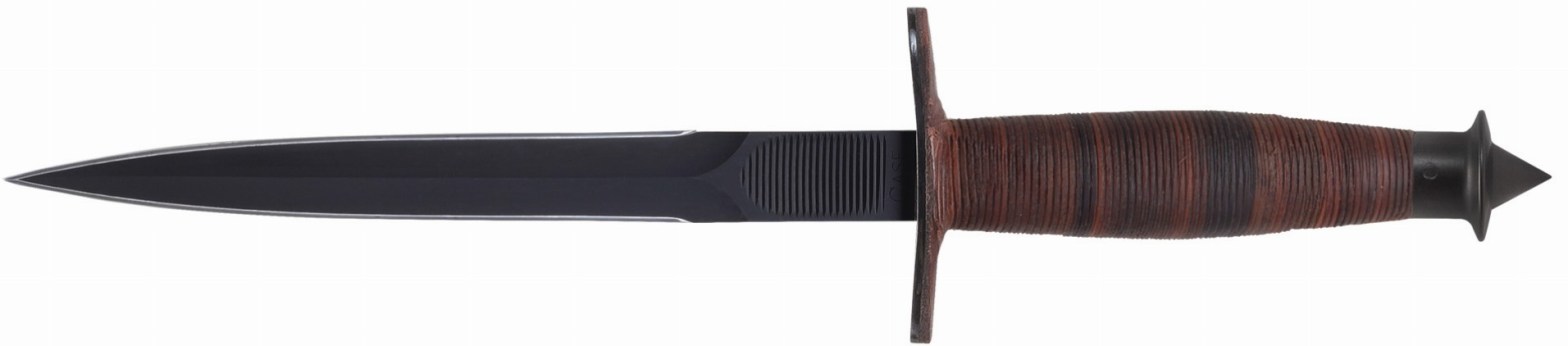
What immortal hand or eye / Could frame thy fearful symmetry?
William Blake was writing about a tiger (tyger) but we are speaking of daggers. The dagger is made with a fearful purpose and a beautiful symmetry.
The dagger is defined by its symmetry around the long axis and by its emphasis on the point over the edge. Daggers have two points, the point of the blade and the butt of the hilt. Edges are secondary. Where a knife is a multi-purpose tool, a dagger is a weapon. There is no disguising its lethal intent.
Examples of modern daggers
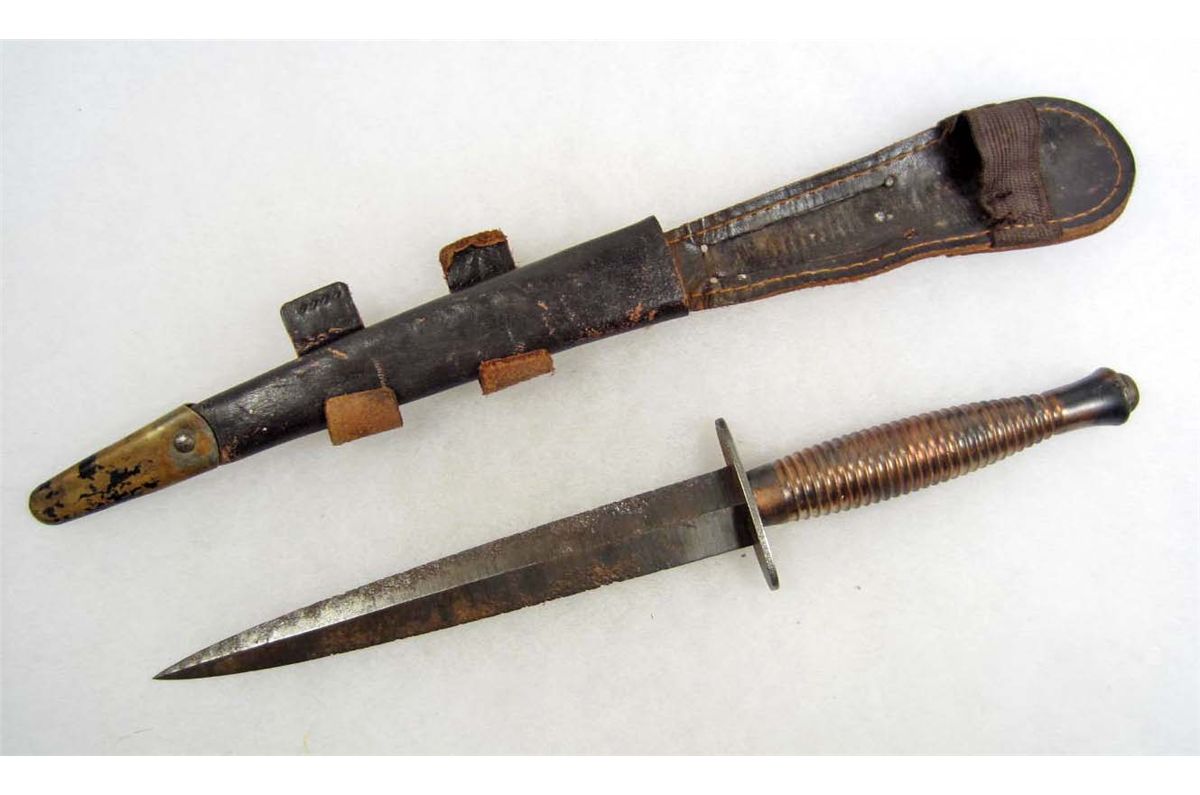
The Sykes-Fairbairn stiletto inspired the V-42 (of the Devil’s Brigade) and the Gerber Mark series that won fame during the Vietnam war.

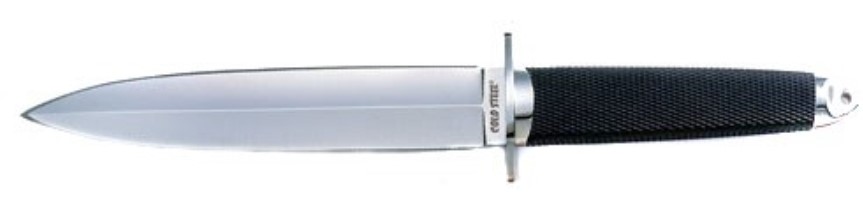
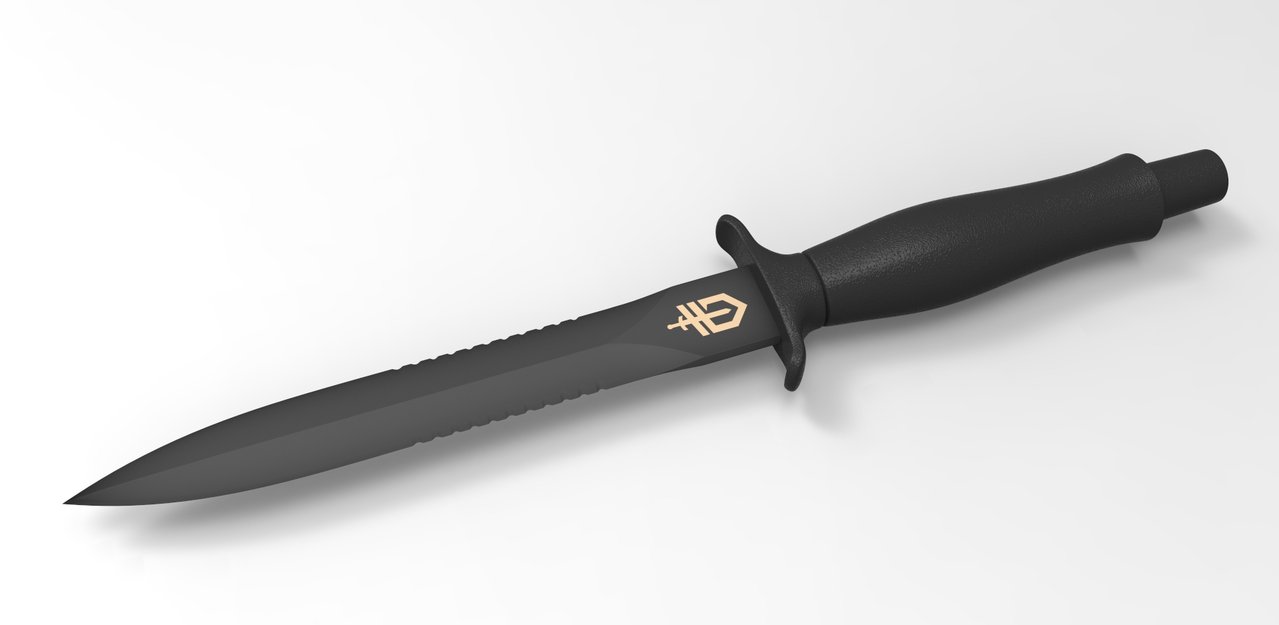
Modern daggers with sharpened edges in contrast with historical rondels that were often spikes to slip between armored joints of a downed knight: the mercy-kill or misericord [Middle English, pity, from Old French, from Latin misericordia, from misericors, misericord-, merciful : miserērī, to feel pity; + cor, cord-, heart].
Starting with an historical review – Fiore’s manuals are well presented >here< and include nice dagger plays (and there are more links in the Sykes-Fairbairn post).
Moving to modern interpretations, the dagger is reserved for the silent killers. The OSS and later ‘special forces’ used the dagger because it is an entry device – not a multi-purpose survival tool like a knife.

The dagger was designed for efficient killing and killers have long recognized the primacy of the point over the edge. The edge vs point debate, I suspect, will never have a decisive conclusion. Both the Styers and Fairbairn methods have been covered previously and it should be evident from reviewing the history and manuals that there is a marked difference between a fighting system and the killing techniques. It isn’t that one is better than the other as much as the purposes are different and therefore the design of the blade is as different as its use.[1] Each has its purpose and we should understand and appreciate those differences.
Master Keating recently reviewed the basics of double dagger plays.
Always know the laws pertaining to the legality of daggers (for they are reviled in many states)
A dagger has a time advantage in knife play. Because it has two live edges, the dagger does not need to turn the live edge to make an angle change, a timing advantage of a half beat or more when playing a game of malicious deceptions.
The dagger disappears more readily than the knife when aligned with the central vision blind spot – its symmetry makes it harder to perceive.[2]
Some unique features of a dagger: When held in a foil grip (thumb hidden by the blade), the flat of the tip is toward the opponent rather than the edge. A ‘popping’ hit will therefore leave a distinctive ^ shape cut. This presentation of the blade can also be used to ‘strum’ the ribs which reportedly creates exquisite pain without severe damage (no organs punctured).
Like all knife plays – mental attitude is primary. We train to be bold! You cannot fear the cut and blade familiarity is a must. Dexterity drills – knife twirling and manipulation is a prerequisite and a means to learn the weapon.
Every elbow technique is the dagger held in reverse (ice pick) grip. Study that and think again about the implications of elbow shields.
The dagger is about points: daggers have two: The blade has a point, but so does the butt which was often formalized as a skull crusher – the use of the punyo.

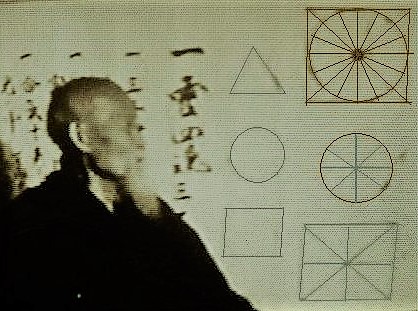
Because daggers are tools of destruction think again about the area of combat – when your life is in jeopardy the geometry is the circle. Destreza – Carranza and the famous circle. The Arena, the bull ring, and the original boxing ring wasn’t a square: the dance of death is not played on a strip, hunters seek the flank and wary prey avoids – circling.
As we circle the feet must be light with the balance closer to the heel as in fencing. With the weight on the ball of the foot the move is already committed and the knife requires increased mobility. When the weight moves to the ball of the foot, then there is no further range to achieve. Of course one must stay light. When examining the foot print of a fighter, if the heel print was too deep, a master knew that the duel would be short – the inexperienced fighter would be hampered by a heavy gait. A knife fighter does not walk directly, he circles in.
_______________________
RESOURCES
Visual context Italian – Italian knife fighting
Ray Floro – Floating heel – rock back – light heel – a deep heel print means death. Need to glide.
The Piper Knife fighting method.
_______________________
GRIPS
Foil grip, the V42 has thumb grooves above the guard specifically for this grip (see picture above). Thump on the flat, backside of blade. Flick it, pop it at targets – leaves nasty triangular, punctures. Rake it down the rib cage, strum the ribs – old OSS interrogation method on Nazis.
Reverse grip – thumb caps the end. Dagger held flat side toward adversary. Same flicking action. The dagger pulls the body.
_______________________
EXERCISES
6-Part Dexterity Drills – This is the rotation of a blade on the horizontal and vertical planes. Allows for quick grip adjustments as well as attacks. Be able to do this will all blades. Do with a blade in both hands.
NOTE: Master Keating prefers his right hand grip to be foil or standard grip, his left hand is in reverse grip.
Guard – Point the dagger at the eyes – It is a promise of death – this basic guard will back most down.
Solo practice – dagger in foil grip – drop the butt down onto an imaginary thrust, then up.
Parry outside, dexterity drill and stab. Repeat on the other side of your body.
Dagger in hammer grip – fan back and forth to understand defense on the right side, the front, the left side.
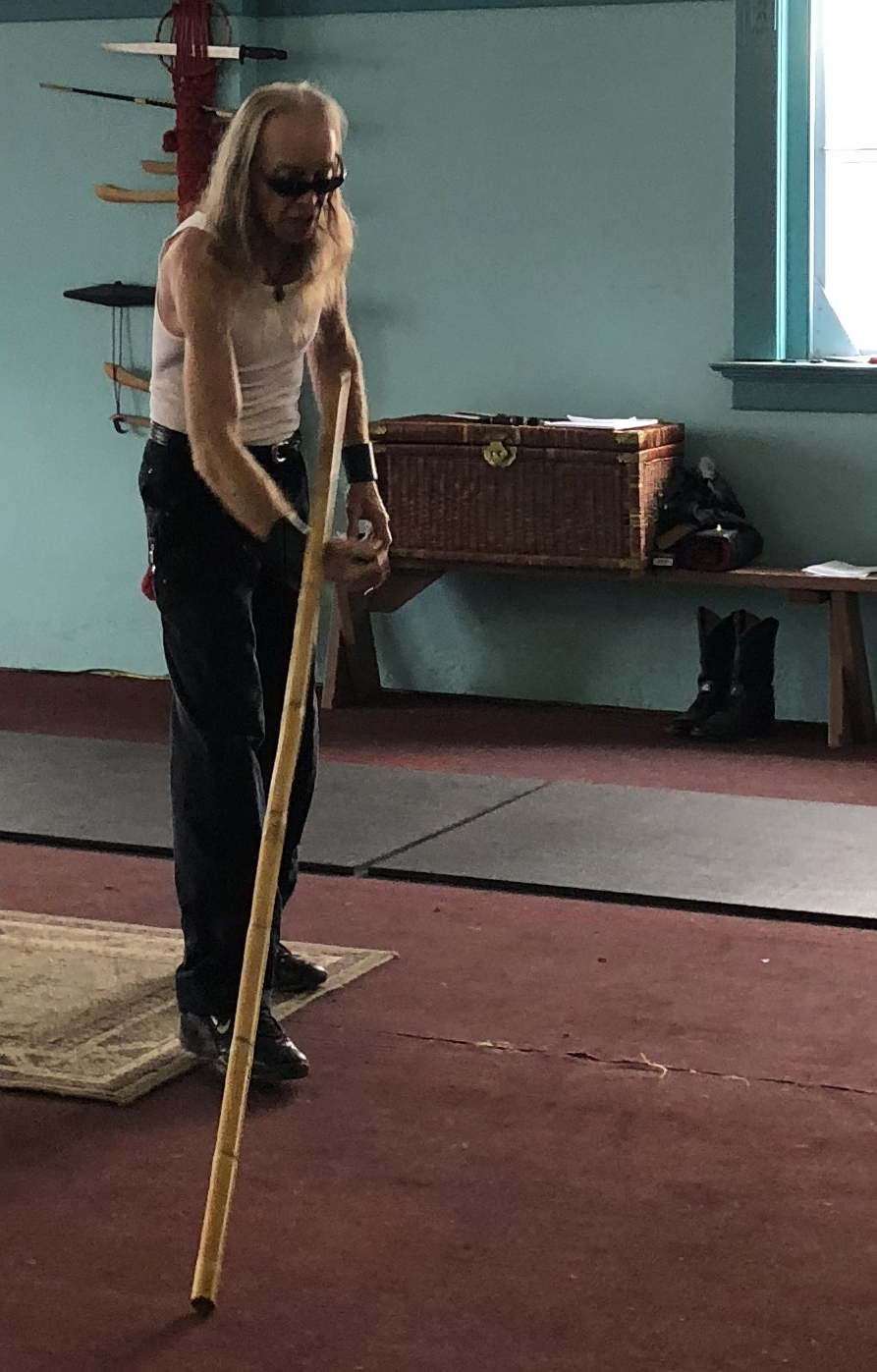
o Pole (jo) and tea cup drill – move the jo like the tea cup drill and find where and how you would slash with the dagger. Start with one dagger, add the second. Figure out how to control the jo. Move it outside in and the other direction. Learn how to “lose your hands,” learn to cradle – these are traps. Thumbs, wings, the pockets of the body.
o Cloudy hands – both hands moving inside-out, outside-in circles, “wax-on, wax off” motions with daggers. Start by emphasizing just the points and move to complete articulation of the daggers. Walk with them and feel the body begin to move with them. Your body will want to turn. This becomes a form of “shadow boxing.” Count the number of hits on yourself. Teaches split coordination, multi-tasking. Double dagger is doing many things at once – working timing and split coordination. Stay relaxed.
Solo exercises: dagger held in reverse grip – hidden
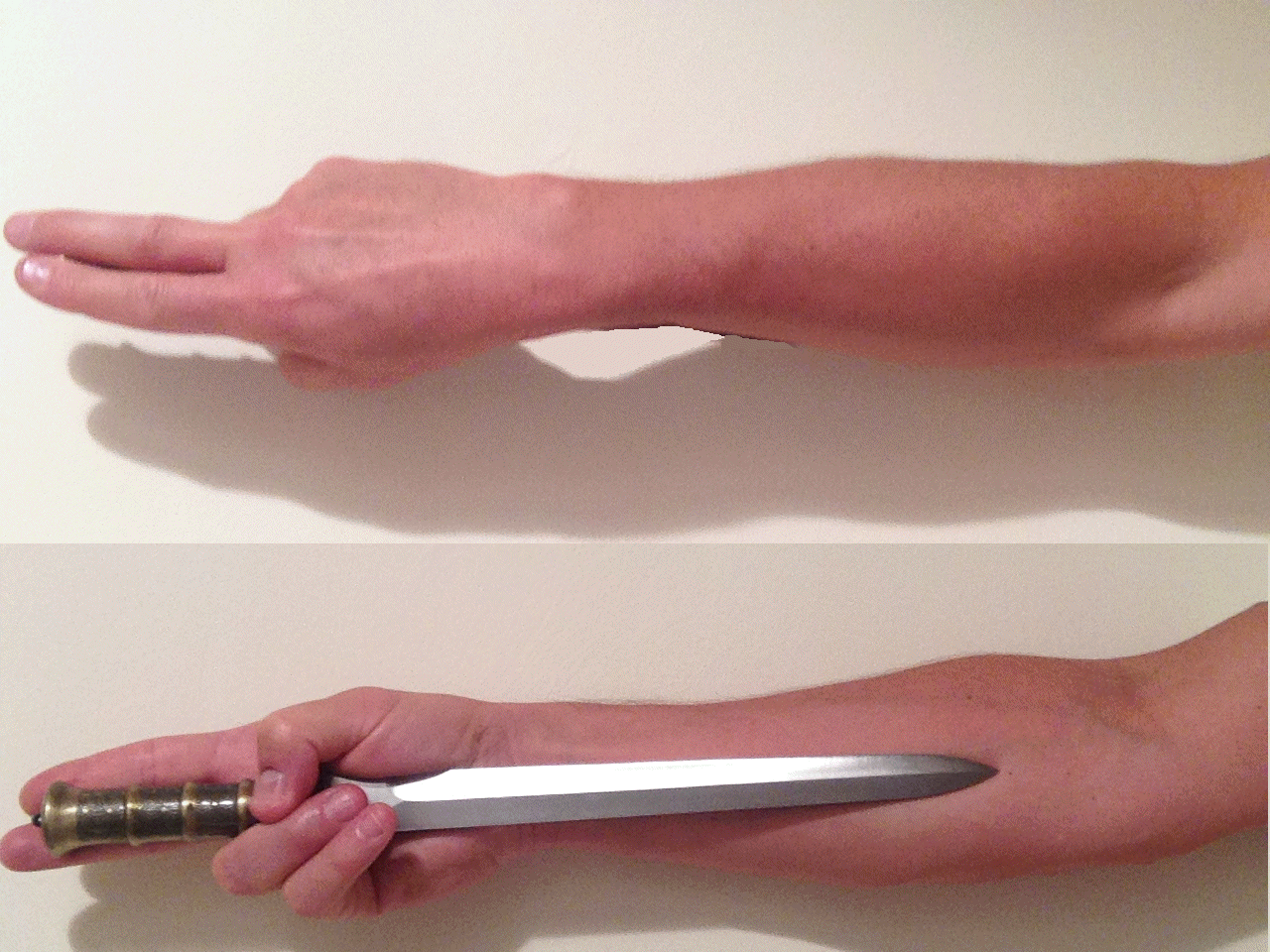
First: Flick the point up the ocular cone toward your opponent’s eyes. Allow the dagger to pull your body forward in true time: weapon, hand, body, foot. Snap to return.
Second: on the horizontal plane, double cut – forward, reverse, then stab
Third: as in second but on the vertical axis.
Fourth: strike with the butt, retract with the point on the outside of the forearm (nails away), then repeat but return with the blade on the inside line (nails toward face) to strike forward then behind.
Fifth: fish tail the knife – warding/harassing cuts. Three quick wags of the blade to the side, middle, opposite side.
Partner exercises.
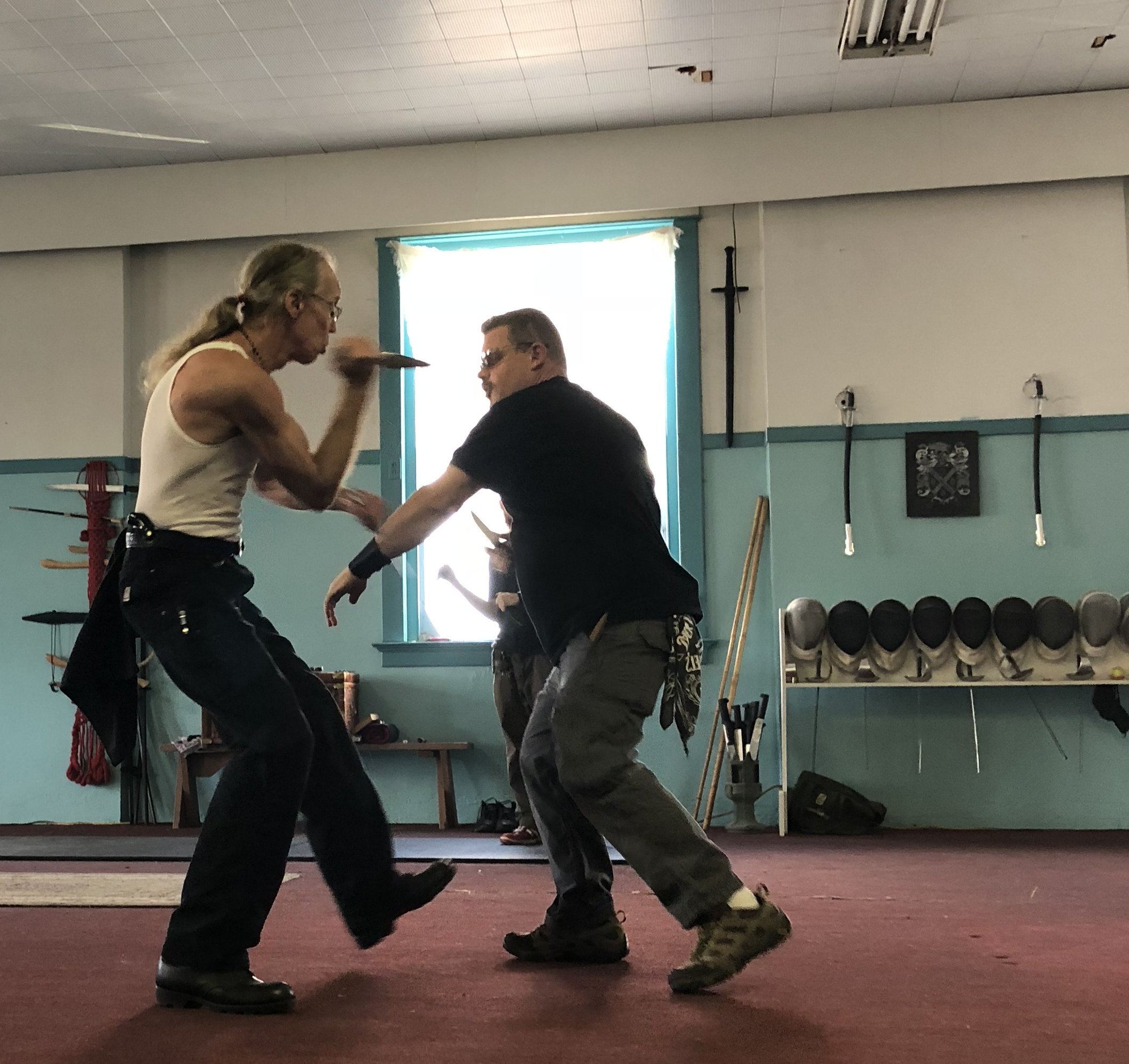
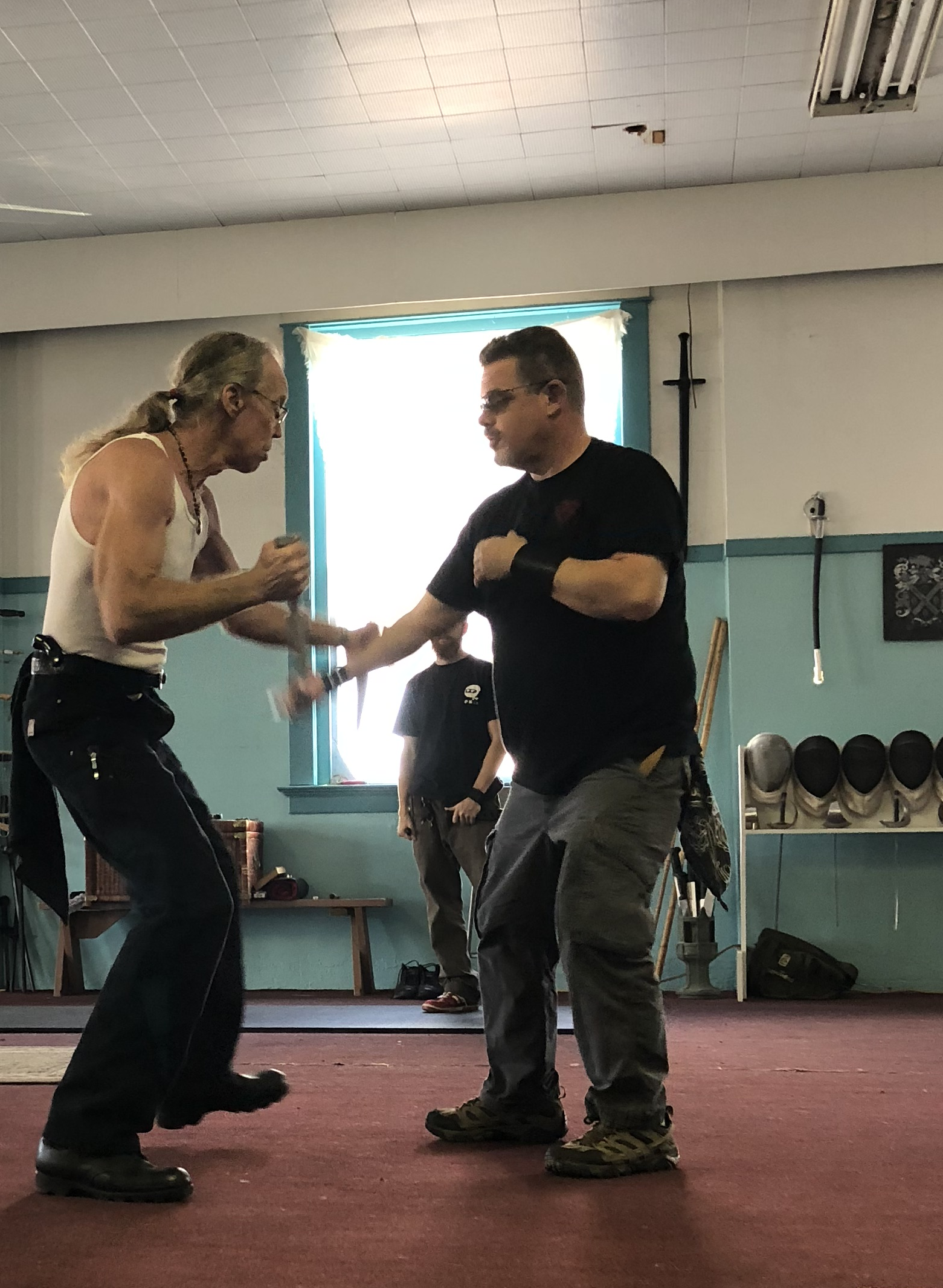
First: Traditional thrusting triangle – tap (one dagger only) but remember the pull cut on the retreat. Perform all matrix combinations (R/R, R/L, L,L and foregrip, reverse, one foregrip, one reverse).
o Start tippity tap on only one line until partners become efficient. Progression training at its finest – Move to include all three lines – the 5, the 6, the 7. Incorporate dexterity drills. Do right vs right. Do right vs left. Do left vs. left. Don’t forget the cuts that the Kali triangle exposes. There are takeways as well. As partners start to get comfortable with the patterns, they will begin to move and cover space.
o Double dagger drill – Feed 6 and/or 7 drill. Start with cover and slash = foundation. Can add pikiti tersa pass later. One partner feeds a 6. The other partner receives this with the left-handed dagger in reverse grip. Execute an outside-in intercept that forces the 6 down to the right-hand dagger in standard grip (grips can vary, experiment!). The right-hand dagger can be moving up like a roofing action and cut under the incoming 6 hand. Then, return your right hand along the 6 line so your partner can practice.
o The 7 line feed allows the other partner to receive with the right-hand dagger. Execute an outside-in intercept that forces the 7 down to the left-hand dagger in reverse grip. Pass the dagger above the incoming 7 and return your own 7.
o For any of the above, the point is to experiment. You can receive with either hand and feed to the other. Moving your body off the line may help to see what is logical.
Second: sinawali done foregrip and then reverse grip.
Third: Cloudy hands, stir with the knife, reverse and flat (point forward) variations.
Solo double dagger exercises.
Tea cup: using a pole (jo) to augment double dagger training. Replicate the actions of a scissor attack to an extended limb (or neck).

Shot glass: pass the shot glass from tip to tip – spearing it smoothly from one to the other to practice the point. Use the flat to pass playing cards.
5 Double Dagger Katas
#1 “Priest Dive.” Starting double daggers hidden – double strike up the ocular cone (priest method), double roll out, double lift (punyo strike/drop), then double strike to the chest.
This is the Generic opening for all – Both daggers – butts out, points toward you. Both hands execute outside dissolves. Bring both daggers up and bring down into opponent.
#2 – Generic opening – right arm up, reverse, sweep leg
#3 – Kokyu Ho
#4 – Daggers in clavicles
#5 – Side sinawali
double tap from inside / outside = forehand and back hand as auxiliary skill
trick – lop sao exercise tile head into notch of throat
Prayer entry – Snake A – stay on outside / snake B come to close (clap)
Disarms – make the man eat his dagger. Against a straight R thrust. Slap L feed R, then clasp you hands at opponent’s elbow to feed back
Combat tricks. Even a fast strike can be caught by the opponent – we have good hand-eye coordination. To defeat that strike with broken rhythm – on the descent, waggle the blade, this will draw the opponent’s attempt to block or catch the strike early. Then continue the strike to its target with impunity.
Auxiliary Skills to Help Dominate – this is not about exchanging blows.
Double tap drill – yokomen like strike is delivered. Partner, on the inside line, taps with one hand, taps with the other and returns either a palm up or palm down judo-like chop. Flow drill.
Control technique – one hand to the back of the head, the other hand – two fingers into and down the throat. Tilt their head forward.
Dagger disarms = Winding disarms – Kali stick disarms – Snake A and Snake B
Salute system – for inside and outside lines. Combine with the double tap drill. Hammer and anvil the bicep and judo chop to the face. Partner receives the chop and double taps and feeds you. You repeat one salute to get to the outside line, a second salute with the other arm brings your elbow up into their tricep. Then, same arm cups the tricep you just hit and becomes the “anvil” for the third elbow you are about to deliver to the bicep.
Scarf – Kerchief defenses
Disarms – Take and keep, project/eject, returns, discards. How many do you know?
Return punch – punch comes in. Tenkan. One arm over, one under. Lock hands. Tenkan back to front and scissor.
Canon punch – Shoulder and forearm form a “v” at the elbow. Palm is up and back of fist is parallel to the ground.
Piper System from Africa – flurry side to side and then hit. Fakes.
Card passing on blades. Point control with a shot glass.
Stool Drill – Four leg Panchar – traditional silat entry —- + drill – teaches sweeping and locking.
Elbow shields – think about these and how they work with double daggers
Defense against kicks – kick comes in. Catch kick in the bend behind your knee….basically raise your heel to your butt, catch kick and draw knife and stab knee. A kick to the shin, simply raise front leg relaxed, stab kicking leg.
Get a Mental Advantage
Theatrics matter – Fake an injury – set the stage for deception.
Ritual taunts to create doubt in the mind of the opponent. Verbal commands add power and put the opponent in a different state of being. Insults – Basically, talk shit. Plant the seed of doubt.
Verbal commands – speak tactically, be relaxed.
Verbal leads to create misdirection. “I am going to kick you in the balls,” but punch in the face.
Laugh in the face of death, it lightens the spirit. Reverse any energy drop. The deadlier the ground, the need for a lighter spirit. Feel up the spirit. Relax, not tense.
To steel your nerves and counter an opponent’s verbal power. Laugh. Don’t dissolve with fear – sardonic laughter re-sets your internal polarity. The deadlier the ground, the lighter the spirit must be – so relax: you are going to die anyway so be light-hearted.
Your spirit precedes you – it is your advance team.
Instill terror to command: be brutal, be quick.
The double dagger emphasizes that in Kali there is no defense, only attack.
The ribs are the spear to the heart – ie you break the rib then push the broken rib into the heart.
___________
[1] The Gurkha sentry elimination technique gives primacy to the edge because the kukuri is a heavy blade – decapitation works equally effectively when done correctly. Read broadly about the Nepali Gurkha and you will be rewarded with incredible stories of valor. Or enjoy a classic movie The Man Who Would Be King (Sean Connery, Michael Cain in the same movie!) to see Saeed Jaffrey as Billy Fish – a warrior to the very end.
___________
[2] Our binocular vision puts us firmly in the class of predator. We are not polite hairless apes constantly worried about our flanks. We need focus on the prey we stalk to gauge its distance and keep it in our sights. Binocular vision also means we have a hard time tracking something coming for us ‘right between the eyes.’ Exploit and be wary of that physiological limitation. In addition we all have a retinal blind spot:
- On a piece of paper, make a small dot with a black marker.
- About six to eight inches to the right of the dot, make a small plus sign (+).
- With your right eye closed, hold the paper about 20 inches away from you.
- Focus on the plus sign with your left eye, and slowly bring the paper closer while still looking at the plus sign.
_____________
The dagger as athame: a magic talisman. Iron commands spirits.
 Protective Arts
One thought on “DAGGERS”