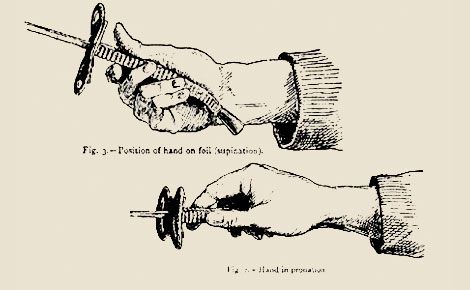
Circular dissolves. Master Keating explains the concept.
What we explore here is a counter-clockwise dissolve but the concepts are applicable to clockwise dissolves.
For the last several classes we have been exploring circular dissolves though the simplified cross-hand encounter – aihanmi katate dori (R/R, L/L grasps).
Setting the encounter:
Nage presents hand thumb up – uke grasps to control the offered hand.
Nage uses rokyu-kokyu to initiate a release, then uses the shyuto to cut over uke’s hand in a counter clockwise (outward) rotation to complete the release. Nage’s hand is now on the outside line.
Explaining the encounter:
Aikido uses similies and metaphors to provide context: “Shomen is like a sword strike,” “Chudan tsuki represents a dagger thrust,” etc., forgetting the importance of the analogy. A mid-level thrust is a dagger, spear, or punch. A direct assault is not a metaphor. Put yourself in the proper mindset. These are real encounters and you cannot assume an unarmed opponent.
What then is aihanmi katate dori? It is a straight thrust encounter between two same-hand dominant players. Review the doce-pares map – aihanmi is a #5 line.

Notice that an encounter on #5 represents any number of possible scenarios: Nage thrusts uke grasps the hand to stop the thrust. Uke thrusts, nage responds. Nage and uke start in a cross weapon encounter.
The secret is: the specifics of the encounter are irrelevant! It is very easy to get lost in the nuances and many instructors make a living off playing these specifics as if they were the primary focus of training.
Cross weapons. You have precisely one problem to solve: control the center.
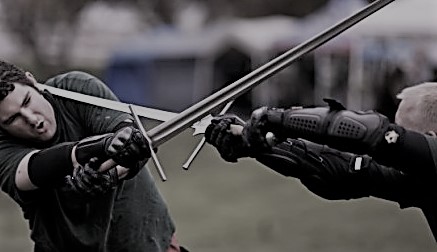
From a single handed encounter there are three primary strategies: beat, circle over (counter clockwise), and circle under (clockwise).

As usually given, Aikido’s aihanmi katate dori presented palm up is the circle over and when presented palm down it becomes a circle under. Put a weapon in your hand and it becomes more obvious – the arc is shorter to gain the advantage.
With a katana, this is the opening move in san no tachi, where the cut over controls the opponent’s sword with an attempt to take the opponent’s thumb. With a knife it is a bait and the circle becomes an attack to the opponent’s flexor tendons. With the empty hand it becomes a release followed by a controlling pressure on the outside dominant line. In all these encounters, the counter clockwise dissolve allows nage to control the centerline.
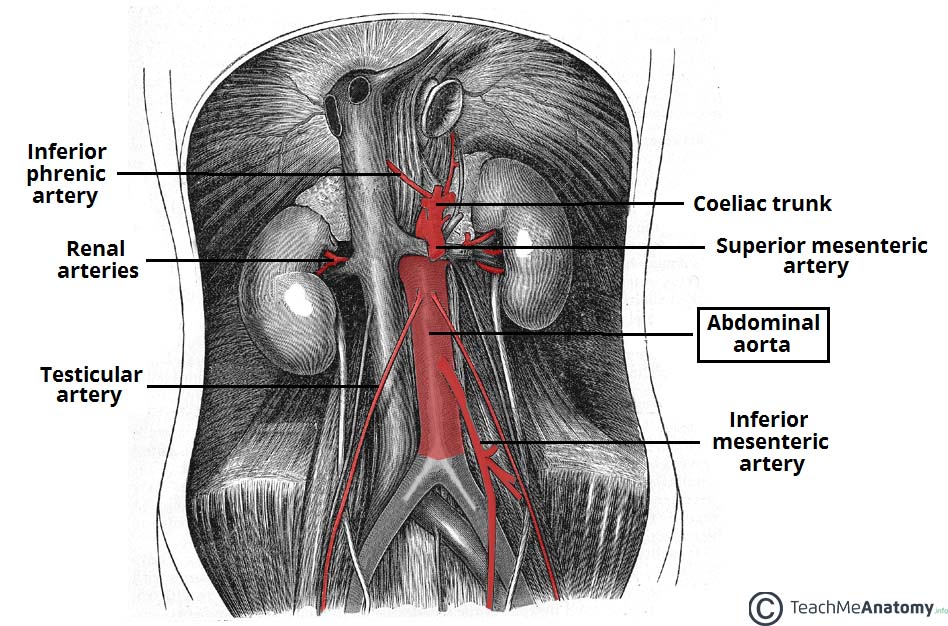
Think on this: the release is not an extraction or escape, it is your ‘go to’ move. From aihanmi with the counter clockwise cut over, contact is maintained arm to arm but nage controls the center from the outside line. The targets change depending upon the level of the response – at the gedan level, nage targets the tendons in the back of uke’s lead leg behind the knee. At chudan level the target can be a thrust to the center line (abdominal aorta) or a draw cut to the underside to hit the flexor tendons. At jodan level the target is the soft palate or eyes.
All these show the power of the response on the direct line (irimi). The bunkai shows the ‘why’ of the initial encounter.
The aiki lesson is the subtle maintenance of pressure combined with the freedom of flow. The initial point of contact is the axis of the encounter. Nage must learn to extract from the grasp without unnecessarily providing more pressure (information) or attempting to move the point in three-dimensional space.
Once that skill is mastered, the next step is pressure replacement – i.e. the back hand must replace the initial grasped hand to maintain control over uke. This was discussed when exploring a punch to the face with the use of the checking hand. Replacement is similar – in a two-beat tempo, you extract one hand and then place your opposite hand on the same spot without disrupting uke.
Hence the importance of aihanmi-katate-dori irimi tenkan as a developmental exercise. Nage must learn to cut over, extract, replace with the upper body and simultaneously enter and turn parallel to uke. The number of discrete moves (beats) nage must execute relative to uke is dramatic.
| Beat | Nage | Uke |
| 0 | present hand | grab hand |
| 1 | cut over | |
| 1.5 | extract | |
| 2 | replace |
Study that imbalance and consider: are you that much faster? In general terms there is a 2 to 1 imbalance in action (and this is just the upper body action). Recognize that this is a simplified matrix that we must build from. But it points to the need to understand action sequences and beats.
Although the start of class was with irimi-tenkan to develop dexterity and sensitivity, the circular dissolve can be done without the tenkan. Review Kotegaeshi to Iriminage.
Furthermore consider: Irimi nage direct on a 5, 3, 1 beat tempo.
Kihon waza is a 3 beat sequence. From aihanmi katate dori, nage (1) cuts over with the front hand while entering irimi, (2) grasps uke’s neck with the back hand, (3) uses the now free front hand to throw.
The 1 beat sequence is often shown as an ‘advanced’ technique because it is a continuous-connection throw. Nage executes the cut-over dissolve while driving forward low-to high with uke’s arm now trapped. A one-breath throw.
But neither of these beats anticipates a potential thrust, retract, thrust response from uke. The kihon presentation presumes that uke does not react to the initial cut over. Therefore, we must add beats to break facile model of the encounter. Nage may have to add checking moves (additional beats) to follow uke’s retracting move (a set up to a second thrust) and this is where a 5-beat pattern comes into play. From aihanmi katate dori, nage (1) cuts over the front hand while entering irimi. Uke counters by retracting for a second thrust, thus nage (2) checks uke’s arm with the back hand, (3) replaces the control with the front hand, allowing the back hand to climb up the limb and (4) grasp uke’s neck with the back hand, (5) to use the now free front hand for the throw.
Circular dissolves on the vertical plane are done primarily with the upper body. Horizontal dissolves are executed primarily with the lower body. Ushiro-tenkan is a tool to explore that aspect of the art.
 Protective Arts
3 thoughts on “CIRCULAR DISSOLVES”