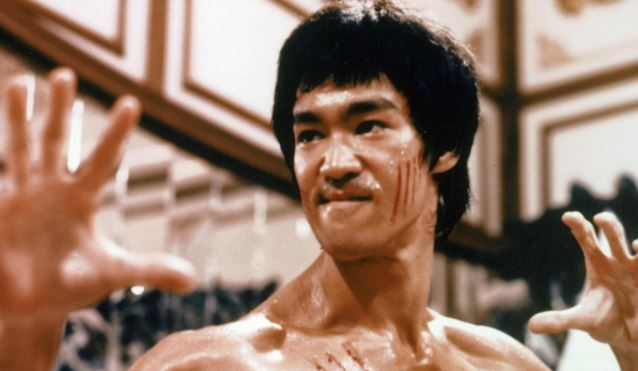
Aikido as an attack art sounds oxymoronic. That is true only because many critics of Aikido have a moronic understanding of the art. (And one too few of us credibly counter.)
Axiomatically we cannot win by defending and winning is important.
But how does that necessitate an attack art? The polemical turn of phrase is the difference between initiating the attack (that is, being the agressor) and controlling the encounter by means of (counter) attack.
In stealing from the masters, I listed and explored lessons taken from Bruce Lee’s Jeet Kune Do, specifically the Five Methods of Attack:
- Single Direct Attack (SDA)
- Attack By Combinations (ABC)
- Progressive Indirect Attack (PIA)
- Attack By Draw (ABD)
- Hand immobilization attack (HIA)
Most empty hand arts will focus on SDA as the primary means of attack. What could be more direct than a solid jab and a swift kick to the nuts? Undeniably effective but not very subtle.
Derived from weapons-based techniques, Aikido is primarily an ABD art. We must create the illusion of an opening to induce the opponent’s attack. Attack by Draw baits a specific attack with a planned counter. Shizentai, the natural body posture, is an opening gambit presenting a false unpreparedness to induce the attack.
Even the kihon presentation of an extended hand and the dojo-conditioned response of uke grasping it, is an indication of the underpinning of the art as ABD (and PIA). In more advanced play, the extended hand is akin to a jab, to bait a counter, followed by a slip to shikaku and a finishing counter.
Consider the standard presentation of any technique in the dojo. The instructor will indicate the opening uke is to take. Often this will necessitate nage naming the attack or gesturing to the opening. This is a pedagogical tool that should be eschewed at higher levels of training and presentation. Instructors especially should cultivate presentations of self that close all other opportunities than the one line nage wants.
ABD is a confidence game. Many arts use ABD sparingly because it is a risky move that necessitates higher skill because we are responding second, and because an imperfect execution will lead a skilled opponent to counter.
PIA is the secondary form of attack Aikido exploits, and often as part of the technique set up by the initial ABD. A Progressive Indirect Attack is initiated with a false or fake strike to create an opening for a second strike. The “progressive” part is how the motion of the initial fake is also part of the beginning motion of the second attack. Therefore, your second attack should be half way to its target by the end of your fake. For example:
Yokomen (R) – insert atemi L, disengage, strike the attacker’s arm R rebound irmi-nage R.
Again, recognize that from a viewer’s perspective, the Aikidoist is responding to an attack and therefore is labeled a defensive art, but the truth is far more subtle – Aikido leads the opponent to the opening that the Aikidoist gave. This requires sang froid.
A typical (and usually valid) criticism of Aikido is that the curriculum lacks (and most dojos fail to present) the Single Direct Attack (SDA) as a credible attack. The SDA in Aikido is shomen, yokomen, tsuki and is simply uke’s initiating action. Because it is rarely presented as nage’s role, the SDA appears to have limited application and its credibility is questioned by other arts.
Rightfully so in most instances. But do not be blinded by historical limitations and tradition: Yokomen is a haymaker punch, shomen could be a downward dagger, or a straight blast punch (lines can be points, and points can be lines). Think and see the potential of the range of human motion, do not be limited to the lexical labels!
So practice uke’s roles with at least equal vim and vigor that you do nage’s role. What we often miss in training is that uke as “feeder” is perceived as a lesser role or worse a passive one. Uke is essentially training as the aggressor and therefore should be learning to be an effective one!
When it was introduced, Aikido was considered a “higher” art, meaning experienced martial artists only were admitted to learn augmenting skills that honed the base art (karate, kendo, etc.) which students brought with them as foundations. In short – Aikido presumed that the students were well grounded in the SDA arts. Therefore, to be a well-developed Aikidoist the foundations of SDA skills must be special taught (or cross-trained).
The goals of SDA are simple and effective: use a strike aimed at a specific target that travels the shortest path with sufficient leverage or power to do its intended job.
The irony is a SDA is more often used than all the other four ways of attack by other arts and it is usually the least emphasized in Aikido. Prioritize mastering SDA as uke during your daily training.
The last two forms are Attack by Combination (ABC) and Hand Imobilization Attack (HIA).
An Attack by Combination links two or more striking techniques executed in sequence. Think of a boxer’s combinations: jab, straight right; jab, left hook; low kick to straight blast; you should get the idea. ABC is rarely presented in Aikido as a method of attack, but is found when breaking down any flow pattern into its constituent atemi pauses. I have presented this in class and discussed a staccato phrasing. Although rarely explicated in the language of ABC, I would argue that all Aikido techniques are by necessity ABC, just “smoothed” out because the goal of Aikido is connected flow with kimusubi. But never forget – if and once the connection is broken by either player, then ABC must be deployed!
Staccato means that each point on the line of flow suddenly becomes a series of SDA each with its own target. Proper targeting people, always.
And the final form of attack – Hand Immobilization (HIA) which is the sine qua non of Aikido. As I have argued above, the SDA in Aikido is under-emphasized because nage’s techniques are intended to find culmination in HIA. These trapping skills in Aikido are presented as the primary goal, whereas in most other arts, trapping skills are follow up to SDA and I ABC.
A critical difference in an close-range or empty hand focused art is that HIA in those arts are often a means to remove an interposing hand to land a strike. For example, some classic HIA would be:
- Pak Sao, Biu Gee (finger Jab)
- Lop Sao, Back fist (this is a standard drill)
- Double Pak Sao, Straight Blast
Aikido’s emphasis is slightly different insofar as the trap (historically) resulted in an elbow break, a wrist snap, shoulder dislocate, or neck break. The point was to take a weapon-bearing samurai off the field. So the HIA are executed on the distal parts of the body first, then work toward the core. The brute bunkai of Aikido is not emphasized, but the budo remains vestigial, ready for invigorated deployment as necessary.
Augment your understanding of the potential of the art by expanding what HIA means – we need not limit ourselves to upper body limbs alone:
- Stepping on the foot to prevent a retreat (and as a force multiplier)
- Tying up the neck to throw a punch or a knee (irimi nage plus)
Using the language of other arts is a means to re-cast and re-present how we understand our own art. Sclerotic understanding is our enemy! Never stop questioning, never stop exploring.
Virtūs et Honos
 Protective Arts
2 thoughts on “FIVE WAYS OF ATTACK”