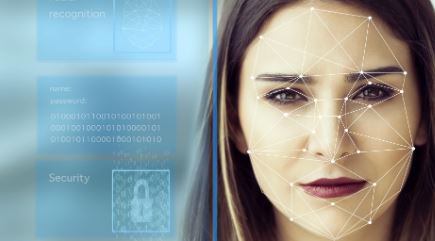
In Privacy, I highlighted the problem of the surveillance state. The public forum now debates how far that power should reach; whether police, corporations, or federal agencies should control it. The question is framed as one of fairness or accountability. It should be one of existence.
The simplest way to see the danger is through the clearest case: a wrongful arrest. Facial recognition software misidentifies a suspect; an innocent man is jailed. The media calls it bias. But the bias is not the problem. The problem is that the cameras exist.

For all the bloviating on who gets to use the algorithms, which companies partner with which agencies, and whether the local police departments get to use the technology is all missing the principle. Which is: cameras, monitoring, and data collection is now the norm and that is a dangerous erosion of your right to be left alone and forgotten. The European Union at least has tried to put some guardrails on data collection. The United States are adopting some of those regulatory restrictions. But I doubt the efficacy since now we all click “accept” to access websites and I am dubious of anonymous browser technology or of “regulating” access to video feeds.
Nevertheless, we should be grateful that the lawmakers are at least now debating the principle. Yesterday (June 25, 2020), Sens. Edward J. Markey (D-Mass.) and Jeff Merkley (D-Ore.), along with Reps. Pramila Jayapal (D-Wash.) and Ayanna Pressley (D-Mass.) said they will introduce legislation in both houses to stop government use of biometric technology, including facial recognition tools. Of course, a strictly partisan bill from lawmakers that are among the farthest left in their respective chambers is unlikely to gain acceptance. But the call to ban facial recognition in the U.S. signals where the progressive wing of the Democratic party is on the issue. As much as I rail against Federal powers, a national limit would only augment local restrictions where a few select cities have already banned government use in their jurisdictions.
On the private sector side, Microsoft has said it will stop selling the technology to police until a national law is passed, Amazon has put a one-year halt to such sales, and more decisively, IBM has exited the business.
But how do we get rid of all the cameras? The genie is out of the bottle and it ain’t getting shoved back in. Butlerian Jihad anyone?
More Facial Recognition defeating technology:
Juggalos makeup
T-shirt that can render you invisible
More on the prevalence of security cameras in major cities. The paper >here< on statistical modelling to determine the ranking.
Not what I would have expected:
1. Seoul
2. Paris
3. Boston
4. NYC
5. Baltimore
6. San Francisco
7. Tokyo
8. London
9. Chicago
10. Philadelphia
11. Bangkok
12. Washington, D.C.
13. Milwaukee
14. Singapore
15. Seattle
16. Los Angeles
The difference here between Seoul and Los Angeles is almost 4x. Mostly I am surprised that London and also Singapore are so low.
 Protective Arts