Sean Connery died aged 90 – a cantankerous enough age for a Scott – and another reason to put 2020 behind us.
His obituaries are built around his filmography and focus on his portrayal of James Bond because he defined the role (how Sean Connery became Bond). I contend Sir Connery’s best roles are his lesser known films:
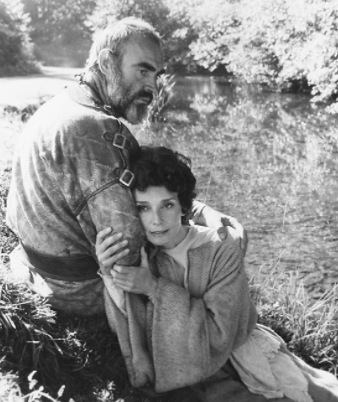
Robin and Marian (1976)
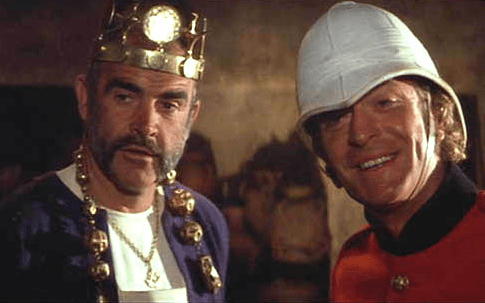
The Man Who Would Be King (1975)
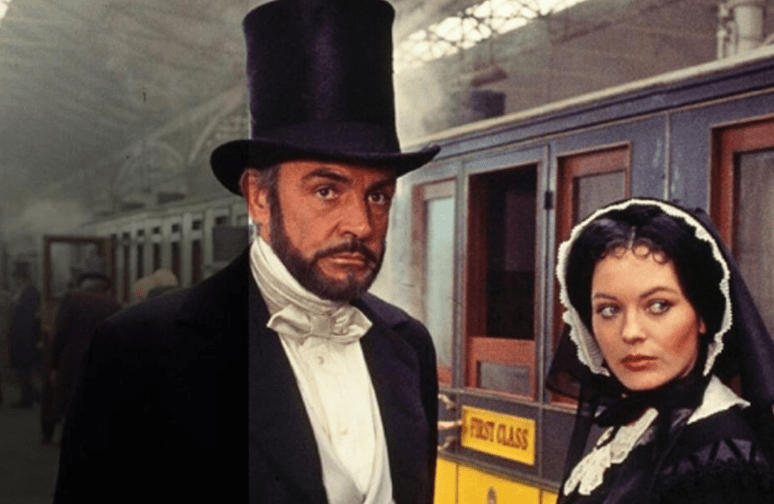
The Great Train Robbery (1978)
__________________
Sean Connery died on October 31st
The actor and Scots nationalist was 90
In october 1962, just as the world watched America’s handsome young president go head to head with the Soviets over their missiles on Cuba, another 20th-century hero made his first on-screen appearance. James Bond’s creator, Ian Fleming, described him as English, with a slim build, blue-grey eyes, a cruel mouth and short black hair, a comma of which rested on his forehead. The man the world came to know as Bond when “Dr No” was released that month was a hulking Scot with dark eyes and so little hair he had to wear a toupée. But the two men had more in common than one might think, and it was their differences as much as their similarities that combined to make him the Bondest of Bonds.
The first glimpse of him is from behind. The camera pans around the gaming table at Les Ambassadeurs in London, pausing briefly to take in Sylvia Trench’s red-chiffonned bosom before turning at last to the saturnine face with its feline eyebrow, its sultry lips. He is sitting down, so you don’t see the way the manly tailoring emphasises how he dresses to the left or how, when clothed in nothing but a towel, his pelty chest fills a doorway. But the message is clear. Sean Connery as James Bond simply is British manhood: good-mannered, patriotic, entitled.
Both went to Fettes College in Edinburgh, Mr Bond after he was reputedly expelled from Eton, Mr Connery to deliver milk from a barrow. He grew up in Fountainbridge, which used to be known as Foulbridge for the open sewer that ran through it. Although the sewer was eventually culverted, a stench remained, thanks to the toffee factory, the brewery and the rubber mill where his father worked 12 hours a day. By 1930, when he was born, it was one of the worst tenement slums in Edinburgh, with outside toilets and no hot water. The only bath in the street belonged to the brewery. Half a century later, whenever he stayed in a posh hotel he liked to luxuriate every day in a long hot soak.
He didn’t think of it as a tough childhood, but it left its mark in several ways. His mother may have taken command of his father’s wages every week, but that did not make her his equal. Even as attitudes were changing in the 1960s, Mr Connery expected women to understand that, and if they refused—if a woman was “a bitch, or hysterical, or bloody-minded continually”, he famously told Playboy in 1965—then he was entitled to slap them. His first wife, Diane Cilento, said he abused her physically and psychologically for all of their decade-long marriage, which ended in 1973.
Delivering milk was only the first job he tried. By the time he was 13, he couldn’t see the point of staying on at school. There was a war on and he wanted to earn money and play football. So he signed up, first as a bricklayer and then as a lifeguard before he learned French polishing from a coffin-maker. He hoped, for a while, that he might become a professional footballer, but plumped for acting when a friend pointed out that, as a career, it had a longer shelf life.
Not long after he finished touring provincial theatres as part of the chorus for “South Pacific”, during which he did bodybuilding to keep in shape, a friend suggested he try out for a low-budget film whose producers were looking to sign up a cheap unknown rather than an established name. Fleming was unsure about the heavy Scots burr and the lumber jacket he wore to the interview, emphasising that what was needed was Commander Bond and not an overgrown stuntman. But the producer’s wife liked his barely concealed menace. He played Bond in six more films.
With his second wife, Micheline Roquebrune, he settled in the Bahamas. He liked the low tax rate. He played golf and made up for his lack of schooling by reading—literature, politics and history, especially about how the English oppressed the Scots. Even after decades of the classless, moneyed world of international cinema, he retained much of what his childhood had taught him about being born on the wrong side of the tracks.
Perhaps because he was away from it for so long, his devotion to Scotland was intense. In 1967 he released “The Bowler and the Bunnet”, the only film he ever directed, about turbulent industrial relations in a shipyard on the Clyde in which the managers wore bowler hats and the workmen “bunnets” or cloth caps. A staunch nationalist, he campaigned for the Scottish parliament in Edinburgh and spoke up for Scottish independence—literally, in a party political broadcast for the Scottish National Party. Not for nothing did he have “Scotland Forever” tattooed on his arm.
There were other film roles, some of which made far better use of his acting talents than Bond—Daniel Dravot in John Huston’s “The Man Who Would Be King” and Jimmy Malone in “The Untouchables”, a caper about Al Capone, which won him his only Oscar—but it was Bond that defined him. It made him rich, world famous, a real star. Five other Bonds would follow, but none was as good as him. And if at times, the association seemed to weigh on him so much that some referred to it as bondage, in his gut he understood that owning Bond the way he did amounted to a sort of Scottish co-opting of an English hero, and that was sweet revenge.
Most of the time he responded to questions about it with that eyebrow. Just occasionally, he would open fire. “In playing Bond, I had to start from scratch,” he pointed out to an interviewer just after “Dr No” opened. “Nobody knows anything about him, after all. Not even Fleming.” Bond made Connery. But, more than anyone else, Connery also made Bond.
__________________
Of all the memorial tributes to Sir Connery, Brian Phillips summarized the nuances of his performances and roles the best:
__________________
Sean Connery, an Icon of Effortlessness
Struggle is the essence of drama, but there are some actors who win audiences over by making everything look easy. Connery, who died Saturday at the age of 90, was the warmest presence, the most natural, the most welcoming of that group. By Brian Phillips Oct 31, 2020, 5:19pm EDT
/cdn.vox-cdn.com/uploads/chorus_image/image/67720184/607390704.0.jpg)
Peacefully, in his sleep, in the Bahamas, at the age of 90—of course, it’s not necessarily true that the manner of a person’s death says anything about a person’s life, but if Sean Connery had to die, could he have found a more perfectly Sean Connery way to go than that? I mean without actually slipping on a Savile Row suit and infiltrating a supervillain’s volcano? In all his best roles, from his iconic 007 in seven James Bond films to his iconic Henry Jones Sr. in Indiana Jones and the Last Crusade to his iconic Soviet submarine captain in The Hunt for Red October, Connery glowed with a kind of invincible effortlessness; I wasn’t at his deathbed, obviously, but based on the early news reports, it was a comfort to imagine the same quality enduring when he was at his least invincible.
Struggle is the essence of drama, but there are some actors who win you over by making everything look easy, and in that group, Connery was the warmest presence, the most natural, the most welcoming. Paul Newman made a career out of playing insouciant golden boys who learned what it meant to get the shit kicked out of them, but Connery almost never took a blow he couldn’t bounce back from with a quick change of clothes and a drink. He let you feel what it was like to dodge the bullet, get the loot, outwit the mastermind, and drive away in a cool car, softly chuckling. And as with Newman, you never resented him for anything he got away with, not because he deserved to get away with it, but because what he shared with you was the extraordinary relief of occasionally not having to deserve it. He made not deserving it existentially beautiful.
RELATED
The Sean Connery Syllabus
There’s a story that before Dr. No, the first Bond film, started filming in 1962, the producers told Connery to wear his bespoke suits to sleep. He was already 32 at that point, the son of an Edinburgh truck driver and a cleaning woman, and he’d knocked around the British film industry for years without making much of a mark; he’d worked as a milkman, he’d dated actresses, and he’d gotten in a lot of fights. He was having an interesting life. But fine suits? Not really his area of expertise. His Bond bosses wanted him to look as comfortable in tailored clothing as other people do in pajamas. And that was the trick he pulled off for 40 years, from Bond’s comfortable worsteds to Ramirez’s peacock-feathered cape and red velvet doublet in the Highlander movies to King Richard’s armor in Robin Hood: Prince of Thieves. He pulled it off figuratively, too. Why worry? he seemed to say. It’s only the fate of humanity at stake.
Off the top of my head, the only truly awful moment I can remember him playing on film is the infamous church-altar “Why? Why? WHYYY??” wail from First Knight, his drecky 1995 King Arthur drama. What’s cringe-inducing isn’t the dollar-store soap-opera quality of the line reading so much as the sheer wrongness of seeing Connery suffer so helplessly. The cause of the suffering—Guinevere, played by Julia Ormond, had been cheating on him with Lancelot—wasn’t the point; the point was that Sean Connery, of all God’s twinkle-eyed children, wasn’t supposed to berate his maker for bringing him misery. He wasn’t supposed to have to. Besides, Lancelot was played by Richard Gere, which … well, there are actors magnetic enough to hold their own next to Connery on screen, but in this case the comparison made Gere look like a featureless android; it was like watching King Arthur lose the girl to King Arthur’s unscrupulous accountant.
He put on costars as comfortably as he put on clothes. For all that he could overpower less charismatic presences, Connery was a generous screen partner for many actors, especially actors with the right sense of humor. Alec Baldwin, as the buttoned-up CIA analyst in Red October, was smart enough to stay out of his way, but Harrison Ford’s smirking Indiana Jones brought out a wonderful side of him; he found a way to transpose his aura of sheer blessedness into an otherworldly and almost saintlike innocence that brilliantly needled Ford’s earthbound hard work. The Kipling-derived colonialist fantasy The Man Who Would Be King, from 1975, must be one of the most problematic movies ever committed to film, but it’s worth gritting your teeth through the story just to see Connery and Michael Caine, real-life pals, being happily tall together.
It’s a testament, actually, to Connery’s supreme easy-goingness that the sheer scale of his career only really becomes apparent when you glance down the list of names that featured alongside his—Connery is surely the only person to have played love scenes with Audrey Hepburn and fight scenes with Wesley Snipes. In the 1950s, he was reportedly held at gunpoint (in real life!) by Lana Turner’s mobster boyfriend Johnny Stompanato; in the ’80s, he had his wrist broken, while training for a role, by an action choreographer named Steven Seagal. He made a movie with Alfred Hitchcock (Marnie, 1964) and one with Nicolas Cage (The Rock, 1996). In the 2000s, in a twist too stupid for 007, the latter film became the basis of a false MI6 intelligence report in the run-up to the Iraq War, when a covert source was found to have borrowed details from the plot for a report about Saddam Hussein’s supposed chemical weapons program.
I’m not sure whether the careers of actors have central themes the way the careers of writers often do. If Connery’s had one, it was the construction of a particular style of midcentury masculinity, one more relaxed than the prewar version, less violent, better fed, more sure of always winning. Humphrey Bogart was playing for higher existential stakes in most of his movies than Connery, but Bogart was also apt to snap, lash out, lose his mind. Connery had more advantages—no Depression, no World War—but precisely because of that, he wasn’t rash. You could reason with him. There’s a coldly exploitative edge to many of his films, especially the early ones, that ties directly to this moment in history and its neither-shaken-nor-stirred vision of manhood. I’m thinking not just of the “natives” in The Man Who Would Be King but of Shirley Eaton dead and covered in gold paint in Goldfinger; there’s no sense that Connery’s Bond intends any harm toward the (many) women who die during his adventures, but there’s also no sense that he’s especially put out when they do. People like to say Bond treats women as objects, but in fact he treats them much worse than that. He takes pretty good care of his objects. He knows how much they cost.
This may be an evasion of the point, but what keeps me going back to Connery’s films is that little crinkle at the corner of his mouth that says none of this deserves to be taken very seriously. You can disagree with the stance—there’s a sense in which I think the James Bond movies ought to be taken very seriously, and probably fled from while screaming—but it opens a space between the human presence of Connery the actor and whatever’s happening on screen. And the actor, at least, can almost always be enjoyed on his own terms. Here we are playing with a particular cultural fantasy, the crinkle says, maybe not a particularly good one, but then, few of them are. It’s strange how often the best parts of the world and the worst parts are mixed together. Every time Connery slouches back against the silver Aston Martin and the wind picks up his tie, I see a little bit of both.
In the end, the clearest sign of Connery’s cultural legacy may be the thing that seems most opposed to what he represented in life—namely, how unbelievably fraught and effortful every single thing to do with the James Bond franchise seems these days. Daniel Craig plays the character as a borderline sadomasochist, a walking (and punching, and rocket-firing) emotional crisis vehemently repressed through sex and alcohol and (unseen but palpable) shopping orgies at Brunello Cucinelli. This may be a more realistic depiction of the psychological toll inflicted by the Bond lifestyle, but in pragmatic terms it reads as a concession to the fact that no one will ever bring Connery’s charm to this role again. If you don’t want to play the character as a watered-down reduction of the icon, the way Roger Moore or Pierce Brosnan did, then the only choice is play it as his raging opposite, because that way at least you aren’t competing with Connery.
Offscreen, too, everything with Bond is so harried, so frazzled, so 10,000 percent stressed-out. The pandemic-mandated delay of No Time to Die. Craig’s openly expressed exasperation with the role. The endless jockeying and bickering in the media over whether the part should go next to Idris Elba or Tom Hiddlestone or Tom Hardy. The friction around Bond throws Connery’s superlative lack of friction into a kind of continual relief; more than that, it indicates the size of the void he leaves behind. All this un-Connery-like work, and still no one can fill it, and no one will.
“No, Mr. Bond, I expect you to die,” the villain barks at him in Goldfinger. He must have been the only one. The rest of us knew on some level that Connery would die, but we surely never expected it. How could we have? He’d spent his whole career calmly sidestepping whatever damage the world had prepared for him, and making us feel we were sidestepping it with him. The name of the movie is You Only Live Twice; at least, if we had to lose Sean Connery, we can take comfort in the thought that we saw him live many more times than that.
 Protective Arts