Tameshigiri, test cutting, is typically done using rolled straw mats that have been soaked in water to add density. The term “tameshi-giri” emphasizes the test of a blade’s sharpness – tameshi “to test” + giri “cut.” The older form was suemonogiri which focuses on the target; suemono “fixed/still object” + giri “cut.”
A good exploration of the semantics and practice is >here<
Historically, the fixed object was the restrained prisoner who served as the target.
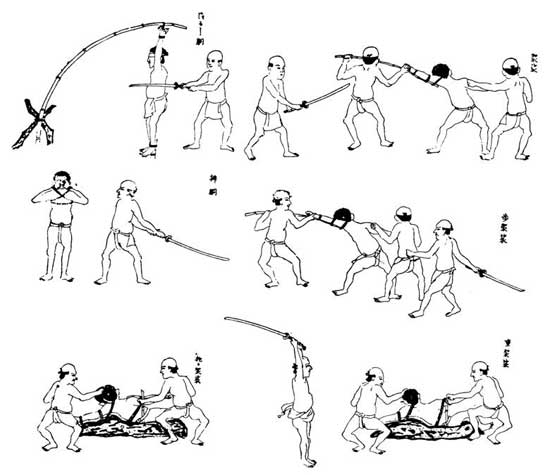
Kaiho Kenjaku by Yamada Yoshitoshi (1797)
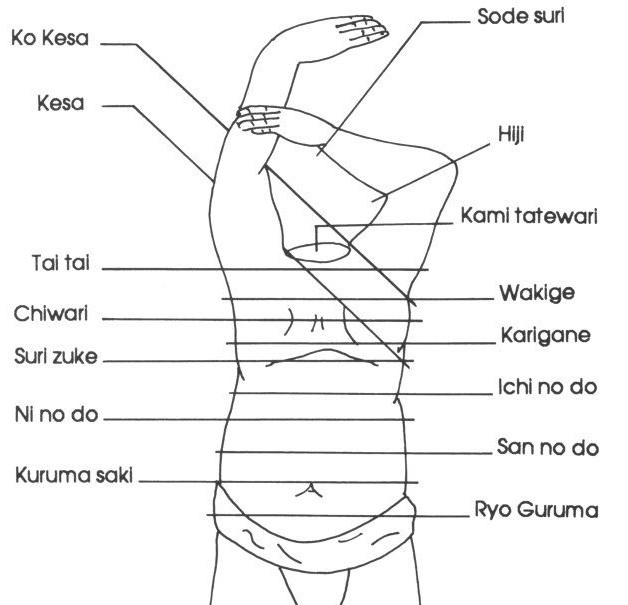
The reason for this is pragmatic; the bodies of criminals would be tied into various positions to allow the swordsman to cut along lines designed to cut through the varying amounts of bone. This was a test not just the blade’s sharpness but also of the swordsman’s skill, since the cuts had to be precisely made or risk breaking the blade.
Professional test-cutters were called otameshi-geisha and members of the Yamada family scribed the two surviving books describing how to properly perform suemonogiri: the Kaihô Kenjaku (“Standard for evaluation of a sword“) by Yamada Asaemon Yoshitoshi (1797), and the Kokon Kaji Bikô by Yamada Asaemon Yoshimutsu (1830).
After a successful cut, the name of the tester, the number of bodies cut through, remarks on the cutting, and the date and location it took place, would be inscribed on the tang (nakago) of the sword, so future generations would know the quality of the blade had been tested.
Resources
A case report of human skeletal remains performed “Tameshi-giri (test cutting with a Japanese sword) ”: Kazuhiro Sakaue
Families performing Tameshigiri in Edo: Discussion thread, Nihonto Message Board
List of popular sword testers in saidan-mei: by C. U. Guido Shiller, Japanese Sword Society of the United States (2007)
Reference page for test cutting swords: website, Samurai Sword.com
Tameshi-Giri (and Suemono-Giri) as a Sub-Cultural Custom and Social Structure in Feudal Era Japan: A Socio-Cultural Analysis of Transformation of Its Symbolic Meanings and Functions (S. Takeuchi, Journal of Asian Social Sciences, Vol 5 #11 Nov. 2009)
Aratemeshi is extreme testing to the limits of the blade, often to its destruction.
 Protective Arts