
This covid-constrained summer of 2020, Master Keating published Comtech Developmental Training, Vol. 1, Sinawali which is an explication of the solo drills that cultivate development, the “IBB Progression.” There are eight drill patterns best learned by using double sticks:
| BBB | III |
| BBI | IBB |
| BII | IIB |
| BIB | IBI |
Each pattern is a development exercise to familiarize the lines of attack as well as the practice of the basic forms of striking: Witik (strike and pull back) v. Lobtik (cutting through).
The Inward line is a forehand strike, delivered from an open position thrown from the shoulder toward your center: yokomen uchi, a haymaker punch, a “closing” line from outside to inside.
The Backhand line is a “reverse” strike that initiates cross body: gyaku yokomen, a reverse knuckle strike, an “opening” line from inside to outside.
Both lines are universal and universally necessary because delivering one line will often result in the set up for its opposite.
The following is a brief exploration of the potential of each pattern. It is by no means exhaustive, but rather an inducement for each of you to find your own lessons.
______________________
BBB = backhand, backhand, backhand
Wing-Chun chain boxing is one way to interpret the BBB pattern – in Western boxing, it’s working the speed bag. The strikes are all witik.
Please recognize that I am trying to link a concept – the global movements. The specifics of the fist positioning are of course different from BBB delivered with a stick or knife in hand, but the body mechanic pattern is similar. The BBB is delivered from centerline to the target.
III = inside, inside, inside
The III pattern is all witik strikes and starts from Kab Kab (open) stance. The following presentation is a simple amplification of drill presented by Master Keating, and explores some applications in broken rhythm to show a combative bait and counter.
Western boxing focuses almost exclusively on inward bound strikes, so a three-hit combo is another way to look at III. The refinements of the inbound attack are well-developed in the sweet science of boxing, so study the nuances, but in principle, they are all III: jab, cross, hook / jab, cross, jab, whatever the combination. Punching allows a combination of witik (jabs) and lobtik (cross) strikes because the empty hand doesn’t need to clear the other hand and doesn’t endanger your own body.
IIB = inside, inside, backhand
IIB is a follow of III, since both start in the “open” stance – both sticks held in front, chambered on the shoulders. The strikes are a flow of lobtik, and in order to follow through with the second set of 3, the last inward bound strike passes through to roll over your head to restart the first inward bound strike of the second set.
BBI = backhand, backhand, inside
The BBI is a wonderful delivery from the Ed Sullivan, or bouncer “interview” position.
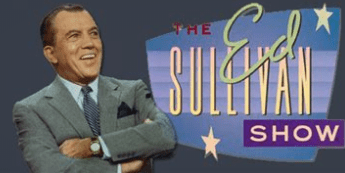
From a double chambered position, one can conceal weapons, hide their true length, or simply present as if unprepared for a sudden attack; regardless of your reason to adopt the stance, with both arms crossed, the only possible delivery is to open with Backhand, Backhand. The Inbound third strike should be a finishing move – as Fred Mastro demonstrates with brutal efficiency.
IBB = inside, backhand, backhand
Hubud, lubud – the most universal and the most useful and powerful given that all the strikes are lobtik. IBB = inside, backhand, backhand, which is heaven-six and hubud and is well covered in earlier material.
______________________
Follow the patterns and explore the lines of potential action.

 Protective Arts