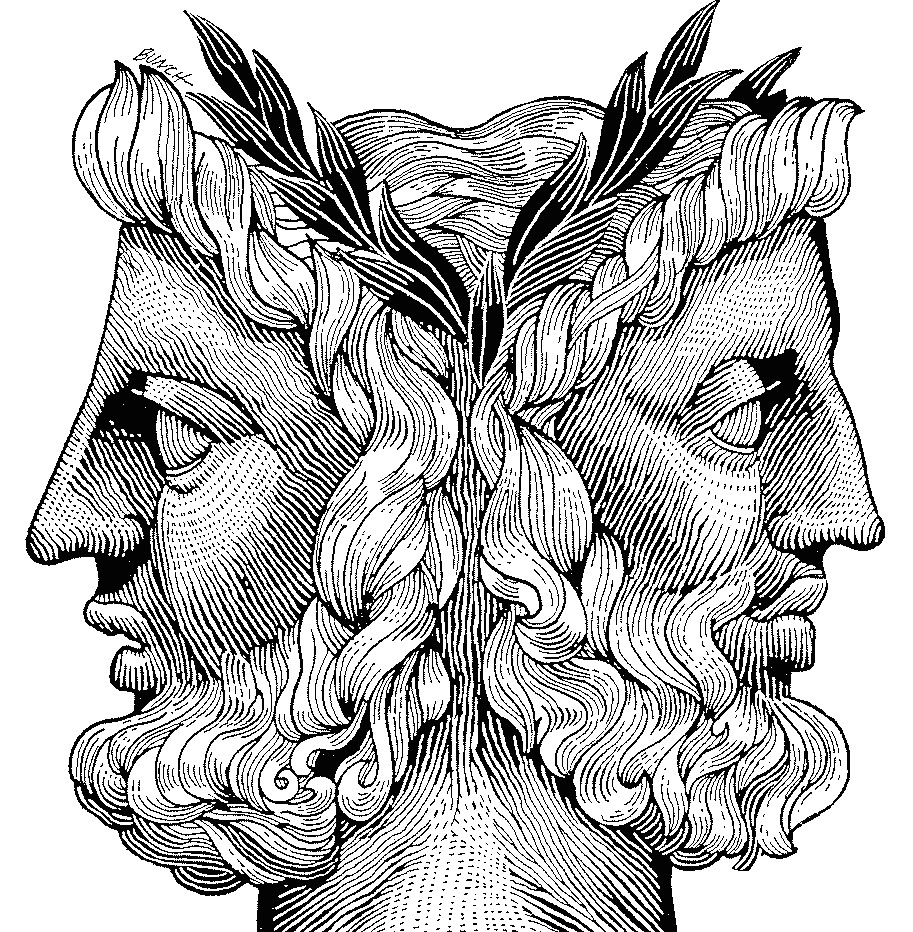
Janus, the two-headed god looking both forward and back. 2020 was a tempting year to just forget. Ryan Reynold’s humorously captured the spirit when he produced this:
Sure it’s a Match commercial but I am a sucker for its dystopian humor. The focus is on the impact of Covid and plays on the forced isolation, and then flips it on its head with the promise of finding love – a match made in Hell? Inversion to prove the universal – it’s fun, clever, and obvious all at once. We are laughing and grateful to have survived a mortal threat and are running up Maslow’s hierarchy of needs as fast as we can!
I know I am desperate to just put it all behind, to look only forward after that royal shit-show!
But Janus looks back because what preceded defines what follows; Santayana’s “Those who cannot remember the past are condemned to repeat it.”
So what lessons can we learn from 2020?
Covid. Our common humanity. Covid is a painful reminder that a globally connected and highly integrated economy [1] is a great boon that comes at a price which every monoculture risks: the spread of disease. We have a shared human biology and isolation is impossible. We are all in jeopardy at the species level.
The incessant coverage of infection rates and the focus on the disparate impacts based on wealth (when has it ever been different?) all highlight inequalities but miss the binding common factor: we are all in this together. This should be the visceral lesson – more immediate and evident than Christ’s homilies – truly we are all children born of one god, bound to one another through our vulnerabilities. But to be reminded of our mortality is impolite – so most of us shut it out. We hide from any reminders of death.
Isolation. I know the challenge of cloistering with one’s immediate family, but I have a deeper empathy for those who have no family to shelter with – solitary confinement is inhumane.
Man is by nature a social animal; an individual who is unsocial naturally and not accidentally is either beneath our notice or more than human. Society is something that precedes the individual. Anyone who either cannot lead the common life or is so self-sufficient as not to need to, and therefore does not partake of society, is either a beat or a god.
Aristotle, Politics
Isolation and training. I wrote a few posts on methods and suggestions. The absence of scheduled training time, I admit, lead to my own failure at maintaining discipline. I have been lax. No, absolutely slothlike, and – worse still – indulgent by using isolation as an excuse to excess. I have absolutely enjoyed the extra time with my family and am grateful that we have the financial security and a home sufficiently large to weather Covid without grave deprivation – just great inconvenience to an otherwise privileged life. I am grateful! It will take serious training to get back to pre-Covid conditioning.
Politics. Dangerous populist demagoguery. The polarization of America troubles me most. Trump poses the oldest question in democracy: why do we still fail to recognize the obvious threats of populist leadership?
Victor Hanson, a scholar I respect deeply, is an intelligent and articulate apologist for Trump. I admire Hanson’s dedication to the common-man thesis that Trump rode into office as well as Hanson’s lambasting the elitist isolation and “do as I say not as I do” moralizing hypocrisy that blinds them to Trump’s virtues. And while I understand his intellectualizing the Trump thesis, Hanson’s classical-tragic lens misses the deep psychology of Trump: the man is a megalomaniac and a pathological imbecile with none of the Sophoclean nuances Hanson ascribes to him.
I have close friends and family members who remain Trump supporters – and who fear the “socialist” Biden agenda. The rhetoric has descended to puerile levels and idiotic arguments. My fervent prayer is that some semblance of civil discourse will return in 2021.
I watch newscasts and shows (the Twilight Zone in particular) from the 1960s and am amazed at how intelligent the discussions were. Thinking back and remembering that the Greek plays and Shakespeare – subjects of deep collegiate scholarship now – were the HBO of their times, one might be seduced to believe the myth of mankind’s steady moral and intellectual decline (Spengler).
Yet we have our modern morality plays. The Avengers staged it best:
The scene poignantly is set in Germany – a clear reminder that we should be thinking about Hitler’s domination:
Loki: Kneel before me. I said kneel! Is not this simpler? Is this not your natural state? It’s the unspoken truth of humanity that you crave subjugation. The bright lure of freedom diminishes your life’s joy in a mad scramble for power. For identity. You were made to be ruled. In the end, you will always kneel.
Old German: Not to men like you.
Loki: There are no men like me.
Old German: There are always men like you.
The danger of the charismatic leader – Frank Herbert‘s eternal villain. Why are so many seduced? Tyler Cowen reviewed his most popular posts of 2020 and found this one was read frequently:
__________________________
Why did so many Germans support Hitler?
by Tyler Cowen March 30, 2005 at 7:47 am in
A well-respected German historian has a radical new theory to explain a nagging question: Why did average Germans so heartily support the Nazis and Third Reich? Hitler, says Goetz Aly, was a “feel good dictator,” a leader who not only made Germans feel important, but also made sure they were well cared-for by the state.
To do so, he gave them huge tax breaks and introduced social benefits that even today anchor the society. He also ensured that even in the last days of the war not a single German went hungry. Despite near-constant warfare, never once during his 12 years in power did Hitler raise taxes for working class people. He also — in great contrast to World War I — particularly pampered soldiers and their families, offering them more than double the salaries and benefits that American and British families received. As such, most Germans saw Nazism as a “warm-hearted” protector, says Aly, author of the new book “Hitler’s People’s State: Robbery, Racial War and National Socialism” [TC: I cannot find it on U.S. Amazon, try this German link] and currently a guest lecturer at the University of Frankfurt. They were only too happy to overlook the Third Reich’s unsavory, murderous side.
Financing such home front “happiness” was not simple and Hitler essentially achieved it by robbing and murdering others, Aly claims. Jews. Slave laborers. Conquered lands. All offered tremendous opportunities for plunder, and the Nazis exploited it fully, he says.
I am a believer in studying the extremes. Hitler’s Germany (extreme oppression and persecution), modern Haiti (a complete mess), and Yugoslavia in the 1990s (relapse from tolerance into murder) have a special hold on my attention in this regard.
And might you think that the German soldiers always followed orders? How about this:
In Auschwitz…there is not one case in the records of an SS man being prosecuted for refusing to take part in the killings, while there is plenty of material showing that the real discipline problem in the camp — from the point of view of the SS leadership — was theft [from arriving Jews and others]. The ordinary members of the SS thus appear to have agreed with the Nazi leadership that it was right to kill the Jews, but disagreed with Himmler’s policy of not letting them individually profit from the crime. And the penalties for an SS man caught stealing could be draconian — almost certainly worse than for simply refusing to take an active part in the killing.
That is from the new and noteworthy Auschwitz: A New History, by Laurence Rees.
__________________________
Loki had it partially right, most people want to be told what to do and happily follow orders – even repugnant ones. Another very human trait – the desire to fit into society is so great that it takes moral courage to remember what is right. (Review again the making of a Unabomber. Thank you Harvard!)
It is easy to think that we would not be corrupted thus – surely I would never blindly be so evil. But I am too honest to be blithely righteous. I drive by the tents of the homeless and have no real empathy – I have no solutions and thus just want them to simply go away. My instinct isn’t to help, to provide aid and succor for the desperate and in need, but rather to retreat to a refuge of safety. Keep them away lest I too be infected and suffer a similar fate. The brotherhood of man lessons are all forgotten when faced with committing to a course of action to better everyone if it means giving up my family’s security and comfort: my charity is circumscribed by tax-deduction calculus.
So would I have been complicit within Das Dritte Reich? I wish I could defiantly assure myself that never! is the answer. All too easy an answer because it is the right one – but not necessarily the honest one.
Trump follows an august lineage of populist leaders that – for me – starts with Themistocles, continues with Julius Caesar, segues to Hitler, and leads to Trump. Much like Hitler, with Trump I am baffled at the evident physical ugliness of the man and the manifest charismatic impact they command. How, exactly, did Trump co-opt the power of the Republican party and foil the establishment? I watched it happen and am at a loss to understand it. The danger is palpable – the fact that martial law is even a topic of discussion should be clarion call for civil action in extremis: Flynn should be keelhauled! And yet many of Trump’s supporters gained nothing tangible from his rule: faith sustained by grievance alone.
Biden’s presidency we can hope swings the pendulum toward the center, but I fear that Trump is a bellwether of the demise of republican values (note the small “r”). The common cause of American exceptionalism is now but a dream – and one criticized by the radical left as an elitist institution.
Alexis de Tocqueville was prescient in his warning – a populous isn’t always violently cowed but its government is a more insidious process where:
It does not break wills, but it softens them, bends them, and directs them; it rarely forces action, but it constantly opposes your acting; it does not destroy, it prevents birth; … it represses, it enervates, it extinguishes, it stupefies, and finally it reduces each nation to being nothing more than a flock of timid and industrious animals, of which the government is the shepherd.
Alexis de Tocqueville, Democracy in America
Remain vigilant.
_____________________
My father died April 2019, the plague descended March 2020, and one of my oldest friends was diagnosed with pancreatic cancer just as Covid hit. Death is very much present with me and my memento mori is the M3 in the driveway. Trying to outrun death? Undoubtably. But also, a wonderful tool to bond with my boys – celebrating life even as it reminds me of its inevitable end.
Concerns over Covid-19 started in March 2020 and at first we were very assiduous with protocols and quarantine. A late snow provided some added refrigeration for the extra food we stocked up on.

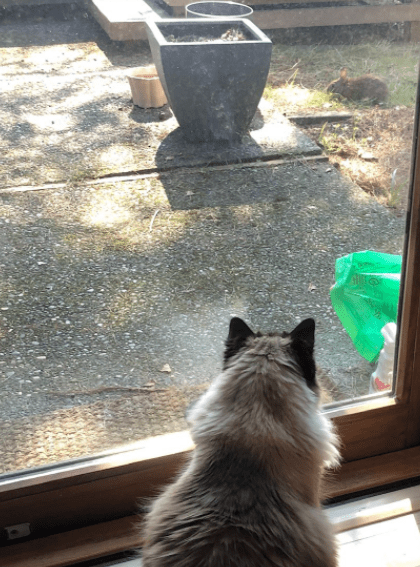
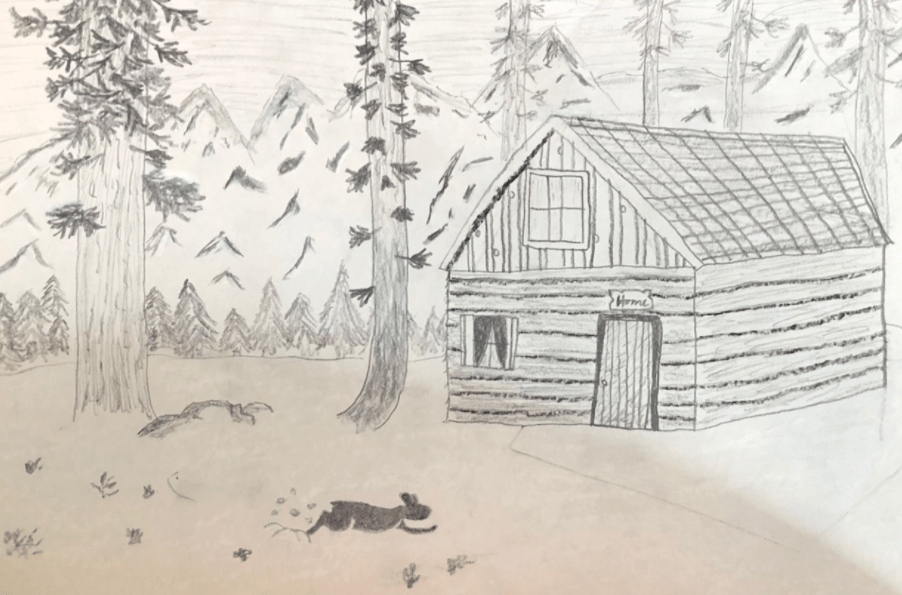
The snow was short-lived, leading to Spring and the eternal return. We have a rabbit warren under our deck – the cats watch them eagerly and inspired Kyrian to draw.
As the weather warmed, we all became more active. Heidi and I began walking on a regular basis and explored the beauty of our neighborhood parks. The scale of the trees in Oregon is impossible to capture with a camera.


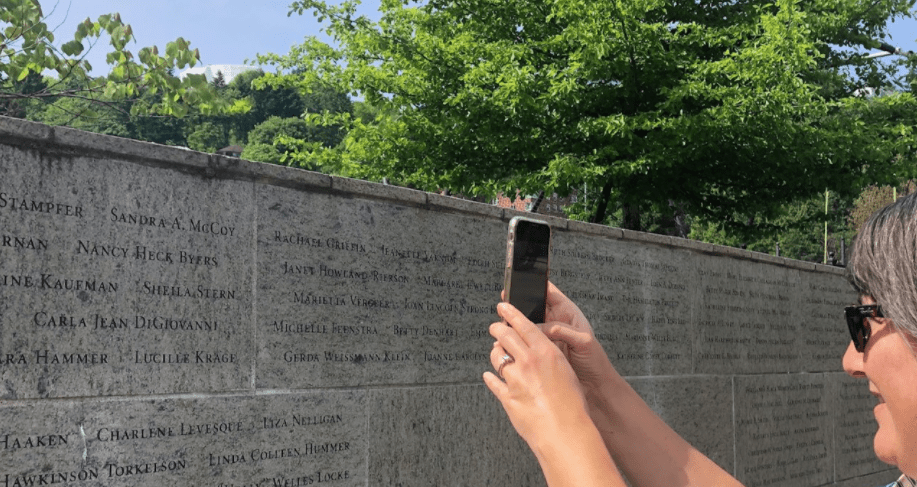
On Mothers’ Day, we visited the Walk of the Heroines, where Heidi had honored her mother by adding her name to the wall in 2011.

In June, we enjoyed a long weekend at Cannon Beach – and we were not alone.


In July we spent a long 4th of July weekend in Bend – again, it is impossible to capture the scale and majesty of the country with a camera.

In early August, we stayed in Seaside for Kyrian’s dance competition – the beach town was packed with tourists despite Covid – and not everyone wore masks.
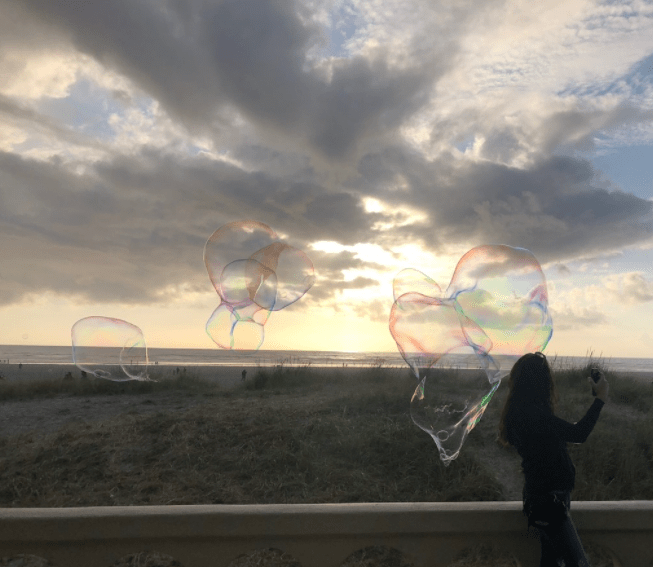
Throughout the summer, we continued our cul-de-sac basketball games – usually me vs Kyrian, but occassionally the boys went one on one

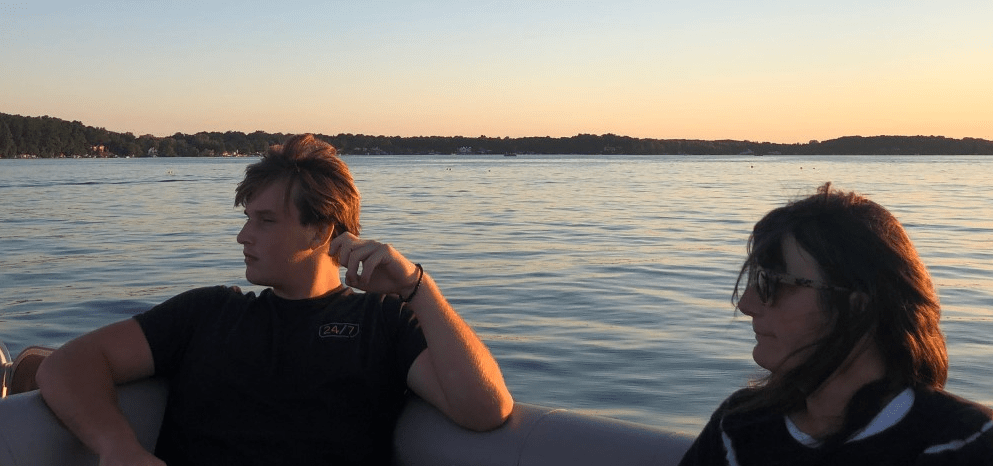
The highlight of the summer, was a trip to Michigan. The boys wanted something “normal” and the chance to see their cousin Aaron at Dad and Nancy’s meant we all risked flying.

School resumed online only.
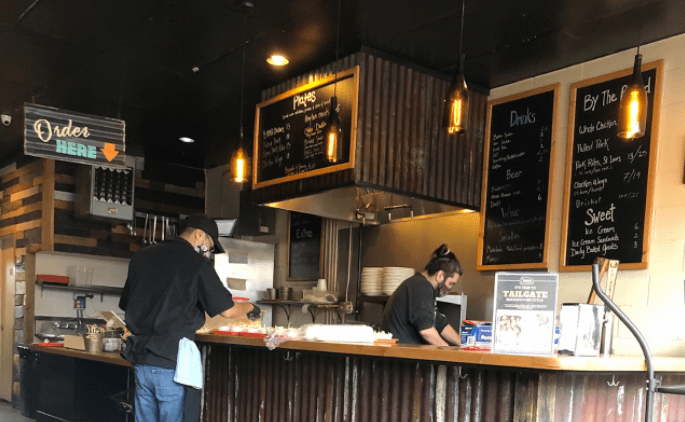
One weekend the boys and I drove to Newberg to explore and happened upon Storr’s Smokehouse – some of the best barbeque we have found.
As the winter rains and short days descended, we all became more despondent. Heidi got a puppy

The Christmas to New Year break was challenging. We all spent too much time alone within the same house indulging in high-calorie food.


The boys played more video games and I found Titans and Doom Patrol to distract me. Only Kyrian was productive and he started to teach himself guitar.

Looking back now, Janus would remind us that reflection itself is survival. 2020 stripped away illusions, about health, politics, even self-discipline, but left behind gratitude. The lesson is simple, if rarely learned: comfort is fragile, courage is choice, and memory is armor. Remain vigilant. Janus would approve.
_____________________
[1] The global economy is demonstrably old – spice and food goods were circulating in the Bronze Age – but the modern scale is wider and faster because of air travel. Viral vectors, like all good zombie and pandemic movies show, are necessarily quickly global.
 Protective Arts