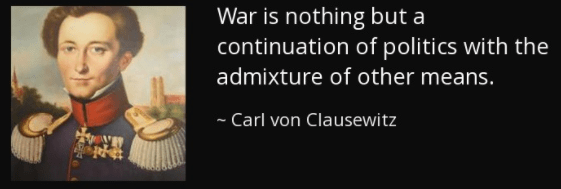
Russia’s invasion of Ukraine (this time) was met with rhetorical resolve and (largely) unified economic sanctions by the West. [1] The mechanism and impact of sanctions is hard to imagine and – unfortunately – hurts the general public more than the oligarchs and political elite of Russia.
The Financial Times is the best and most accessible presentation:
I admit to being conflicted on economic warfare – this form of war essentially targets civilians, something a just war is not allowed to do. An economic attack is directed against treasure and demands less blood, so is morally preferrable by most theorists. It is also politically expedient – showing dedicated action while avoiding putting soldiers directly in harms way.
To take the war directly to the oligarchs, the House introduced legislation to seize their assets. The ACLU helped to defeat the effort because it violated due process. My moral compass is spinning! The ACLU is comprised of well-meaning lawyer-types. I deeply respect their adherence to the law – the West can be well-summarized as a culture where the rule of and equality before the law is paramount. Thus I am sympathetic to their argument for due process to protect the oligarchs’ private property.
Yet we have a realpolitik problem. The West should not, must not, sit idly by as Russia invades. But we cannot declare war – that formality would change the conflict irreparably. Yet Biden has already called Putin a war criminal. Are we putting too fine a legal point on definitions?
Plunder the oligarchs’ assets to finance the assistance we are providing Ukraine?
Sherman’s March was designed to bring pain directly to the plantation owners. The scorched earth and “forage liberally” policy (the Union army was well beyond supply and refits) was effective and culminated in Sherman’s capture of Savannah – Lincoln’s 1864 Christmas gift (accomplished on the 21st). While Grant ran the conventional and bloody war against the Confederate army, and suffered heavy losses for it, Sherman was destroying the economic means of production. Sherman destroyed rail, infrastructure, pillaged farms, and took the fodder. Ultimately both strategies were required for the Union to prevail and I doubt any serious military historian would conclude otherwise.
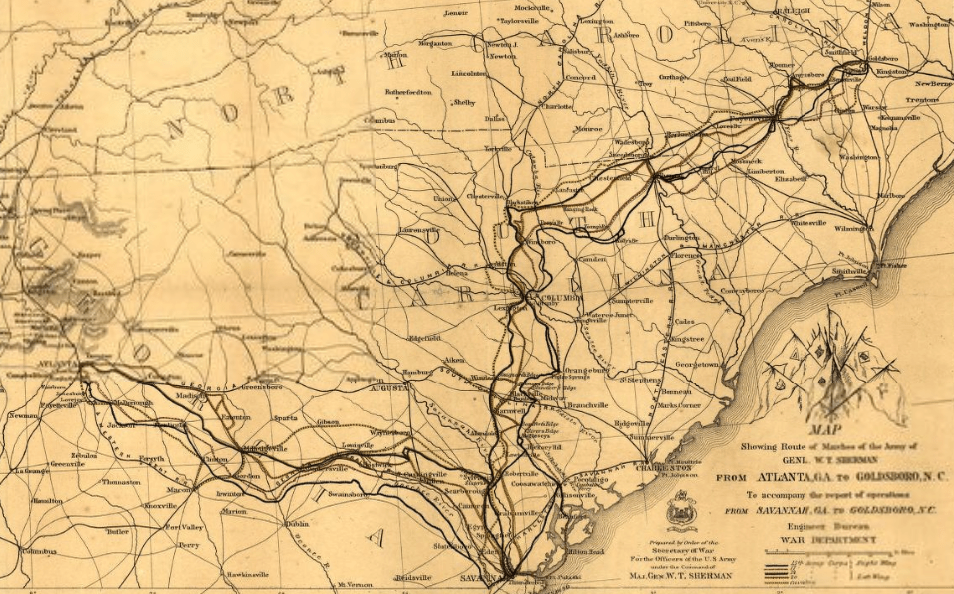
Sherman was unconventional by targeting infrastructure rather than armies (the Western Way of War demands decisive battles). There were no international rules or conventions to restrict war time actions during the Civil War. In the mid-19th century soldiers and commanders behaved responsibly in wartime because of religious beliefs that are the foundation of any theory of “just war.” The antebellum curriculum at West Point focused heavily on engineering but I suspect that the moral precepts of a just war were discussed. A generation earlier, both George Washington and Benjamin Franklin read Emerich de Vattel’s 1758 Law of Nations which sought to define when nations could legitimately resort to armed conflict and how they could behave once engaged. This much is certain, in 1863, the U.S. government published General Order No. 100, Instructions for the Government of the Armies of the United States in the Field, written by Francis Lieber. He was a German-born jurist and political philosopher who drew on the principles of just war and the work of Vattel and Grotius to formulate concrete policies for the army. (The radical individualist and abolitionist Lysander Spooner quoted Vattel extensively in his publications. [2])
Just war theory (then and now) is intended to limit the scope of conflict to the combatants and minimize lethal violence and property destruction against non-combatants. Americans on both sides of the Civil War were familiar with the guiding principles, if not the details, of the just war doctrine. They also understood that the purpose of war is to win: The importance of winning. Hence the March to the Sea.
Pinker made the mistake of thinking we have become our better angels because the death count in armed conflict is lower. We have merely refined and sharpened our knives so that we are better at precision killing. Human nature hasn’t changed, just been hidden with targeted or bloodless violence. Until we Cry ‘Havoc!’, and let slip the dogs of war. Putin set them free.
And so I am conflicted. I do not believe U.S. direct and open armed conflict with Russia is prudent, even if justified to repel an invasion. The West elected instead to wage economic war as a form of ostracism and coercion. The confiscation of property owned by oligarchs aligned with and in the direct ambit of Putin without due process is a further act of war. Sherman issued Special Field Orders No. 120 authorizing the confiscation of property with no due process. Such is war.
Is the ACLU hand-wringing too much legal formalism? Would we be sacrificing the very principles that the West stands for by an “unjust” taking in retaliation for an invasion that will otherwise be repelled with the blood of heroes? My libertarian ideals quiver and falter as I hear the echo of Kyrian’s plaintive question, “Dad, will Adin be drafted?”
_______________
[1] Despite being part of NATO, Turkey is not part of the West under Erdoğan and one wonders – will it always be thus?

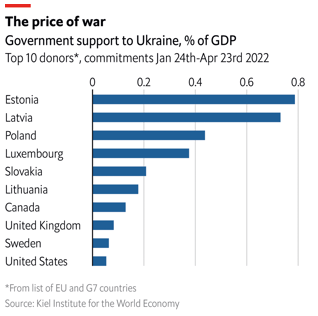
The direct financial support for Ukraine has bolstered its ability to withstand the Russian invasion:

Note the countries that border Russia have given a very significant percentage of their GDP to bolster Ukraine, knowing that they could be next.
[2] Lysander Spooner was both an abolitionist and opposed to the Civil War on sound libertarian principles. Murray Rothbard and later libertarian thinkers admired Spooner’s clear thinking.
 Protective Arts
2 thoughts on “Economic Warfare”