Intellectual dishonesty has always offended me – at best it is fraud (ahem, Foucault) and at its worse hypocrisy (religion).
Adin is taking “Social Inequalities” classified as a sociology class by the University of Oregon. It offers nothing substantive nor provides intellectual rigor. But he knew that before he signed up and did so precisely to check off a prerequisite and get an “easy A.” The final paper assignment:

What a crock of horse piss. Using your individual experience to locate your feelings within a matrix of constructs isn’t sociology, it’s a form of indoctrination.
The assignment presupposes the existence of a structure or a “social force” and then asks the individual to reflect upon (confess) behaviors or experiences that fit within the definition of the presumed structure.
Clearly these classes don’t promote critical thinking but rather promote ideological imperatives. Introspection at the level of the individual is nothing more than omphaloskepsis and doesn’t tell us anything about social structures until we actually have a meaningful (aggregated) data set from which to derive evidence for a pattern that indicates there is in fact structure.
Forced navel-gazing is a clever way to sow division. We all need to remember that the origins of this intellectual bankruptcy began with Peggy McIntosh’s 1988 paper.
McIntosh’s “white privilege” merely lists advantages that accrue to those with money and social dominance and are thus banal universals that are not unique to being “white.” I can assure you, travel to a non-white majority country and the “whiteness” of privilege is quickly disproven. McIntosh is the perfect exemplar of how a narrow collegiate experience benefits no-one because it doesn’t promote critical inquiry. Thus it stands for the entire endeavor: “Wokeness,” once meant as awareness of injustice, has degenerated into moral posture. No longer a rally for self-awareness through solidarity, it has become a marker of self-righteousness.[1]
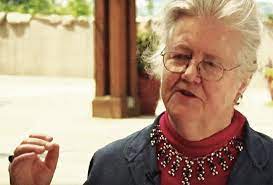
Better than hear my opprobrium, listen to the woman’s words in this TEDx talk. Her presentation seems so logical, but listen closely. McIntosh actually admits she is racist – “And to this day, in my major project, the SEED project, whose core staff is nine people of color and five whites, I will, unless I check myself, second guess, and doubt, and judge everything said — every sentence, every word, said by my colleagues of color. I will do it because my hard drive is wired with the white privilege that I am a knower. And among my nine colleagues of color, the level of knowledge and understanding, and intelligence isn’t as high as it is in me.” She admits her default “program” is a racist one. One can write this off as her atonement for her time – she was born in 1934 and thus is steeped in racist ideology. She has played an amazing magic trick to hoodwink the post-Civil Right generations that there could still be such a strong racial bias. Te nominas non me – don’t foist your weaknesses upon me. McIntosh is a bitty grandma who thinks her individual worldview has any significance and she has the guilt of the religious: “So I decided I had to pray on it. And I went to sleep one night — angrily, really. It wasn’t the usual prayer in which you ask for something, I was demanding. I said, if I have anything I didn’t earn by contrast of my black friends, except the money system and the knowledge system, show me.” And the revelation: “And in the middle of the night, along came an example. I switched on the light — it woke me up of course — and I wrote it down. And over the next three months, 46 elements of unearned advantage came to me. And they’re in my paper, “White Privilege, Unpacking the Invisible Knapsack,” and my paper, “White Privilege and Male Privilege,” a personal account of coming to see correspondences through work in women’s studies.” Ahh. But who was this messenger in the night? Was this divinely inspired or demonic? She hasn’t the depth of soul to question her conclusions or the source of her revelations. Worse still she admits to being a hypocrite: “So the cops arresting me for speeding tend to let me off. I get the benefit of the doubt because I’m a little old lady with white hair. (Laughter) And my papers are in order, and my voice is soft. So, I get let off. It’s not fair. But I don’t want to say, “Officer, officer, arrest me!” (Laughter) Because that’ll put our insurance up. (Laughter)” No martyrdom for her, not even financial inconvenience! Listen carefully, she reveals her true nature: admittedly racist, hypocritical to the core, weak, and sanctimonious.
And there are so very many problems in the course’s matrix of social ills. I look upon the list my son must flagellate himself with and see only pejorative terms that need a robust discussion and definition before acknowledging them as evils that escaped from Pandora’s vase.
One can only hope that Musa al-Gharbi is correct that “awokening scholarship” has peaked. David Rozado points to Twitter data which also suggests a decline. Let us hasten a painful death to these false gods!
________________________
It sickens me to see this university-taught whinging, especially as Biden contemplates cancellation of student debt. Where is the equity?
The beauty of a free market is that ultimately ideas can be monetized. Monetization is an indicator of social utility and value creation.
Those degrees that have social utility don’t accumulate college debt which cannot be paid. The people with debt they cannot repay have worthless degrees ipso facto and therefore we should not – must not! – increase the moral hazard by cancelling those debts. According to the Cato institute the majority of Americans oppose student debt cancellation. The percentage of opposition scales against further qualifications, but at least the majority are opposed.
The democratization of higher education was a grave error. It has vastly diminished its value – even degrees from elite universities are no assurance of excellence, refinement, or command of core knowledge.

_______________________
[1] Read the list of “privileges” and with one simple thought experiment, see how they are utterly false with a re-contextualization of geography. If I were to go to Mexico, Japan, or anywhere other than historically Anglo countries, none of these obtain. All McIntosh does is prove her provincialism! She clearly hasn’t even been to Hawaii where only her ignorance would let her believe any of these applied to her:
- I can, if I wish, arrange to be in the company of people of my race most of the
time. - I can avoid spending time with people whom I was trained to mistrust and who
have learned to mistrust my kind or me. - If I should need to move, I can be pretty sure of renting or purchasing housing in an area which I can afford and in which I would want to live.
- I can be reasonably sure that my neighbors in such a location will be neutral or
pleasant to me. - I can go shopping alone most of the time, fairly well assured that I will not be
followed or harassed by store detectives. - I can turn on the television or open to the front page of the paper and see people of my race widely and positively represented.
- When I am told about our national heritage or about “civilization,” I am shown
that people of my color made it what it is. - I can be sure that my children will be given curricular materials that testify to the existence of their race.
- If I want to, I can be pretty sure of finding a publisher for this piece on white
privilege. - I can be fairly sure of having my voice heard in a group in which I am the only
member of my race. - I can be casual about whether or not to listen to another woman’s voice in a
group in which she is the only member of her race. - I can go into a book shop and count on finding the writing of my race
represented, into a supermarket and find the staple foods that fit with my cultural traditions, into a hairdresser’s shop and find someone who can deal with my hair. - Whether I use checks, credit cards, or cash, I can count on my skin color not to
work against the appearance that I am financially reliable. - I could arrange to protect our young children most of the time from people who
might not like them. - I did not have to educate our children to be aware of systemic racism for their
own daily physical protection. - I can be pretty sure that my children’s teachers and employers will tolerate them if they fit school and workplace norms; my chief worries about them do not
concern others’ attitudes toward their race. - I can talk with my mouth full and not have people put this down to my color.
- I can swear, or dress in secondhand clothes, or not answer letters, without
having people attribute these choices to the bad morals, the poverty, or the
illiteracy of my race. - I can speak in public to a powerful male group without putting my race on trial.
- I can do well in a challenging situation without being called a credit to my race.
- I am never asked to speak for all the people of my racial group.
- I can remain oblivious to the language and customs of persons of color who
constitute the world’s majority without feeling in my culture any penalty for such oblivion. - I can criticize our government and talk about how much I fear its policies and
behavior without being seen as a cultural outsider. - I can be reasonably sure that if I ask to talk to “the person in charge,” I will be
facing a person of my race. - If a traffic cop pulls me over or if the IRS audits my tax return, I can be sure I
haven’t been singled out because of my race. - I can easily buy posters, postcards, picture books, greeting cards, dolls, toys, and children’s magazines featuring people of my race.
- I can go home from most meetings of organizations I belong to feeling somewhat tied in, rather than isolated, out of place, outnumbered, unheard, held at a
distance, or feared. - I can be pretty sure that an argument with a colleague of another race is more
likely to jeopardize her chances for advancement than to jeopardize mine. - I can be fairly sure that if I argue for the promotion of a person of another race, or a program centering on race, this is not likely to cost me heavily within my
present setting, even if my colleagues disagree with me. - If I declare there is a racial issue at hand, or there isn’t a racial issue at hand, my
race will lend me more credibility for either position than a person of color will
have. - I can choose to ignore developments in minority writing and minority activist
programs, or disparage them, or learn from them, but in any case, I can find
ways to be more or less protected from negative consequences of any of these
choices. - My culture gives me little fear about ignoring the perspectives and powers of
people of other races. - I am not made acutely aware that my shape, bearing, or body odor will be taken
as a reflection on my race. - I can worry about racism without being seen as self-interested or selfseeking.
- I can take a job with an affirmative action employer without having my
co-workers on the job suspect that I got it because of my race. - If my day, week, or year is going badly, I need not ask of each negative episode
or situation whether it has racial overtones. - I can be pretty sure of finding people who would be willing to talk with me and
advise me about my next steps, professionally. - I can think over many options, social, political, imaginative, or professional,
without asking whether a person of my race would be accepted or allowed to do what I want to do. - I can be late to a meeting without having the lateness reflect on my race.
- I can choose public accommodation without fearing that people of my race
cannot get in or will be mistreated in the places I have chosen. - I can be sure that if I need legal or medical help, my race will not work against
me. - I can arrange my activities so that I will never have to experience feelings of
rejection owing to my race. - If I have low credibility as a leader, I can be sure that my race is not the problem.
- I can easily find academic courses and institutions that give attention only to
people of my race. - I can expect figurative language and imagery in all of the arts to testify to
experiences of my race. - I can choose blemish cover or bandages in “flesh” color and have them more or
less match my skin.
Some of these are utterly flabbergasting: #17 talking with your mouth full in American is a universal sign of ill-manners, it’s classist, not race contingent; as is #18; #19 is gendered, not a white issue – McIntosh needs to be educated on the slang use of Karen; #22 makes her a Dumb American; #28 is patently false (albeit perhaps not in 1988 but I would like to see data please); most of the assumptions result from her racist presumptions. How, how dear reader, has this claptrap gained any audience whatever?
Perhaps if McIntosh had studied anthropology (or sociology) rather than English she would have understood that her concerns were of negligible insight. She (and most Americans) have never experienced structured inequity. To do so, she would need to move her eyes away from her navel to gaze at India, the largest democracy with a very rigid and structured system of inequality – the caste system.
How much are individuals willing to pay for privileged status in a society with systemic discrimination? Utilizing unique data on indentured Indians in Fiji paying to return to India, I calculate how much upper-caste individuals were willing to pay historically for their status. I show the lower bound of the value of the uppermost castes in north India equaled almost 2.5 years’ gross wages. The ordering follows hypothesized inter-caste hierarchies and shows diminishing effects as caste status falls. Men entirely drive the effects. My results show some of the first evidence quantifying caste status values and speak to caste’s persistence
Alexander Persaud, “A (paid) passage to India: Migration and revealed willingness to pay for upper-caste status” (Feb 2023)
_______________________________
Adin achieved his “easy A” with the following final paper, which I can only hope he wrote with the specific goal of appeasing the professor.
Adin Barker
Professor J. Vasquez-Tokos
SOC 207
March 17, 2023
Social Inequalities Final Paper
Throughout my life I have been very fortunate to have the skin color and gender that I do. From daily tasks like going shopping or walking down the street to more extreme examples like being pulled over by the police. In the class, the idea of race is defined as a social construct by, “nothing more than what society and law say it is” (Lecture, 3.1). Many of these laws have been created by white people for white people’s benefits. Furthermore, society, specifically in the United States, has been structured for white people to succeed. Racist historical laws, practices, and policies have created systemic racism which is now infused in our everyday lives (Lecture, 3.1). As a white individual, I am privileged in the fact that I have never had any discrimination towards me, whether it be laws, stereotypes, or other forms of discrimination in the US. I was born into a country which was built to cater to people who look like me. A key example of this systemic racism and privilege which I have recently experienced was the first time I was pulled over. When I was pulled over, I was definitely frightened because I had never had it happen to me before, but I never feared for my life. It didn’t even cross my mind once that what is going on right now could drastically change if not end my life. If I didn’t have the skin color I do, this encounter would’ve been drastically different. Being in Oregon where there is a very high percentage of white people, and a long history of racist ideology along with laws. Similar events have occurred around the country which has created racial biases around the country which has led to everything we are now seeing in the media and how deadly encounters with police can be. I would’ve treated being pulled over as a life or death situation had I not been born with the skin color I have.
Being a male in today’s society is another area where I have benefited. As there are no
significant brain sex differences, there shouldn’t be any gender discrimination in wages or expectation for roles in society. Yet, as a gender as a social construction is still based on “social forces that attribute status and expectations on people based on perceived femininity /masculinity. Opportunities, experiences, and results (on many measures) vary based on gender” (Lecture 4.1). I was born into a very open minded household where “gender fragments” were encouraged and not looked negatively upon (Trans Kids, Meadow). I was allowed to play with whatever toys I wanted regardless of stereotypes, I played dress up and wore my mothers wigs. I never had to pretend to be anyone other than myself in my house which really let me grow into the person I am today. Even though I developed to be a heterosexual, male, I had the opportunity
to choose for myself how I wanted to identify, dress, and who to be attracted to. There are plenty of homes where children don’t get the same opportunities as me to explore their gender and sexuality. Being a heterosexual male there are expectations and stereotypes which can be harmful to our development if not supported. Everyone has different experiences and struggles surrounding their gender identity. Toxic masculinity is something that I have experienced throughout my life. I have been told to “man up,” “don’t be a wimp,” and many other things just throughout sports. Not only in my immediate life does toxic masculinity show up, but in the media that I consume. The media has done a great job of reinforcing how “boys and men are taught to deny human emotion that isn’t linked to aggressive power” and showing how, “boys and men are punished for vulnerability and rewarded for aggression (Lecture 4.2). From the movies we watch to the headlines being posted all over, it shows that men are the aggressors and if they’re anything else they are portrayed as less than a “real man.” Not only the media and sports but going through everyday life at school, homophobic jokes, taunts, and imitations [were used] through which boys publicly signal their rejection of that which is considered unmasculine” (Pascoe, 177). This fag discourse has little to do with the people being called words actually being gay but its more a word which people use to denote weakness or nonconformity to the normal. Using words and phrases similar to those slurs help promote toxic masculinity while stigmatizing those people who don’t always conform to “hegemonic masculinity” (Lecture 4.2). Normalizing ideas like toxic masculinity and fag discourse can have detrimental affects on the male community which already has statistically higher suicide rates than other communities. Throughout my life I have heard those words be used in a way to put someone down without knowing why people would say it. Knowing now that it is just a way for them to feel more masculine or prove something to everyone else it seems silly that people continue to use words and phrases that can be so hurtful to someone who actually may be struggling with identity.
The last identity I have which I have learned to reevaluate after sociology is being upper
middle class. I have been blessed that I don’t have to pay my way through college, have the soft skills, and connections which has put me in the cycle of class reproduction. Being upper-middle class, I have opportunities that those in lower classes don’t or have to work much harder for them to get. Not only that but I have been able to go to some of the wealthiest public schools which have given better education than those in other neighborhoods of Portland. Being from a good area of Portland, along with having those opportunities, gives me a better chance at being able to have upward mobility and procure more wealth than my family previously had. Furthermore, because of the way I appear in society I have the benefit of “fitting” into most job roles. I also have the benefit of my parents having connections which I can use later in life which can help boost me upward, giving me an even better chance at class reproduction. Also, being white and upper-middle class, I have had the benefit of bills and laws benefiting me. An example of laws benefiting white people is the G.I. bill, where whites and blacks were disproportionately benefited. Even though it was meant to help the middle class, the support wasn’t evenly distributed between everyone (Lecture 2.1). Even though this didn’t personally affect me, I have had similar benefits of being white and upper middle class.
Being a straight, white male has benefited me throughout my life more than I will
probably ever know. Personally, taking a social inequality class has helped expand my
understanding of my privilege. Not only that, being someone of privilege gives me the power to try and change these inequalities which are so widespread.
 Protective Arts