We come to know characters in books far better than we can people in our own lives because characters are immutable, crystalline in their structured captivity. I stole that thought from Milan Kundera – there is likely something similar in The Unbearable Lightness of Being.
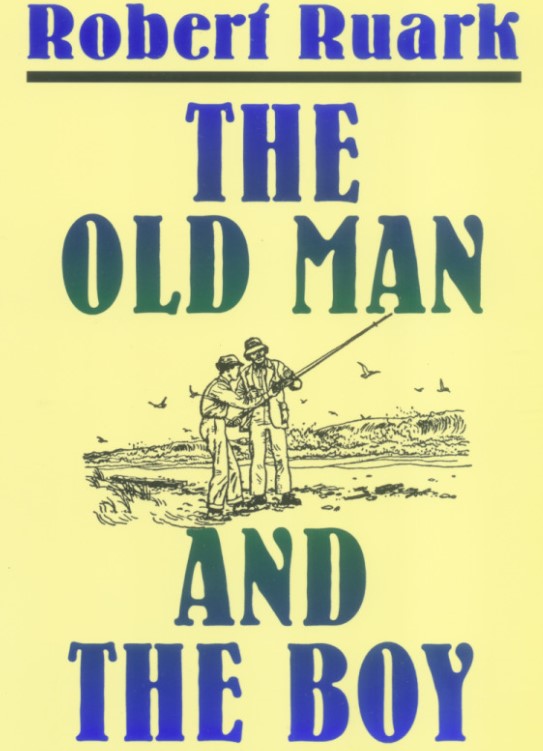
My mother sent me a book my father had wanted my boys to read – The Old Man and the Boy, by Robert Ruark. I read a few chapters which are clearly anthologized serial stories (as they were published originally). They are charming in a folksy wise man teaching the youth about life way. Ruark captures the innocence and optimism of an America soberly unaware of itself after WW2 – an America where hunting and fishing are taken for granted, when the incessant pressure of city-time wasn’t oppressive, when common-sense was in fact common and sensible because there was an implicitly shared understanding.
Because he never sent it while he was alive, he and I never got to discuss the book. He never mentioned to me that he had read it.
In thinking upon “Why this book?” makes me reflect upon my father. Did he see himself as the Old Man hoping to convey warm wisdom upon my sons? Upon me? Did he find idyllic memories of his youth in these tales – reminders of experiences I don’t believe he ever had? It would be easy to dismiss it all as too saccharine and too sentimental. My boys would have had no interest in nor even care to understand these stories – the context is too foreign to them. Despite a rural upbringing, from the stories my father told me of his youth, he never hunted nor fished extensively. He did take up fly fishing after he retired, so perhaps he can see himself there. But I am quite confident he didn’t do anything of the sort with his father. His father by all accounts was a loving and well-loved man. But he was a small-town banker, not a gentlemen farmer or woodsman.
I think that what my father responded to was the feeling of the book – its spirit. He was an artist, so I expect he wouldn’t be opposed to the terms. Ruark does manage to create an atmosphere of innocence that I believe my father wished for everyone he loved – a hope for good – and simple – outcomes.
By sending the book post-mortem, I see it as a totemic blessing. It serves as a reminder of the power of the idyll: a reminder to read Theocritus and not just Homer.
 Protective Arts