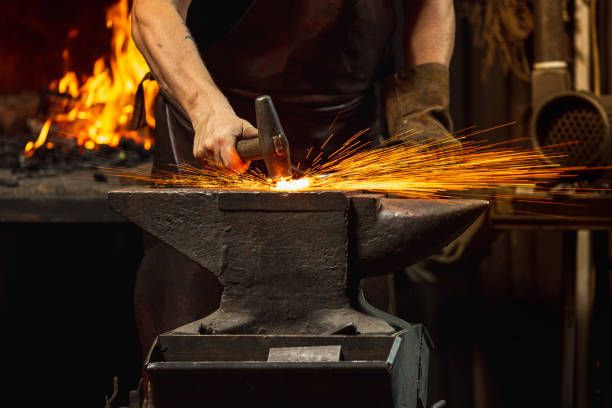
I have been focusing on tanren-geiko and drawing out a muscular pressure from both uke and nage in order to cultivate honest training.
“Whatever has value in the present world has it not in itself, according to its nature—but rather because it has been given value, and frequently because it was regarded as valuable by a higher power.”
— The Will to Power
Nietzsche reminds us that techniques are embodied responses that resulted in winning.
For an idea to propagate and be transmitted it must have utility – even when watered down to an art. Aikido’s techniques no longer have direct application to survival on a battlefield, but their value remains to cultivate the spirit in the crucible of contest. Yet struggle and competition is now suspect. Contest implies victory, and victory implies defeat—an unpalatable notion in an age that seeks beauty without effort. Thus, the cooperative contest in the dojo is a path for personal refinement. Tanren training is the hammer and fire that make the blade. We must remain honest that beauty is an emergent characteristic of hard work.
_____________________________
That brief thought was inspired by a rather insipid comment that stuck with me longer than I should have let it:
A visiting student had the temerity to write an email to Mike Napoli after taking one of my classes. Her complaint? That my focus was too violent and that Aikido shouldn’t be taught that way. She is wrong, probably read too much John Stevens.
Let’s start there.
What you find in many dojos today is the result of deliberate forgetting. It is not evolution. It is not refinement. It is editorial omission. Omission combined with the lack of vigorous training and devoid of practical application.
My polemical style is theater designed to provoke a response and act as a crucible of character. If you don’t understand the seriousness of my play, to preserve and transmit the fire within the art, then I have no need of you. Nor does the art, which already suffers too many fools. It is not enough to say that Aikido is peaceful; we must say what it was, how it changed, and what that change costs. Mine is an attempt to recover the reasons for the form, the purposes embedded in technique, and the intent that once governed practice.
The techniques of Aikido did not arise from nothing. Ueshiba studied under Sokaku Takeda, inheriting Daito-Ryu’s joint locks, pins, and throws. These were battlefield techniques, designed for armored opponents, often in situations where weapons were lost or compromised. The locks had intent: to disarm, disable, control, or kill. Aikido’s foundational techniques are of that system.
And Aikido’s spiritual foundation is also culturally specific. O’Sensei was a member of the Omoto sect, a radical Shinto-derived movement led by Onisaburo Deguchi. The Omoto-kyo religious movement was a quasi-Shinto, quasi-Buddhist sect that preached universal peace, but a peace based on Japanese divine leadership. Ueshiba was a follower of its prophet, who was both charismatic and politically dangerous. In fact, the government cracked down on Omoto violently in 1921 and again in 1935, for sedition. The Omoto sect was not some gentle ecumenical philosophy it was nationalist, messianic, and millenarian. Omoto believed in Japanese divine destiny, in the descent of Amaterasu, and in a future world reshaped by Japan’s spiritual centrality. The universalism it preached was not egalitarian; it was a hierarchy with Japan at its summit.
This is crucial to understand, because it frames what Ueshiba meant when he spoke of harmony. Harmony was not the erasure of conflict; it was the orchestration of conflict toward divine ends. And Aikido, in that frame, was a ritualized expression of power properly aligned with cosmic order.
After the war, this was no longer acceptable. Omoto had already been suppressed by the Japanese state for its millenarian activism, and its association with Aikido became a liability in postwar Japan. Under the guidance of his son Kisshomaru and later interpreters like Koichi Tohei and John Stevens, Aikido was rebranded. The nationalist and esoteric Omoto elements were carefully rescripted with Buddhist and universalist tones to emphasize concepts not inherent in the origins: “reconciliation,” “harmony,” and “spiritual development.” The pacifist myth of Aikido was born through a great act of editorial mediation. Kisshomaru Ueshiba’s 1957 book Aikido, and later Stevens’ volumes, cherry-picked from O-Sensei’s writings and stripped away most of the Omoto-kyo-specific language. This was intentional. You can’t market a martial art with millenarian Shinto prophecy in the West.
And this changed the presentation of the techniques and the way they were taught. Atemi (strikes) were removed or marginalized. Ukemi became performative. Entries became stylized, the finishes elongated, the structural integrity diluted. The pedagogy shifted from combative realism to cooperative demonstration.
It is here that John Stevens makes his fatal error. In portraying Aikido as a pure expression of peace, he abandons its origin in tactical necessity. Beauty, he insists, is the purpose. But beauty is not the purpose. As I wrote above: “The beauty is an emergent characteristic of the hard work.”
Teachers like Kazuo Chiba kept the blade edge sharp. Chiba, a postwar uchideshi, often spoke of Aikido as a “forging” process—not therapeutic but transformational in the old, brutal way. He saw the pacification of Aikido as a betrayal. “That man will ruin my art,” Ueshiba is reported to have said about Tohei. Chiba took that warning seriously. He understood that Aikido is a budo—a martial path. His practice retained atemi, retained tension, retained danger. He said explicitly: “The budo of Aikido is hidden.” And he meant hidden in plain sight. Just as Okinawan karate hides its bunkai within kata, Aikido hides its combative grammar beneath the veneer of flowing movement.
Chris Mulligan, was at Seagal’s dojo during the early development of Above the Law. Whatever one thinks of Seagal now, that film did more to restore Aikido’s reputation as a martial art than anything in the previous decade. It showed Aikido as forceful, arresting, impactful. It did not show Aikido as a dance. This was before The Perfect Weapon and Jeff Speakman’s cinematic legitimization of Kenpo. And both of them emerged from the long shadow of 1970s kung fu theater, where the martial was stylized to the point of opera. Seagal, for all his faults, brought back the shock of impact.
Impact matters. Aikido without impact is choreography. Aikido without structural pressure is delusion. We train tanren-geiko to forge this pressure, to let uke and nage feel the honest exchange. The goal is not to defeat your partner but to reveal the technique in full tension. That tension is where the truth resides.
And that brings us back to the student who wrote to Napoli. She saw violence where I see structure. She saw aggression where I see control. She wanted Aikido to be peaceful by omission. I want it to be peaceful by choice—a peace made possible by capacity, not by fantasy. Aikido is not safe because it lacks danger. It is safe because it contains danger within form. To practice honestly is to preserve controlled danger.
Bibliography
- Bodiford, William. “Religion and Spiritual Development in Aikido.” Journal of Asian Martial Arts, Vol. 16 No. 4, 2007.
- Chiba, Kazuo. The Sword and the Mind: Teachings of a Warrior. San Diego: Birankai Publications, 2003.
- Chiba, Kazuo. The Structure of Aikido. San Diego Aikikai Publications, multiple editions.
- Dykstra, Yoshinobu. “Omoto and the Japanese Religious Tradition.” Japanese Journal of Religious Studies 7, no. 2–3 (1980): 139–160.
- Hurst, G. Cameron. “Death, Honor, and Loyalty: The Bushidō Ideal.” Philosophy East and West 40, no. 4 (1990): 511–527.
- McCarthy, Patrick. Bubishi: The Classic Manual of Combat. Tuttle, 1995.
- Pranin, Stanley. Aikido Pioneers: Prewar Era. Aiki News, 1997.
- Pranin, Stanley, ed. Aikido Masters: Prewar Students of Morihei Ueshiba. Aikido Journal, 1999.
- Pranin, Stanley, ed. Conversations with Aikido Pioneers: Postwar Interviews. Aikido Journal, 2003.
- Stevens, John. The Secrets of Aikido. Shambhala, 2002.
- Stevens, John. Abundant Peace: The Biography of Morihei Ueshiba, Founder of Aikido. Boston: Shambhala, 1987.
- Takeda, Tokimune. Daito Ryu Aiki Jujutsu: Hiden Mokuroku.
- Tissier, Christian. Aikido Fondamental. Paris: Éditions du Cuirassier, 1986.
- Ueshiba, Morihei. Budo Renshu. Aiki News, translation 1991.
- Ueshiba, Morihei. The Art of Peace. Translated and edited by John Stevens. Boston: Shambhala, 1992.
- Ueshiba, Kisshomaru. Aikido. Tokyo: Hozansha Publishing, 1957.
 Protective Arts
2 thoughts on “AIKIDO AS A FORGE”