
It’s a Wonderful Life was my father’s favorite film, and now, years after his death, I see why: it honors the difficult grace of choosing a small life on purpose. George Bailey thinks he has forfeited greatness but the film quietly insists he has achieved it.
Part of the movie’s power comes from James Stewart himself. He returned from World War II not as a glamorous matinee idol but as a veteran who had flown combat with the Eighth Air Force, rising from private to full colonel and earning two Distinguished Flying Crosses before continuing in the reserves to become a brigadier general. That résumé isn’t trivia; it explains the gravity in his eyes. The war had changed him; the lightness of his early comedies never fully returned.
There’s a famous account, substantiated in Stewart’s own words, that during the barroom prayer, he didn’t “act” so much as break. He later said he began to sob on camera, drawing from “something very close to me” after the war. Director Frank Capra kept the take. When Stewart pleads, “I’m not a praying man,” the line lands as a confession. You sense a man asking for permission to go on living.
Even the film’s survival was tenuous. It stumbled at release, then was saved decades latter, when a lapsed copyright renewal sent it into the public domain, and stations ran it endlessly at Christmas, turning it into the classic we think it always was. Republic Pictures later reasserted control via the underlying story and music rights after Stewart v. Abend reshaped derivative-work law, but by then the movie had entered the national expectations. It “lived” because ordinary people kept returning to it. That feels right.
The parallels between George and my father are uncomfortable for me. George lost hearing in his left ear saving his brother; my father lost the sight in one eye after a car fan exploded when he tried to wire it to a 120v outlet. Both injuries redirected their lives. George’s deafness kept him from enlisting; my father’s blindness spared him Vietnam. George inherited a vocation from his banker father; and my father’s father was that same kind of small-town banker. Peter Bailey kept a failing building-and-loan alive because neighbors needed roofs. My grandfather kept a small Connecticut bank honest, and my father learned that stewardship is not an abstraction. The film never romanticizes that duty, it just refuses to call it failure.
George has his bitter moments. At one point he spits, “Playing nursemaid to a lot of garlic-eaters!” a burst of contempt for the same townsfolk he serves. It’s ugly and it’s true to life. The pivot of the story is not that George stops resenting his obligations, it’s that he masters the resentment. He learns to love the very people his ambition made him despise.
What the film understands, and what my father silently modeled, is that “greatness” is often the long obedience to duties: a town that still has a savings-and-loan because you show up; a marriage that endures because you tell your own panic to wait; a household that works because you fix the thing that’s broken and go back to work the next day. My father taught high-school art, built additions badly but sturdily, read before dawn, and kept moving. He was no saint. He could be stubborn and he smoked too long. But he chose to be needed where he was. That is George Bailey’s wager.
Capra’s sentimentality has always made some critics itchy. Fine. Strip away the saccharine and you find three hard truths. First: the counterfactual of a life consists mostly in other people’s welfare. Second: worth is measured not by distance traveled but by the spaces that collapse if you are removed. Third: despair is a form of pride, the belief that only spectacular lives matter. Stewart’s prayer, and my father’s life, refute that delusion.
The movie also carries a warning that feels sharper now. Potter’s power isn’t just capital, it’s abstraction. Once help scales beyond faces, people become data, and mercy becomes efficiency. The Building & Loan’s messy, personal credit system was moral precisely because it was inefficient. It stayed moral because it was a humane institution.
Stewart kept that ethic. He continued to fly reserve missions, including an “Arc Light” mission over Vietnam, and to play men who were decent before they were impressive. The “ordinary hero” wasn’t a role he wore; it was who he was.
When I watch It’s a Wonderful Life now, I don’t see a Christmas fable. Mostly, I see my father: a man who chose modest obligations over ambition, who believed that love is proved by labor, and who taught without words that a life can be both unspectacular and indispensable.
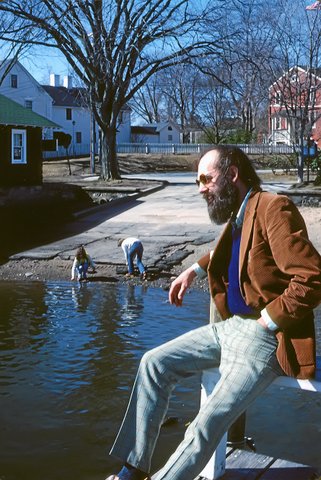
Merry Christmas Dad.
 Protective Arts