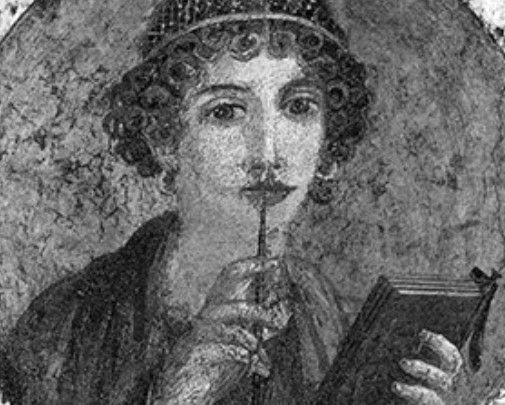
Identity appears first.
Between roughly 700 and 500 BCE, something kindles in the Greek world before it bursts into flame. The later blaze is short lived. Very short. If one is severe with dates, it runs from the Persian victory in 480 BCE to the Spartan demolition of the Long Walls in 404 BCE. About 75 years. That’s it. The Parthenon rises. Tragedy peaks. Democracy experiments with itself. Then the Peloponnesian War grinds the city down. The Sophists grow too clever. Plato drafts a corrective manifesto. Aristotle systematizes and hands strategic insight to Alexander. Hellenism spreads brilliance thin. The fire dims.
Brilliance is short-lived.
But before the conflagration, the lyric poets smoldered for two centuries.
The age of aristocratic lyric coincides with the tyrannos. A world of unstable elites, hoplite rebalancing, factional violence, and temporary consolidators who interrupt conflict without resolving it (Vernant, The Origins of Greek Thought). The tyrannos does not create equality; he creates a stable space for the elites to talk among themselves. The Lyric Poets oblige.
Archilochus is first. What remains of his work is mostly fragments. But there are longer pieces that show he earns his leisure with martial prowess:
In the spear is my kneaded bread, in the spear my Ismarian wine, when I drink I recline on the spear.
The Elegiac Poems
When Archilochus speaks, he does not ask what he should feel. He tells us what he does feel. Rage. Humiliation. Desire.
The shield I left because I must, poor blameless armament! beside a bush, gives joy now to some Saian, but myself I have saved. What care I for that shield? It shall go with a curse. I’ll get me another e’en as good.
He throws away his shield and says he will buy another. The act has occurred; the poem is justification. The first act is survival. The second act is exposure. That exposure invites judgment. Plutarch records that the Spartans kicked him out of the city when they learned he authored the poem. Whether embellished or not, the anecdote captures the point: the lyric moment becomes a moral arena.
Judgment implies norm.
Archilochus understands this. Elitist that he is, he can admonish, “No man… would enjoy very many delights who heeded the censure of the people.” He is not submitting to the crowd. He is negotiating among peers. That friction is ethical formation.
Bruno Snell argued that Greek literature reveals the historical emergence of self-awareness; from Homeric action to lyric interiority (The Discovery of the Mind, 1946). Scholars quibble with his linearity, but the inflection point is real. Lyric speech carries the interior into shared space. It is not diary. It is display.
Then Sappho:
He is more than a hero
he is a god in my eyes—
the man who is allowed
to sit beside you — hewho listens intimately
to the sweet murmur of
your voice, the enticinglaughter that makes my own
heart beat fast. If I meet
you suddenly, I can’tspeak — my tongue is broken;
a thin flame runs under
my skin; seeing nothing,hearing only my own ears
drumming, I drip with sweat;
trembling shakes my bodyand I turn paler than
Sappho, He is more than a Hero
dry grass. At such times
death isn’t far from me.
She stages the body as evidence. Tongue breaks. Fire runs under skin. Eyes fail. Sweat gathers. She does not defend desire. The feeling is its own event. Female erotic interiority appears without apology and without concern for the polis. That is not modern autonomy. It is aristocratic permission.
A century earlier, epic would have absorbed her.
A century later, the polis would have disciplined her.
But she knew her power:
Although they are
Although they are
only breath, words
which I command
are immortal
Alcaeus, her contemporary on Lesbos, rages politically in similar circles.
What constitutes a State?
The State
Not high-raised battlement, or labored mound,
Thick wall or moated gate;
Not cities fair, with spires and turrets crown’d;
No:–Men, high-minded men,
With powers as far above dull brutes endued
In forest, brake or den,
As beasts excel cold rocks and brambles rude:–
Men who their duties know,
But know their rights, and knowing, dare maintain;
Prevent the long-aimed blow,
And crush the tyrant, while they rend the chain.
Even here, the political is filtered through aristocratic character; it is the quality of men in small councils.
Anacreon follows, but by then, the form is becoming standardized. His poems feel derivative, an echoing of Sappho’s raw desire:
Ah tell me why you turn and fly,
My little Thracian filly shy?
Why turn askance
That cruel glance,
And think that such a dunce am I?O I am blest with ample wit
To fix the bridle and the bit,
And make thee bend
Each turning-end
In harness all the course of it.But now ’tis yet the meadow free
The Thracian Filly
And frisking it with merry glee;
The master yet
Has not been met
To mount the car and manage thee.
Aristocratic leisure makes this possible: insulation from immediate economic necessity. The structure matters. These are elites speaking to elites in small gatherings: Symposia. The lyric “I” is to be witnessed. Greek interiority enters culture as display.
This matters. The lyric “I” does not merely describe feeling; it asks, Is this permissible? When Archilochus exposes cowardice, he forces a recalibration of courage. When Sappho exposes longing, she forces a recalibration of shame. Moral evaluation shifts from divine sanction to peer recognition.
Lyric interiority flourishes before the democratic polis requires psychic conformity. This is not an argument that the polis crushes the self; it is an observation about scale. In the small circle, interior rehearsal refines. In the arena, rehearsal politicizes.
Scale changes everything.
After 508 BCE, Cleisthenes reorganizes identity around the polis. Public festivals expand. Theater institutionalizes psychological display. The tragedians, Aeschylus, Sophocles, Euripides, stage before thousands. Interior conflict becomes civic spectacle. The city becomes witness and judge (Vernant & Vidal-Naquet, Myth and Tragedy). Interiority is no longer negotiated among peers; it is subjected to collective judgement.
But the lyric period is a prerequisite for the tragedies that follow. Before the city can stage the self publicly, the self must first be shown to be real.
Later philosophers will argue that the polis makes the man.
The lyric poets show that the man precedes the polis.
The lyric poets insist on that ontological claim. Individual experience is real. Interior contradiction is not failure. Feeling does not require mythic veil or civic endorsement to exist. That feels modern.
 Protective Arts