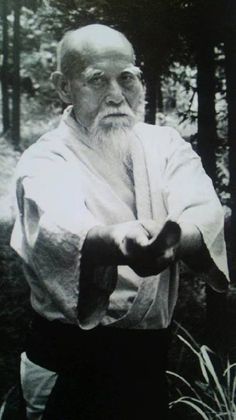
SINAWALI in AIKIDO

This morning was a focus on the basic sinawali pattern at first merely to learn the drill. There are numerous online references to help remind you of the basic pattern. YouTube is an amazing resource if you can discern the true from the false. Techniques and tricks that once were only taught in person and at seminars that required travel and treasure to get to, are now posted and feely available. Knowledge for free! But it still requires a critical eye to steal the techniques and learn the skills. And that takes dedicated training – there is no real substitute for hands on instruction.

Nevertheless, to provide some direction, your search would be well served by starting with Guros Presas and Inosanto.

I would also point you to James A Keating and this very useful article from Pete Kautz, where he provides a ‘sinawali mapping’ tool. Good mental aids to facilitate your learning and better comprehension.

To help translate body patterns Aikidoists already know, I likened the start of the pattern to hasso. Starting in migi-hanmi hasso, one holds both weapons (double stick, dagger, whatever) – but rather than a 2-hands on one (katana), we are holding one weapon in each hand: two hands are weaponized rather than 2 hands on one weapon. From the chambered position, the top hand begins the fore-hand (i.e. thumb up grip) yokomen, followed by back-hand (ie thumb down) gyaku yokomen, and then the initiating hand again from the cross body start (back-handed) which then returns to the low chamber so the sequence can begin again from the left. I will not get overly descriptive since visual aids are readily available. In short, there is a 3-beat striking pattern, with the return to low chamber akin to sheathing the sword, or stabbing an opponent to your rear as a 4th beat.  But that is merely my pedagogical metaphor. It is a simple ‘as if’ to get the pattern ingrained. As it is typically presented it is three strikes starting top chamber fore-hand, then three strikes starting with the fore-hand from the opposite side. The beginning ‘beats’ will sound like a waltz – one, two, three, one, two, three….  but that is just a learning pace.

Keating Doce Pares
Master Keating’s diagram

The strikes for our purposes were yokomen/yokomen/gyaku-yokomen (in the doce pares numbering 1/1/2).

Recognize that this is an “Aikidification” of a Spanish/FMA system, so please understand that it is a translation – a means of better understanding a universal pattern. Once the basic pattern is mastered, it is time to enhance the flow.

The ‘weaving’ pattern of sinawali manifests as soon as the 3-beat pattern is connected on each side – suddenly the waltz box-step rhythm becomes an enchanting ‘flower’ woven in front of your opponent. For the uninitiated it dazzles and overwhelms precisely because the linked strikes do not stop. We have now created an endless looping series of strikes that describe the horizontal figure-eight (infinity)! Where have you executed this before? With the jo: our “warm up” of the rotating hand over hand exchange is precisely the same idea – just executed (again) with a two-handed weapon. But look beyond the simple tool in your hand – get beyond the simple instantiation of the specific and start to perceive the broader patterns. Now ask why hasn’t that “warm up” exercise ever been presented to you in its proper light for what it is?

With growing confidence and patterns flowing, we added the footwork – and with the reminder that the beginner’s line is on the 180 degree (face to face) – but we should quickly learn to move past because this is a combative pattern. Start to flank your opponent – move to the 90 degree – when both players start to move suddenly you will look like cats – true predators sizing each other up. Search for Paul Vunak as visual inspiration. If you were fortunate enough to train with him, Chiba Sensei broke the relatively static 180 degree formula of Aiki-weapons. His systematic exploration and development lead to his creation of the Sansho series, which when presented correctly is an encircling kumi-jo. [1]

Having covered the basic pattern, added flow and footwork, made the cognitive connections back to Aikido’s forms – we then played with tools of various lengths (shoto to tanto) only to remind ourselves of a generalization that the longer the weapon the fewer joints can be used to wield it. Simple examples, two-handed kata is manipulated primarily from the shoulder (as opposed to the elbow or wrists), whereas a dagger is fluidly deployed with the wrist alone. This is not axiomatic, but rather a reminder that smaller weapons are ‘faster’ because multiple joints can impel them along vectors that can change rapidly.

Shorter weapons, closer range, less reactionary windows, faster response time necessary. Suddenly the axioms of strike whatever moves first, is closest to you become real – no longer conceptual. The FMA nomenclature of largo mano, sumbrada, and hubud ranges is useful (effectively long range – where the weapon only is deployed; short range – where the weapon and checking hand is used; and trapping range – where all elements are in play).

Some global reminders lest we forget the purpose of training: strike hands not weapons (we dont trade blows except in training), always press – fill voids (you cannot win by defending), in a knife fight there are no primary attacks (deceit and tricks rule; stop the one-hit one-kill mentality), never forget every slash can be delivered as a thrust.

We then dropped back to a single-stick to clearly articulate how a pattern becomes combat effective. The first bunkai from the initiating fore-hand strike: the yokomen to yokomen weapon contact now will ‘flow’ past the stop-hit so that tori’s weapon rides around uke’s so as to strike the opposite side of uke’s head. The yokomen to yokomen is no longer primary, rather tori rides uke’s energy to deliver a gyaku-yokomen (think chuburi), then pick up uke’s weapon hand with the pommel (punyo). Now with the contact with the top hand (still holding the weapon) executes nikkyo. Suddenly the true power of nikkyo is revealed – with correct and precise form – tori will disarm and simultaneously cut uke’s wrist using the edge whilst disarming uke with tori’s forearm against the flat of uke’s blade. This is best experienced in person to feel the application of leverage.  Physics works but the experience of it is for the dojo.

_____________________________

[1] Recall that as late as 1989 Chiba Sensei was still working through the “basicjo forms – and sansho was introduced a few years later.

Chiba sensei watching …

KI-MUSUBI

Linguistically, Japanese sounds exotic, which (like most things in life) is both a blessing and a curse. It is a blessing because a Japanese phrase like ki-musubi forces non-Japanese speakers to pause mentally and to question seriously whether or not we understand the concept. Translated, ki-musubi is ‘to tie ki.’ Now the curse of a foreign language is obvious: what does ‘ki’ mean and how does one ‘tie’ it?

In English ‘to tie’ derives from Old English têah, têg ‘that with which anything is fastened’ (and ultimately from Old Norse taug ‘rope’) and is related to rope-related action verbs like ‘to bind’ (*tegan, tgan), ‘to draw, drag’ (togian) and ‘to pull’ (ton). Good Anglo-Saxon words that Sir Walter Scott would approve of using, but the implicit idea (the hidden etymological assumption) in these concepts is coercive and forced.

In Latin the verb vincio has a broader semantic range: to bind, bind about, fetter, tie, fasten, surround, and encircle. It survives in English (through the present infinitive, vincîre) as vinculum, which means a bond or a tie and specifically in anatomy, a ligament.

Ovid was very fond of vincio. As a poet, his uses are metaphorically beautiful:

Miscuimus lacrimas maestus uterque suas;

Non sic adpositis vincitur vitibus ulmus,

Ut tua sunt collo bracchia nexa meo.

“Our mingled tears spoke our mutual sadness.

You clasped your arms round my neck,

more closely than the curling vines embrace the towering elm.”

(Letter from Oinone to Paris)

For Ovid being tied is the embrace of a lover, held tight and bound fast. Later authors like Cicero and Tacitus used vincio slightly more often (statistically) than Ovid did, but they focused on the obligations of being ‘tied’ to another as a member of a group. Later usage often expressed the concept by using the noun vinculum:

“…tum accedit mea quidem sententia maximum vinculum, quod ita rem geris atque gessisti…”

… your complimenting me has been exactly the same as, in common with your ancestors and entire family… (M. Tullius Cicero, Epistulae ad Familiares, bk 15, ltr 11, sec 2).

To tie the knot is also a Latin idea: vinculum matrimonii (‘the bond of marriage’). But a bond of unity can quickly become a fetter or impediment. In the Latin Vulgate, the Book of Mark (7:35), we find, “et statim apertae sunt aures eius et solutum est vinculum linguae eius et loquebatur recte,” or “immediately his ears were opened and the impediment of his tongue was loosed, and he spoke clearly.” (The man was ‘tongue-tied.’) But even later Latin acknowledged the positive aspects of bonds. In Colossians (3:14), “super omnia autem haec caritatem quod est vinculum perdectionis,” ‘Above all these things, walk in love, which is the bond of perfection.’

The complex etymological history should indicate how the act of tying oneself to another has deep physical and emotional implications. Being bound in marriage (which we moderns need to be reminded, means that a unity is created from a dyad), being exactly of the same mind, and engulfed in a lover’s embrace are all the positive aspects of musubi. This concept is inseparable from productive training in Aikido.

In weapons training, the prosaically named sixth paired exercise, roku no tachi, is also called ki-musubi. Each practitioner must watch the other closely. The focus of the exercise is to develop a mutual awareness, a sense of timing, wherein the motions of both people are matched exactly: both people are of the same mind (sententia maximum vinculum). There are of course physical cues (breathing patterns, eye movement, etc.) that indicate that each party ultimately is watching the other in order to know when to respond. However, in the past, Okamoto sensei has made us practice this exercise from a distance in the dark in order to limit the visual cues and learn to sense when the other is moving. This is nothing mystical, it simply means paying very close attention to all possible sense data.

In practice it is very easy to get wrapped up in the personal experience of the art. This is unavoidable, especially when first learning the movement patterns. However, to progress in Aikido, one must move beyond his or her own physical experience (how does it feel, where does my hand go, etc.) and learn to ‘read’ the other person. In my understanding, this is ki-musubi.

All to often our focus on the personal experience of the art (even the Western teaching method of telling someone what to ‘do’) can form unrealistic ideals of self-sufficiency that puts one out of touch with interdependence and consequently out of touch with the very purpose of Aikido.

AT CLOSE RANGE: Shomen and Yokomen

First warm up with a new pattern – shomen practice with a step-cut, slide-cut, step-cut to get out of fixed patterns; disrupt habits and the facile assumptions.  Then yokomen with the same step-cut, slide-cut, step-cut.  The tempo is quick beat cut, cut – you are advancing through space – your first cut misses and your second is a follow up attack.  (If you want to add further complexity later, then add a double cut – so step-forehand/backhand, slide-forehand/backhand – aka yokomen, gyaku yokomen.)

A reminder shomen exercise – a cut, counter cut is a typical sequence.  In weapon work it is kiri-otoshi.  Empty handed we can replicate the exercise but this evening we did a cut, counter tsuki (palm strike to the chin, which is a safer form to practice than the logical eye-spear).

IMG_0327
Palm strike or eye gouge?

The next development pattern added a more traditional ikkyo style arrest, but with the top hand free to cut uke and the bottom hand doing the ‘work.’  But much time was spent training how to ensure the lower hand was used effectively – and the primary method was to use the lower hand only to first arrest uke’s striking arm, then drive it up and over – staying close to vertical – while playing uke’s center via the deltoid and latissimus.  As a test, if uke can counter cut with the original striking hand, then tori provided too much horizontal energy (i.e. pushed uke away) or not enough lift (i.e. didn’t come from low to high).  Done properly, you should be able to exert enough control to provide for the next step – which would be to add the top hand.  Tori uses the palm of the free hand against uke’s little finger in a sankyo-like cork-screw.  Small circle jujutsu done with palm pressure and the counter lock on the elbow.  From here much productive learning can be found in playing that line to feel uke’s center: can you control someone with those two points alone?  Experiment, you can.  However, that control is elusive, so we need to know the next step, which is to ensure uke’s arm is as vertical as possible and then to ‘snap’ uke’s hand over your elbow.  The result should be similar to rokyo in its position (or a basic snake) and this allows tori to use his entire body weight to control uke’s shoulder.  Tori can ‘fall into’ uke with devastating physiological effects.

Getting used to training at close range attacks and a quick riposte, we add a complicating two beat counter.  Shomen countered with a cross-hand intercept then the eye-rake and leg trap (aka koyku-ho on the inside line).  From there we move to yokomen.  But how do we know when yokomen is delivered?  An exercise – tori strikes shomen, uke responds with yokomen to avoid the initial strike and win the contest.  It is the absence of contact that lets tori know that yokomen is coming.  So the response: tori is already in a downward strike, thus turning the blade isn’t the solution, it is turning the hips 90 degrees to meet the yokomen directly.  Note that this is a right- to-right or left-to-left counter cut.  As a pattern the basic exercise is simple.  You have seen and practiced this as a set piece in more “advanced” classes.  Uke delivers a yokomen and nage responds counter yokomen to the offending arm (strike whatever moves first).  It is a good form to practice, but as I said – it is a set piece and delivered on a basic one-step kill principle.  We are playing a more subtle encounter – attack, counter-attack, and riposte.  We are trying to build beyond the visual stimulus because done quickly and correctly, the uke’s counter yokomen should be largely unseen – thus, we are responding to the absence of information and perform the only logical move in the sequence of action.  A logic-chain dictated by the initial action.  I am playing with ranges – within the shikko of each participant – rather than the longer range actions typically presented.  And I am ‘messing’ with tempos and beats, but you have seen this all before.  The encounter I merely adapted from a ‘standard’ yokomen, ushiro-tenkan to low-line shikaku (Okamoto sensei does this often and you can see it in her Offenbach seminar 2014 – if you follow the principles).

Once uke’s arm is intercepted and the balance taken, tori’s free hand can now take the neck and because we are at close range, tori also uses a leg trap (which could be at the level of the thigh, knee, or a foot trap and done with either leg).  Playing at closer ranges increases the threats and opportunities.  Remember as a generalization, the longer the range the fewer the ‘natural’ weapons that can be deployed.  I am decreasing distance, thereby increasing threats and opportunities, and forcing faster reactions in time because the space is limited.  This is not a beginner’s range.

12004148_939671572738000_3234619769590534894_n

_________________

Look for cognates – Fendente and yokomen