The Russian Way of War

Tyler Cowen pointed to >this< post by Gilbert Doctorow on The Russian Way of War, a title that alludes to Hanson’s seminal work. Doctorow is a convincing writer and has a corpus of work that builds a defense of Putin’s position. I admire his intelligence and flair as demonstrated >here< in melding Bulgakov with American paranoia following 9/11. Doctorow makes interesting points and writes with authority.

Let us start with the Russian Way of War (Part Two), which asserts Russia has been prosecuting the war with “one hand tied behind its back” and that the restraint is purposeful. His premise is that Putin wants to resolve this with minimal loss of life and thus the Russian Way of War:

This approach does not inflict death on huge numbers of civilians, does not count on a ‘shock and awe’ initial attack to demoralize and overrun the enemy.  I said at the time that the overriding considerations on the Russian side were the traditional ‘brotherly’ relations between Ukrainians and Russians, who were extensively intermarried and had relations on both sides of the national frontiers.

At face value, this seems emotionally logical and provides a rational reason for Russia’s failure to meet its military objectives. Wait: When was the last war waged by combatants of “brotherly” relations? The Civil War. The single most brutal and bloody conflict in U.S. history. And why? Because those families were virulently opposed ideologically. The fact that the combatants were intermarried did not abate the violence of the war’s prosecution.

So I had to dig deeper.

He published with prescience given his December 8, 2021 assertion “The United States pushes Russia to the brink” which outlines actions that do appear to place some responsibility on the West for the current conflict.

My admiration for his analysis was short lived.

Who is Gilbert Doctorow? A corporate expatriate turned self-styled public intellectual. Former regional manager with UPS, later a marketing consultant in Russia, and eventually an independent scholar and public speaker. I certainly do not hold his “independent” scholar status against him, but I must point out the hubris of his LinkedIn profile (cited in full with spelling errors):

Puffery becomes hubris

I have purblished four collections of essays in the political science field, beginning with “Great Post-Cold War American Thinkers on International Affairs” which was and remains a breakthrough book …

As a breakthough author, I assume you have spell check?

My ad hominem poke at his spelling notwithstanding, I am sure his experience and intelligence are more than sufficient basis for well-conceived positions and opinions. He published on antiwar.com and I am highly supportive of their ideals – a libertarian principled organization. However, Doctorow also publishes heavily in the Monthly Review, which is ideologically socialist. I can see a plausible path to link these two perspectives for a Russophile like Doctorow.

He knows war is bad, so writes positioned papers on why it is so, and believes in a social equality where everyone gets to summer in Scandinavia like he did. And the hubris demonstrated in his description of his own published work drives it home for me. He is a member of the moralizing intelligentsia, the “Anointed,” in Sowell’s useful phrase, who believe their compassion grants them superior insight. Worse, Doctorow portrays Putin as a reluctant aggressor “pushed into a corner” by the West. History tells us that cornered tyrants bite hardest.

After a short fall down the rabbit hole (because Cowen linked to it and Doctorow’s analysis sounded cogent – at first read), my convictions are bolstered by climbing out.

My concerns on Russia’s aggression remain both personal and ideological. Personal because I am concerned this ill-conceived war could escalate to a more direct confrontation between Russia and the West. Ideological because, while I am a Libertarian, I am a flawed one. I cannot follow Murray Rothbard to all his logical conclusions and especially when we scale to international politics. I know that the human experience is universal and that human action should be free of external constraints, but there are in fact constraints; self-imposed, culturally conditioned, historically inherited, and morally imposed.

I know that war is the health of the state because the aftermath of every war is an expansion of state power over its citizens and broader control over the economy. But I cannot follow Rothbard to the idea of non-intervention, there are times when it is necessary and morally just to intervene. Unfortunately, there remains only one means to succor violent aggression. It is indeed a slippery slope and one we Americans have been pushed down all too often. Yet history shows me that as dangerous and hypocritical as it may be to be a hegemonic power, there will always be one. The question thus distils to who will be in control? Our police actions and projections of power have been and will be used for selfish purposes and inconsistently. I can envision worse uses of power. I just pray we don’t have to use it.

___________________

UPDATES

5.15.22 – the Independent reports that Putin may have suffered a loss of 1/3 of the forces initially committed to the Ukraine invasion.

4.28.22 – the Economist Apr 30th 2022:

“Vladimir Putin uses warfare to make up for Russia’s weaknesses. That is why he is so dangerous

The might of the modern Russian army was supposed to show the world that President Vladimir Putin had restored his country to greatness after the humiliation of the Soviet collapse. Instead, poor progress and heavy losses in Ukraine have exposed deep flaws within Russia. For those threatened by Mr Putin’s aggression, a diminished army is a relief. Unfortunately, it also leaves a nuclear-armed power with a point to prove.

So far, the invasion of Ukraine has been a disaster for Russia’s armed forces. About 15,000 troops have been killed in two months of fighting, according to Britain’s government. At least 1,600 armoured vehicles have been destroyed, along with dozens of aircraft and the flagship of the Black Sea fleet. The assault on the capital, Kyiv, was a chaotic failure.

Leon Trotsky wrote that “the army is a copy of society and suffers from all its diseases, usually at a higher temperature”. Fighting in the east and the south of Ukraine over the next few weeks will not only determine the course of the war, but it will also determine how much the Russian army can salvage its reputation—and the reputation of the society it embodies.

Our briefing this week sets out just how rotten the army has been. Russia’s defence budget, of over $250bn at purchasing power, is about three times that of Britain or France, but much of it is squandered or stolen. Mr Putin and his top commanders kept their invasion plans from senior officers, reflecting a crippling lack of trust. Disaffected troops, fed on out-of-date rations, have deserted their vehicles. Units have tortured, raped and murdered only to be honoured by the Kremlin. Russia has failed to win control of the skies or combine air power with tanks, artillery and infantry. Wallowing in corruption, unable to foster initiative or learn from their mistakes, its frustrated generals abandoned advanced military doctrine and fell back on flattening cities and terrorising civilians.

Ukraine’s highly motivated forces are a rebuke to these Russian failings. Despite being less numerous and less well armed, they resisted the invading army by passing decision-making to small, adaptable local units given up-to-the-minute intelligence. Even if the Russian campaign, now under a single commander, makes gains in Donbas, it will do so chiefly thanks to its sheer mass. Its claim to be a sophisticated modern force is as convincing as a tank turret rusting in a Ukrainian field.

For Mr Putin this is a crushing setback. That is partly because, although he controls a formidable propaganda machine to help drown out his critics, the loss of face threatens his standing at home. It is mostly because the use of military force is central to his strategy for making Russia count in the world.

Russia may be vast, but it is a medium-sized polity that still yearns to be a superpower. Its population ranks between Bangladesh and Mexico, its economy between Brazil and South Korea and its share of global exports between Taiwan and Switzerland. Although Russia enjoys some sympathy in non-aligned countries like South Africa and India, its soft power is ebbing—hastened by its display of incompetence and brutality in Ukraine.

To fill the gap between its power and aspirations—and to resist what he sees as America’s encroachment—Mr Putin has repeatedly turned to the only sphere where Russia can still purport to be world-class: military force. In the past 14 years he has invaded Georgia and Ukraine (twice) and fought in Syria. His mercenaries have deployed to Libya, the Central African Republic, Sudan and now Ukraine. Mr Putin is a global bully obsessed with his country’s inadequacies. Contrast that with China, which also has ambitions, but has so far been able to get results using its growing economic and diplomatic heft.

Humiliation in Ukraine weakens Russia’s last claim to superpower status. The war may yet drag on, and while it does Russia will not be able to mount big operations elsewhere. Equipment, ammunition and manpower are being used up fast. Restoring Russia’s forces to full strength and training them to avoid the mistakes in Ukraine could take years. Should sanctions remain because Mr Putin is still in power, the task will require even longer. Russian missiles are chock-full of Western components. The flight of talented, outward-looking Russians will weigh on the economy. All the while, the less that Russia can project military power, the less it will be able to disrupt the rest of the world.

That will be welcome. Yet, the invasion of Ukraine also holds lessons that are less comforting. For one thing, it shows that in pursuit of this strategy Mr Putin is willing to take risks that to many others—including many Russians—make no sense. Further decline in Russian power could lead to still more reckless aggression.

Ukraine also shows that in future wars if Russian forces cannot prevail on the battlefield, they will resort to atrocities. A weaker Russian army could be an even more brutal one. For those around the world facing Russian aggression, that is a terrible prospect.

Ultimately, weakness may lead Russia to the last arena where it is still indisputably a superpower: chemical, biological and nuclear weapons. From the start of this war, Mr Putin and his government have repeatedly brandished the threat of weapons of mass destruction. Mr Putin is rational, in that he wants his regime to survive, so the chances of their use probably remain slim. But as Russia’s armed forces run out of conventional options, the temptation to escalate will surely grow.

The message for the wider world is that Mr Putin’s military opportunism in Ukraine must be seen to fail by his own officers and strategists, who may then temper his next headstrong scheme. A stalemate in Donbas would merely set up the next fight and it could be even more threatening than today’s.

Yet, even if Mr Putin is defeated, he will remain dangerous. The message for nato is that it needs to update its tripwire defence. This rests on the idea that a Russian attempt to take a bite out of, say, the Baltic states may succeed at first, but would trigger a wider war which nato would eventually win. That defence involves the risk of miscalculation and escalation, which are more fraught than ever if Russia’s conventional forces are weak. Better to have a large forward force that Russia would find hard to defeat from the very start. The best way to be safe from Mr Putin and his rotten army is to deter him from fighting at all.”

3.4.23 – The Economist reports on Russian demography – which echoes Peter Zeihan:

Ademographic tragedy is unfolding in Russia. Over the past three years the country has lost around 2m more people than it would ordinarily have done, as a result of war, disease and exodus. The life expectancy of Russian males aged 15 fell by almost five years, to the same level as in Haiti. The number of Russians born in April 2022 was no higher than it had been in the months of Hitler’s occupation. And because so many men of fighting age are dead or in exile, women now outnumber men by at least 10m.

War is not the sole—or even the main—cause of these troubles, but it has made them all worse. According to Western estimates, 175,000-250,000 Russian soldiers have been killed or wounded in the past year (Russia’s figures are lower). Somewhere between 500,000 and 1m mostly young, educated people have evaded the meat-grinder by fleeing abroad. Even if Russia had no other demographic problems, losing so many in such a short time would be painful. As it is, the losses of war are placing more burdens on a shrinking, ailing population. Russia may be entering a doom loop of demographic decline.

The roots of Russia’s crisis go back 30 years. The country reached peak population in 1994, with 149m people. The total has since zig-zagged downwards. It was 145m in 2021 (that figure, from the un, excludes the 2.4m people of Crimea, which Russia seized in 2014 and incorporated into its national accounts). According to un projections, the total could be just 120m in 50 years, if current patterns persist. That would make Russia the 15th-most-populous country in the world, down from sixth in 1995. According to Alexei Raksha, an independent demographer who used to work for the state statistics service, if you look just at peacetime years, the number of births registered in April 2022 was the lowest since the 18th century. April was a particularly cruel month, but it was a revealing glimpse of a chronic problem.

Population decline is not unique to Russia: most post-communist states have seen dips, though not like this. Their declines have been slow but also manageable. Russia’s population in recent decades has seen a precipitous slump, then a partial recovery (thanks to a period of high immigration from parts of the ex-Soviet Union and more generous child allowances after 2007), followed by a renewed fall.

According to the state statistics agency, in 2020 and 2021 combined the country’s population declined by 1.3m; deaths outstripped births by 1.7m. (The un also shows a fall, but it is shallower.) The decline was largest among ethnic Russians, whose number, the census of 2021 said, fell by 5.4m in 2010-21. Their share of the population fell from 78% to 72%. So much for Mr Putin’s boast to be expanding the Russki mir (Russian world).

All this began before the war and reflects Russia’s appalling covid pandemic. The official death toll from the disease was 388,091, which would be relatively low; but The Economist estimates total excess deaths in 2020-23 at between 1.2m and 1.6m. That would be comparable to the number in China and the United States, which have much larger populations. Russia may have had the largest covid death toll in the world after India, and the highest mortality rate of all, with 850-1,100 deaths per 100,000 people.

If you add pandemic mortality to the casualties of war and the flight from mobilisation, Russia lost between 1.9m and 2.8m people in 2020-23 on top of its normal demographic deterioration. That would be even worse than during the disastrous early 2000s, when the population was falling by roughly half a million a year.

What might that mean for Russia’s future? Demography is not always destiny; and Russia did for a while begin to reverse its decline in the mid-2010s. The impact of population change is often complex, as Russia’s military mobilisation shows. The decline in the number of ethnic Russians of call-up age (which is being raised from 18-27 to 21-30) will make it harder for the armed forces to carry out the regular spring draft, which begins in April.

Such complications notwithstanding, the overall effect of demographic decline will be to change Russia profoundly—and for the worse. Most countries which have suffered population falls have managed to avoid big social upheavals. Russia may be different. Its population is falling unusually fast and may drop to 130m by mid-century. The decline is associated with increased misery: the life expectancy at birth of Russian males plummeted from 68.8 in 2019 to 64.2 in 2021, partly because of covid, partly from alcohol-related disease. Russian men now die six years earlier than men in Bangladesh and 18 years earlier than men in Japan.

And Russia may not achieve what enables other countries to grow richer as they age: high and rising levels of education. Nicholas Eberstadt, a demographer at the American Enterprise Institute in Washington, argues that the country presents a peculiar combination of third-world mortality and first-world education. It has some of the highest rates of educational attainment among over-25s in the world. But the exodus of well-educated young people is eroding this advantage. According to the communications ministry, 10% of it workers left the country in 2022. Many were young men. Their flight is further skewing Russia’s unbalanced sex ratio, which in 2021 meant there were 121 females older than 18 for every 100 males.

The demographic doom loop has not, it appears, diminished Mr Putin’s craving for conquest. But it is rapidly making Russia a smaller, worse-educated and poorer country, from which young people flee and where men die in their 60s. The invasion has been a human catastrophe—and not only for Ukrainians. 

Economic Warfare

Russia’s invasion of Ukraine (this time) was met with rhetorical resolve and (largely) unified economic sanctions by the West. [1] The mechanism and impact of sanctions is hard to imagine and – unfortunately – hurts the general public more than the oligarchs and political elite of Russia.

The Financial Times is the best and most accessible presentation:

Weaponisation of finance

I admit to being conflicted on economic warfare – this form of war essentially targets civilians, something a just war is not allowed to do. An economic attack is directed against treasure and demands less blood, so is morally preferrable by most theorists. It is also politically expedient – showing dedicated action while avoiding putting soldiers directly in harms way.

To take the war directly to the oligarchs, the House introduced legislation to seize their assets. The ACLU helped to defeat the effort because it violated due process. My moral compass is spinning! The ACLU is comprised of well-meaning lawyer-types. I deeply respect their adherence to the law – the West can be well-summarized as a culture where the rule of and equality before the law is paramount. Thus I am sympathetic to their argument for due process to protect the oligarchs’ private property.

Yet we have a realpolitik problem. The West should not, must not, sit idly by as Russia invades. But we cannot declare war – that formality would change the conflict irreparably. Yet Biden has already called Putin a war criminal. Are we putting too fine a legal point on definitions?

Plunder the oligarchs’ assets to finance the assistance we are providing Ukraine?

Sherman’s March was designed to bring pain directly to the plantation owners. The scorched earth and “forage liberally” policy (the Union army was well beyond supply and refits) was effective and culminated in Sherman’s capture of Savannah – Lincoln’s 1864 Christmas gift (accomplished on the 21st). While Grant ran the conventional and bloody war against the Confederate army, and suffered heavy losses for it, Sherman was destroying the economic means of production. Sherman destroyed rail, infrastructure, pillaged farms, and took the fodder. Ultimately both strategies were required for the Union to prevail and I doubt any serious military historian would conclude otherwise.

Sherman was unconventional by targeting infrastructure rather than armies (the Western Way of War demands decisive battles). There were no international rules or conventions to restrict war time actions during the Civil War. In the mid-19th century soldiers and commanders behaved responsibly in wartime because of religious beliefs that are the foundation of any theory of “just war.” The antebellum curriculum at West Point focused heavily on engineering but I suspect that the moral precepts of a just war were discussed. A generation earlier, both George Washington and Benjamin Franklin read Emerich de Vattel’s 1758 Law of Nations which sought to define when nations could legitimately resort to armed conflict and how they could behave once engaged. This much is certain, in 1863, the U.S. government published General Order No. 100, Instructions for the Government of the Armies of the United States in the Field, written by Francis Lieber. He was a German-born jurist and political philosopher who drew on the principles of just war and the work of Vattel and Grotius to formulate concrete policies for the army. (The radical individualist and abolitionist Lysander Spooner quoted Vattel extensively in his publications. [2])

Just war theory (then and now) is intended to limit the scope of conflict to the combatants and minimize lethal violence and property destruction against non-combatants. Americans on both sides of the Civil War were familiar with the guiding principles, if not the details, of the just war doctrine. They also understood that the purpose of war is to win: The importance of winning. Hence the March to the Sea.

Pinker made the mistake of thinking we have become our better angels because the death count in armed conflict is lower. We have merely refined and sharpened our knives so that we are better at precision killing. Human nature hasn’t changed, just been hidden with targeted or bloodless violence. Until we Cry ‘Havoc!’, and let slip the dogs of war. Putin set them free.

And so I am conflicted. I do not believe U.S. direct and open armed conflict with Russia is prudent, even if justified to repel an invasion. The West elected instead to wage economic war as a form of ostracism and coercion. The confiscation of property owned by oligarchs aligned with and in the direct ambit of Putin without due process is a further act of war. Sherman issued Special Field Orders No. 120 authorizing the confiscation of property with no due process. Such is war.

Is the ACLU hand-wringing too much legal formalism? Would we be sacrificing the very principles that the West stands for by an “unjust” taking in retaliation for an invasion that will otherwise be repelled with the blood of heroes? My libertarian ideals quiver and falter as I hear the echo of Kyrian’s plaintive question, “Dad, will Adin be drafted?”

_______________

[1] Despite being part of NATO, Turkey is not part of the West under Erdoğan and one wonders – will it always be thus?

Predictable behavior

The direct financial support for Ukraine has bolstered its ability to withstand the Russian invasion:

Note the countries that border Russia have given a very significant percentage of their GDP to bolster Ukraine, knowing that they could be next.

[2] Lysander Spooner was both an abolitionist and opposed to the Civil War on sound libertarian principles. Murray Rothbard and later libertarian thinkers admired Spooner’s clear thinking.

ATHLETICISM

A recent (re)post from the excellent Art of Manliness covered The Insanely Difficult Standards of Histories Hardest P.E. Program. Brett is not typically prone to hyperbole but compared with the current physical education provided students – which is a travesty! – the observation is correct. But he has written about the Spartans, so he knows that standards have been higher. As laudable and challenging as the La Sierra System was, it was no agoge!

In the Hoplites and Physical Limitations, I took Donlan and Thompson (1976) to task for thinking college athletes were a viable comparison to Athenian hoplites when evaluating if it were possible to run a mile in panapoly. I suspect it is the oldest truism that each generation thinks they had it hardest and that there is nothing but a continued decline in physicality and grit. I am inclined to agree that, on average, it is in fact true.

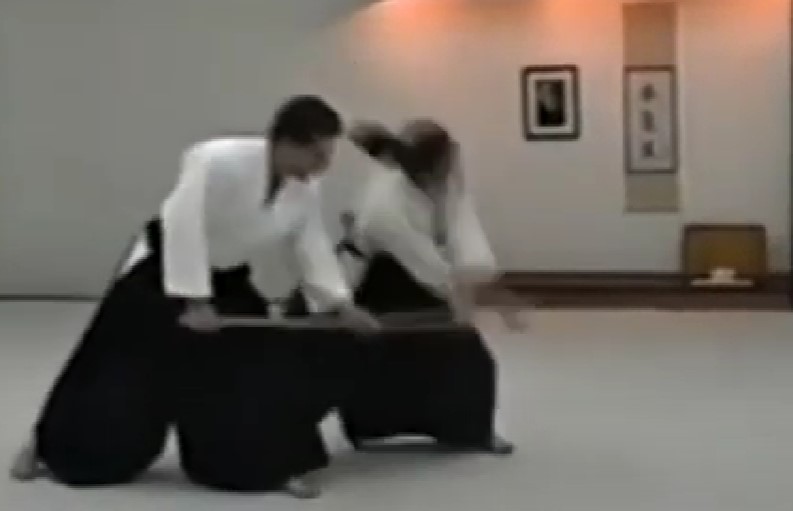
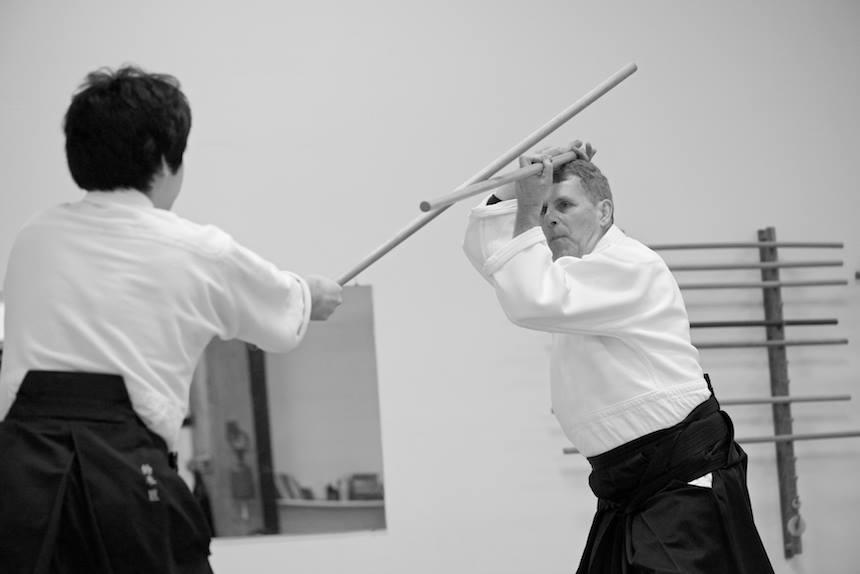
My primary context is from Aikido. To attract and retain students, and because the average instructor is aging, the level of intensity is markedly less than what I remember. I admit to being complicit: when I instruct, I do not demand (or provide) as much as I did a decade ago. I assuage my guilt by telling myself that physical conditioning isn’t the primary goal of learning a martial art (it isn’t). But it doesn’t help because I know that while it isn’t the primary goal, it is an important by-product. Athleticism is required for martial excellence.

Athleticism I define as integrated somatic awareness and skillful ability – you need to be kinesthetically engaged with your environment, be able to move your body appropriately to effect a physical goal, and have the endurance to sustain the activity.[1]

Our ancestors were more athletic because they were generalists by necessity. To survive and thrive in a world with tools of minimal mechanical advantage, muscular labor was everything. Therefore everyone performed manual labor, if only because walking was the primary means of conveyance. I have an Oura ring to nag me into activity and achieve my daily step goal.

But there is hope. Despite near sloth-like activity levels when contrasted with the (even recent) past, the body is universally pliable. As some company slogan says, all we have to do is just do it! The means of physical conditioning and improvement have not materially changed since the dawn of recorded history. This is best shown in E. Norman Gardner’s (1930) survey, Athletics in the Ancient World.

I have mused about the origins and importance of Elite Competition, and Gardner’s introduction is a perfect summary, which I copy in full:

Athletics in the Ancient World

The ideals of excellence are often exemplified by the sports, the athletic contests that are played and form the basis of competition. The connections among athleticism, athletics and excellence competitively proven are ancient and remain irrefutable.

In book 8 of the Odyssey, Odysseus is hosted by the Phaeacians who compete in athletic contests. These competitions all go smoothly until one prince tries to get Odysseus to take part. He politely declines, but when that prince suggests that Odysseus looks like a businessman, not an athlete, Odysseus is goaded to action by this unbearable taunt. He discards his cloak and throws a discus much farther than any of the Phaeacians. (His impressive showing in the discus is somehow seen as proving that he is not a merchant.) An embarrassed silence follows, but the king heals the rift with lots of praise and presents.

But in these contests, all the activities are individual sports, sports that require no cooperation with others. And I now also have Gardner’s conclusion to justify my abject lack of interest in American team-sports like football and baseball: “We may doubt if team games could ever have acquired the same popularity among the Greeks as individual contests.” I am more Ancient Greek than American in that regard.

________________

[1] My definition of athleticism integrates skill because regardless of “natural” and “innate” ability, excellence requires training: strength, vigor and physical endurance are vital components to be cultivated, but in themselves do not constitute athleticism.