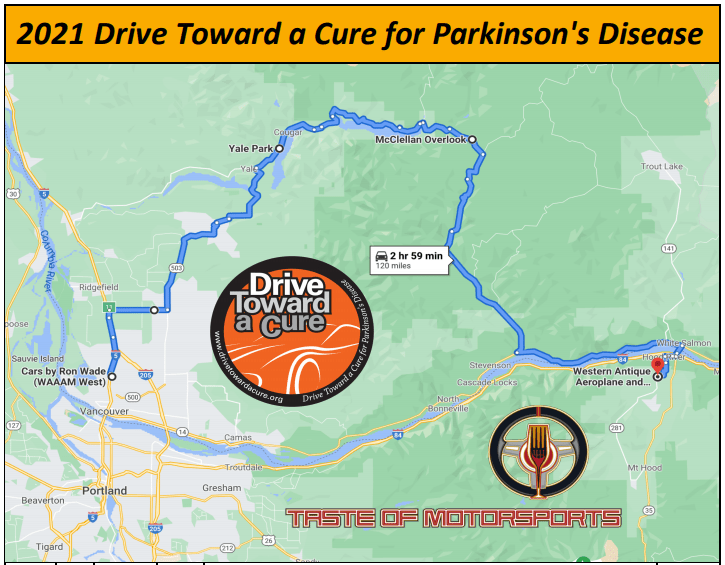
After one drive with the M club I was hooked. My 2014 BMW 428i xdrive was a great car but it wasn’t an M-series. A confluence of my sons’ enthusiasm for performance vehicles, a means to bond with them, the promise of drives through the beautiful countryside, and the reminder to enjoy the moment over-rode my reticence and gave me the courage to upgrade to a 2011 E92 – M3 coupe.
Pandemic purchase – memento mori
The inevitability of death as encouragement to spend some money in the here and now; after all, you cannot take it with you. Or can you?
Drive to St. Helens, September 26, 2020
Among the PNWBMWM group
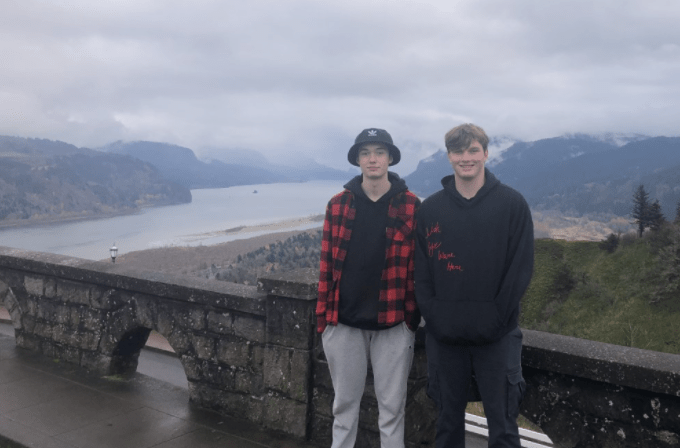
November 10, 2020 – the boys wanted to go to Rowena Crest to capture the car running through the curves. Adin captured the picture from the viewpoint.
Christmas Eve day the club drove to Vista Point again. Adin and I got our official membership hoodies but nothing prepared us for how windy and cold it was at the top of the ridge. Kyrian stayed in the car to keep warm and we all departed early. The wind was strong enough to stop our forward walking and nearly take our balance. A good day!
The BMWM club founder moved, leaving a gap for organized driving which I filled by joining the BMW Car Club of America. Interestingly enough, shortly after joining, I was invited to a free track day to drive the 2021 M440i xDrive Coupe.
The day was sponsored by BMW of North America, so it was a pure promotional exercise to introduce the new models and generate excitement. But for me, a lackluster event. First the aesthetics, the newly designed front grill is a huge disappointment – it’s simply not right for a BMW! The autocross was set up in the parking lot of the Expo Center and featured tight turns with only short bursts for acceleration.
The car handled predictably well but I was underwhelmed. I prefer the E9# models and the older steering – it simply feels more connected to the road.
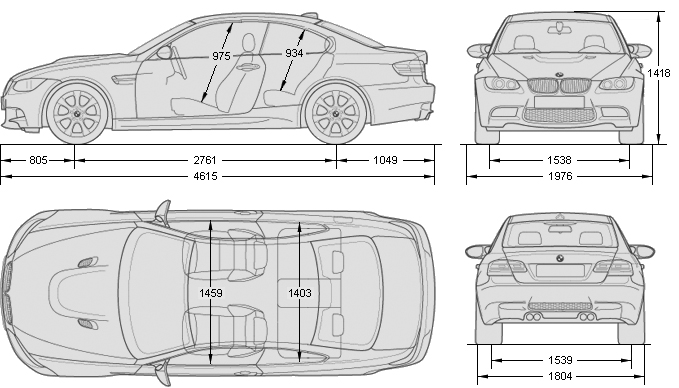
The coupé uses a carbon fiber roof to reduce weight and lower the center of gravity.
The official 0 to 100 km/h (62 mph) acceleration times for the coupé is 4.6 seconds with the DCT transmission. The S65 engine is a naturally aspirated V8.
In The Importance of Winning, I outlined the necessity of prevailing in combat. The will to win is often distilled to morale. Morale: the courage of the individual infectiously emboldening the spirit of his fellow comrades in arms.
For not by numbers of men nor by measure of body, but by valour of soul, is war wont to be decided..
Morale is a key element in prevailing – one needs keep in high spirits – lest the weakness of one betray the group. In a group context, the combined morale of the individuals culminates with an esprit d’corps.
________________
“Predicting Pugnaciousness,” Science & Technology, The Economist, Sep 5th 2020 edition (with hyperlinks added for augmentation):
How to forecast armies’ will to fight
What motivates the dogs of war?
In June 2014 around 1,500 partisans of Islamic State (IS) attacked Mosul, a city in northern Iraq. They were outnumbered almost 15 to one by government troops defending the place. The result was a rout. But not in the direction those numbers might have suggested. In the face of the enemy, the government soldiers ran away. Reflecting shortly thereafter on America’s failure to foresee what would happen, James Clapper, then Director of National Intelligence (and thus America’s top spy) described a force’s will to fight, or lack thereof, as an unpredictable “imponderable”.
Many in the past have felt the same. Military history is, as a consequence, littered with disastrously wrong assumptions about belligerents’ will to fight. America, for instance, famously underestimated the determination of Vietnam’s National Liberation Front when it involved itself in that country’s civil war in the 1960s and 1970s. Similarly, in 1916, during the first world war, Germany underrated France’s will to defend its fortress at Verdun against what the Germans hoped would be a war-winning assault. Casualties in that battle exceeded 300,000 on each side.
Assessing enemy morale is crucial to warcraft. Bruce Bueno de Mesquita, a political scientist at New York University, reckons human will matters enough for four wars in ten to be won by what starts off, in strict military terms, as the weaker side. Behavioural scientists are now, however, bringing the power of modern computing to bear on the question. Defence planners have long used computers to forecast the results of conflicts by crunching data on things like troop numbers, weapons capabilities, ammunition supplies and body- and vehicle-armour. The next step is to extend the idea into the area of morale, by quantifying the psychological variables that determine whether troops will flee, or stand and fight.
One leader in the field of morale research is Artis International, a think-tank in Arizona that is supported by America’s defence department. To understand better what has been going on in Iraq, for example, Artis’s researchers have interviewed Iraqi-government soldiers, Sunni militiamen, Peshmerga fighters defending the autonomy of Iraqi Kurdistan, and also captured is troops. Participants were asked about their willingness to further their causes by doing various things. These ranged from protesting in the street and donating money to torturing or killing opponents, volunteering as a suicide-bomber, or even sacrificing one’s family.
Brothers in arms
The researchers charted participants’ responses on a seven-point scale of ascending willingness. The responses suggested that, among other things, those who declared themselves willing to sacrifice the most were the ones who also seemed least interested in material comfort and economic prospects. The researchers then embedded themselves with troops from the interviewed groups (save the IS prisoners), in part to seek differences between stated and actual willingness to fight. The bits of action they witnessed, and post-battle mapping of where (and when) casualties were suffered, broadly confirmed the findings from the interviews.
Crucially, this fieldwork revealed much about the casualties various types of units can take before survivors lose the will to fight. A typical fighting force, it is generally thought, will collapse sometime before a third of it has been destroyed. Some Kurdish and IS units in Iraq, however, fought on in a co-ordinated fashion after sustaining far more grievous losses. Artis therefore tried to classify and measure the belief systems behind such remarkable bravery.
One finding was that a fighter’s identity must have fully “fused” with those of his brothers in arms. The top priority of such fighters must, says the think-tank’s boss, Richard Davis, have shifted from family to another cause, a transcendental ideal that has become so “sacralised” that it would not be traded away for anything. Artis’s researchers identified fighters who had mentally downgraded their families to second or third place. Some were Peshmerga, who most valued “Kurdeity”—a love for the homeland steeled with commitment to fellow Kurds and Kurdish culture. Many IS captives, for their part, had shunted their families into third place behind the caliphate and sharia. Units girded with those beliefs had fought on effectively even after seven-tenths of their comrades had fallen.
The broad outline of this analysis would, of course, be familiar to any student of military history. Fanaticism has long been recognised as a plus in a soldier, be it the Zealots of ancient Israel, the Roman Catholic conquistadors of the Americas, or the Nazis’ 12th ss “Hitler Youth” Panzer Division. What is different about the Artis approach is its attempt to quantify, or at least to approximate, what is going on. That should help both in assessments of an enemy’s performance on the battlefield, and in designing training and indoctrination programmes for your own side.
Based on their work in Iraq, Artis’s 45 or so behavioural scientists have now led studies on willingness to fight and die for customers in 21 countries as diverse as Britain, Egypt and Guatemala. The goal is to incorporate such insights into predictive software. One organisation working on doing this is the United States Air Force Academy’s Warfighter Effectiveness Research Centre (werc), in Colorado. werc’s researchers are using Artis’s data to quantify how different levels of the will to fight alter the performance of tasks. For example, according to Lieutenant-Colonel Chad Tossell, werc’s director, aircraft pilots whose wills are flagging are unlikely to buckle completely, but their reaction times typically slow down. His team is developing equations that reflect this. These are then fed into a version of “Far Cry”, a video game that the air force is modifying to incorporate will-to-fight calculations into combat simulations.
Comparing how unblooded cadets play the game with the approach taken by combat veterans will permit werc to compile data on how experience, sex, age and other factors affect the speed with which players do things like throwing their virtual selves onto a grenade to save their comrades. How much a willingness to perform such an action in a game translates into behaviour on the battlefield remains to be seen. But the hope, Lieut-Colonel Tossell says, is that this study will, within two years, help the air force to nudge recruits into combat positions that make the most of their level of will to fight. The research, he adds, has already led to greater emphasis in training on the transcendental ideals that underpin America’s support for its own driving ideological creed: liberal democracy.■
_________________
Really nothing new here. The willingness to fight for a cause – “transcendental ideals” – is an ancient technique, provide a rally-cry and a focal point: Remember the Alamo; Lincoln’s call to preserve the Union, and then to free the slaves; Pearl Harbor’s day of infamy; whatever the event that is used, that focus becomes the common motivating agent. Fill that desire to be part of something “bigger than” oneself.
When there isn’t an external event ready at hand, then the the esprit d’corps must be self-generating: the history of the group, the binding of the individual members to a sense of exclusivity becomes the bond that creates the collective identity. A sense of belonging that binds the members to each other, that “band of brothers” which was ancient before the Sacred Band of Thebes.
Brotherly love
We have psychological circular-reinforcement at work – a binding esprit d’corps that provides a basis for having higher morale – an internal sense of superiority, combined with motivation to not betray the history of your group, or let down your brothers-in-arms, which in turn reinforces the spirit of the broader group.
The challenge, then, is to ensure that first the transcendental ideals are (1) laudable (2) easily communicated (3) continuously reinforced. Morale resides within the individual, group morale is the collective morale of the comprising individual members, and esprit d’corps is directly related to the reinforcement of group morale by virtue of belonging to an important team. Esprit d’corps is the shared pride, faith and confidence shared by the collective individuals within that organization and thus is comprised of three essential ingredients:
Group Identity: it must be favorably different from others Group History: it must be famous for something Group Effectiveness: it must execute its mission
For elite military units, the uniforms, traditions, chants and cadences, are all used to inculcate the identity: unit history is an important part of the oral tradition (ka-densho).
But it all starts with the individual. Bereft group membership – without the external affirmations and legacy of the esprit d’corps – how does one maintain morale? How do we teach and convey the traits of individual determination, perspicacity, tenacity, grit, whatever the adjective, such that these internal drives are demonstrated by external behaviors.
Even setting aside the geography of the country, there is no instance I’m aware of in which a country or region with a total fertility rate below replacement has fought a serious insurgency. Once you’re the kind of people who can’t inconvenience yourselves enough to have kids, you are not going to risk your lives for a political ideal. When the US invaded Afghanistan and Iraq, their total fertility rates were 7.4 and 4.7, respectively…Ukraine is at 1.2. We see numbers like this and don’t stop to appreciate the wide chasm that separates the spiritual lives of nations where the average person has 1 kid from those with 3 or more, much less 6 or 7, each. On fertility, Russia isn’t that much better than Ukraine, but it’s got the tanks and a powerful air force, and the side that wants to fight a guerrilla war has to be the one that is willing to take a much larger number of casualties. There’s a consistent pattern of history where there’s a connection between making life and being willing to sacrifice it. This, by the way, is also why Hong Kong was easily pacified when China started clamping down, and why Taiwan will fold and not fight an insurgency if it ever comes down to it.
I have not been able to train Aikido since March 2020. It has been over six months since my last contact on the mat and I confess, I do not miss it nearly as much as I expected to. As summer 2020 draws to an end, I suspect fall will not provide an end to our forced isolation.
Covid restrictions keep me cloistered, so I retreat to the hermitage of my basement office to read, write, and watch too much television. But my days are more meaningfully filled with time reclaimed with my family. Selfishly, I am happier to have the proximity. I know this uncertainty is harder for them than me. I have the refuge of history and a general aloofness as armor, but for them the lack of routine and social interaction is a harsh break that amplifies their anxiety: plague, civil insurrection, political polemics, wild fires, it is all too many horsemen at once. At least the rain has cleansed the air so it is no longer dangerous to breathe.
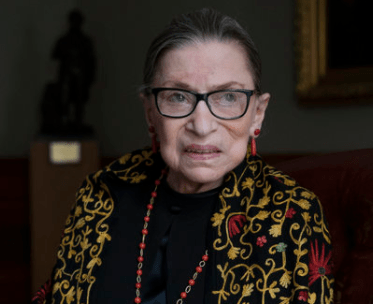
My wife, I suspect, is not alone. She spends too much time in the present, focused on the inane spectacle that is our current political environment. Her anxiety is sharp because we have a megalomaniac buffoon in office and a dotard offered as an alternative. The fascist right and the socialist left – the “U” shaped landscape where the opposing forces are closer to one another than either side will acknowledge. Compounding her anxiety, a bastion of reason has left us: Ruth Bader Ginsberg died September 18, 2020.[1]
decorous and dogged
Her death was not surprising, she had battled cancer multiple times, and her obituaries had been written in advance – they were published immediately after the announcement of her passing:
The timing of her death could not be worse. She leaves a vacant seat on the Supreme Court and Trump can now nominate and fill it with a conservative-minded justice. In this era when “conservative” means intrusive rather than classically attentive to individual liberty, I fear the possibilities. My only buoying hope is that once appointed, most judges exhibit tempered-reasoning and are less willing to legislate from the bench. But only time will tell.
I wonder how these events will be recorded in my boys’ memory. In a perverse way, the coronavirus has been a blessing for me: forced me to spend more time at home and with my family; no rushing off to the office, no mad rush to close deals, the amount of work has slowed just a little, but the pacing of it is now in my control. Despite the greater economic uncertainty, I am happier for the dramatic events that have wracked the nation and the world. It reminds me that earth abides and that we have been here before.[2] Intellectuals scour history for the mirrored-crystal ball, looking for the past performance that will predict the future performance. Should we take lessons from the Spanish Flu of 1918, or is it the Black Death of the 1300s?[3] Neither is the correct answer when you compare the gross fatality rates, but the psychological trauma of all the shit going down is real.
The rich are fleeing cities for the countryside, just like they ran from the Black Death – Boccaccio’s Decameron collects the stories narrated by the sheltering elite, like a moralizing Shahrazád telling stories to keep death away for just one more night.
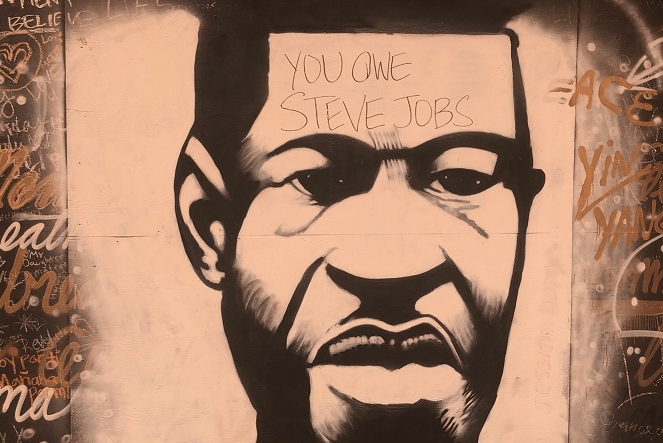
The Black Death gave birth to the Danse Macabre – art reminding us all of the universality of the death we cannot escape. The Black Lives Matter gives prominence to graffiti reminding us of economic inequities and unequal access to justice.
The boarded windows of the Mac Store provided the canvas [4]
The Black Death was a social leveler, bringing down high and low indiscriminately. Because of underlying morbidity, Covid statistically is disproportionately impacting the poor and the old, but the narrative locks in on a racial bias, missing the point by highlighting differences rather than remembering our universal battle with Death (qv. Easter 2020).
Because the impacts of the virus are disproportionate, it has been politicized. The elite can hide in gated communities or walled enclaves; they are fed by modern serfs, UPS door-drops their purchases and Uber Eats door-dashes their food. And it is true that the social divide is greater now – the Medieval aristocracy was closer to their sustaining workers than are the tech/media oligarchy of today. These elites are simply out-of-touch, literally and figuratively, with the working class. They moralize and are proudly “woke” to racial injustice, but are ignorant of the plight of the flyover counties that make up the geographic majority of these United States.
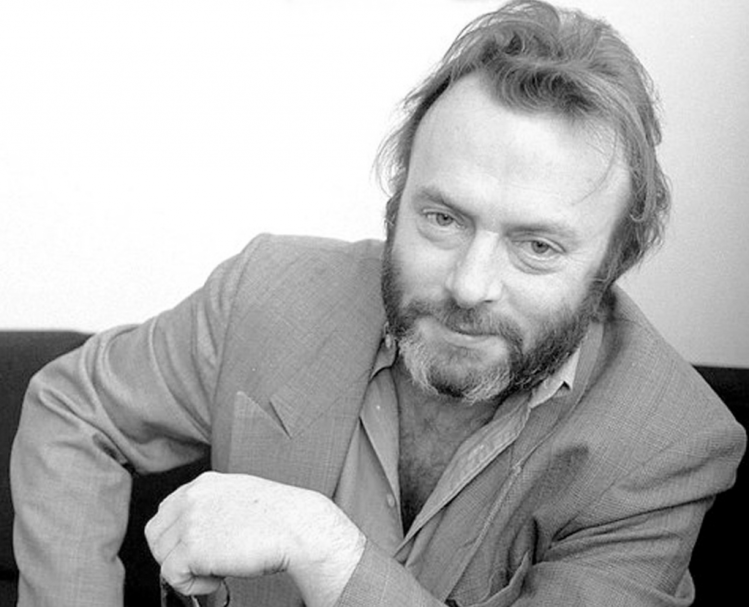
These secular clergy hold sanctimonious conversations debating whether gender is a social construct [5] and laud the legitimacy of self-identification betraying an inordinate focus on the importance of the individual and their opinions. The validity of argumentation now is not how it reflects upon or explains facts, but rather how offended the other party is.
If someone tells me that I’ve hurt their feelings I’m still waiting to hear what your point is.
When opinion trumps facts and logic it’s game over. I fear that the obsession with the modern sins of racism and sexism and the witch-hunt for reparations and justice has squandered the lessons the seven-deadly sins teach. It is a pathetic indictment of the current discourse that there is a narrow range of permissible opinion. Stray from the dogma of either faith and excommunication and termination of employment shall be the doom on your head! (At work I had to sit through D.E.I. training and I flash to Chinese re-education: doublethink good that!)
The trauma-inflicting news cycle eats at us all. The irony of a massively interconnected world with news delivered by algorithm and sanitized by self-selection creates a reflexively affirming and stultifying worldview that is as limited as an isolated medieval hamlet where itinerant merchants and gossip were the only sources of information. This is the root destruction of collective truth claims. The law-and-order right believes that Portland is ruled by antifa gangs at night and inundated by BLM protesters during the day. On the left, the same protesters who demand inclusion and equal outcomes are the very ones who created the world where a greater portion of the gold goes to a small minority (smaller than the medieval aristocracy) which leaves more people lost in the wilderness and turn beggar on the streets. Compare and contrast the knightly virtues that guided the imperfect holders of that title with the current oath for police and civil servants:
I, (name), do solemnly (affirm or swear) that I will support the Constitutions of the United States and of the State of Oregon and the Charter of the City of Portland and its laws; and I will faithfully, honestly and ethically perform my duties as (office). 3.74.030
A weak and fading whisper (support, not defend?) compared to the chivalric code:
Thou shall believe all that the Church teaches and thou shalt observe all its directions.
Thou shall defend the Church.
Thou shall respect all weaknesses, and shalt constitute thyself the defender of them.
Thou shall love the country in which thou wast born.
Thou shall not recoil before thine enemy.
Thou shall make war against the infidel without cessation and without mercy.
Thou shall perform scrupulously thy feudal duties, if they be not contrary to the laws of God.
Thou shall never lie, and shalt remain faithful to thy pledged word.
Thou shall be generous, and give largesse to everyone.
Thou shall be everywhere and always the champion of the Right and the Good against Injustice and Evil
Neither knights nor police were or are perfect guardians as the stories are clear to point out. The Knights of the Round Table, the romance and escapist idealism sustained and informed the literary class during the Black Death. The tales were in common circulation before Malory anthologized them in Le Morte d’Arthur (1485). The medieval elite were realists; even in their stories human frailty and weakness are common, they know the fallibiliy of mankind. But, there was always the ideal, aspirational characters who showed the path to Progress.[6] Where is Galahad now? What ideals do we now hold that bind us all?
I skip centuries: Walter Rathenau [7] provides some guidance:
Even the most troubled epoch is worthy of respect, because it is the work not just of a few people but of humanity; and thus it is the work of creative nature—which is often cruel but never absurd. If this epoch in which we are living is a cruel one it is more than ever. Our duty to love it, to penetrate it with our love till we have removed the heavy weight of matter screening the light that shines on the farther side
Walter Rathenau’s Ou Va la Monde? (Where is the World Going?) III, 11
______________
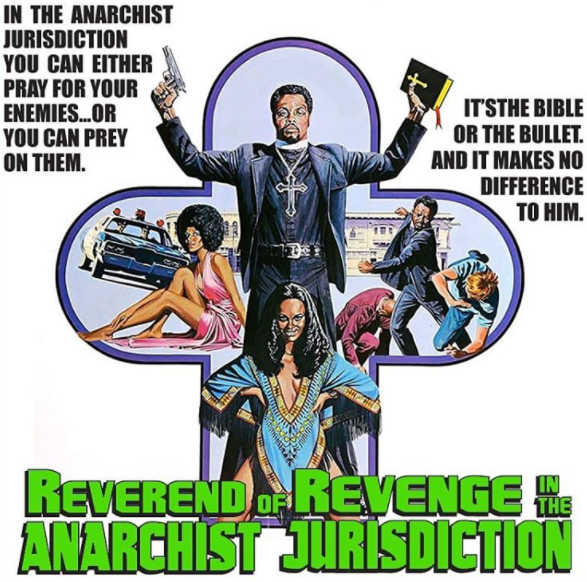
On the lighter side, David F. Walker captures the spirit with 70s throwback style
______________
[1]Justice Ginsberg outlived her friend and philosophical rival Antonin Scalia who died February 13, 2016. His numerous talks online demonstrate his intelligence, wit and strong textualist stance on the Constitution. Their combined wisdom is missed.
You owe Steve Jobs = Steve Jobs owes a portion of his wealth because of his atmospheric success?
You owe Steve Jobs = Consumers owe Steve Jobs thanks for creating technology that has expanded their lives and increased their happiness?
I wonder if the vandal knows Steve Jobs died November 5, 2011?
Public property and monuments – control ceded by the City to the movement. Relatively innocuous by day, but the rhetoric of the mob is predictably vacuous of integrity. I was accosted by a virulent white woman when walking by, told that I had to listen to the rhetoric of the black man on a megaphone, because he “had an important message” and when I declined to stop, she demanded that I “get out of their park.” I so viscerally wanted to punch her sanctimonious throat and shove my tax burden down her Marxist idealism. I pay for you to use that fucking park!
Protest activity in Portland has garnered national attention because of the nightly face off between Federal officers and an entrenched encampment in Lownsdale Square, which has been destroyed as a result of the “civil” protests.
Waiting for the nightly clash
Once the Federal officers announced they would leave, the protesters decamped and the nightly media circus dissipated.
[5] On gender politics, I really don’t give a rip as to how any individual identifies. But it is a sad state of affairs to think that the idiosyncratics of any given individual’s psychological makeup should be important. If the inner world of the individual isn’t harmful to themselves or others, then I don’t care what they identify as or believe in. But don’t make it my problem by forcing me to use neologisms or shame me for using traditional pronouns based on biological markers to normalize what is statistically deviant behavior. And as to biological sex (vs gender which can be a ‘social construct’) the answer is simple: if you produce eggs, your are female, and if you produce sperm you are a male. If you can do neither or choose to surgically eliminate your options before reproducing, then you are biologically of no significance.
[6] Both Malory and Bunyan wrote their works while in prison. Redemptive literature born from boredom while in carceration?
[7] Walter Rathenau (1866-1922) – I need to study his works in greater detail, but he is an intriguing man whose biography bridges the end of Romanticism and the intimations of the Age of the Atom. Science and idealistic perfectionism collided so that one “knew” that the evolutionary process is not to be confused with natural selection, which is a purely superficial process. In Rathenau, Nietzsche (1888) and Einstein (1909) can converse: The modern disciples of Einstein recognize nothing but an eternal present, which was also what the ancient mystics believed. If the future exists already, then precognition is a fact. The whole trend of advanced knowledge is to place the laws of physics, and biology and psychology as well, in a four-dimensional continuum—that is to say, in the eternal present. Past, present, and future are. Therefore, perhaps it is only our consciousness that moves.
One must not count too much on God, but perhaps God counts on us…










 Protective Arts