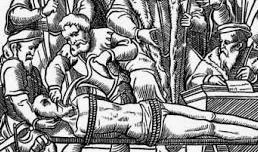
The Spanish Inquisition

The abstract is all I have access to:

Empirical evidence on contemporary torture is sparse. The archives of the Spanish Inquisition provide a detailed historical source of quantitative and qualitative information about interrogational torture. The inquisition tortured brutally and systematically, willing to torment all who it deemed as withholding evidence. This torture yielded information that was often reliable: witnesses in the torture chamber and witnesses that were not tortured provided corresponding information about collaborators, locations, events, and practices. Nonetheless, inquisitors treated the results of interrogations in the torture chamber with skepticism. This bureaucratized torture stands in stark contrast to the “ticking bomb” philosophy that has motivated US torture policy in the aftermath of 9/11. Evidence from the archives of the Spanish Inquisition suggests torture affords no middle ground: one cannot improvise quick, amateurish, and half-hearted torture sessions, motivated by anger and fear, and hope to extract reliable intelligence.

Ron E. HassnerSecurity StudiesVolume 29, 2020 – Issue 3

Re-read that conclusion: “torture affords no middle ground: one cannot improvise quick, amateurish, and half-hearted torture sessions, motivated by anger and fear, and hope to extract reliable intelligence.”
I am not willing to pay for full access to the article, but does this mean that professional torture extracts reliable and actionable intelligence? Was the CIA training curriculum simply not sufficiently advanced?

The phrasing of Ron E. Hassner’s abstract invites the question: if Inquisition torture produced reliable information, does that imply that professionalized torture can yield actionable intelligence? The answer, drawn from Hassner’s data and wider research, is more nuanced.

Hassner’s quantitative review of over 1,000 Inquisition trials (1575–1610) shows that roughly 12 percent involved torture; confessions under torture occurred in about 29 percent of those cases, while non-tortured confessions reached 42 percent. The apparent reliability noted in the archives reflects correlation, not causation. Tortured and non-tortured witnesses sometimes corroborated each other, but inquisitors had already accumulated extensive independent evidence before resorting to coercion. Torture, in practice, confirmed what was already suspected; it seldom uncovered new leads. In other words, its epistemic value was supplementary, not revelatory.

This bureaucratized and highly regulated system differs radically from modern “ticking-bomb” fantasies. The Inquisition’s procedures were conducted by trained officials, under procedural guidelines refined over centuries, within a quasi-judicial framework. Even then, inquisitors treated the results with formal skepticism, cross-checking and often discounting testimony given under duress. Hassner’s conclusion “torture affords no middle ground” underscores that the only circumstances under which torture yielded even partial reliability required institutional control, documentation, and time-intensive verification. These are precisely the conditions absent from emergency intelligence operations.

Contemporary research amplifies the same conclusion. Neuroscientific studies (e.g., Shane O’Mara, Why Torture Doesn’t Work, 2015) demonstrate that acute stress impairs hippocampal memory consolidation, distorts temporal sequencing, and increases confabulation, the creation of false but sincerely believed memories. Psychological analyses of coercive interrogation likewise find that fear, pain, and exhaustion accelerate compliance but degrade accuracy. The 2014 U.S. Senate Select Committee report on CIA interrogations concluded that coercive methods produced little unique, verifiable intelligence and often delayed cooperation or encouraged deception.

Thus, if “professional torture” ever achieved partial reliability, it did so within a framework of obsessive bureaucracy, a system so slow, resource-intensive, and morally corrupting as to be incompatible with modern intelligence needs. The historical record and scientific consensus converge: torture can confirm but rarely discover truth. The epistemic cost is too high, and the moral corrosion total.

For further perspective, NPR’s Fresh Air (Terry Gross, 2012) interviewed former interrogators and psychologists, all emphasizing that rapport-based, evidence-driven methods consistently yield more reliable intelligence than coercion.

Father, Son, Grandson

___________

There are several permutations of the story. A Zen-priest is asked to provide a blessing, and he obliges, “Father dies, son dies, grandson dies.” The beneficiary is confused and angry, “What kind of blessing is THAT?!” And the wisdom is revealed: “Would you rather it happened another way?”

With the received wisdom of the natural order, I submit that the continued sequestering in Oregon is nonsense. The official posting for today (6/13/2020):

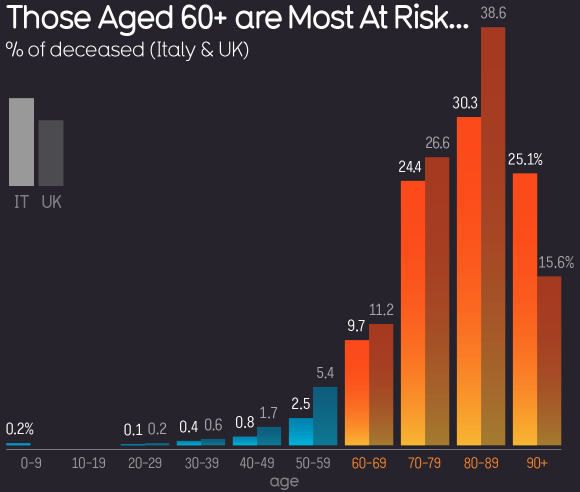
And the deaths are invariably the 60+ age range

Grandfather with underlying medical conditions dies. Possibly a sad event, but depending on the underlying medical condition, probably a blessing! Americans have always confused life extending technology with quality of life.[1] Just because you can do a thing doesn’t mean you should do a thing. For Fuck Sake People – we now have sufficient data to make a rational decision here! Those most at risk are those near the end of life. We are all held hostage to “save” the elderly with pre-existing medical conditions? My recently dead father knew the difference between quantity and quality of life, and given the choice, would gladly have risked accelerating his death for benefit of his grandchildren, and probably even yours, because he knew that quality of life was more important than quantity of time.

My children are staring down the imminent possibility of a no-contact-sport, no-in-classroom instruction year. Stultifying conditions for their development into fully actualized adults. How is that social cost justified? To save the essentially-dead and non-contributory? Yes, it has to be said: not all life has equal value. That is why there is medical triage and actuarial tables. If we want to play this metaphor that we are at war with a virus, then we need to have the testicular fortitude to accept the increased death rate of the marginal to save the sanity and economic future of the majority. That is the calculus of war. The media needs to understand the metaphor it uses. War isn’t hiding in the castle; that is being besieged. You cannot win by defending! Prevailing requires active engagement: taking risks and accepting consequences.

Review my Covid-19 post – I was fully on board with coerced cloistering to prevent a pandemic with what could have been a broad mortality rate. Absent reliable data, that was the logical response: stop the spread. But the evolution of my perspective is dictated by data which clearly shows Covid-19 isn’t a broadly distributed risk – it is highly concentrated to a population that is ready for palliative care.

And if you need to assuage your easily-offended liberal conscience, then pile on to the BLM narrative and recognize that continued confinement will be most devastating to low income families. Disproportionately low-wage earners are in higher-risk jobs, have no savings, and both parents must work. So what happens to all those unsupervised kids who cannot attend school? The earnings and education gap is decried as institutionalized racism, so now it gets exacerbated by these Nanny State policies?

Covid has been politicized to the exclusion of an honest discussion of the social and economic costs. But perhaps I’m too much a libertarian confused by Enlightenment logic and utilitarian theory. I fume in impotent rage. I don’t agree with how they come to their conclusion, but I’m about to join with the gun-wielding, anti-vaccination nut jobs who see a grand conspiracy at play.

__________

Of course there is always the enlightened perspective of the great Cthulhu

This image has an empty alt attribute; its file name is capture-3.jpg

He is the universal panacea against institutionalized, structural individualism. He is voracious.

Update 7/13/2020

The pesky unpredictability of the mortality is problematic. Those Covid-deniers are providing an experimental set that shows that there will always be a segment of the younger population at risk: “Man, 30, Dies After Attending a Covid-Party.”

____________

[1] Mark Manson wisely considers Who Wants to Live Forever? in Mind F*ck Monday #48 (copied in full below with original links). That phrase for me conjures a scene from Highlander (1986)

Christopher Lambert
 
Who wants to live forever?
 
Welcome to another Mindf*ck Monday, the only weekly newsletter that’s even cooler than it sounds. Each week, I send you three potentially life-changing ideas to help you be a slightly less awful human being. This week, we’re talking about topics that are a matter of life and death. No seriously, we’re talking about life and death this week: 1) the scientific progress in “treating” aging, 2) what a vastly longer lifespan would mean for culture and society, and 3) why do things die in the first place?

Let’s get into it.

(Note: If you enjoy this email, please consider forwarding it to someone who would get a lot out of it. If you were forwarded this email, you can sign up to receive it each Monday morning. It’s free.)

1. Can aging be reversed? – One of the more quietly controversial and interesting areas of scientific progress today is around the idea that biological aging can be treated as a disease and potentially be reversed. For years, researchers have been pioneering methods to limit cellular deterioration, stave off chronic diseases, and help older individuals stay healthy and independent as life expectancies rise.

Last week, a new study found that a cocktail of drugs not only slowed biological aging (measured by markers on the individual’s genome), it reversed it by approximately 2.5 years. To my knowledge, this is the first time an aging reversal has been shown in human subjects. This is a stunning result that even the researchers did not expect.

(Note: it was a small study and had no control group, so don’t wet your panties just yet. As always, more studies need to be done.)

As with most bleeding-edge technologies, the idea that we can defeat aging, like most controversial ideas, has inspired reactions from experts that range from utopian to apocalyptic.

I was first exposed to the idea that aging could potentially be conquered by science in Ray Kurzweil’s book The Singularity is NearIn it, Kurzweil’s’ views are beyond utopian. They’re like the religious rapture. In the book, Kurzweil makes the argument that not only will we cure death, but it will likely happen in most of our lifetimes.

Kurzweil points out that over human history, not only has life expectancy been increasing, but the rate at which it increases has been increasing as well. So, maybe centuries ago, life expectancy increased at a rate of 0.01 years per year. Then, it increased to 0.1 per year. Then 0.2 per year. Then 0.3 per year.

He argues that eventually, life expectancy will hit a tipping point where it increases by at least one year per year, meaning that for every year that goes by, humans are expected to live at least one year longer.

Ergo, we all become immortal. The end.

Maybe Kurzweil hasn’t spent much time investing in financial markets, otherwise, he’d be aware of the ubiquitous warning that accompanies every exciting chart:

“Warning: Past performance is no guarantee of future results.”

Indeed, there seems to be a “low-hanging fruit” effect on human longevity. It turns out that giving most of the world running water, sewage treatment, and, you know, food, vastly increases lifespan. So that “exponential curve” of increasing life expectancy that forever increases into the future is more likely an “S-curve” where life expectancy jumps massively as countries industrialize and modernize and then begin to level off at around 75-80 years old.

But regardless of the murky science and controversial implications, the lure of immortality is too strong for many to ignore. Companies have emerged that offer to cryogenically freeze your body when you die, promising to keep you frozen until the technology to “cure death” emerges in the future.

No, I’m not making this shit up. Apparently, some notable people such as Larry King and Peter Thiel have signed up for it. But don’t get too excited. Freezing your body indefinitely after death starts at around $200,000 USD. Better start saving today!

2. Who wants to live forever? – In my book, Everything is F*cked: A Book About Hope, I argued that one of the dangers of consumer culture is that we often equate “giving people what they want” with progress. Given that we so often want things that are terrible for ourselves (not to mention others), I point out that this is a pretty flimsy standard for measuring the social good.  

To me, curing aging (and maybe even death) is the ultimate question of, “Okay, we definitely want it… but should we?”

It’s hard to imagine the social and psychological repercussions of a population where the average life expectancy is, say, 250 years old. Would we overpopulate the planet? When would the retirement age be? Would our healthcare systems collapse? Would bridge and bingo become Olympic sports?

I joke, but I do think there are some serious philosophical questions here. Our ability to value things is driven by scarcity. We often care about things in our lives because we have an abiding sense that we will never experience them again. If we live forever, all experience becomes abundant, therefore much of it loses its meaning. Everything becomes more superficial—there’s no sense of legacy, no sense of, “I lived for that.

Or what about family? Will it become standard for everyone to have half a dozen marriages and a dozen kids? Will people have brothers and sisters 70 years younger or older than themselves? Will we appreciate our parents more or less knowing that we’re stuck with them for another two centuries and will end up sharing them with dozens of other people?

The perceived costs of things like traffic accidents, disease, and war would become much larger. Far fewer people would want to risk getting shot or dying in a car accident if they know they’re giving up hundreds of years of life. People would oddly become much more risk-averse. Pandemics would be waaaay scarier. The power of compound interest would become far more valuable, creating much more of a culture around saving and learning rather than spending and doing. Expertise would reach a point where people spend 30 or 40 years getting educated before starting their careers. Forty really would be the new twenty!

3. The evolutionary value of death – You might read all this and throw your hands up in the air and shout, “What are they doing? This isn’t natural!”

But you’d be wrong.

Although they are rare, there are “immortal” species on the planet (in this case, “immortal” means that they do not biologically age.) The jellyfish Turritopsis dohrnii doesn’t die. Neither does the bristlecone pine tree. Many species of lobster technically don’t age and could theoretically live forever, the problem is that they outgrow their shells which then decay and fall apart, leaving them vulnerable to predators (talk about tragic).

Lifespans vary widely across the natural world. Some sharks and tortoises live for half a millennia. There are species of apes that only live to be about 15 years old. There are several species of flies that live for 24 hours or less.

It turns out that death is not inevitable. In fact, death exists for a specific evolutionary purpose.

Ideally, by mixing and matching genetics, a species becomes more robustly adapted to its environment. The quicker individual creatures die, the faster they must procreate new generations, and the faster the rate of genetic mutation and adaptation within the species.

Therefore, each species has a “sweet spot” for lifespan based on the necessary evolutionary adaptation to its environment. If a species needs to adapt quickly and often, it dies quickly and often. If it needs to adapt slowly (or never), then it dies slowly (or never).

That “sweet spot” for humans seems to be every 2-3 generations, or every 80-100 years. The telomeres on our chromosomes appear to “run out” soon after that, effectively putting a limit on how long we can live naturally. This sweet spot probably exists because it’s short enough to stay ahead of the quickly mutating infectious diseases that threaten us, but long enough to have some grandparents around to help raise kids (for more on this idea, see Matt Ridley’s excellent book, The Red Queen).  

A lot has been said about the scientific potential to alter our own species—genetic engineering, nanotechnology, artificial intelligence, etc. But perhaps nothing would be so fundamental as altering our ability to age and die. Our psychology, our biology, and our societies seem to be largely based on it. Changing it could change everything.

The question is, will we be around to see it?

Until next week,
Mark

TAKING A HIT

I have the distinct disadvantage that my face is precisely level with my son’s elbow while guarding him playing basketball. In a two-on-one game, he passed me, boxed out his younger brother and while doing so, swung an elbow squarely into my chin. Fortunately for me it was aligned to drive my jaw nearly straight back, at only a slight angle so now the left side of my jaw hurts more and that ear still rings.

Pain hurts. But it’s not really that debilitating. It’s just pain. I didn’t stop despite it being a good hit. In these games, I try to give my older boy some challenge, so I have to play dirty ball. He is far better, bigger, faster, and stronger than I am. So I have to get low, check his moves, and brace for impact. It’s not pretty and I foul him horribly. But he just bangs me out of the way.

These blacktop games have been a great reminder. Being hit is really the only way to learn how to take one; to learn how to roll with the punches.

I have taken more damage during quarantine than I do training Aikido. I take charges, shoulders to the chest, elbows to the jaw, and strikes to the arms in these scrappy games. It has been a grounding experience, bringing me back to some fundamental lessons. Pain is a teacher and learning to work through it is a critical skill to learn.

In Aikido we emphasize care for our partners. And that is right. We each give one another the gift of our bodies to use for the mutual benefit of skill development. That is a precious gift and not one to be abused. Nevertheless, recognize that accidents happen and that in rigorous training they are inevitable. Nothing to fear, just acknowledge the risk. (You signed that waiver. Did you read it?)

The risk of physical harm is an opportunity to learn deep lessons. Pain hurts, but it isn’t going to stop you. Learn to master pain, use it to your advantage in the moment. Do not let it stop your actions.

Competitive martial arts, especially ones that involve sparring, condition their practitioners to give and receive blows. Aikido does not afford its players that opportunity. We learn to take a hit primarily through falling. Full body impact on the mat is good conditioning, don’t get me wrong. But it’s not the same as being hit. There is a psychological component that adds insult to injury. They hit you! The first time it happens, it’s hard not to take it personally. It can raise emotions that can work against you; lead you to rash actions, or worse, make you cringe in fear of the next blow.

Cross-training in striking arts is one way to fill the skill gap. Mark Hatmaker has sound advice on cross-training:

Where conditioning may draw on multi-sport activities that bear little resemblance to the target sport, drilling must be fine-tuned to reflect what the sport entails, not what we want it to be, not what we wish it to be, not what we surmise it to be, not what this or that authority says it is but what it actually is. We must scrutinize each drill to see whether it correlates with the game in question — if not, we may be wasting precious conditioning and drilling time

So be careful. Time is a scarce resource. And I warn you, punching arts are not directly applicable to Aikido; see them for what they are. But I also believe them complimentary arts. Therefore, I studied Okinawan Kenpo for a few years to augment my Aikido.

Pugilistic excellence is not the goal of Aikido. Nevertheless, I contend it remains a critical skill to learn in order to be well-rounded. Kumite is the fastest way to condition yourself against being surprised by the shock of getting hit. Or simply play scrappy basketball with your teenagers.

________________

Recognizing and exploiting human frailty is sound combat strategy. Violence has molded human physiology. First published in Biological Reviews, June 2014, “Protective buttressing of the hominin face,” suggests that the masculine features of the skull are protective adaptations to strengthen the typical targets.

Biologist David Carrier and physician Michael Morgan, from the University of Utah, compared earlier studies’ measurements of the skulls of apes to those of australopith and modern humans. They found the largest increases in bone density were in parts of the skull that fracture most often in fights among modern humans, primarily the brow, mandible and cheekbone.

These areas of the skull also show the starkest size differences between males and females in both australopiths and humans. They theorize the proper explanation for the differences is not dietary (since males and females eat the same food), but rather because males are more likely to fight and suffer facial injuries.