Easter 2020

Easter Sunday. The hope of rebirth. The ancient myths remind me that we are all deeply connected.
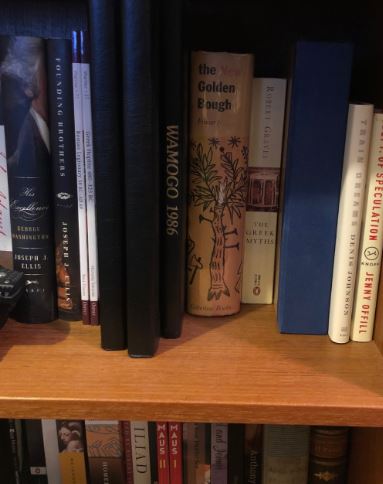
The Golden Bough (1890) by Sir James Frazer sits on my bookshelf beside Robert Graves and my high school yearbook. Mildred Beecher, my English teacher introduced me to Frazer’s work because I had asked the difference between a daimon and a demon. She was an extraordinary woman. She read Beowulf in the original and learned patience because she had been strapped to a board, immobilized for months, after breaking her back in a motorcycle accident in England.

Frazer’s full work is encyclopedic in scope, covering twelve volumes. I have only read the abridged version.

The book opens with a description of the rite practiced in a grove of Diana near Nemi, well into historical times. There grew a certain tree, guarded night and day by a man who was both priest and murderer. The Rex Nemorensis, the King of the Wood, held his office only by having killed his predecessor. Each king, in turn, would be slain whenever a stronger or craftier rival arrived. But his assailant had to be a runaway slave who first tore a branch from the sacred tree, the Golden Bough sought by Aeneas as the price of admission to the underworld: the hero’s journey.

Sir James Frazer finds cognates through time and across the globe. By cataloging, reviewing and comparing the myths, he illuminates the secret of the sacred grove. The slave who stalks about the tree is human mortality whose very life and fecundity, the fertility of his flocks, and the fruitfulness of grain, fruit-trees, and vines, depends upon. He is the god that must die that his vigor be renewed. The ritual killing of a king to fructify the land: King Arthur, John Barleycorn, Adonis, Osiris, Balder, Tammuz. Sacrifice is necessary to ensure that the cycle of life, death, and rebirth continues.

The durability and continuity of the ritual form a pattern identified by Gilbert Murray who also tied it to the solar cycle:

Agon: a contest of the year-daemon against his enemy, light against darkness, or summer against winter

Pathos: a ritual or sacrificial death of year-daemon, followed by an announcement of the same by a messenger

Threnos: a lamentation of the death of the year-daemon

Theophany or Peripeteia: a resurrection and epiphany of the year-daemon, which is accompanied by a change from grief to joy

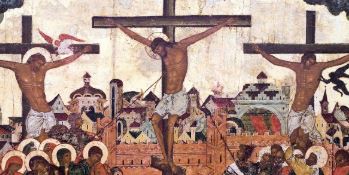
The rare Easter services I attended concluded with the joyous Paschal greeting, “Christ has Risen!” A wonderful sentiment to remember.

Frazer’s work encourages a review of Christ’s lineage beyond the pattern of his death and resurrection. Jesus was born in Bethlehem, the House of Bread, which was also a seat of Adonis worship. His virgin birth, the sudden shining star, the gift of myrrh, even the straw on which he was laid, are a continuation of more remote and divine precedents. It is a recognition of patterns greater than man, coeval with the conception of time. The gods cannot come to birth until there is knowledge of the revolving year and memory of the seasons’ return. It is to these gods that myth rightly assign the gifts of civilization; wheat/corn and beer/wine.

As civilization advances we collectively forget the deep chthonic connection to the earthly cycle. But the ritual is before us with the sacrament: To eat the body of the God, to drink His blood (relic of a savage rite), is still to celebrate life. The palliative against the raw fear that life might cease.

Growing up in Protestant Connecticut, ceremony and ritual were secondary to scripture. Although I respect his intellectual and individualistic spirit, I have come to conclude that Luther was wrong. By giving primacy to the text over ritual, the Protestants rejected the essential mystery. In discarding the Mass, they were depriving god his powers to fructify and rejuvenate; breaking the visceral connection to the ancient cycle. Ritual is the vestigial substructure of modern civilization.

Especially now, with a potential disruption in the food chain created by Covid-quarantined migrant labor not picking crops, the importance of ritual is reasserted: to remind us all of our connection to the earth and our dependency on it for sustenance. It is a call to mindfulness.

ISOLATION AND HOW TO TRAIN

It is unfortunate that Covid-19 keeps us from training together. Aikido is a partnered art and “social distancing” has made training together impossible. Nevertheless, there are ways to keep your connection to the art.

Okay, I admit to having a soft spot for some not-so-high-brow books. Steve Perry’s (1986) The Man Who Never Missed is just a fun read. A memorable fiction from this book is Sumito, the art of the 97 Steps. Sumito is a martial art whose training method is essentially an Arthur Murray dance step diagram

Map the steps

Just walk the 97 steps and you have mastered the art. Of course it isn’t that simple; to get from step A to B is easy, but C is challenging, and getting to D and beyond is exponentially more difficult and there are no explicit instructions on how to do it.

A marvelous fiction leading to being a bad-ass martial artist. But notice the deeper lesson – it’s predicated entirely on self-mastery. There are no partners, training devices, gimmicks, DVDs or other explicit instructions.

And the simple truth is that all martial arts are foremost a means of self-mastery.

So, what better time to work deeply on self-mastery than when you are forced to be alone?

The question becomes, in the context of Aikido, how?

Develop your base.

Funekogi Undo, the ‘rowing exercise,’ is a great warm-up and when done mindfully should teach you much about your body.

Funekogi Undo is adopted from Misogi 禊 (ritual purification) and importantly incorporates breathing patterns. As you perform the action: in through the nose, out through the mouth. Be sure your feet remain rooted as you shift your body forward and back. The action from your arms needs to have relaxed shoulders to ensure freedom of movement. Watch carefully how O’Sensei demonstrates the double-punch and grab return. Like most warm ups in every martial art – they are not simple ‘stretches’ or ‘calisthenics’ but rather essential movements necessary to execute techniques effectively. 

With this exercise, your connection through your feet to the earth should provide a good sense of rooted stability. The flexibility and range of motion on a line (forward and back) are increased. Your breathing is ‘harmonizing’ with your movement and regulated by the kiai. More explicitly, the lesson is to learn to breathe like a fighter. Take this lesson from boxing

Then add changes in direction.

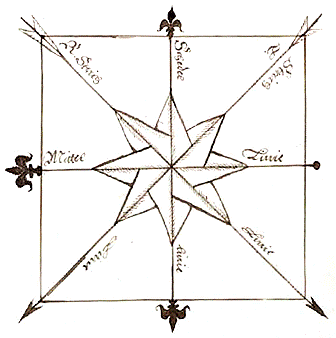
Shiho– and Happo Undo are patterns to follow that develop tai-sabaki (foot work). If you have done weapons, Shiho– and Happo-Undo are exactly the same as Shihogiri and Happogiri, just without a sword.

The essential lessons are (1) complete each motion fully, (2) sequentially, and (3) each of the directions is nothing more than an entry on a line. Diagram the footwork vectors and you have traced the cutting rose.

Eight directions

You need to unify the lower and upper body to benefit from this exercise. Add the weapon to build some strength and provide a feedback to your shoulders. As you advance your feet, your hands should proceed (hand, body, foot!) from your waist to your head – chudan to shodan – as if your feet are pushing your hands. Don’t lift your arms from the shoulders! The shoulders are relaxed, simple ball joints that allow your fundament (hara) to impel your hands (weapon) forward and up. Focus on completing each motion to its fullest range. Do what you are doing to completion, do not move to the next direction prematurely. 

As simple as these solo exercises may seem, listen to your body. Done correctly, you are learning efficient linear motion. As a swordsman, the weapon should be an extension of your body. But because the sword has mass and only one live edge, its construction dictates the linear pattern you are tracing. Focus on relaxed shoulders to ensure the sword is free to move unhindered by muscular tension. A sword’s efficacy is its speed, not the force by which you push it through space. It is not a club and neither are your arms! 

And this too is a critical body skill that leads to a technique – ikkyo omote. It is this self-guided practice that will challenge you to understand the material. The process of trying to recall and practice the material will force you to analyze it. You will not have anyone to follow, so you must use your memory and critical thinking skills.

To maximize the benefit from solo training, you need to develop your mental image of what the movements should be. With a clearer image, you will be able to replicate the movement more accurately. Add repetition, and you will get ahead. Rather than spending more precious class time on repetition for coordination, you can return to class, ready to move forward, with the skills you developed at home.

Virtūs et Honos

_____________________________

Added bonus if you have a training ring is provided by Master Keating

Great solo training

The Road

Probably not the best choice given the current climate, but I had started Cormac McCarthy‘s The Road a few months before the Covid quarantine began. The additional forced time inside gave me the opportunity to finish the novel.

I had seen the movie, so the angst of not knowing how it would end was not nearly as pronounced, but the book resonates deeply. I have two boys so imagining being with them in a post-apocalypse world still hits hard.

McCarthy has a great command of language and creates moments of evocative elegance despite the bleak subject matter:

No lists of things to be done. The day providential to itself. The hour. There is no later. This is later. All things of grace and beauty such that one holds them to one’s heart have a common provenance in pain. Their birth in grief and ashes. So, he whispered to the sleeping boy. I have you.

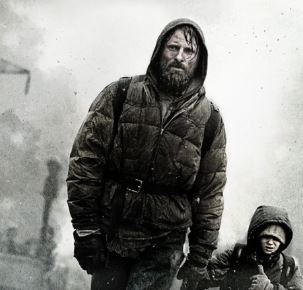
The man and the boy continue through the ruined landscape, carrying the fire (the spirit of life). The man is desperate to find something better, he carries hope precisely because of the boy: he perseveres for his son. The man has a warrior’s spirit and determination to prevail, despite adversity and painful moments of self-doubt.

But this is not an easy conclusion. Given the premise of the book, I hate to admit, but I think I would agree with the wife’s decision (tersely summarized in the movie, “This isn’t living, this is surviving”). In the book when she walks out:

She was gone and the coldness of it was her final gift. She would do it with a flake of obsidian. He’d taught her himself. Sharper than steel. The edge an atom thick. And she was right. There was no argument. The hundred nights they’d sat up debating the pros and cons of self destruction with the earnestness of philosophers chained to a madhouse wall.

Fortunately, this Covid-induced isolation is not the end and our choices remain more of grave inconvenience and desperation for secure employment rather than daily life and death in a dead environment.

McCarthy describes what that lowering of the veil would feel like:

He tried to think of something to say but he could not. He’d had this feeling before, beyond the numbness and the dull despair. The world shrinking down about a raw core of parsible entities. The names of things slowly following those things into oblivion. Colors. The names of birds. Things to eat. Finally the names of things no one believed to be true. More fragile than he would have thought. How much was gone already? The sacred idiom shorn of its referents and so of its reality. Drawing down like something trying to preserve heat. In time to wink out forever.

Wow! The slow fade of reality. That passage, to me, is the novel’s heart. The Wittgensteinian collapse of language, the “names of things” fading, signals not just material ruin but ontological decay. The language of Adam reversed. When words lose their referents, meaning dies before we do.

The landscape and environment destroyed by nuclear winter leading to a erosion of reality as words no longer have referents. The language of Adam reversed.

And yet, McCarthy is not nihilistic. He ends with a benediction. The fire endures. Life and humanity are affirmed. Against all reason, The Road insists that love, embodied, not abstract, is the last moral act.

Virtūs et Honos

_______________

Survival and resiliency both require planning. The average American’s response to the Covid pandemic has been to stock up on essentials (toilet paper) and apparently drive Doomsday Preppers to its highest viewing ratings ever.[1] But how do you prepare for a biological pandemic? The pandemic reading lists don’t provide a “how to prepare” guide but rather a survey of how we respond.

Those inclined to take the Bible as scripture (remember Jerry Falwell on AIDs?) will continue to view plague as one of God’s punishments (predictably citing Exodus 9:14, Numbers 11:33, 1 Samuel 4:8, Psalms 89:23). Sophocles and Homer may have connected plague to the divine Apollo, but that was a literary trope more than a thesis. Thucydides dismissed the divine origins of plague and focused on the resulting fear and loss of social conventions with the associated increase in avarice.

No longer a divine punishment, plague remained a morality tale. The good and evil of mankind is exposed through the destruction of normal social associations. Boccaccio and Chaucer lived with plague and well knew its horrible ravages. As a result of the Covid outbreak, I wonder if Daniel Defoe’s lesser known work, A Journal of the Plague Year (1722) and Marry Shelly’s The Last Man (1826) will see a rise in popularity.

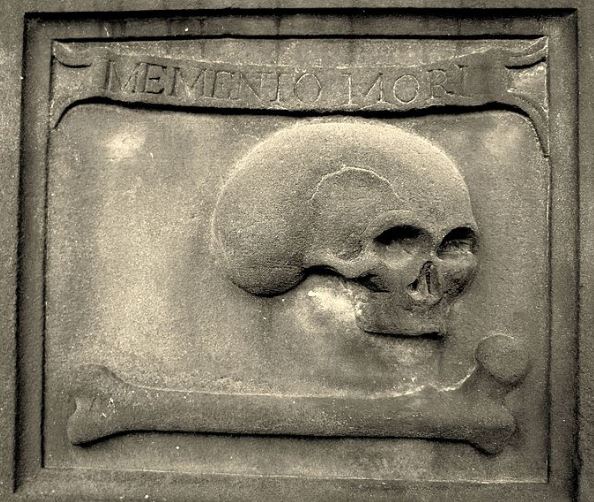
The list of more recent pandemic apocalyptic novels grows more scientific (The Andromeda Strain [1969] by Michael Crichton was my first), but the theme remains one of survival after social collapse. None have suggestions on how to prophylatically prepare. And now more than ever, we highly interconnected, global travelling humans with the shared biology of a single species, are universally vulnerable. The ironic beauty of a plague is that its potential (eventuality) should show us that the ultimate preparing is the cultivation of spirit – a reminder to embrace our mortality and learn how to best use our time. A return to Memento Mori.

You too are mortal

There is stoicism in feeling a deeper connection born of an external threat. Being reminded that life is transient, and because it is ultimately fragile, its worth is greater still. This is the way of Bushido. Value life deeply because it will end all too soon.

In that regard, a plague is divine action. An external and eternal reminder that we should be thankful and learn to live.

_______________________

[1] There are well-managed websites that will sell you gear to prepare for biological threats as well as those to help you build you a bunker (and of course you can go upscale).