TESTING

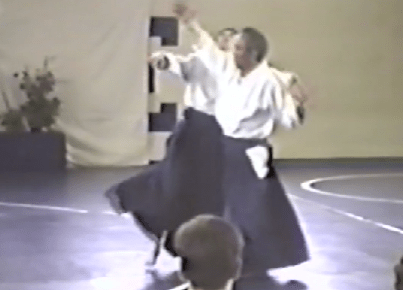
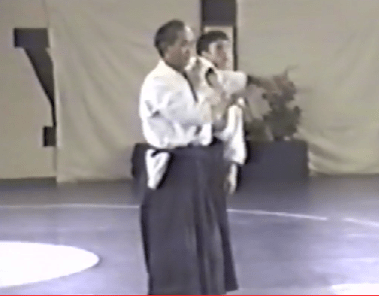
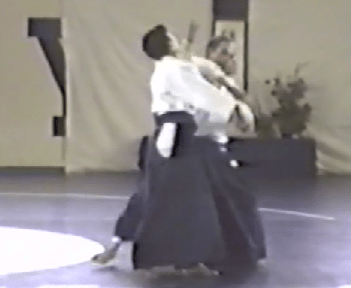
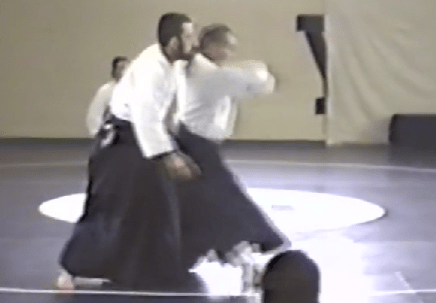
Testing in Aikido is a performance art. Without overt competition there is no immediate external validation of one’s skill and achievement. A presentation of one’s understanding of the art at that moment in time, along the path of one’s development is the goal. (Tarim Kim has sound advice on knowing what you know now.[1]) That implies an objective standard against which the student can be measured. For the kyu ranks the objective standard is a simple demonstration of specified waza. The progression through the kyu ranks is accretive – an accumulation of more techniques and a continued refinement of movement.

Refinement of movement implies continuity and fluidity – not speed but smooth.

Simultaneously, the student should be demonstrating an increasing confidence as exhibited through increased control of the encounter before the physical contact begins.

A physically adept (athletic) student can achieve this mastery quickly. As a generalization, at a minimum, three-hours of good honest training per week is necessary to learn the art. This training method and progression from kyu rank to shodan is straightforward.

Shodan however implies only a basic level of understanding – the ability to replicate the rote patterns of movement (techniques) that comprise the kihon curriculum. The basic grammar and lexicon of the art. Make no mistake, this is a high level of training relative to the untrained, but it does not constitute mastery. As Okamoto sensei once said to me, “Anyone can get shodan.”

Herein lies the danger: For those who seek only external validation, the black belt may constitute an end goal. To discover that it is merely a new starting point may be a disappointment. Shodan is when training begins in earnest.

Shodan through sandan are the ranks when honest training can lead to deeper understanding. These ranks are often when the student is near their physical prime – so the intensity of training is paramount. Physical strength must be “burned out” to be able to move beyond raw talent and athleticism. To accomplish this student of this rank must train with cohorts of similar skill and prowess. Junior students may fear students of this rank because of their intimidating training style. It is a necessary phase. A crucible that refines the raw materials into a more pure state.

Additionally, the hierarchical and structured ranking system ensures that time served – the sempai relationship – continues to be honored. The minimum number of years between dan ranks requires a continued commitment to the art.

These are the ranks that should generate teachers. Students have put in the requisite time and honest training to develop the physical refinement of skill, power and grace.  Grace. Grace should be the criteria for yon-dan and beyond. I use that term purposefully and with all the powerful ambiguity it should elicit.

Physical grace is simple elegance – refined movement. The ability to execute (and importantly for a teacher, the ability to demonstrate) the key fluid motions without hesitation or prevarication. But Christian grace implies a more powerful and unmerited gift – which I liken to kimusibi. Blending with another must transcend the mere physical.

A story: For my yondan test I remember Okamoto sensei having me present (enbukai) which I took seriously as showing everything I could do physically – demonstrate my skill to the best of my abilities. After I gave what I had decided to present, she began to call up various kyu-ranked students. I interpreted this to be a test of how much I could show using junior ranked students. It was frustrating because their ukeme was clearly the limitation; they were not on par with my ability.

I have never had a conversation to verify this, but after years of reflection I am convinced the test was the polar opposite of what I thought at the time. The test wasn’t for me to show what I could do, but rather to bring out the best Aikido possible from my uke – to highlight their ability. Drawing out the best in another: grace. To grace another with your presence – your Aikido elevating them.

At its best, ours is a sublime art because the arrow of causality is reversed. Uke dictates the encounter. These are rare moments. Ephemeral – so cherish them if and when you experience them.

_________________

Aikido Kyoto Kyu Test Requirements 3

An outline on How to Conduct a Test

_________________

Progression through ranks and mastery are not necessarily well correlated. Ultimately external validation will (by necessity) fade and internal validation must replace it.  An outline of progression to provide a framework is found >here<

KungFu test
-Branding would be a true rite of passage

Kung Fu (TV Series) – worth watching

__________________________

[1] Tarim Kim (Master Keating’s nom de plume) has made similar observations on learning the path of Gung fu.  He suggests:

Know What you Know Now

July 4, 2017

Knowing What You Know Now (not later):

When one is doing their own particular interpretation of the martial techniques, tricks and skills they have been taught over a period of many years an art can take on unwieldy  proportions. This is due to that lone person being the only one who can really understand what is transpiring as they demonstrate their skills. After all, it is THEIR version of the art or arts of which they have a working knowledge of and can demonstrate upon request. A grand compendium of all the things they value in the combative and martial arts sense. I mean the entire picture. Health, defense, spirituality and more.

I have found that most martial artists cannot or do not realize the true depth of their acquired knowledge. Learning happens over many years, keeping track of it all is quite difficult. Accessing it can even be harder. Being spontaneous in its execution can be challenging. Being spot on with the RIGHT response to an attack is also quite trying for some people to pull off. So how the hell does a man find and realize (actualize) his so-called “content”?

Well, you don’t do it by following rote forms or by putting yourself up for judgement by others. You do it by learning to let go. To simply, purely move as the human body is meant to move. Muevete Mijo! Open up the valves and let the kung fu flow out! This is not something for just any martial artist to try. This is advanced stuff. You must have several years minimum in some type of martial art to do this. It is that part of advanced training where “chiseling away” excess data occurs and the re-valuing of the material for more than you first perceived it to be.

Begin with general motion. Just go out into an empty space and float. Move and turn, try being light as a feather. Sink and root, grind the foot slightly and become heavy as a boulder. Articulate the hands as though the air is a liquid thick, feel the air as it moves about your hands and fingers. Raise and lower your torso via the legs and knees. Move the arms about in circles of various directions and planes. Experiment with movement. Do not have an agenda, do not attempt to give meaning to your motion. Just stop that martial madness for a while and simply, mindlessly move. Be quiet in your head, this is about movement, it is not about thinking. Slow up, move naturally, but push yourself a little bit past comfort. Breath each breath with full awareness as to how important each and every breath really is (try skipping a few, you see quickly what I mean).

Now add tension and relaxation cycles into the mix. Tense certain muscles for a short duration – then relax those same muscles completely as possible. These tension cycles should smoothly be matched in your breathing patterns, all natural, all in harmony (all things in the same unified timing(s). Every action, look, breath and sound must come into unity along with the full participation of your entire body. This is generic movement and this can be your vehicle to discovering the treasures that are locked up and hidden away within yourself. Self realization is critical. This is a way to know yourself and to find out what yourself knows.

Once you are comfortable with MOVING – moving as you, moving from the energies from the inside to the outside you might add a planned movement. This might be from a kata, a situational or something you just put together. But you should try to incorporate it into your non-planned generic flow training phase. So, add just a dash of planned motion. Insert it as you wish into your open flow of movement. In a few days, add another short planned set of motions into the mix. Now there will be two short sets that you can add anywhere you want into the flow of motion that is already  naturally occurring. Keep this up until you have perhaps four or five planned sets of motion you can interject into any type of unplanned movement exercise. Let these sets be catalysts to free up other movement bases. If they surface in your practice, let them flow in and out, do not try to remember them. We are creating spontaneity and tapping into our treasure-house of martial abilities. Trying to escape that trap of remembering by simply doing. Remember to forget, because if you try to remember, you’ll forget. Let it all go, break the nucleus and let yourself reform a new, better nucleus through your efforts.

If you eventually incorporate weapons into your free flow of action do so slowly and follow the cycle again. This is your personal Tai Chi – made for you, by you. And why not? After 20 years of training I think you have earned that right to flow & go as you wish. To interpret the art as you see fit. By the creation of the free form movement habit you will insult no clan, system or master. You will see your past training coming to surface at last. Allow it, impede nothing that comes to you during this time. Accept what comes and learn. This is about living in the awakened state. Perform your free flow Pyrrhic dance outdoors, indoors, winter or summer. If do a daily Tai Chi Form then let this replace it for a few of those days. Let the integration of the two practices begin! By now you should be seeing the material in your head coming forth, your familiarity of movement should be more refined. Stay relaxed, this is discovery and exploration, not fighting. Breathe as you go, aware and ready, slow and steady. There you are!

Thank You all!

Tarim Kim / July 2017

ASHI-SABAKI

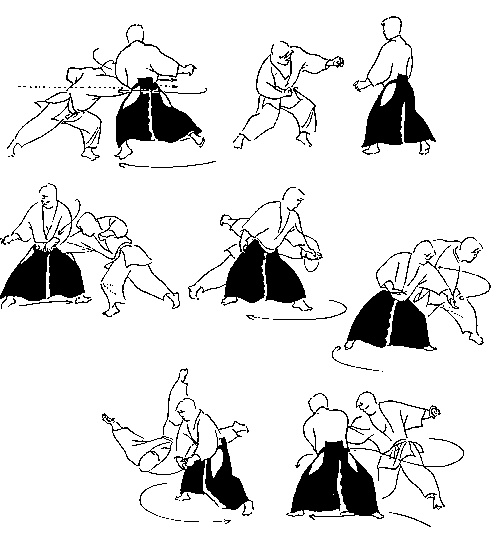
Ashi-sabaki generically means foot work but for us it denotes a very specific relationship.  The solo form of practice will be similar to ikkyo.  Standing shizentai as a universal posture, lower the center and zone out with the fingers in the up position, elbow pointed toward your own hip.  Drive the fingers forward with the hip and up as you shift your weight toward the front leg.  Then as you turn your hip into the thrust the back leg slides forward 45 degrees to cover your groin and simultaneously strike uke.

As a basic foot work pattern, ashi-sabaki and ikkyo’s foot work will look very similar.  The handwork (tae-sabaki) is opposite.  Ikkyo starts R-R / L-L and fingers down (ai hanmi).  Ashi-sabaki starts R-L / L-R and fingers up (gyaku hanmi).

The tanren / kihon exercise is designed to give both uke and nage the chance to develop a very solid core: as much as it appears that the arms are primary in this energy transfer, the focus should be on the abdominals and hip.  Properly loaded with uke’s weight, nage’s drive through uke will require a good hip engagement.  And because uke’s arm will be above nage’s, nage must connect the arm to the hip bone to have a chance to prevail.

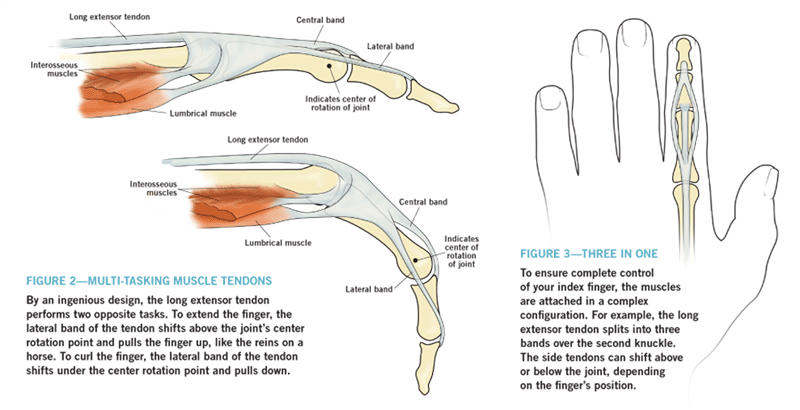
To visualize the encounter weaponized it.  Nage thrusts with a dagger – uke intercepts with the lead hand.  Nage turns edge out to cut uke’s flexor tendons.  Uke raises to evade.  Nage continues a contoured line to the heart through the arm-pit (top of ribs).  Uke’s correct response is predicated entirely on a weaponized encounter.  Otherwise the exercise becomes empty choreography: do this because my teacher told me to do so.  Wake up!

From the ashi-sabaki entry the flow sequence in its ki-hon presentation leads to an ikkyo (arm bar) but with uke’s hand already in a bent grab so the flow to a nikkyo pin is an easy continuation as well.  Depending on uke’s inclination to escape/reverse – the next step would be an elbow bar (rokyu/hijikime) or kaiten nage.

The presentation of the ashi-sabaki relationship is next presented from yokomen – an oblique high-line attack (angles 1, 2).  Nage intercepts and immediately drops the vertical plane only to then rise and strike to uke’s face.  This is a kimusubi exercise primarily: nage has to capture uke in one beat and then drop while maintaining connectivity.  By rising immediately nage captures uke’s inclination to counter the pressure and uses it as a rebounding energy to move the line to a different vector.

Where ikkyo emphasizes the edge, ashi-sabaki emphasizes the point.

From the capturing exercise we can use the same lead arm intercept to flow under the yokomen – a slip to the outside line, but the same tai sabaki.  This position favors irimi nage.  But the hand sequence is now four-beats.  (1) intercept uke’s strike to re-direct and slip under (2) second hand captures uke’s strike hand once nage is on the outside line (3) nage’s intercepting hand now takes uke’s neck (4) close the connection to throw irimi-nage.  This is hubud-lubud.


PRESERVING INFORMATION

Continuous and correct training is the most efficient way to learn, but we will always need a way to reference past material and transmit information to future generations.

This morning my son was watching an episode of Batman “Artifacts set in the future after the Batman has died. A group of scientists search the Batcave for clues to defeat Mr Freeze. A good archeology story, the scientists mis-interpret some of the artifacts and cannot access the data from the old mainframe because it wasn’t designed to store information that long. There is the challenge of both the durability of the media and the form of the message. The Batman solved for the media by using titanium plaques engraved with binary code to teach the future how to program a new computer. We have other examples: Voyager anyone? Nuclear waste: consider the problem of warning the future about the dangers of nuclear waste >here< and >here< and >Long Communication< for example.

A quality book is one of the more durable ways to store information, evidenced by European codex, Egyptian papyrus, and Asian scrolls.

Pankration__amphora_BM_VaseB610.jpg
Fired clay also proves perdurable

Hence my recommendation to start your own physical library of books because the internet simply hasn’t the proven durability. Print material is not the best way to show flow, so interpretation will be a challenge. As visible on the amphora – pictures are effective at showing discrete moments in time. Like in kata, the challenge is that the moment of greatest importance are usually the actions taken in the space/time between points. The linkages that connect, the flow patterns that effect the technique are the dynamic portions where ‘the action happens.’ Those are difficult to convey.

Aikido and the Dynamic Sphere does a good job at portraying the lines of motion and application of force to effect the throw. The fact that the images are line drawings and not photographs improves its efficacy (high contrast and minimal visual clutter). In addition to your primary art, I would also suggest that by building a library with material from other arts that you will begin to find similarities among them. Look carefully at those similar techniques – there is a reason for similarities! Marc Tedeschi  gives glimpses of universal connections in his series The Art of …” Very well produced works – high quality photos, good explanations, very clear design sensibility – you deserve to own them all. While it has not been updated in some time (and I would not necessarily recommend owning everything listed) my Biblography may be useful to generate suggested further reading/collecting.

Video is undeniably the best media to capture dynamic action but I remain skeptical that video will prove as durable through time (celluloid, Betamax, VHS, DVD, Blu-Ray …).  I have already had to pay to transfer some VHS to DVD and perhaps posting information on the internet will allow for easy translations, but my recommendation is to grab as much information as possible and store it in the most perdurable manner you can.

The Long Now

Harvard Law recently addressed this very question >here<