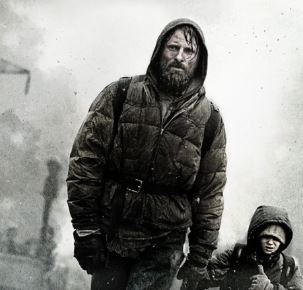
Probably not the best choice given the current climate, but I had started Cormac McCarthy‘s The Road a few months before the Covid quarantine began. The additional forced time inside gave me the opportunity to finish the novel.
I had seen the movie, so the angst of not knowing how it would end was not nearly as pronounced, but the book resonates deeply. I have two boys so imagining being with them in a post-apocalypse world still hits hard.
McCarthy has a great command of language and creates moments of evocative elegance despite the bleak subject matter:
No lists of things to be done. The day providential to itself. The hour. There is no later. This is later. All things of grace and beauty such that one holds them to one’s heart have a common provenance in pain. Their birth in grief and ashes. So, he whispered to the sleeping boy. I have you.
The man and the boy continue through the ruined landscape, carrying the fire (the spirit of life). The man is desperate to find something better, he carries hope precisely because of the boy: he perseveres for his son. The man has a warrior’s spirit and determination to prevail, despite adversity and painful moments of self-doubt.
But this is not an easy conclusion. Given the premise of the book, I hate to admit, but I think I would agree with the wife’s decision (tersely summarized in the movie, “This isn’t living, this is surviving”). In the book when she walks out:
She was gone and the coldness of it was her final gift. She would do it with a flake of obsidian. He’d taught her himself. Sharper than steel. The edge an atom thick. And she was right. There was no argument. The hundred nights they’d sat up debating the pros and cons of self destruction with the earnestness of philosophers chained to a madhouse wall.
Fortunately, this Covid-induced isolation is not the end and our choices remain more of grave inconvenience and desperation for secure employment rather than daily life and death in a dead environment.
McCarthy describes what that lowering of the veil would feel like:
He tried to think of something to say but he could not. He’d had this feeling before, beyond the numbness and the dull despair. The world shrinking down about a raw core of parsible entities. The names of things slowly following those things into oblivion. Colors. The names of birds. Things to eat. Finally the names of things no one believed to be true. More fragile than he would have thought. How much was gone already? The sacred idiom shorn of its referents and so of its reality. Drawing down like something trying to preserve heat. In time to wink out forever.
Wow! The slow fade of reality. That passage, to me, is the novel’s heart. The Wittgensteinian collapse of language, the “names of things” fading, signals not just material ruin but ontological decay. The language of Adam reversed. When words lose their referents, meaning dies before we do.
The landscape and environment destroyed by nuclear winter leading to a erosion of reality as words no longer have referents. The language of Adam reversed.
And yet, McCarthy is not nihilistic. He ends with a benediction. The fire endures. Life and humanity are affirmed. Against all reason, The Road insists that love, embodied, not abstract, is the last moral act.
Virtūs et Honos
_______________
Survival and resiliency both require planning. The average American’s response to the Covid pandemic has been to stock up on essentials (toilet paper) and apparently drive Doomsday Preppers to its highest viewing ratings ever.[1] But how do you prepare for a biological pandemic? The pandemic reading lists don’t provide a “how to prepare” guide but rather a survey of how we respond.
Those inclined to take the Bible as scripture (remember Jerry Falwell on AIDs?) will continue to view plague as one of God’s punishments (predictably citing Exodus 9:14, Numbers 11:33, 1 Samuel 4:8, Psalms 89:23). Sophocles and Homer may have connected plague to the divine Apollo, but that was a literary trope more than a thesis. Thucydides dismissed the divine origins of plague and focused on the resulting fear and loss of social conventions with the associated increase in avarice.
No longer a divine punishment, plague remained a morality tale. The good and evil of mankind is exposed through the destruction of normal social associations. Boccaccio and Chaucer lived with plague and well knew its horrible ravages. As a result of the Covid outbreak, I wonder if Daniel Defoe’s lesser known work, A Journal of the Plague Year (1722) and Marry Shelly’s The Last Man (1826) will see a rise in popularity.
The list of more recent pandemic apocalyptic novels grows more scientific (The Andromeda Strain [1969] by Michael Crichton was my first), but the theme remains one of survival after social collapse. None have suggestions on how to prophylatically prepare. And now more than ever, we highly interconnected, global travelling humans with the shared biology of a single species, are universally vulnerable. The ironic beauty of a plague is that its potential (eventuality) should show us that the ultimate preparing is the cultivation of spirit – a reminder to embrace our mortality and learn how to best use our time. A return to Memento Mori.
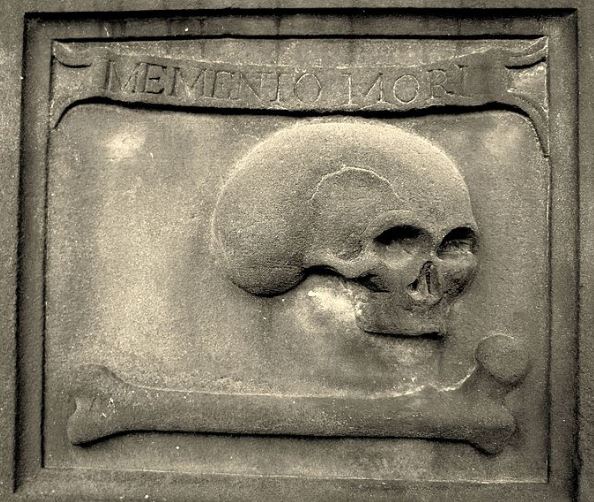
There is stoicism in feeling a deeper connection born of an external threat. Being reminded that life is transient, and because it is ultimately fragile, its worth is greater still. This is the way of Bushido. Value life deeply because it will end all too soon.
In that regard, a plague is divine action. An external and eternal reminder that we should be thankful and learn to live.
_______________________
[1] There are well-managed websites that will sell you gear to prepare for biological threats as well as those to help you build you a bunker (and of course you can go upscale).
 Protective Arts
I have a feeling I should catch up on your recent posts before commenting deeply, but suffice to say The Road is one of the most devastating books I’ve read and your treatment here is perfectly concise and evocative of it and our current state. I hadn’t reflected back on how salient the paring down to the Man and the Boy is to our quarantine. And of course, being a man of the cloth, I would agree that this horseman’s sharpening of gratitude’s cutting edge is a divine gift.
LikeLike
Noel, thank you. A plague-induced quarantine coinciding with Passover and Easter adds to the poignancy. Inspired me to re-visit Sir James Frazer’s Golden Bough, Campbell’s Hero’r Journey, Nietzsche’s Eternal Return.
LikeLike