Aikido teaches commitment and timing.
I recall Okamoto sensei telling us “without commitment there is no Aikido” and I have been trying to unpack that ever since. Its simple to articulate, hard to convey and embody.
I recently used Diomedes to explain kairos: the harmonious incorporation of committed action in proper time. Then I found >this< essay in Big Think which, surprisingly, used the image of a counter-sniper: not merely someone who acts quickly, but someone who knows precisely when action is required. Another example of violence being used to illustrate the decisive moment. Knowing when the moment has arrived and entering without hesitation.
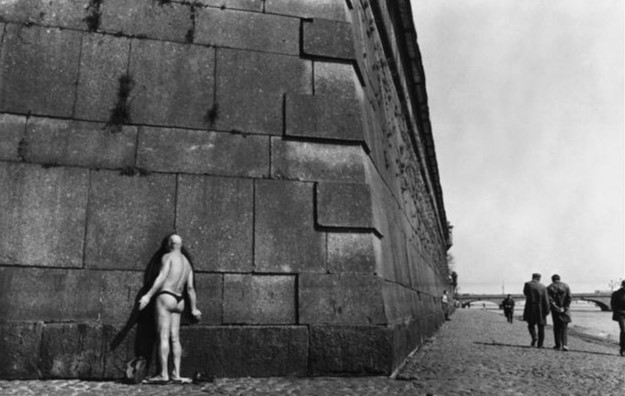
Then Russ Gorman sent me a video on Henri Cartier-Bresson, which explains kairos in the language of the visual arts:
To take photographs means to recognize – simultaneously and within a fraction of a second – both the fact itself and the rigorous organization of visually perceived forms that give it meaning. It is putting one’s head, one’s eye, and one’s heart on the same axis.
Cartier-Bresson
That sentence explained Aikido better than most Aikido books.
The throw is not the point. The photograph is not the point. The art lies in the moment before either happens.
That moment is kairos.
Most students think Aikido is about throws and learning a compendium of techniques. They are wrong in the same way bad photographers think photography is about cameras. The photograph is incidental in the same way the wrist lock is incidental. Each is a “result of,” not “the point of.” The art lies elsewhere.
Students are taught nouns instead of verbs: ikkyo, nikyo, kote-gaeshi, irimi-nage. They collect techniques like tourists. And like a tourist, collecting is necessary to achieve native familiarity, but its simply a stage in development. The forms start as static objects but must become expressions of timing, distance, and commitment. Technique is only proof that perception was correct. The true subject is kairos.
Too early and technique is force. Too late and technique is recovery. Exactly right and it appears effortless. This is why advanced Aikido looks fake. It is a demonstration of timing, not combat efficacity.
Cartier-Bresson called it the decisive moment. He saw first, then acted once. The photograph was only the residue of correct perception. Aikido is the same. The throw is not the art. It is the evidence.
Russ gave me Cartier-Bresson. Chris Mulligan gave me the other half. Most memorably when he quoted Roger Daltrey:
You cannot be afraid of a broken nose.
That line matters because it is not metaphor pretending to be toughness.
Daltrey came from postwar working-class West London, a world where actual scraps were ordinary social grammar. The early orbit of The Who was shaped by pub fights, class aggression, and the very British assumption that sometimes men got hit. Pain as a teacher.
So the phrase carries both meanings at once: literal physical willingness to engage conflict, and the psychological refusal to preserve retreat. That is uke.
Most students want Bresson’s eye without Daltrey’s nose. Unfortunately, that isn’t possible. Perfect timing requires risking consequence. Throws using the “path of least resistance” don’t exist without committed attack. And you cannot attack and defend at the same time. Attack requires exposure.
If uke is still deliberating internally, the attack is already false. The body is lying. Commitment destroys optionality.
There is a philosophical legitimacy and a reading list to help deepen that point, and we will address it later, but first I will turn to military combatives to explain the logic.
I find Anthony J. Drexel Biddle, Kali and Silat useful because they reveal Aikido’s budo, the necessary combat logic and lethality that informs proper movement. They ask the impolite but necessary question: Can this reliably stop a violent man? If the answer is no, your philosophy is decorating failure.
Silat restores malicious geometry. It reminds us that wrist locks are not ornamental. They are persuasive because destruction is implied. Kote-gaeshi is not a polite suggestion. It works because the alternative is worse.
Biddle strips away moral perfume and asks why the angle matters. Why this hand? Why this line? Why here and not there? This is the science of the art.
A good ikkyo is not beautiful because it looks smooth. It is beautiful because the shoulder line is structurally compromised, the spine disconnected from the hips, the escape route removed before resistance can organize.
Beauty is diagnostic.
A Roman arch is beautiful because it stands. A throw is beautiful because nothing unnecessary remains. An elegant mathematical proof. The argument reduced to the essential only.
This is why I find Aristotle more useful than much postwar Aikido philosophy. Virtue is not contemplation, it is praxis: action under conditions of uncertainty. The physician, the archer, the statesman, the martial artist. All depend on the same triad: Praxis → Kairos → Telos (Action → The right moment → Proper completion).
American combatives and knife work improve the conversation because they restore the cost of error. It informs, and defines, correct movement by teaching the right strike to the right artery at the right moment, the right entering angle that removes recovery before force is needed. Appropriateness of line executed at the right time. Action under constraint, executed with effortless action. The beauty of captured time. The right action at the right moment results, ipso facto, with proper completion. The throw wasn’t the goal, it is the necessary by product.
As a teacher in the Western tradition, I cannot begin with metaphysics. I cannot say “become one with the universe” and believe myself, or expect functional irimi to emerge. So: First mechanics, then necessity and physiology, then psychology, then philosophy.
Here is why your elbow fails. Here is why your balance cannot recover. Here is why hesitation kills the technique. Only after the body knows this do the aphoristic poems have purchase.
Under pressure, divided intention is physically visible. But ultimately, “mind-body unification” becomes plain observation.
The Japanese aphorisms are compressed conclusions. “The Way of the Samurai is found in death” from Hagakure is not curriculum (unless you are Ghost Dog). It is shorthand. It means hesitation destroys decisive action. Likewise Takuan Sōhō in The Unfettered Mind: the mind must not stop. Fear of death creates fixation; fixation gets you killed. The philosophy enters last. But once embodied, it feels like it was there first.
That is the trick. The body teaches the proverb.
Cartier-Bresson and Daltrey together explain the whole thing. Bresson: recognize the decisive moment. Daltrey: accept the cost of acting inside it. Perception without commitment is aesthetic hesitation. Commitment without perception is just collision.
The spirit of Aikido is not harmony as sentiment. It is harmony as proportion inside contest. Harmony is not the absence of violence. It is the correct proportion of force inside unavoidable conflict. The throw is not the point. The point is becoming the kind of person who can recognize the moment when action is no longer optional and enter without hesitation.
The Greeks already had the word.
Kairos.

