REVERSED EFFORT AND THE KEY TO MASTERY

The more I teach, the more I distrust my own methods. I vacillate between two instincts: to explain everything, the Western compulsion toward clarity, and to say almost nothing, as my Japanese teachers did. Both seem inadequate.

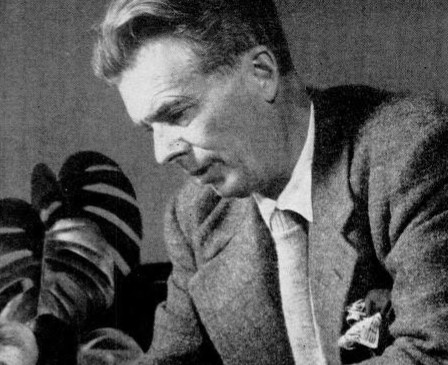
There is a paradox in learning that unsettles: The more effort one exerts to master, the more elusive it becomes. Aldous Huxley called it the law of reversed effort: the harder we strain to achieve a thing with conscious will, the more surely it escapes us. He was speaking of hypnosis and sleep, but also of prayer, meditation, and grace. It applies equally to Aikido; or to any discipline where body and mind must align without interference.

The promising student brings enthusiasm and the desire to “get it right.” But muscle and will can only carry one so far (Okamoto sensei assured me, this is sufficient through shodan). One must be able to replicate, with accuracy, the compendium of techniques, but their broader application and interconnectedness require more than rote understanding to perform under pressure, or in context. Where the instinct is to double down, to grip harder, to move faster, to strive, ultimately the need is less effort, less resistance.

In the Japanese tradition, we are given very little explanation. The teacher shows the form, usually four times or so. There is no breakdown, no step-by-step walkthrough. If we ask too many questions, the answer is often a nod toward the mat. “Steal it with your eyes,” the saying goes. You are not taught the technique. You must take it.

This is not a defect of pedagogy. It is the pedagogy.

Westerners tend to recoil from this opacity. We crave explanation, diagrams, logic chains. We mistake verbal description for understanding. Yet in Aikido, understanding emerges only when language fails (not a great prognosis for all my posts!); when the nervous system, not the intellect, begins to recognize structure. The body itself must learn.

I’ve watched this law of reversed effort reveal itself most clearly when students are exhausted. After two hours of training, when strength is spent and ego deflated, their movement suddenly improves. They blend rather than resist; they feel timing rather than chase it. Not because they finally figured it out, but because they finally stopped getting in the way. Seminars can elicit this most easily, but every time on the mat is a chance to test your limits.

I had the fortune of learning under both methods, Mulligan sensei’s explicit and reductionist style and Okamoto sensei’s parsimonious approach to teaching. Later, after Chris and Yoko returned to Japan, I trained intermittently with James Keating. His approach could not have been more different. Keating offered a map (Keys to Effective Training) a set of organizing principles: quadrant play, logic chains, geometric patterning. His system gave names to what the Japanese left unsaid. It was cognitive scaffolding: an architecture for insight.

At first, these two pedagogies seemed oppositional. One relied on mimicry and patience; the other on analysis and categorization. But over time I came to see them as complementary expressions. Both lead, by opposite means, toward the dissolution of conscious will. The Japanese path exhausts the intellect through silence; the Western path exhausts it through complexity. Either way, the goal is surrender.

Keating’s “keys” are not commandments but instruments of revelation. They reveal structure so that structure can later be forgotten, like grammar to language, or kata to combat. Once internalized, the scaffolding collapses, and movement flows without thought. That is Huxley’s paradox again: will creates the preconditions for its own obsolescence.

Initially, and through every rank until shodan, we primarily progress through accumulation. But we deepen by letting go. I freely admit that I typically fail to “let go” and, therefore, am a poor model. But I see it. A subtle yielding replaces brute resolve. What once required ten thousand corrections becomes simple presence (shizentai).

Bruce Lee described this cycle perfectly:

“Before I studied the art, a punch was just a punch. After I learned the art, a punch was no longer a punch. Now that I understand the art, a punch is just a punch.”

The beginner imitates. The student analyzes. The master returns to simplicity. Complexity is not abandoned it is integrated, dissolved into instinct. The punch becomes itself again, but differently: empty of effort, full of intent.

If this sounds mystical, it isn’t. Neurophysiology confirms it: the prefrontal cortex quiets as skill automates; parasympathetic dominance replaces tension; the nervous system acts before the mind articulates. “Relax,” doesn’t mean be limp. It means stop interfering.

To master Aikido (any art, really), one must pass through both doors (back to Hulxley!): form and formlessness, prescription and freedom. In one, you think to understand; in the other, you move to remember. Each prepares the ground for the other. Together they form a single path: from effort to ease, from map to territory. Every true art moves this way: from accumulation to abandonment, from exertion to grace. We build the scaffolding to watch it disappear. We labor to exhaustion so that the body may finally remember how to move without us.
Walt Whitman

AIKIDO AS A FORGE

I have been focusing on tanren-geiko and drawing out a muscular pressure from both uke and nage in order to cultivate honest training.

“Whatever has value in the present world has it not in itself, according to its nature—but rather because it has been given value, and frequently because it was regarded as valuable by a higher power.”
The Will to Power

Nietzsche reminds us that techniques are embodied responses that resulted in winning.

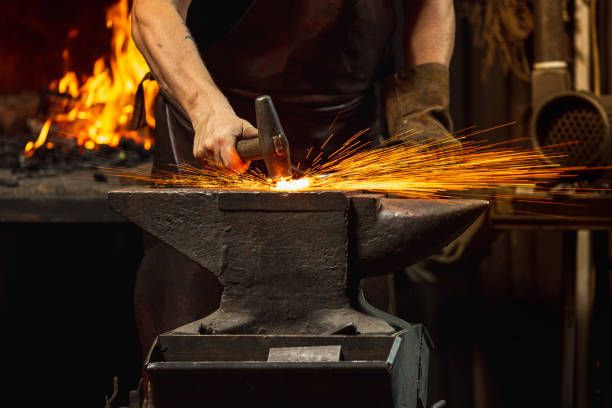
For an idea to propagate and be transmitted it must have utility – even when watered down to an art. Aikido’s techniques no longer have direct application to survival on a battlefield, but their value remains to cultivate the spirit in the crucible of contest. Yet struggle and competition is now suspect. Contest implies victory, and victory implies defeat—an unpalatable notion in an age that seeks beauty without effort. Thus, the cooperative contest in the dojo is a path for personal refinement. Tanren training is the hammer and fire that make the blade. We must remain honest that beauty is an emergent characteristic of hard work.

_____________________________

That brief thought was inspired by a rather insipid comment that stuck with me longer than I should have let it:

A visiting student had the temerity to write an email to Mike Napoli after taking one of my classes. Her complaint? That my focus was too violent and that Aikido shouldn’t be taught that way. She is wrong, probably read too much John Stevens.

Let’s start there.

What you find in many dojos today is the result of deliberate forgetting. It is not evolution. It is not refinement. It is editorial omission. Omission combined with the lack of vigorous training and devoid of practical application.

My polemical style is theater designed to provoke a response and act as a crucible of character. If you don’t understand the seriousness of my play, to preserve and transmit the fire within the art, then I have no need of you. Nor does the art, which already suffers too many fools. It is not enough to say that Aikido is peaceful; we must say what it was, how it changed, and what that change costs. Mine is an attempt to recover the reasons for the form, the purposes embedded in technique, and the intent that once governed practice.

The techniques of Aikido did not arise from nothing. Ueshiba studied under Sokaku Takeda, inheriting Daito-Ryu’s joint locks, pins, and throws. These were battlefield techniques, designed for armored opponents, often in situations where weapons were lost or compromised. The locks had intent: to disarm, disable, control, or kill. Aikido’s foundational techniques are of that system.

And Aikido’s spiritual foundation is also culturally specific. O’Sensei was a member of the Omoto sect, a radical Shinto-derived movement led by Onisaburo Deguchi. The Omoto-kyo religious movement was a quasi-Shinto, quasi-Buddhist sect that preached universal peace, but a peace based on Japanese divine leadership. Ueshiba was a follower of its prophet, who was both charismatic and politically dangerous. In fact, the government cracked down on Omoto violently in 1921 and again in 1935, for sedition. The Omoto sect was not some gentle ecumenical philosophy it was nationalist, messianic, and millenarian. Omoto believed in Japanese divine destiny, in the descent of Amaterasu, and in a future world reshaped by Japan’s spiritual centrality. The universalism it preached was not egalitarian; it was a hierarchy with Japan at its summit.

This is crucial to understand, because it frames what Ueshiba meant when he spoke of harmony. Harmony was not the erasure of conflict; it was the orchestration of conflict toward divine ends. And Aikido, in that frame, was a ritualized expression of power properly aligned with cosmic order.

After the war, this was no longer acceptable. Omoto had already been suppressed by the Japanese state for its millenarian activism, and its association with Aikido became a liability in postwar Japan. Under the guidance of his son Kisshomaru and later interpreters like Koichi Tohei and John Stevens, Aikido was rebranded. The nationalist and esoteric Omoto elements were carefully rescripted with Buddhist and universalist tones to emphasize concepts not inherent in the origins: “reconciliation,” “harmony,” and “spiritual development.” The pacifist myth of Aikido was born through a great act of editorial mediation. Kisshomaru Ueshiba’s 1957 book Aikido, and later Stevens’ volumes, cherry-picked from O-Sensei’s writings and stripped away most of the Omoto-kyo-specific language. This was intentional. You can’t market a martial art with millenarian Shinto prophecy in the West.

And this changed the presentation of the techniques and the way they were taught. Atemi (strikes) were removed or marginalized. Ukemi became performative. Entries became stylized, the finishes elongated, the structural integrity diluted. The pedagogy shifted from combative realism to cooperative demonstration.

It is here that John Stevens makes his fatal error. In portraying Aikido as a pure expression of peace, he abandons its origin in tactical necessity. Beauty, he insists, is the purpose. But beauty is not the purpose. As I wrote above: “The beauty is an emergent characteristic of the hard work.”

Teachers like Kazuo Chiba kept the blade edge sharp. Chiba, a postwar uchideshi, often spoke of Aikido as a “forging” process—not therapeutic but transformational in the old, brutal way. He saw the pacification of Aikido as a betrayal. “That man will ruin my art,” Ueshiba is reported to have said about Tohei. Chiba took that warning seriously. He understood that Aikido is a budo—a martial path. His practice retained atemi, retained tension, retained danger. He said explicitly: “The budo of Aikido is hidden.” And he meant hidden in plain sight. Just as Okinawan karate hides its bunkai within kata, Aikido hides its combative grammar beneath the veneer of flowing movement.

Chris Mulligan, was at Seagal’s dojo during the early development of Above the Law. Whatever one thinks of Seagal now, that film did more to restore Aikido’s reputation as a martial art than anything in the previous decade. It showed Aikido as forceful, arresting, impactful. It did not show Aikido as a dance. This was before The Perfect Weapon and Jeff Speakman’s cinematic legitimization of Kenpo. And both of them emerged from the long shadow of 1970s kung fu theater, where the martial was stylized to the point of opera. Seagal, for all his faults, brought back the shock of impact.

Impact matters. Aikido without impact is choreography. Aikido without structural pressure is delusion. We train tanren-geiko to forge this pressure, to let uke and nage feel the honest exchange. The goal is not to defeat your partner but to reveal the technique in full tension. That tension is where the truth resides.

And that brings us back to the student who wrote to Napoli. She saw violence where I see structure. She saw aggression where I see control. She wanted Aikido to be peaceful by omission. I want it to be peaceful by choice—a peace made possible by capacity, not by fantasy. Aikido is not safe because it lacks danger. It is safe because it contains danger within form. To practice honestly is to preserve controlled danger.


Bibliography

  • Bodiford, William. “Religion and Spiritual Development in Aikido.” Journal of Asian Martial Arts, Vol. 16 No. 4, 2007.
  • Chiba, Kazuo. The Sword and the Mind: Teachings of a Warrior. San Diego: Birankai Publications, 2003.
  • Chiba, Kazuo. The Structure of Aikido. San Diego Aikikai Publications, multiple editions.
  • Dykstra, Yoshinobu. “Omoto and the Japanese Religious Tradition.” Japanese Journal of Religious Studies 7, no. 2–3 (1980): 139–160.
  • Hurst, G. Cameron. “Death, Honor, and Loyalty: The Bushidō Ideal.” Philosophy East and West 40, no. 4 (1990): 511–527.
  • McCarthy, Patrick. Bubishi: The Classic Manual of Combat. Tuttle, 1995.
  • Pranin, Stanley. Aikido Pioneers: Prewar Era. Aiki News, 1997.
  • Pranin, Stanley, ed. Aikido Masters: Prewar Students of Morihei Ueshiba. Aikido Journal, 1999.
  • Pranin, Stanley, ed. Conversations with Aikido Pioneers: Postwar Interviews. Aikido Journal, 2003.
  • Stevens, John. The Secrets of Aikido. Shambhala, 2002.
  • Stevens, John. Abundant Peace: The Biography of Morihei Ueshiba, Founder of Aikido. Boston: Shambhala, 1987.
  • Takeda, Tokimune. Daito Ryu Aiki Jujutsu: Hiden Mokuroku.
  • Tissier, Christian. Aikido Fondamental. Paris: Éditions du Cuirassier, 1986.
  • Ueshiba, Morihei. Budo Renshu. Aiki News, translation 1991.
  • Ueshiba, Morihei. The Art of Peace. Translated and edited by John Stevens. Boston: Shambhala, 1992.
  • Ueshiba, Kisshomaru. Aikido. Tokyo: Hozansha Publishing, 1957.

WEAPON RETENTION

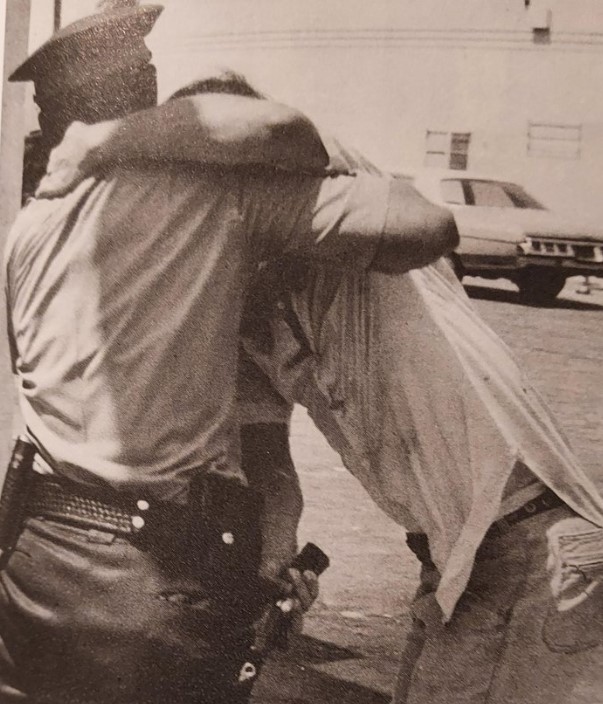
The banner image is a sobering reminder that retaining control of your weapon is imperative in close quarter combat. Primary weapons are always carried at the waist, thus the focus on chudan level.

The ritual endures longer than the reason for it – try to deduce the martial logic behind the ritualistic rote repetition in the art.

Ai-hanmi katate dori ikkyo ushiro tenkan

Uke attempts to grasp nage’s weapon that is held by the obi (belt) on the left hip. (Because warriors are right handed, this is a RvR encounter.)

Nage withdraws the weapon handle from uke’s grab by turning the left hip while using the left hand to raise the handle vertically and making a small step ushiro tenkan. Uke then orients to take nage’s right hand – the only viable target.

Nage cams their grabbed arm – elbow down, shyuto rotating inward – which defines the axis of the encounter where uke’s need to keep contact (lest nage immediately deploy the weapon) necessitates that uke’s elbow is moving vertically upward while their balance is being drawn forward. Keeping the grabbed hand as a static point, nage can use their left hand to control uke’s elbow and execute a controlling cut through uke’s center.

This narrative could be expanded to describe nage using their left hand to feed the saya up so as to place the handle into their right hand, which would allow (with a drop of nage’s hip) drawing the weapon and use it as an inducement for uke to move (as the blade rests against the back of uke’s neck).

Note that this presentation – and narrative description – of ikkyo is very different from an action in superior time. In superior time, ikkyo is a “lumberjack jam,” or an immediate counter-strike, or makiotoshi, or a lead to other techniques, which is why ikkyo really is a path to solve the infinite.

As a weapon-retention technique, the ikkyo narrative presumes a standard (nails-up) draw of the weapon.

A nails-down (reverse grip) draw results in irimi-nage.

Ai-hanmi katate dori irimi nage

Uke reaches for nage’s sheathed weapon. Nage slips irimi in time so that the weapon moves past uke’s grasp, while grabbing the handle in reverse grip, so that nage’s body movement effectively draws the weapon and uke is forced to grab nage’s weaponized hand – the knife point already toward uke’s center. Only uke’s extended arm prevents nage from immediately using the lethal point. The goal is to make your opponent place their body on your weapon’s point.

This momentary impasse where nage is behind uke, in their shikaku, while uke is preventing the stab, is solved by nage grasping uke’s neck with the left hand, making a small inward rotation to torque uke’s neck and spinal alignment, while keeping inward pressure with the knife and simultaneously shifting bodily back on an outward angle. This multi-vector movement will destabilize uke. If uke relents on the pressure holding nage’s knife, then nage will deploy it immediately. If uke keeps the tension while being destabilized, then nage has the opportunity to use their grabbed arm to throw uke using a traditional irimi-nage throw (rotational throw using the freedom of action at the shoulder).

An attentive reader should understand that these descriptions are a re-framing of Okamoto sensei’s demonstrations.