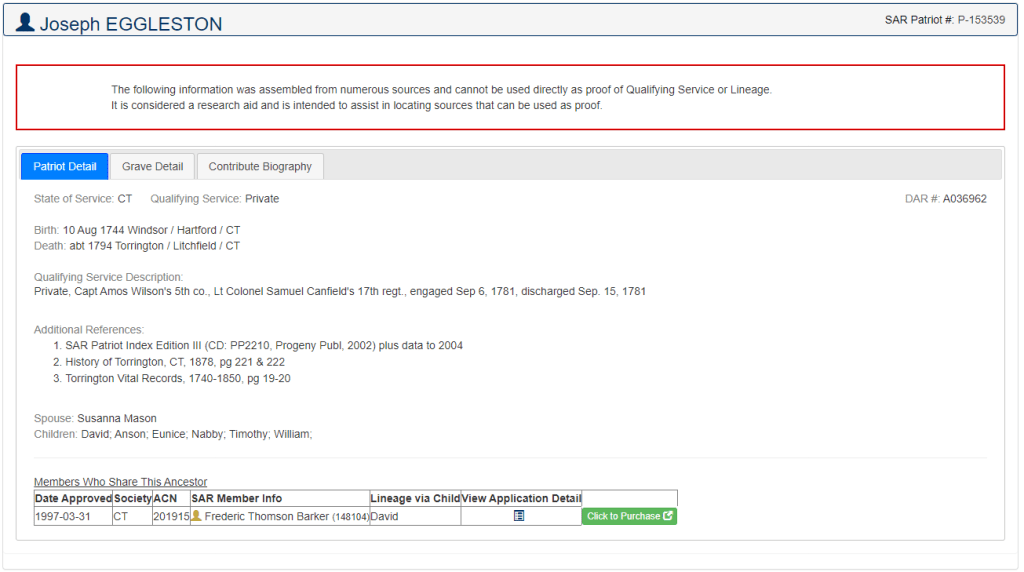
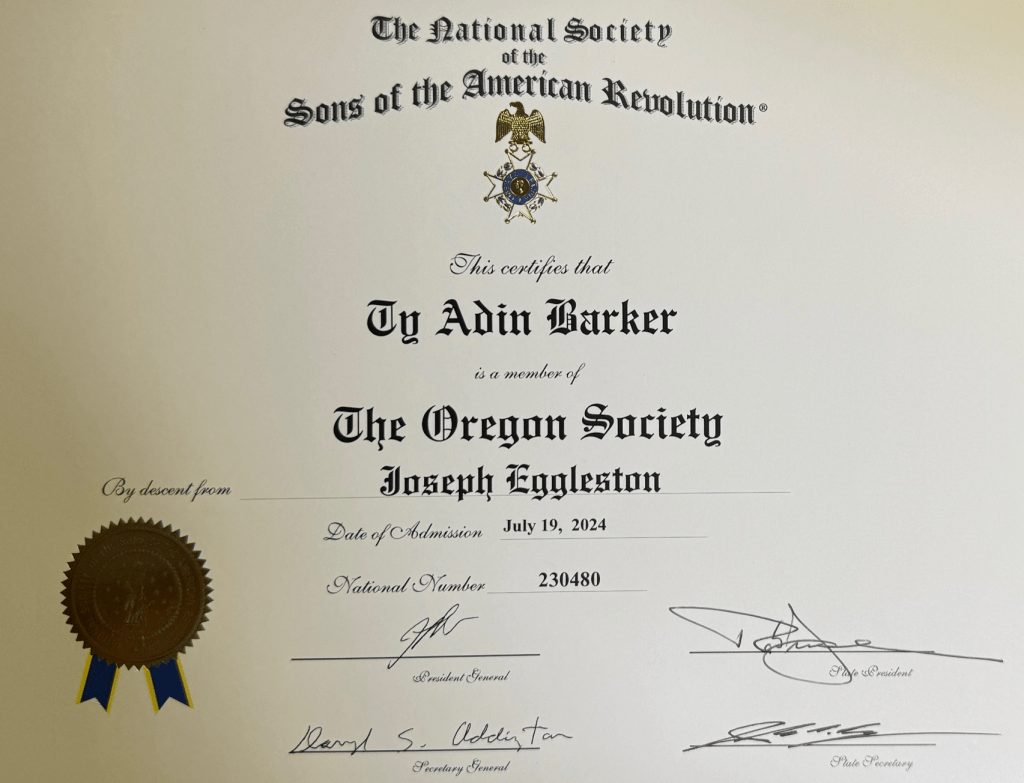
Joseph Eggleston was a soldier in the American Revolution who appears to have served for a total of nine days from September 6, 1781 only to be discharged on September 15, 1781.
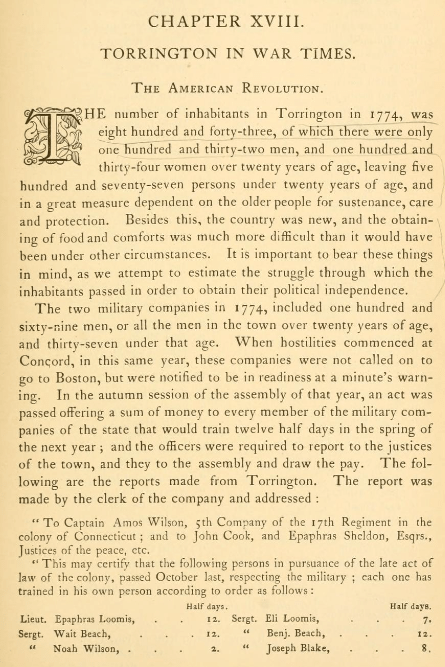
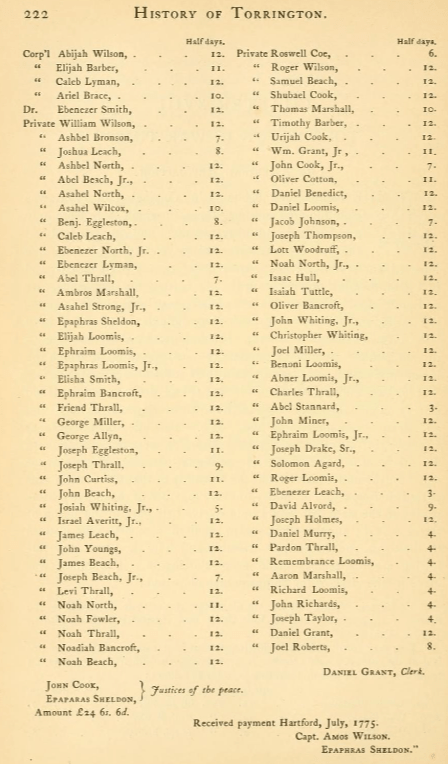
His mustering onto the roll is recorded as starting in 1774 in Rev. Samule Orcutt’s (1878) History of Torrington, Connecticut from Its First Settlement in 1737, with Biographies and Genealogies:
Despite the thin service record, the lineage was established and used by my paternal uncle Fred for his application. Mine followed the same genealogical connections and I used it to establish membership for my sons as well.
The official Certificate of Membership:
Membership Numbers
Using Joseph Eggleston as the ancestor was the path of least resistance – but additional ancestors also served. On my maternal side, both Caleb Taft (SAR Patriot #P-301378) and his nephew Bazaleel Taft (Bazaliel/Bezaleel SAR Patriot #P-301376) served.
Seth Wadham(s) is another viable ancestor, and he provided material aid to support the war effort.
My sons are marginally interested in their connection to history: youthful presentism. Their mediocre public school education didn’t help. Current curriculum fails to underscore the importance of the Revolutionary War. The Declaration of Independence provided the moral and intellectual justification for all the subsequent independence movements and the military victory was proof of concept.
________________
King George III famously wrote “America is lost!” at the conclusion of the war. An analysis of the passage he scribed, largely based on a published essay by Arthur Young is found >here< (by Angel Luke O’Donnell).
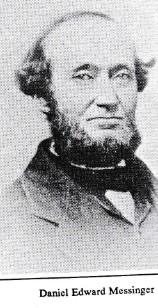
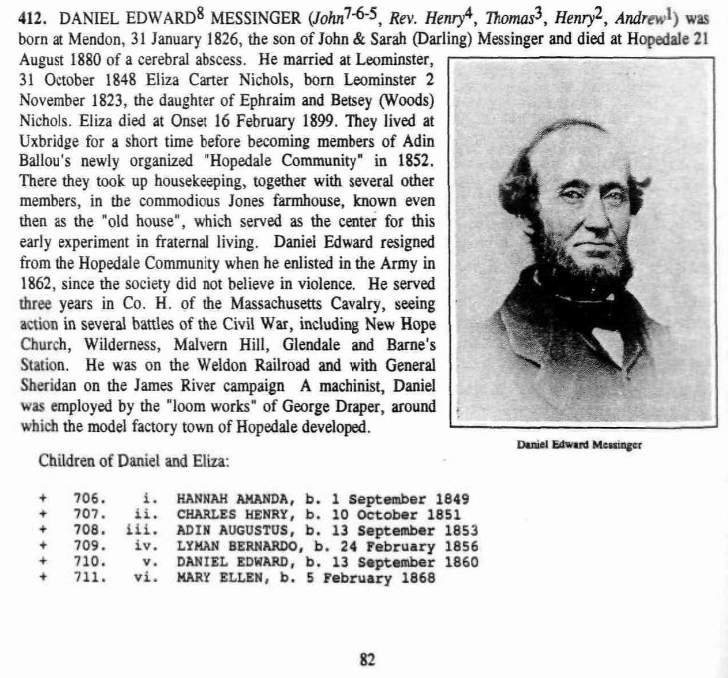
Daniel Edwards Messinger married Eliza Carter Nichols on October 31, 1848. They lived in Uxbridge, Massachusetts, before becoming members of Adin Ballou’s “Hopedale Community” (the dale of hope) in 1852.
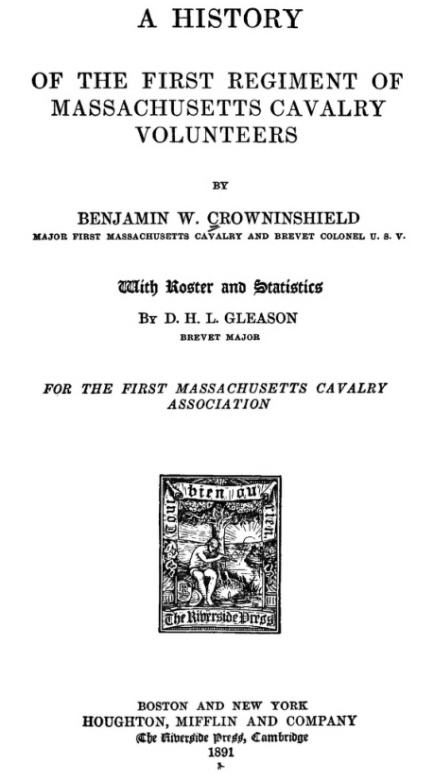
Their placement in the Messinger line and their connection to Uxbridge and Hopedale are documented in The Descendants of Henry Messinger of Boston, 1637 (privately printed, 1994). In the official records of the 1st Regiment, Massachusetts Cavalry, Daniel appears under the spelling “Messenger.” The regimental history lists “Messenger, Daniel E.”, age 36, of Milford, Massachusetts, as a member of the regiment (and associated rosters place him in Company H):
Daniel listed Comp. H (p403) “Messenger” spelling : Digitized Version
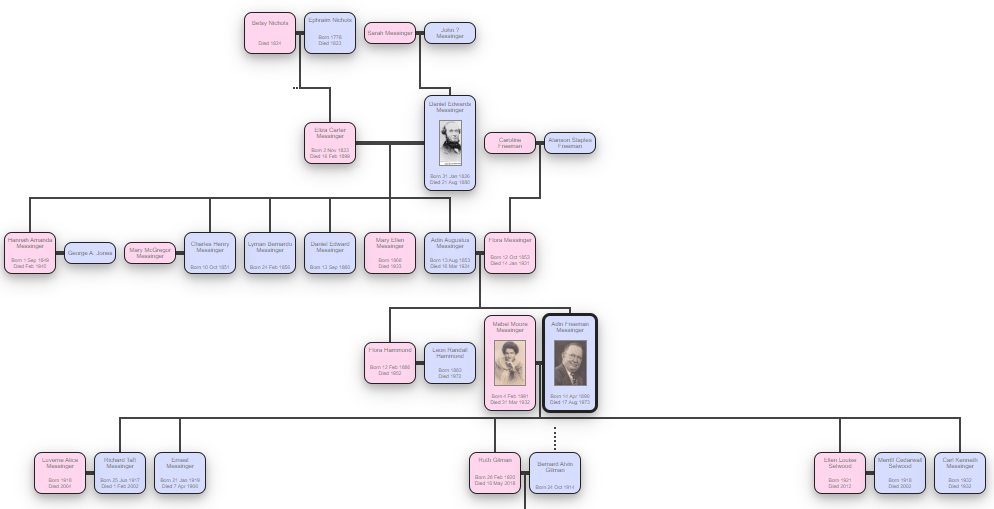
Daniel and Eliza had six children. Their third-born child is your great-great-grandfather, Adin Augustus Messinger:
Lineage
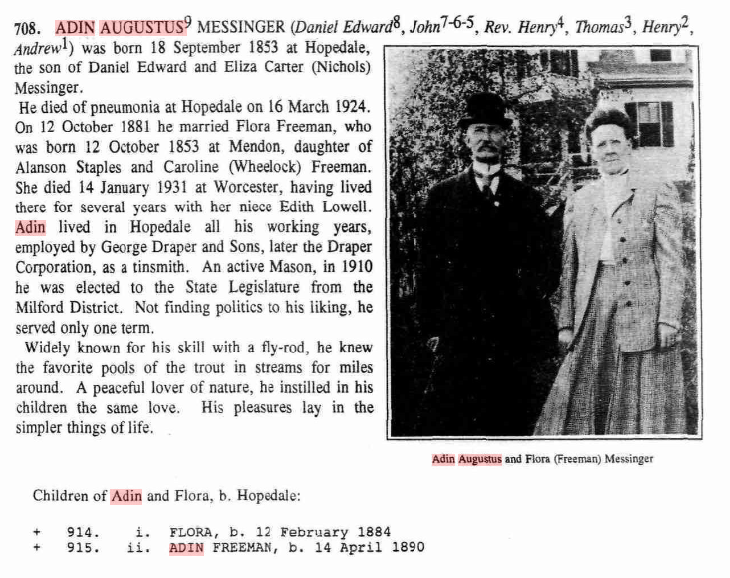
Adin Augustus Messinger is my GG grandfather.
The Descendants, p. 103
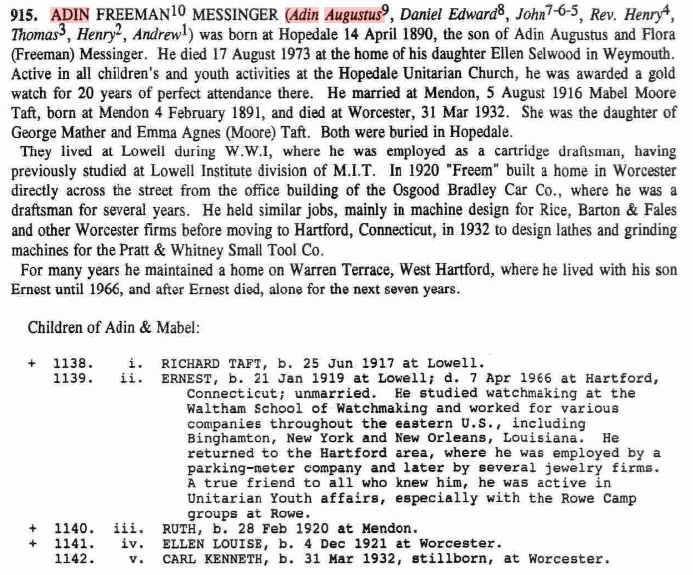
Adin Augustus named his son, my G grandfather, Adin Freeman, preserving both the given name “Adin” and the “Freeman” matronymic as a middle name. This line and the “Adin” naming pattern are laid out in the same Messinger genealogy volume.
The Descendants, p. 125
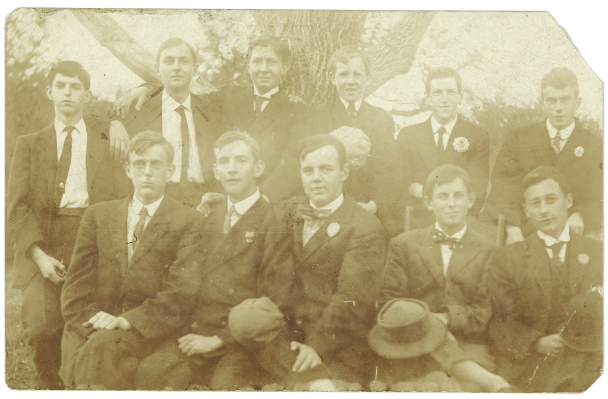
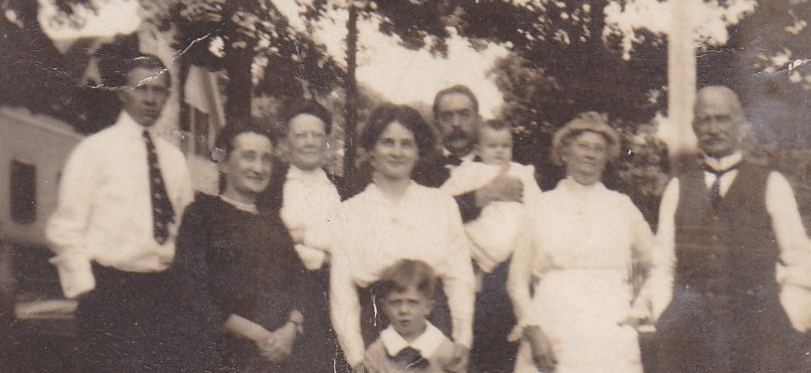
Adin Freeman Messinger – back row, third from the left
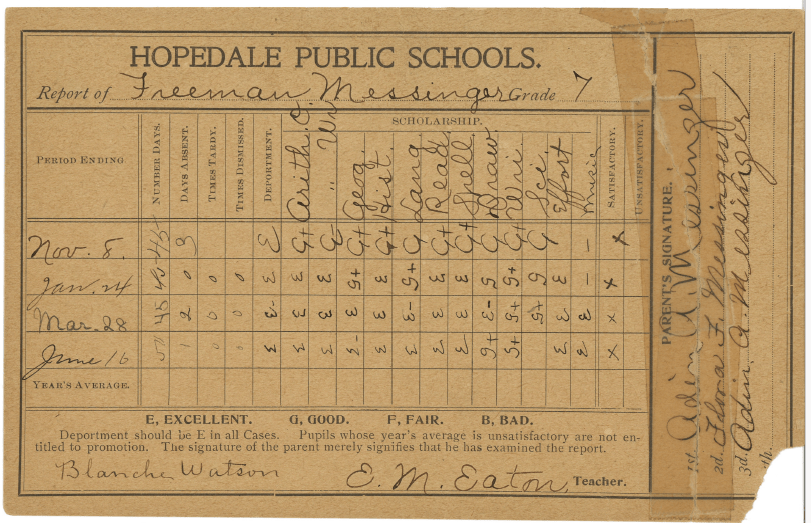
7th grade report card
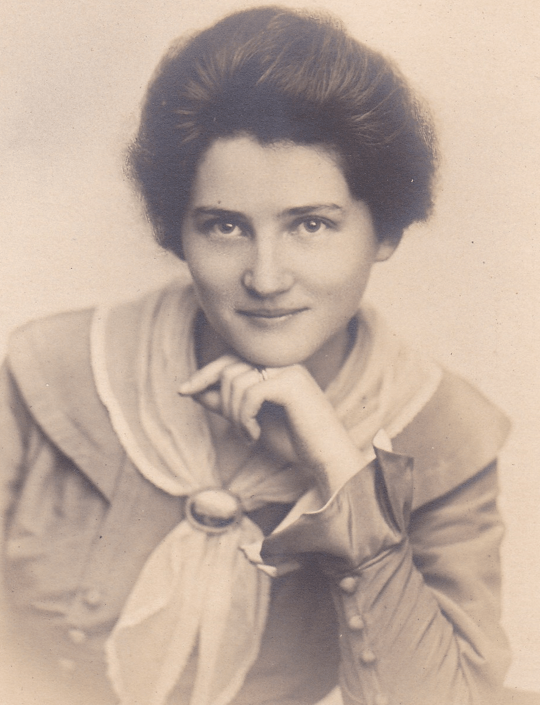
Mabel Moore Taft
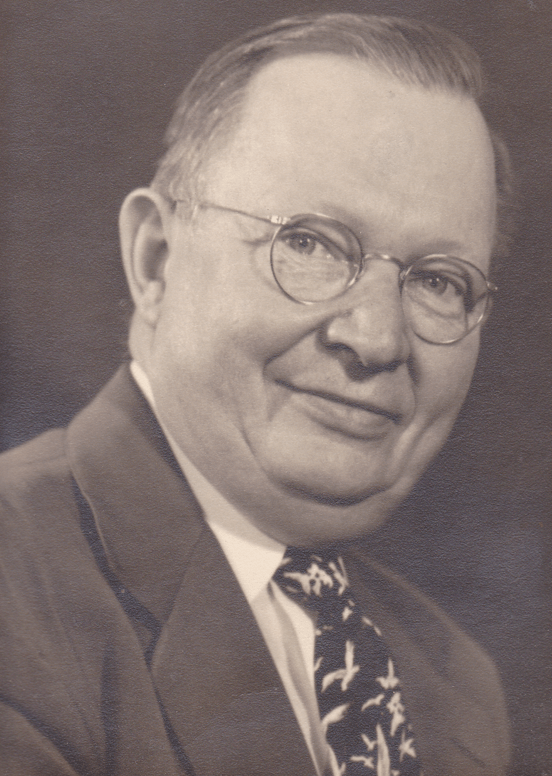
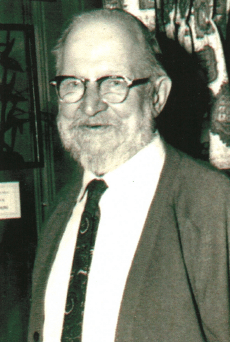
Adin Freeman Messinger
Possibly taken Memorial Day 1917. L-R Adin Freeman Messinger, Mary Ellen Messinger, Flora [Freeman] Messinger, Mabel [Taft] Messinger with Freeman L. Hammond, Leonard R. Hammond with Lowell K. Hammond, Hannah [Messinger] Jones, Adin Augustus Messinger
Prior to this research the atypical spelling “Adin” (rather than Aiden, etc.), which is closer to Hebrew, always puzzled me since we have no Jewish ancestry, but the clear inspiration for the family name is the founder of Hopedale: Adin Ballou (his autobiography).
________________________
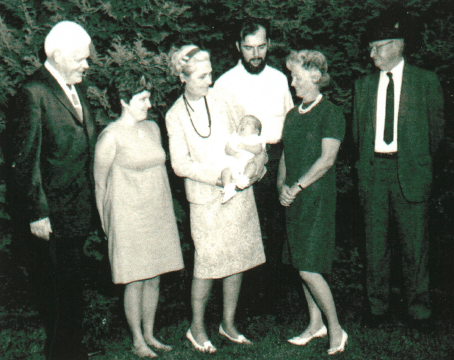
Haworth Barker, Lori (Gilman) Barker, Florance Barker (holding Ty), Ernest Barker, Ruth Gilman, Adin Messinger
My grandmother, Ruth (Messinger) Gilman, wrote a note to my son Adin when he was a month old, relaying these memories about her father:
Dear Adin (almost a month old!)
We’re so happy to hear you’re here!! You might like to know you’re named for you great, great grandfather Adin – who was named for his father. He also had his mother’s maiden name (Freeman) as you do – you mother’s (DiGiovanni) maiden name.
Adin was born in Hopedale, MA on April 14, 1890, where he lived until he married on August 5, 1916 to your great great grandmother Mabel Taft. They met probably at the Unitarian church socials – as Mabel lived in the next town of Mendon.
He loved baseball and I remember him with the radio and T.V. tuned to the Series games.
Growing up he was interested in children’s and youth activities in the church and was awarded a gold watch for 20 years of perfect attendance.
Adin had a sister Flora who lived all her life in Hopesdale. A very generous lady much loved by all. Adin and Mabel moved to Lowell, MA during WW1 where he was a cartridge draftsman. He had studied at Lowell division of MIT. In 1920 (the year I was born) he built a home in Worcester, MA – across the street from the office building of Osgood Bradley Car Co. where he was a draftsman for several years.
He was a fun loving father, uncle, and friend. In summer he went to Mt. Wachusett area. A large one room cottage bunk beds for the four children and right outside our own lake! Blueberries to pick, etc.
After Mabel died in 1932, Adin and his sons Dick and Ernie stayed in Worcester to finish their last years of high school. His daughters Ellen and Ruth (me) went to Hartford to live with their aunt, Bea(trice) Taft.
In 1936 Adin and the boys moved to Hartford where Adin worked in machine design for Rice, Barton & Fales, then to design lathes and grinding machines for the Pratt & Whitney Small Tool Co. One of the machines – a tap cutting machine – your great grandfather Bernie worked on during WW2.
The only car I remember was a Hupmobile – a large touring car. Time in the summer with the open air blowing – in the winter with the “isinglass window” in – the four of us under blankets huddled on the floor! We spent some time at Cape Cod between time at Mt. Wachusett.
Adin always brought red roses to the Hopesdale cemetery where Mabel and his parents were buried as well as Ernie and his sister Flora.
We always were very careful to keep our elbows off the table – Adin was a “stickler” for good table manners.
One of Adin’s expressions was “Don’t plague him” an expression your grandmother Lori heard fairly often as she teased your great uncle Gary or R. Adin.
He was a loving father, grandfather and great grandfather.
Adin Freeman Messinger
He died in August 1973. His children Dick, Ernest, Ruth, Ellen. Ernie died in 1966.
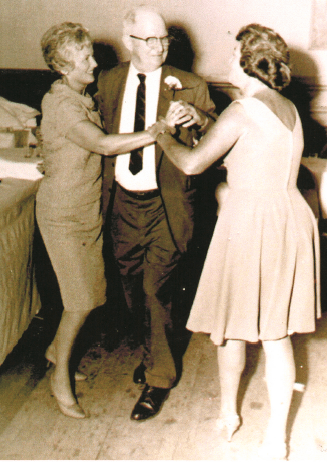
Ruth, Adin Freeman, and Verne
3 grandchildren of Dick and Verne: twins Bruce, Donald and Lance.
4 grandchildren of Ruth and Bernie: Barbara, Lori, Gary, and (Robert) Adin.
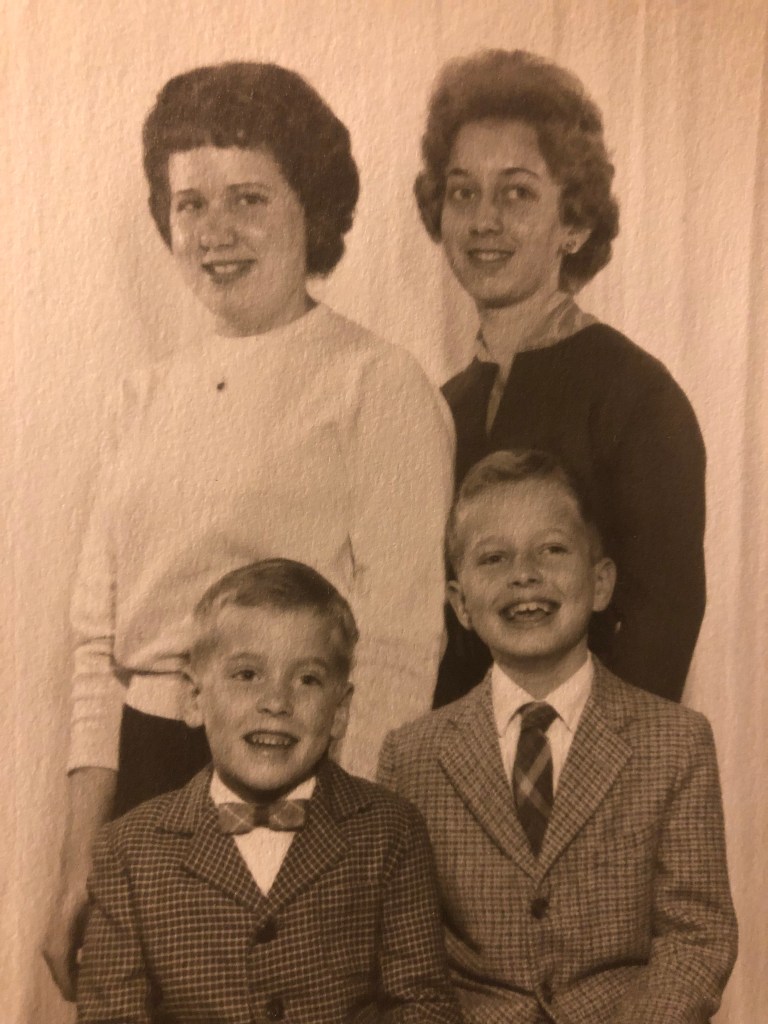
Lori, Barbara, Robert (Adin), Gary
2 grandchildren of Ellen and Merrill: Pamela and Russell.
_____________________
The Taft Lineage:
The Taft Genealogy records that Robert Taft Sr. (c. 1640–1725) left England and settled near the frontier town of Mendon around 1669. A carpenter and yeoman farmer, Robert established what would become the Taft homestead in the newly chartered village that later divided into Uxbridge. From this household branched two enduring lineages: the Uxbridge-Hopedale line that remained close to the original hearth, and the presidential line that migrated west as the country expanded. As time and geography widened, so did the family’s moral temperament: a slow metamorphosis of conscience shaped by migration, denomination, and vocation. From the frontier Puritanism of Mendon to rational Protestantism and finally to virtue internalized, the family’s faith evolved while retaining its moral rigor.
Robert Taft Sr. (c.1640–1725) left England in the late seventeenth century and settled near the frontier town of Mendon, Massachusetts, around 1669–1670. A carpenter and yeoman farmer, he established the Taft homestead in a newly chartered village that would later be divided, with part of it becoming Uxbridge. Local town records and family histories place him on that raw interior edge of Massachusetts, holding land, serving in civic roles, and helping to turn a scattered frontier into a functioning community.
This settlement came at a perilous moment. Only a few years after Robert arrived, New England was engulfed by King Philip’s War (1675–1676). Mendon was among the first English towns in the Massachusetts Bay Colony to be attacked; contemporary and later accounts describe it as the first to be struck. Several residents were killed, the homes and meetinghouse were burned, and the inhabitants fled. The town lay abandoned for a time, and only after the war did families like the Tafts return to rebuild on the same ground. For that generation, reconstruction was both necessity and covenant: labor itself became an act of faith. To impose order on what they understood as wilderness was, in their minds, to honor God; belief was materialized in stone walls and boundary lines.
From this rebuilt foundation, two long-running Taft branches emerged. The Mendon–Uxbridge line, from which Mabel Moore Taft (1891–1973) descends, remained rooted in Massachusetts for more than two centuries. Robert’s son Daniel Taft (1677–1761) carried the local line forward, and the family lands passed down through his descendants Jotham Taft (1734–1810) and Asahel Taft (1767–1849). Asahel’s son, George Mather Taft (1822–1896), pushed the family’s reach beyond subsistence farming into education, civic service, and the administrative life of the mill towns. Out of this line, eventually, came Mabel Moore Taft, who would marry Adin Freeman Messinger of Hopedale.
The Mendon–Uxbridge Tafts lived inside a regional culture that prized self-improvement and public duty. As New England moved from subsistence agriculture toward industrial villages and reform movements, the family’s ethic traveled with it: from hard-soil Puritanism to the cooperative experiments of nearby Hopedale and the small-town civic roles that anchored nineteenth-century Massachusetts life.
A parallel branch carried the Taft name north and then west. Aaron Taft (1743–1820), a grandson of Robert Sr., left Mendon for Vermont. His son, Peter Rawson Taft (1785–1867), moved again, this time to Cincinnati, Ohio, joining the broader wave of New England professionals who transplanted their habits of town governance and church discipline onto the expanding American frontier. Peter’s son Alphonso Taft (1810–1891) rose into national office as U.S. Attorney General and Secretary of War under President Ulysses S. Grant. Alphonso’s son, William Howard Taft (1857–1930), carried the family further still, serving first as President of the United States and later as Chief Justice of the Supreme Court.
The common ancestry of these branches runs back to Robert Taft Sr. on that Mendon farm. The Taft Historical Society in Uxbridge preserves genealogical charts, town records, and local histories that document both the Massachusetts line and its connection to the Vermont–Ohio branch, and these materials align with the standard published Taft genealogies. The degree of cousinship between Mabel and President Taft is distant (fifth or sixth degree depending on how one counts) but the shared root is clear.
From the mid-eighteenth century onward, the Taft and, later, Messinger lines moved through the familiar New England religious evolution: from strict Puritan covenant theology to a more procedural, civic Protestantism and finally into the Unitarian and Christian Science forms that shaped the twentieth century. In the Mendon–Uxbridge branch this meant church-centered town government, school committees, and the reforming energy of places like Hopedale. In the Ohio branch it meant lawyers, judges, and administrators who translated the old Puritan faith in order into a secular creed of law and procedure.
Seen in this light, the connection between the Barker, Messinger, and Taft families sits inside a much larger American pattern. The conscience formed in a burned-out Mendon settlement after King Philip’s War migrated westward, turned itself into town meetings and mill-village reforms, then into courtrooms and federal administration.
_______________________
Adin Ballou. An Elaborate History and Genealogy of the Ballous in America. Providence: E.L. Freeman & Sons, 1888.
Ballou, Adin. History of the Town of Milford, Worcester County, from Its First Settlement to 1881. Boston: Franklin Press, 1882.
Promise was that I Should Israel from Philistian yoke deliver; Ask for this great Deliverer now, and find him Eyeless in Gaza at the Mill with slaves, Himself in bonds under Philistian yoke;
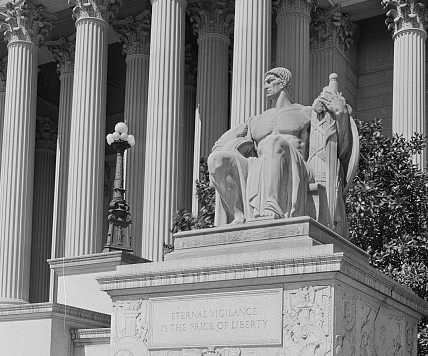
At the main entrance to the National Archives of the United States is a statue of a titan seated on an inscribed pedestal, “Eternal vigilance is the price of liberty.”
Eternal vigilance
The inscription is often, wrongly, attributed to Thomas Jefferson. It was an accepted truism in the early 19th century. There are other titans guarding the National Archives – “The past is prologue.” Truisms hard-learned. Orwell warned, “Who controls the past controls the future.”
The titan vigilance guards the national memory. He is not mere attentiveness. He is surrounded by a warrior’s girding; a plumed helm, a shield and sword, Heracles’ lion skin and most importantly, the faces. The faces is carried by the lictor, the consul’s executioner.
The symbology is lost on the ignorant who pass casually and do not comprehend the gravity of the message. The archives are collective memory so that we remember lessons learned, for:
“Those who cannot remember the past are condemned to repeat it.”
– George Santayana, The Life of Reason, 1905.
And no people forget more swiftly than those who inherit freedom unearned.
Hence a titan of vigilance because we must never forget and always be mindful of past sacrifice; because America was forged in a crucible of blood that paid its nascent independence – and paid definitively in a gushing abattoir from 1861 to 1865.
America more than any other country in history has paid the blood price to secure the liberty of the individual. It was an ethos inculcated: Thus citizen volunteerism well before American entered late to the Great War. And then again in WW2. America became the Primus Lictor of Western values after taking the lion-skin mantel from the British.
Of course there have been wars of expansion and exploitation perpetrated by the West, but nowhere else have the values of liberty been more broadly held and supported. Thus we can never forget and we must face with moral resolution the price of liberty – the state of being free within society from oppressive restrictions imposed by an outside authority on one’s way of life, behavior, or political views. Liberty shall not be constrained unless the expression of individual liberty limits the liberty of another.
Quoting Spooner as a justification for military action is ironic – and yet I would argue that his maxim of self-defense is applicable here: we are defending ourselves in a just war against an evil bent on destruction of liberty.
Simply read the Hamas charter – and believe them. They backed their beliefs with action – sacrificing infrastructure upgrades for rockets – sacrificing their people for Allah’s empty promise.
There are any number of pithy and sarcastic observations to be made about the sad false equivalencies to make the plight of the Palestinians somehow a relevant counterpoint to the suffering of Israel. The idiots that trumpet their support for a culture that actively persecutes them. As Christopher Hitchens elucidated, all religions are bad, and Islam is first among evils.
We know the multifaceted strategy of the monstrous Hamas operation of October 7.
In precivilizational fashion it wished to kill and mutilate the most vulnerable of all Israeli civilians and thus to shock the world that it was capable of—and proud about— anything, from decapitation to necrophilia. Such animalistic savagery, in the reckoning of Western therapeutic society, was supposedly to be seen as forced upon Hamas murderers by the “occupation.”
The killers felt they would shock the Israelis into concessions given their eagerness to commit the unspeakable. They took captives for tripartite reasons: to barter children and the elderly for their kindred terrorist murderers in Israeli jails; to use captives to force the Israelis to grant cease-fires and pauses in their retaliation; and to bank them as shields to protect Hamas kingpins from retaliation.
Hamas invaded during a holiday in the early hours, in a time of peace, and on the iconic 50th-annivesary of the Yom Kippur surprise Arab attack. Their aim was to prove that Israeli soil was for the first time porous and 2,000 killers could enter sacred Israeli ground with impunity and kill in one day more Jews civilians than at any day since the Holocaust.
The terrorists shot thousands of rockets into Israel to overwhelm Iron Dome and terrify the entire civilian population.
All these tactics was aimed at long-term strategic goals: stop the Abraham Accords; obey the directives of Hamas’s Iranian terrorist masters as payment for their arms; discredit the radical Palestine Authority and Arab moderate nations as anemic in their opposition to the supposedly shared hated Zionist entity; and prompt an Israeli response that by necessity would involve collateral damage to human shields, and schools, mosques, and hospitals atop subterranean Hamas headquarters.
Yet if we know their despicable methods, aims, and strategies, why did they think the civilized world would support their barbarity or at least excuse it?
One, Hamas assumed anti-Semitism was prevalent throughout the West and was canonical in the Middle East. Palestinian authorities count on the fact that being an enemy of the Jews of Israel wins them empathy of the world and creating their own unique rules of passive-aggressive victimhood.
So Palestinians demand to be the only “refugees” in the world—not Greek Cypriots, Eastern European Germans, and Prussians, Kurds, Armenians, and certainly not a million Jews cleansed from the Arab Middle East.
Israelis are to be “settlers,” not millions of Middle Easterners who surge and settle into the West, form resistance communities, sneer at integration and assimilation, and use Western liberality to protect and project their own illiberality.
Second, Hamas relies on useful Western idiots. It understands its terrorists repel the majority of Americans. But it figures Western and globalist institutions—academia, the media, popular culture—in their wealth, ignorance, and self-importance, alleviate guilt and find resonance by mouthing the shibboleths of the “underdog.”
In particular, Hamas understands that the Palestinian cause has fused with the leftwing Diversity, Equity, and Inclusion industry. Thus Hamas becomes the Middle-East counterpart to BLM, aggrieved minorities, and, more preposterously, the trans/gay/feminist movement. Meanwhile, Israelis are recalibrated as the demonized Western “colonialist” white supremacists.
Third, the Islamic expatriate populations of Europe and the U.S. have soared. In the strange logic of the Middle Easterner in the West—on a green card, or a student visa, or either as an illegal alien or a first-generation immigrant—he will envision the magnanimity of Americans and Europeans who offered him refuge from the violence, hatred, tyranny, racism, sexism, terrorism, and violence of his homeland all too often as weakness to be manipulated, not as generosity to be appreciated much less reciprocated.
Middle Eastern expatriates brag of their growing numbers and the political clout that Islam accrues in liberal democracies, without a clue of their hypocrisy of supporting illiberal tyrannies whose violence drove them out to the West in the first place.
So, we watch Middle Easterners in the U.S. trying to ruin iconic events such as crashing “Black Friday” shopping, disrupting the New York Thanksgiving parade, or tearing down American flags on Veterans’ Day.
Only in America would the Iranian terrorist theocracy’s ex-ambassador to the UN, Mohammad Jafar Mahallati, be accorded a professorship at Oberlin or a former top diplomat for the Iranian regime Seyed Hossein Mousavian land a coveted billet at Princeton.
From such perches these expatriates are free to promote pro-Hamas, Iranian, anti-Semitic—and Anti-American—agendas. They consider their hosts not so much tolerant as stupid, in the sense that any American expatriate in Iran who whispered criticism of the theocratic regime would either be hanged or used as a barter hostage. Why would those whose careers were devoted to demonizing and harming the United States from their coveted billets in Iran even wish to move to the Great Satan, while keeping warm relations with their theocratic kingpins in Tehran?
Four, behind all these considerations, is the reality of terrorism and the fear it instills in the West, given the 21st century history of Middle Easterners slaughtering thousands of Americans and Europeans. In crude terms, Hamas and its terrorist affiliates signal us, “damn Israel or be prepared for another 9/11.”
Five, Hamas is a death cult, an updated terrorist version of the more organized SS—with the qualifier it broadcasts rather than hides its savagery.
Radical Palestinians brag that they love death more than Israel loves life. So they count on Israel giving up three convicted terrorists for one elderly or young captive, on targeting civilians with rockets while Israelis drops leaflets warning of their bombing attacks, on coercing human shields that they assume Israel will avoid, on sanctioning raping, mutilating, and beheading in a way Israel would never conceive of reciprocating in kind, and on and on.
So will all these tactical and strategic methods work? For all the UN, media, and globalist support for Hamas, still perhaps not.
October 7 was a declaration by Hamas that all barbarity imaginable was now fair game. Yet its sheer evil has unleashed the IDF that perhaps not even Joe Biden, hostages, and “world opinion” can permanently stop.
For all the boasts about loving death, it was Hamas who cowardly murdered the unarmed, scampered back to the safety of their tunnels, and used their own kindred Gazans to shield them from death—delivered to them by supposed nerds who love life too much.
Europeans also have had it with unlimited immigration from the Middle East. Restrictionist politicians throughout Europe are ascending as never before, in Greece, Ireland, Italy, Germany, Holland, Spain, and Sweden.
They all reflect growing public anger that Europeans are hated by the very people who seek them out and wish to destroy their Enlightenment institutions by manipulating and discrediting them. The thousands who hit the streets to cheer on October 7 and damn their hosts only confirm a growing global consensus—in the West, Latin America, Asia, and even throughout the Middle East—that admitting migrants from Palestine or Gaza, or their supporters, is a veritable death wish.
Pro-Hamas protestors calling Joe Biden “Genocide Joe” and boasting about the Arab or Muslim vote in Michigan is incoherent. Not only do harassing Thanksgiving shoppers and parades, disrupting iconic American holidays and events, swarming highways and bridges, and preying on Jews alienate Americans. But also taking credit for ensuring Biden’s defeat will only distance the Democratic establishment, such as it is, from its embarrassing, loud, but ultimately relatively impotent Islamic constituency.
Shouting for mass death “From the River to the Sea” does not endear the pro-Hamas crowd to half of their fellow Democrats, much less unabashedly strutting their anti-Semitism. The current overt support for Hamas, in other words, has revealed to the nation the bankruptcy of the entire pro-Hamas/DEI base of the Democratic Party and will do much to ensure a conservative president in 2024.
And that president will likely deport anyone on a green card or student visa promoting Hamas terrorism, or violating U.S. law, while ensuring a travel ban from terrorist supporting regimes in the Middle East. Such measures will win overwhelming public support, despite media and academic outrage.
Strategically, Iran, Hamas, and the Palestinians may seem to have flummoxed Israel into endless concessions by metering out hostages for serial pauses. But again, no Israel government can retain power by allowing the mass murdering Hamas to survive and so it will not.
Despite all the blood-curdling rhetoric of Hezbollah and Iran, neither will attack Israel or U.S. assets in force, given no American president could afford not to retaliate disproportionately. And “disproportionately” would mean rendering Iran’s military and Hezbollah to something akin to the current status of Hamas.
So for now, Hamas and its American-residing apologists are full of themselves and feel they are leveraging and manipulating the West. But such haughtiness may be a delusion. Hamas in the Middle East and its enablers in Europe and America have done more to harm the Palestinian cause and the idea of Middle Eastern immigration to the West than at any time since 9/11.
It is hard to anger Westerners, but continue the death chants, the violent demonstrations, the creepy anti-Semitism, and the proud support for the Hamas bloodwork of October 7, and they will be surprised at the growing anger of otherwise postmodern Europeans and distracted Americans.
Just as Israel realizes that there is no living with Hamas killers, so the West is learning that it can no longer sustain universities that despise the culture that nourishes it or Middle Eastern immigrants, visiting students, and residents that use the gift of freedom and tolerance to promote their abhorrent anti-Semitism, violence, intolerance—and, yes, hatred of their generous hosts.
_______________________________________
For all the cease fire and hostage trading, there is a simple solution to the current conflict that would preserve the lives of innocents: Hamas leadership should surrender unconditionally to the IDF and suffer the consequences.
The belly aching of those calling for a cease fire misunderstand the consequences of aggression. The tragedy that Hamas created for its citizenry and the just retribution that Israel is forced to inflict is the responsibility of Hamas alone. And the gruesome reality of civilian casualties should have been the deterrent – and one that should never be sanitized. War should be horrific, lest it become palatable. Human action needs to have consequences to have meaning. Death should never be accepted and the sacrifice of innocents for nationalist interests is not moral. Star Trek the original series well addressed these issues:
We don’t make war with computers and herd people into suicide stations. We make the real thing.
James T. Kirk – Star Trek, A Taste Of Armageddon, S1 E23
War is a very messy business and aggression remains instinctive, which was my criticism of Pinker – we are not better humans, just better at targeting with cleaner technology. Armed conflicts remain prolific.
[1] There are several inconsistencies in this opinion piece and numerous ironical images, which I have no internal qualms about holding.
The fundamental tension between the necessity of a state strong enough to protect individual liberty from hostile forces and the state’s propensity to use war as its greatest instrument of control is intractable. Still, there are clear examples of morally superior governments (using Spooner as a paragon for judging) and thus a justification for just war in defense of liberty.
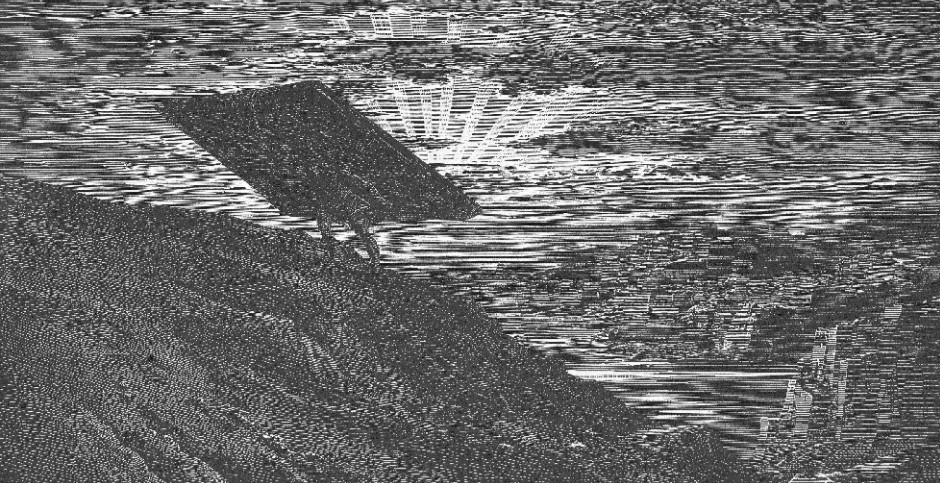
I use Biblical allusions despite my adamant belief that religions are used to justify every evil act. Yet Scripture remains, at least for now, part of our deep cultural grammar, creating resonances that can be felt even when not as well understood. The title image of Samson carrying away the gates of Gaza (Judges 13:5, 14:4) shows him destroying Philistine dominion, a direct warning to any oppressor of Israel. The opening quote from Milton’s poem which starts, like a Greek epic, in media res, with Samson shorn and eyeless, despondent and imprisoned. Samson is a prisoner within himself – lamenting that he is blind and powerless. Yet the chorus reminds him, and us, that the capacity for deliverance lies within. Samson’s final act is not passive martyrdom but willed judgment: he pulls down the pillars, crushing both himself and his captors, and rises, in Milton’s phrase, with “calm of mind, all passion spent.” This is not an act of martyrdom to glorify Allah, rather a heroic reprisal to achieve the right of self-determination. (The Palestinians, who already have autonomy, might learn that self-determination is more than perpetual grievance.)
Samson being Eyeless in Gaza leads naturally to Aldous Huxley’s novel, whose protagonist struggles to find moral clarity in a corrupt and disoriented world. Huxley diagnoses the spiritual blindness of modernity — the collapse of certainty in the wake of Nietzsche’s death of God — but prescribes pacifism and mysticism as the cure. Published in 1936, on the eve of the Spanish Civil War and Hitler’s rise, the book reflects a generation too weary to summon the resolve that history would soon demand.
Fortunately for me and most Americans, we are not asked to bear arms against tyranny — not yet. But vigilance is still required. The West increasingly undermines itself from within, producing both enemies of liberty and useful idiots who believe that rights are granted by the government abound. Such blindness is our true danger. And unlike Samson, we may find that no pillars are left to pull down when we finally open our eyes.


 Protective Arts