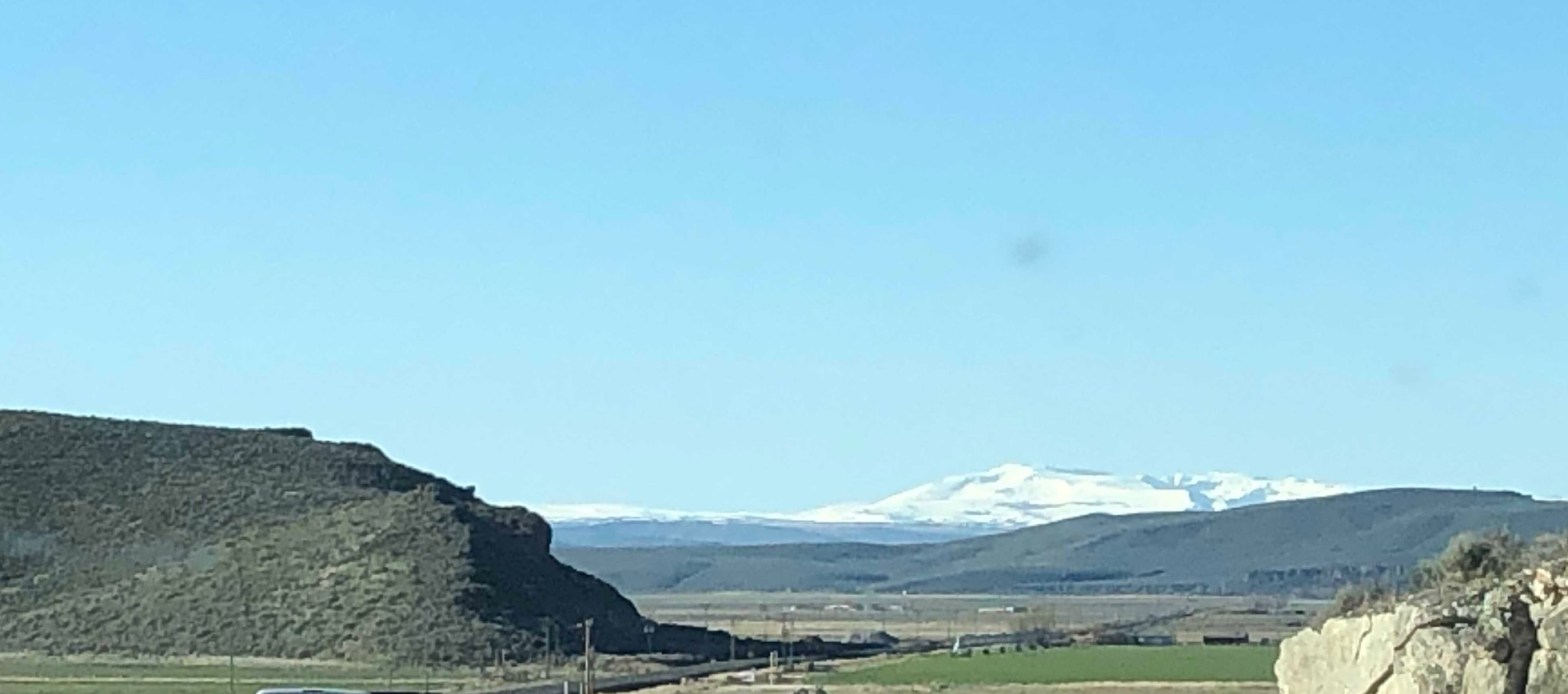
Step outside Multnomah County and the geography, climate and political convictions of Oregon change rapidly. The topography of eastern Oregon opens, light pollution drops and the distance between places increases exponentially.
Big Sky
I love the expansiveness. A poignant reminder of our insignificance: instilling a righteous humility.
It had been several years since I had been this deep into Malheur area while birding, looking for sage grouse. This trip was out past Burns, Oregon to Crystal Crane Hot Springs.
The hot springs
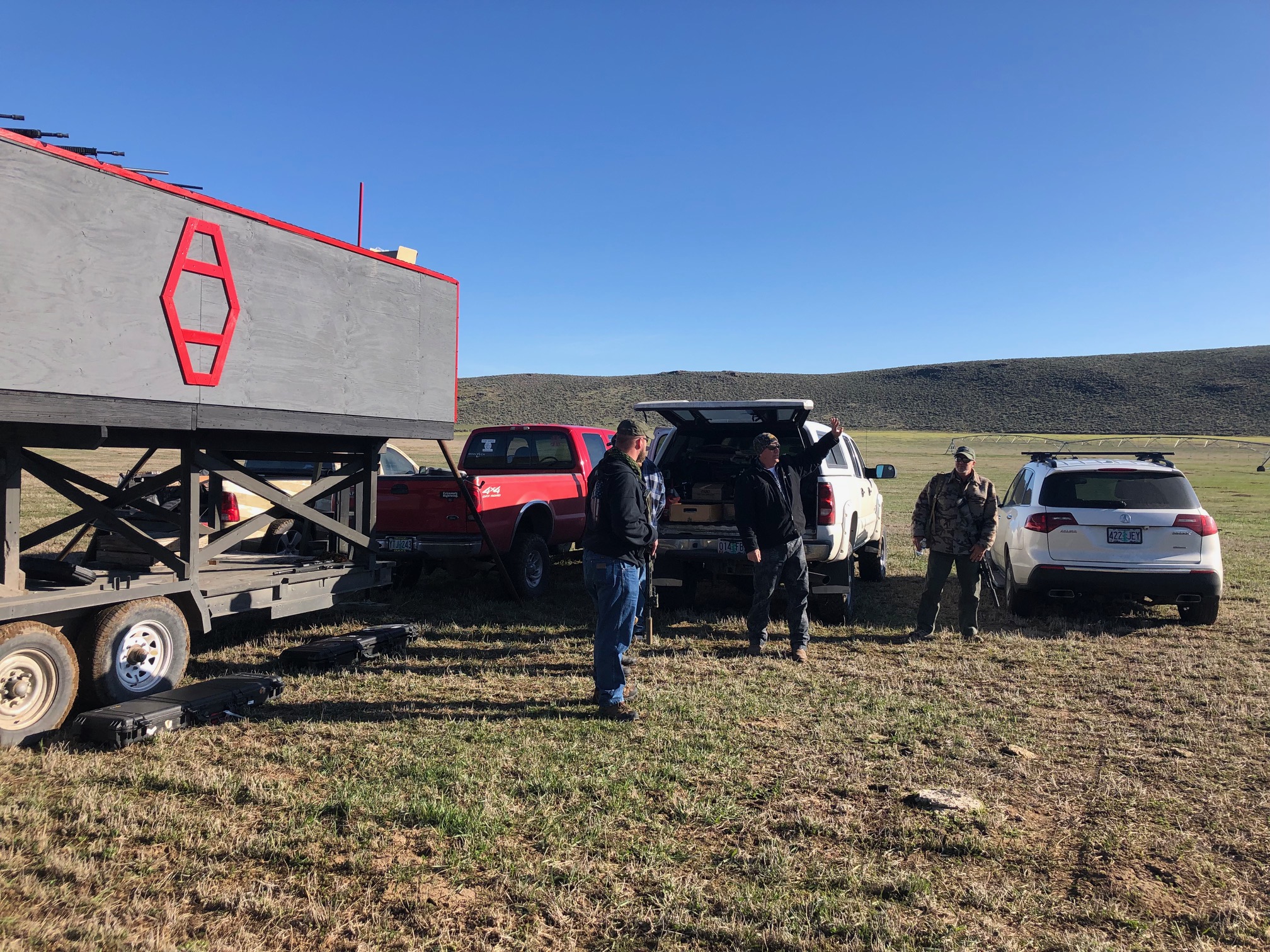
Crystal Crane Hot Springs facilities are an amalgam of tipi, RV hook-ups, bunk houses and a common mess hall. It attracts bird watchers, communal hot-springers, and hunters. I went there to hunt sage rat. Hunting is a misnomer: guided slaughter is a better description. The guide drives a trailer-mounted box into a field which serves as a firing platform to improve the view and angle of fire.
Setting up the platforms
The sage rat is a pest for the farmers (who would otherwise poison them) and the hunters bring an economic influx that the locals need. But that would be post-hoc justification – the truth is that it is good visceral fun.
An adult rat is about 9″ in length, and they blend well with the ground cover. They are prolific breeders and are everywhere. Once set up in the field, it doesn’t take long before they come out of their burrows, but usually 150 yards and often at more than 200 yards away from the platform.
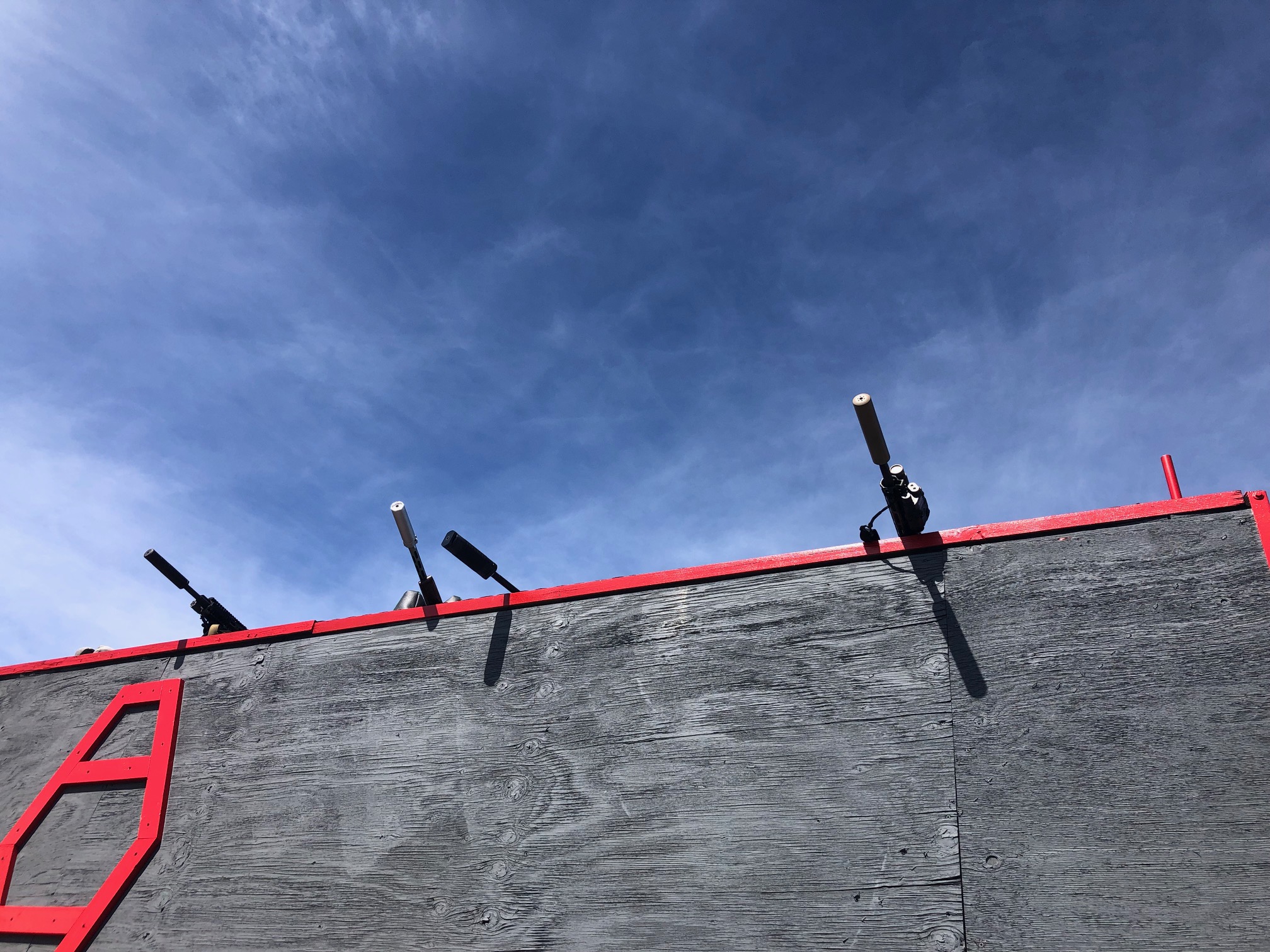
Suppressed to protect hearing
The platform comfortably holds eight and the lines of fire are 360-degrees. In close quarters, suppressors are a blessing for the higher-pressure rounds. The rifles ranged from .17, .22, .204, to .233. Shooting small targets at relatively long ranges made good spotting and a good scope imperative.
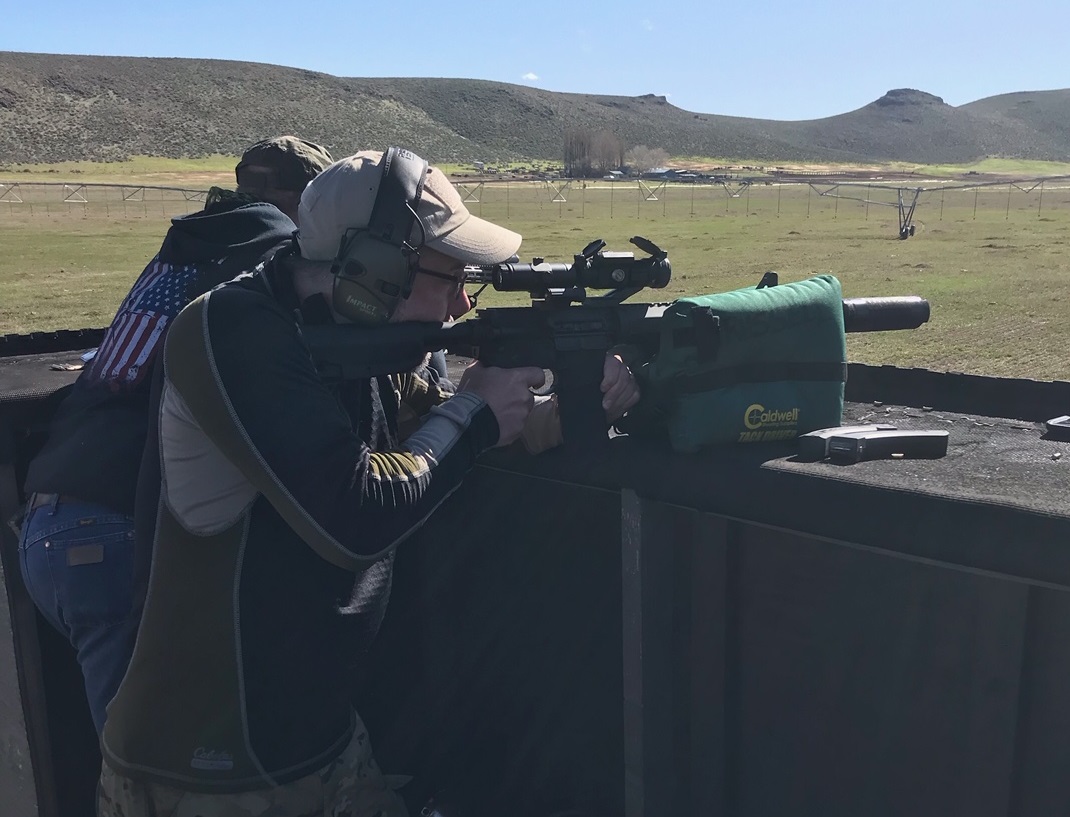
A red dot with a 3x magnification may be adequate for man-sized silhouettes but proved difficult for sage rats. The dot more than covered the target, making precision shooting a game of guesswork.
Not the right set up
But missing was almost more interesting than hitting the target. Walking shots in and chasing a moving target was as rewarding as a direct hit.
I was invited to the hunt through business connections but had the great fortune to hunt and bunk with Tuhon Harvey Elmore. Search for his YouTube content and see his connections.
How did we both get there? I was invited by one of the general contractors I employ frequently, and the owner’s son-in-law works with one of those 3-letter agencies that directs our operators in foreign theaters. He and his buddies couldn’t make this year’s hunt, but the word got around that it was great target training and constant action.
Tuhon Elmore has had a contract with the DOD for 18 years teaching Sayoc to those who need to use blades in dire circumstances. So Tuhon Elmore and one of his senior students made the trip.
Our group was just one of many. This is an industry, and hunters roll through the area in droves. With a dearth of natural predators (we screwed that up already), hunters are filling a void.
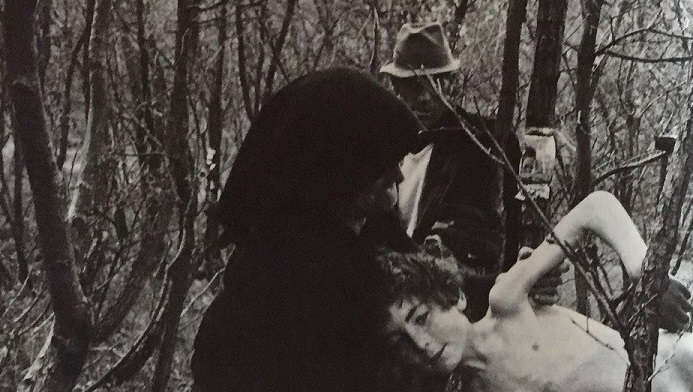
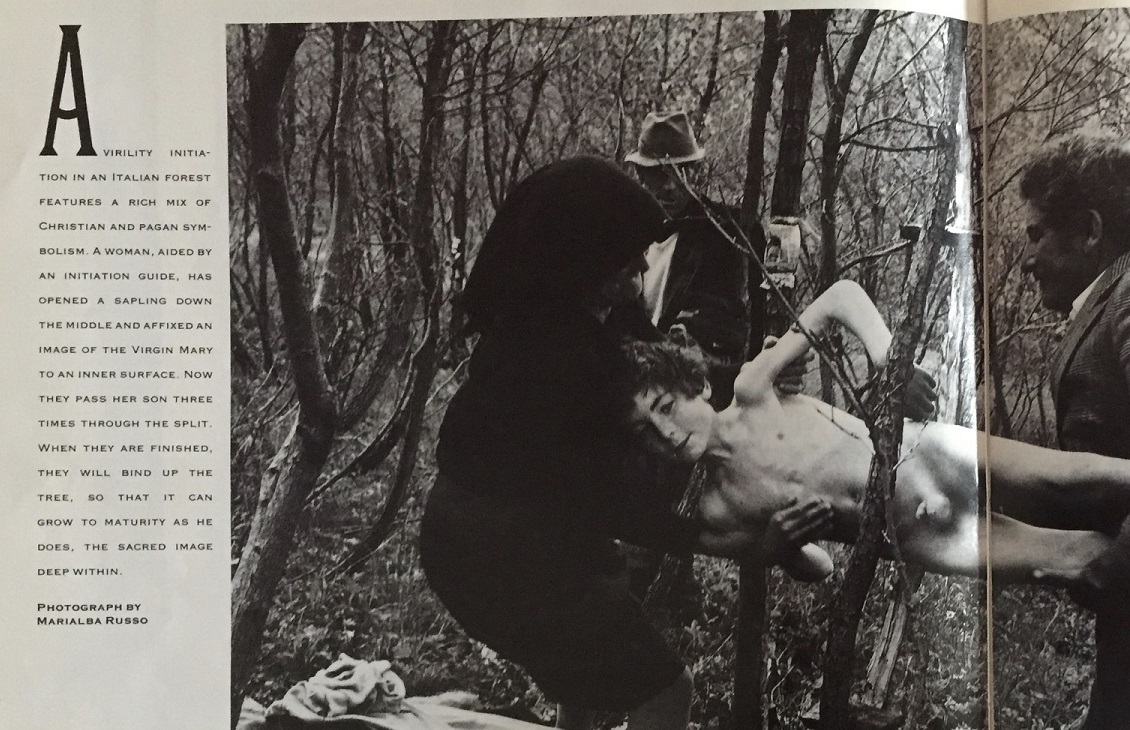
I regret not recording where I grabbed this photograph. I believe it was from Life magazine in the late 1970s, taken by Marialba Russo [1] from her study in virility, ritual, and the human need to prove transformation.
____________________________
The latent anthropologist in me laments the lack of rites of passage celebrating important transitions. Blood rites were once the key: girls to women with first menstruation, boys to men with the first wound in battle – first blood to mark passage into adulthood. Of course we moderns have moved past the social stage when fighting and fucking is all we need to propagate and protect the species – we got too much other shit to learn to be productive members. But biology rages on as the deep undercurrent. Therefore we fumble under the misguided belief we are above our biology.[2] Menstruation is a hygienic inconvenience, male aggression is suppressed and criminalized (rather than nurtured and cultivated).[3] Rites of passage denote dangerous transitions (across the limen) and celebrate the successful emergence into the next stage. (Give Arnold van Gennep a read.)
And so what does this have to do with martial arts?
Testing is a rite of passage. A demarcation of the threshold between who we were and who we must become.
As much as I recognize the importance of these rites, I have never enjoyed officiating them. Given that warning – here are suggestions on:
How to Administer a Test
The ultimate goal of any rite is to ensure that the participant emerges with a new status. That status is both an external recognition by others of the transformation as well as an internalization of a transition – of progression.
Pre-qualify the student.
As a teacher, you should know well in advance that any given student merits a new rank. First there must be the basic psychomotor ability: the student has established through consistent demonstration on the mat the ability to make each of the requisite techniques work. The overall level of refinement and understanding will vary according to level, but the consistency in executing the techniques should be evident from time on the mat. The ability to physically execute a technique at an appropriate skill level is the pre-requisite.
Announce the date.
To ensure that there is an audience, ensure that the date is well publicized. The audience validates the experience. All social events need witnesses. An audience also ensures the appropriate affective environment.
Create a Solemn Atmosphere.
A somber and serious environment sets the stage. Put the room on notice that we are now in a different space. Your job as the test administrator is to create that atmosphere. How? A pointed speech about expectations, or stark silence. Read the mood of the room and purposefully change it. Sit on the side of the mat. Wait several full breaths before moving. Walk purposefully to the far corner to observe the testing area. Bring a clip board to write notes. Present yourself with an air of gravitas. Convey through your very posture, facial expressions and solemnity the seriousness of what you are about to bear witness to.
Ritual Formalism.
People respond to ritual and spectacle. Even those who are intellectually aloof from ceremony cannot avoid an emotional reaction. It is precisely the emotional or affective response you need to elicit.
Call students out one-by-one. Instruct them where to sit so as to create distance between them all. This is to provide them with the space to demonstrate as well as for you to view the students. Ask for ukes to sit slightly behind the testing students. They bow toward the kamiza, the teacher, then each other. The order is the structure. The structure is critical to the ritual.
Calling the Test.
The techniques for each rank are prescriptively outlined. Call them in order so as to allow each student to gain a rhythm. You are not testing to fail. The students should have been pre-qualified as sufficiently skilled for the rank they are testing. Your job is to create the atmosphere and environment where the students affectively feel tested so that they can emerge victorious – then need to feel that they have crossed a threshold.
Administer the test to the ability of the students. If the students (or any one in the group) clearly and consistently fumbles a technique – you can provide a clarifying or guiding statement. If that doesn’t redirect the student, move on to another technique. You do not want to exacerbate failure.
Monitor the aerobic capacity of the testers. When in a test environment, most students speed up and fail to breathe regularly: this is induced stress. As a teacher you need to create a healthy amount of stress (to make the experience ‘real’) but need to monitor the ability of the students. You must test to their limits lest the experience be deemed ‘easy’ so you must administer carefully.
If there is a mixed group – some younger athletic types and some older who do not have aerobic capacity – then have the older students sit while asking the younger to demonstrate more. Let the older students catch their wind without drawing too much attention – keep the focus on the action.
Call the techniques in a grave manner. Drop your voice an octave or two. Present yourself as a mountain (Kagemusha, “A mountain does not move”).
Admonish those testing to complete all techniques, to finish pins, to create proper spacing, to not smile, laugh, or apologize. Do not accept less than their complete attention and concentration.
Never forget that there are those few who know that pain is a teacher. Push them hard before the test and during the test to make the experience real – a true challenge of endurance and commitment.
Closing the Ceremony.
The solemn nature of the beginning must carry through the end. The end of the ritual is the reverse of its opening. Students bow to each other, then the teacher, then the kamiza. As the teacher, you may have been sitting seiza the entire time. Your legs may be asleep. Find a way to maintain dignity when returning to the center of the mat to close the test. Your actions are the final markings of closure. Do not break character or change the atmosphere until you have left the mat. Only then has the ritual ended. Only then can the students return to normalcy.
We have crossed through the liminal to emerge as something new. The belt, the scroll, these are the later symbols of the transformation, markers of distinction, but the affective change happens during the test.
Why This Matters.
If Aikido had real, immediate competition, testing would be unnecessary. Victory or death would mark the passage plainly. In peacetime, however, ritual must supply what combat once provided. We recreate a facsimile of danger to keep meaning alive.
Tomiki Aikido introduced competition to simulate this edge. I respect the experiment but reject the result: Aikido is not a sport. Sport rewards the outcome; budo refines the person. Our testing must therefore feel perilous enough to be real while remaining safe enough to teach.
The absence of ritual leaves a vacuum. In that void, aggression festers into pathology and masculinity collapses into fragility. The rite, properly constructed, does not glorify violence; it domesticates it. It teaches us to bleed with purpose.
We cross the limen, endure the trial, and emerge altered. The ancient machinery still works. The form may change, but the need endures.
______________________
Related Resources.
Mark Manson always has a wonderfully irreverent tone that both belies and emphasizes his salient observations and advice. The testing environment should help foster the student’s sense of development and progress. The inculcation of value internally felt and externally recognized.
_______________________
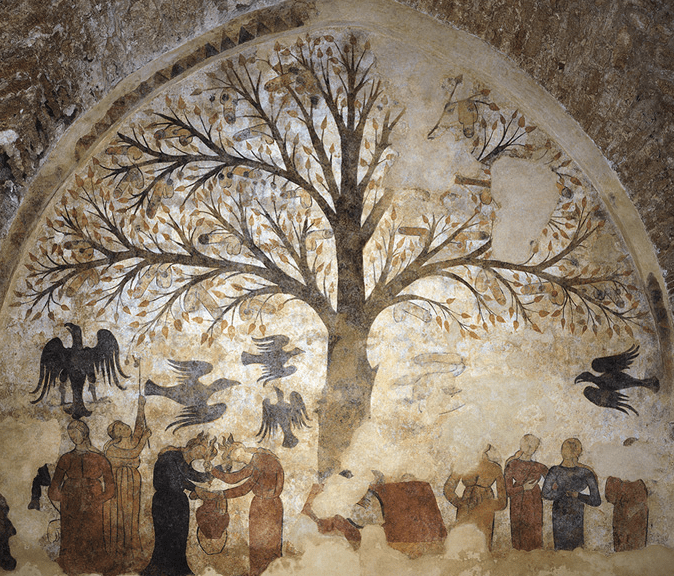
[1] I have done only a cursory search for the “virility” rite captured in the photo. The Italian version is a “passing through” rite, which (in the English folkways) is often associated with medical magic, qv. Hand, Wayland D. “Passing Through: Folk Medical Magic and Symbolism.” Proceedings of the American Philosophical Society, vol. 112, no. 6, 1968, pp. 379-492, and this >link< to a folklore account collected in 1886. Folklore studies are not much in vogue. A review of The Natural History and Antiquities of Selborne (1789) may prove useful. The virility rite in Italy may have links to the Tree of Fertility in Tuscany at Massa Marittima, Fonte dell’Abbondanza (1265).
Fruit of the tree of life
Time reports (2011) that the fresco was ‘restored’ without the phalluses. James Frazer’s works addresses the worship of trees.
[2] We arrogantly edit our genetics to suit our cultural presumptions – forgetting Shelly’s warning. He Jiankui opened the door to a new era of eugenics and the illusion of human perfection.
[3] As a man with two boys to raise, my concerns have a strong male bias. I remain resolutely primitive in my belief that most boys need a rough and tumble physical environment to flourish and fear the neutering culture they are surrounded by where these traits are criticized, suppressed and therefore explode in predictably destructive ways. There is a dangerous fragility to masculinity – consider the challenge of male expendability.
My children do not have any memories of Goshen. What I call my grandmother’s house was sold in 1990 after 180 years in the family. Windywalls. True homes in New England all have names, and a house becomes a home only after a birth, a marriage and a funeral take place within their walls. Family history can both ground one’s sense of self and be a constraint on potential. My children are wonderfully free of any history except their own.
Material fragments nevertheless remain with this provenance.
Meerschaum Pipe
Meerschaum Reclining Nude
According to Ernie Barker the pipe belonged to my great-grandfather Dr. Barker who received it as a graduation gift from Yale.
But his elder brother Anthony Barker was skeptical. Dr. Barker had tuberculosis and was a non-smoker. Tony concluded it was probably a racy novelty that (their father, my grandfather) Haworth Barker would have found interesting when he started smoking and its quality is such that it probably was a wedding gift from his friend Lionel Moore. They both smoked on the sly. “At any rate, it was among my father’s possessions when I was a boy–and I coveted it then–and smoked it once or twice on the sly. So, I would say that my DNA is also part of its provenance.”
Mason Watch Fob
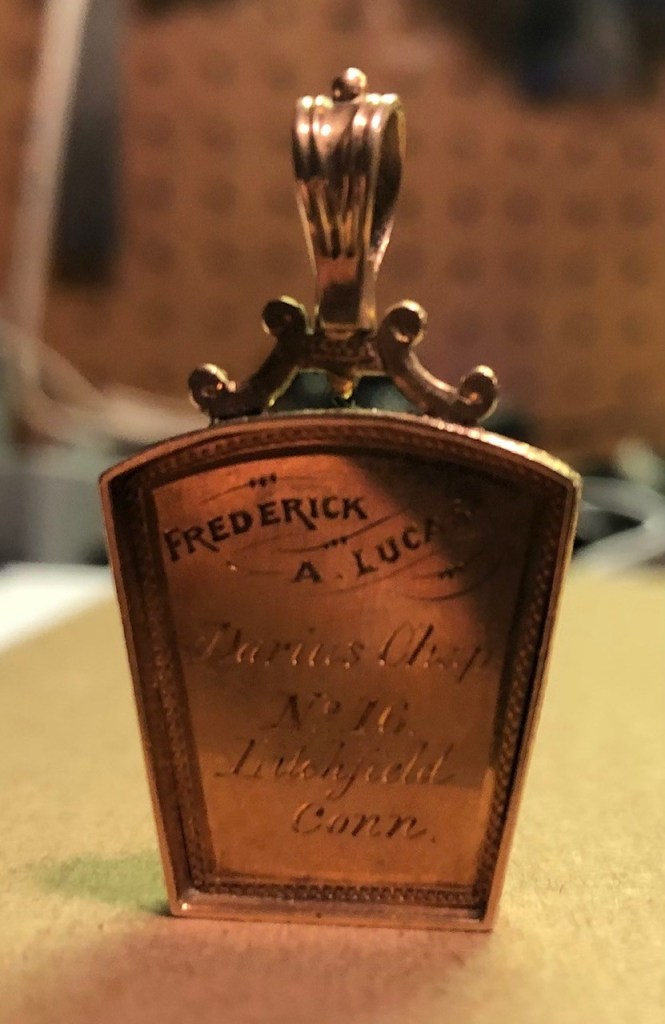
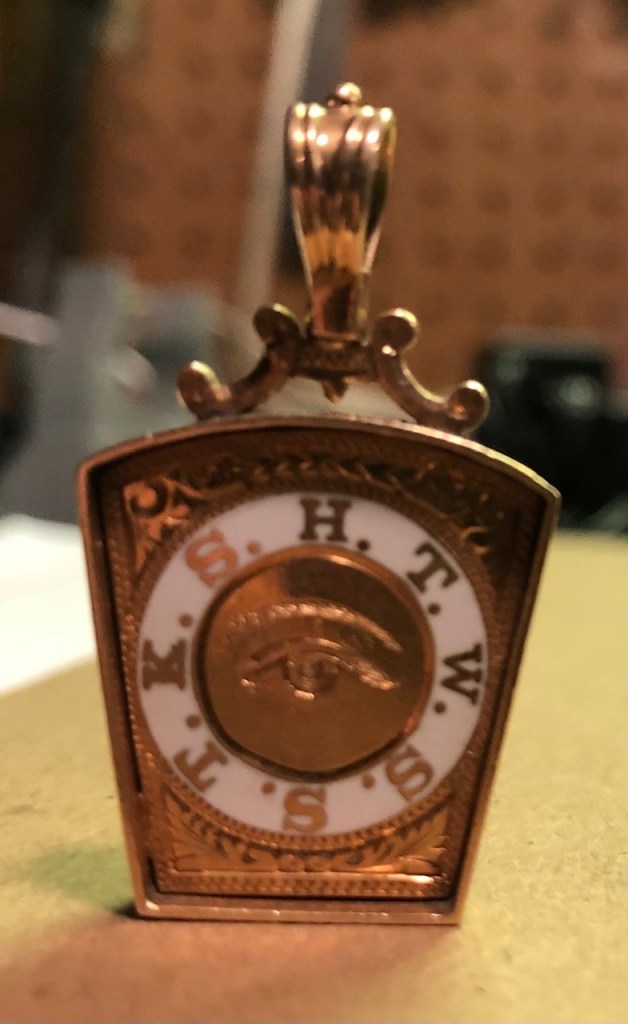
Frederick A. Lucas, a Mason of Darius Chapter No. 16, Litchfield, Connecticut, wore a gold watch fob inscribed with the letters: H T W S S T K S — Hiram, Tyrian, Widow’s Son, Sendeth to King Solomon. During the Civil War, the “brothers” of the lodge paid burial expenses for their fallen. The emblem was less ornament than bond: a visible reminder that ritual can outlast chaos, that fraternity once meant obligation.
Frederick Lucas Darius Chapter No 16, Litchfield CT
Mason watch fob
The letters should be read clockwise, starting at 12 o’clock: Here the Right Worshipful Master calls the candidate’s attention to the keystone before him, by pointing out to him the initials on the stone, which he is informed read as follows: HIRAM, TYRIAN, WIDOW’S SON, SENDETH TO KING SOLOMON.
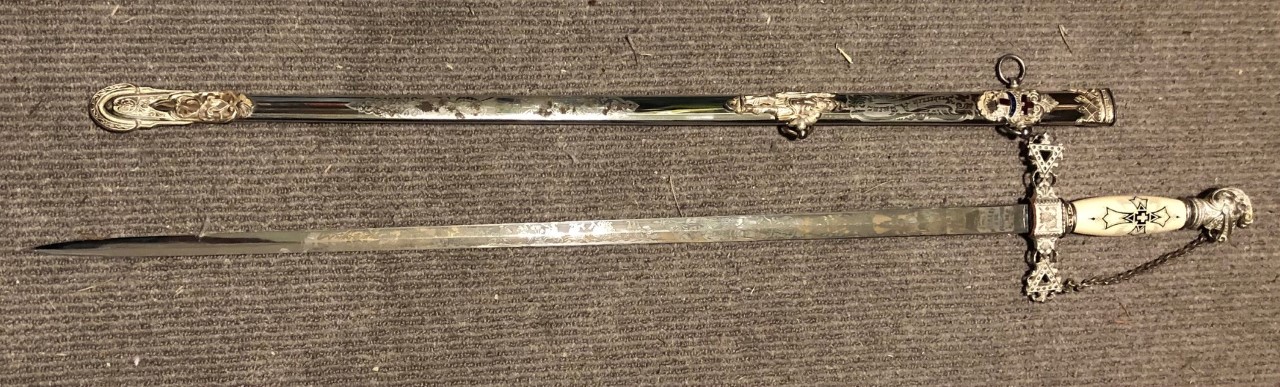
Mason Sword
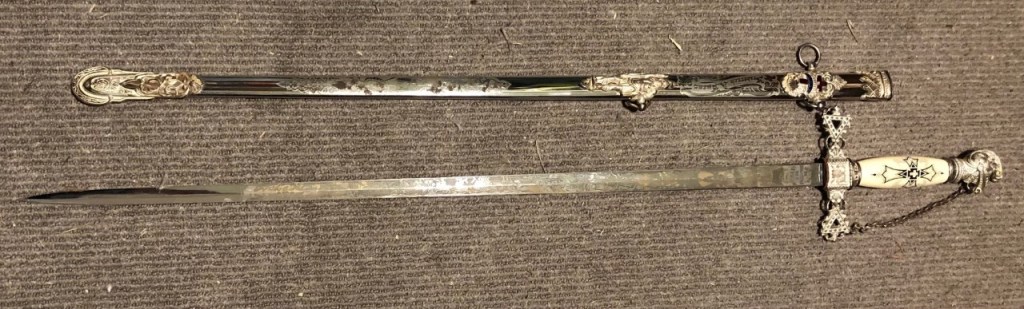
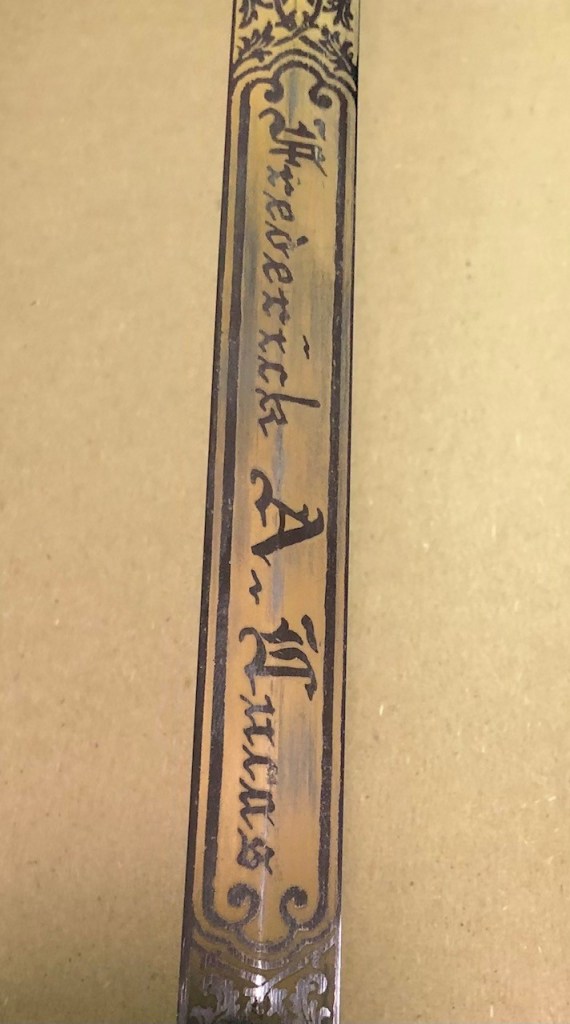
I have not found a manufacturing date, but this sword was granted to Frederick Lucas after his return from the Civil War –
Lodge #7, Waterbury CT Ceremonial sword and sheath
M.C. Lilley & Co. Columbus Ohio
Frederick A Lucas
Pierced Formations
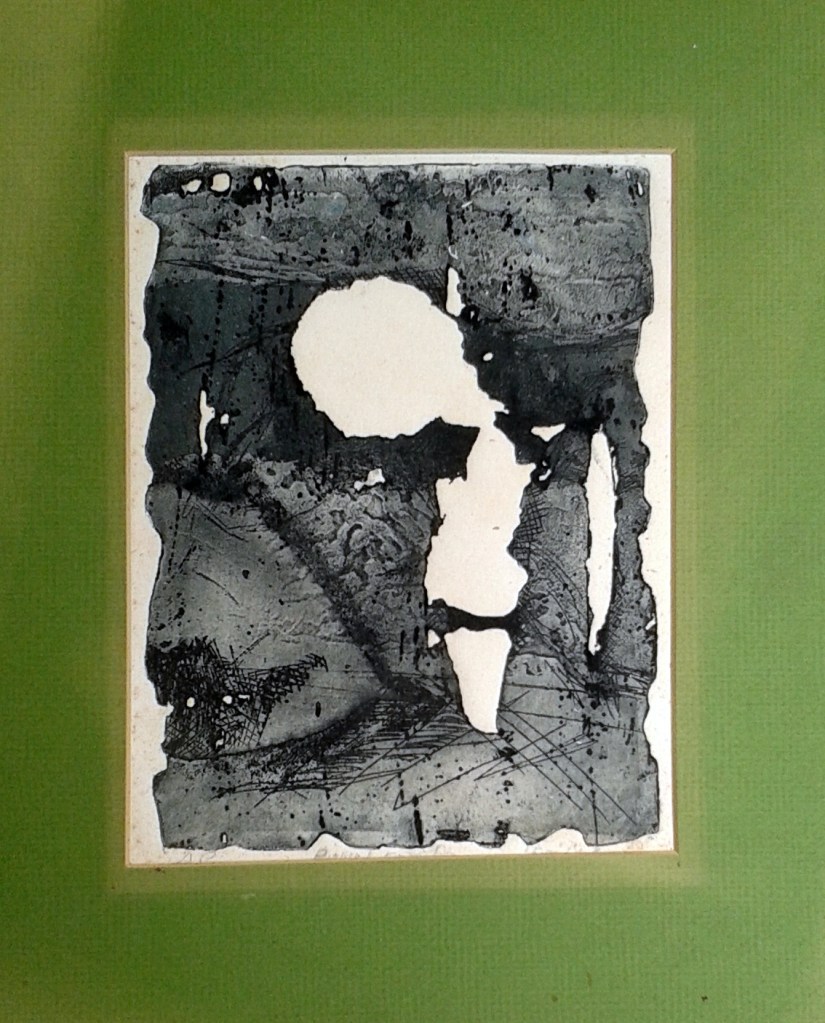
As part of his graduation requirements for his Masters in Fine Arts, my father held a gallery show of etchings. I have only two, both artist’s proofs, and Pierced Formations has always called to me:
Pierced Formations, AP, by Ernest Barker
His later sculptures and paintings remain in Connecticut.





 Protective Arts