Initial Conditions
Both practitioners begin in migi-hanmi, seigan-no-kamae.
Neither possesses initiative. Both share the centerline equally, each capable of attacking or receiving without commitment.
Uchidachi then deliberately lowers the sword into gedan-no-kamae.
This is not defensive withdrawal. It is 誘い (sasoi) an invitation.
By voluntarily abandoning the upper line while preserving posture, distance, and balance, uchidachi presents an apparent opening to men while concealing the intended response.
Ukedachi accepts the invitation by raising into jōdan-no-kamae.
The tactical decision has already been made. The strike itself merely follows.
This form isolates a specific problem: induced overextension.
In practice, this condition usually arises through error. Here it is created deliberately so that it can be studied.
Count 1: Invitation
Problem
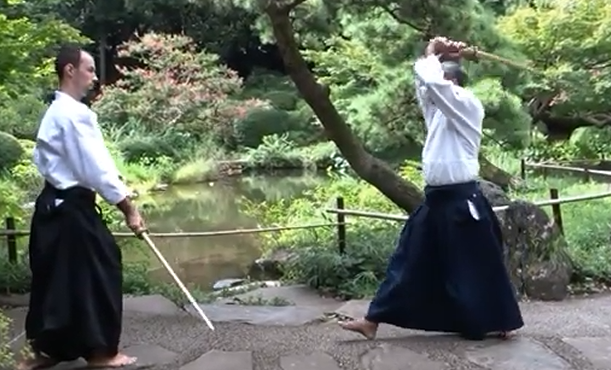
The invitation has succeeded.
Ukedachi has accepted the offered line and commits to a descending shōmen strike.
Although ukedachi attacks first, uchidachi has already shaped the conditions under which that attack occurs ABD, attack by drawing.
The contest for initiative has begun.
Ukedachi Logic
Commit fully.
A hesitant strike teaches nothing.
The apparent opening must be exploited decisively.
The commitment is genuine, but so is the structural exposure it creates.
Uchidachi Logic
Cut upward (kiri-age) into the opening to strike the underside of ukedachi’s wrists, as Ukedachi completes shomen.
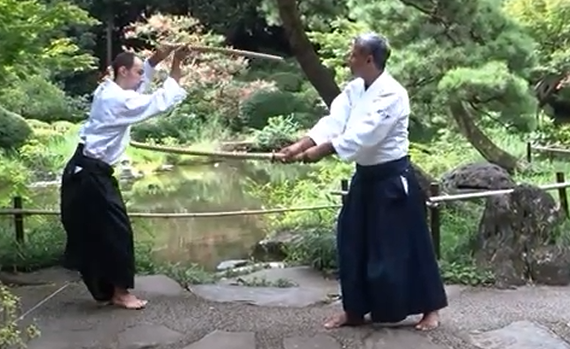
This is not defensive; it is opportunistic exploitation.
Principle
A real opening must be given for a real response. Without risk, there is no pressure. Without commitment, there is nothing to study.
Count 2: Displacement (Ukedachi retreats + cuts down)
Problem
Uchidachi has taken initiative.
Ukedachi must now recover while moving backward.
This is already a disadvantage. Behind the OODA loop. Ukedachi is now reacting rather than dictating the exchange. The exchange has shifted from attack to recovery.
Ukedachi Logic
Step back (left foot), to receive the descending cut with uchi-komi.
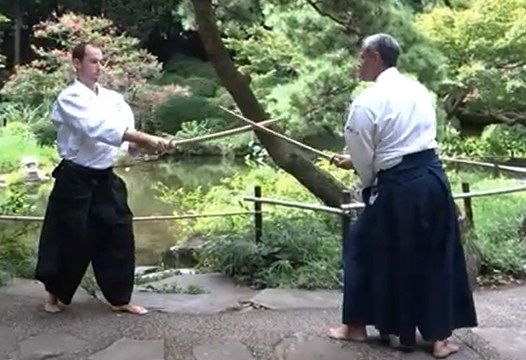
This is not a counterattack: it is recovery and line reset.
You are stabilizing structual posture and alignment.
Uchidachi Logic
From the apex of the kiri-age, re-orient the blade edge, and continue forward, maintaining pressure with a descending cut toward ukedachi’s wrist from the top.
Do not overextend or chase blindly. Your job is to keep initiative alive.
Principle
When initiative is lost, structure must be recovered before advantage can be regained.
Count 3: Tsuki Attitude (Ukedachi reorients)
Problem
Ukedachi cannot remain defensive.
Pure retreat leads to collapse.
Ukedachi Logic
From the uchi-komi capture, adopt tsuki kamae and perform kiri-kaeshi. Kiri-kaeshi emerges not as a reset, but as the only remaining path to recover initiative.
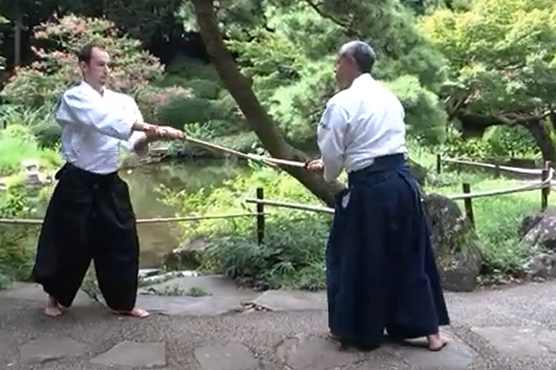
This is critical: You shift from retreat → threat re-establishment.
Even if you are behind, you must present danger.
Uchidachi Logic
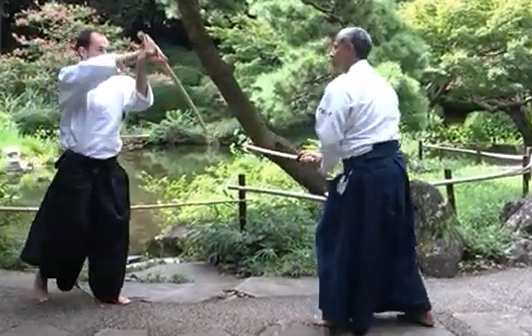
Ukedachi is trying to capture initiative. Sensing the threat and change of pressure, release the bind and rise naturally into jo-dan no kamae and deliver shomen.
Principle
Even in disadvantage, you must remain offensively credible.
Count 4: Final Exchange
Problem
Both are now advancing. The exchange has narrowed to a single contested line.
This is where most interpretations collapse into choreography.
Ukedachi Logic
Uchidachi has released from the kiri-kaeshi bind. Structurally, you are behind.
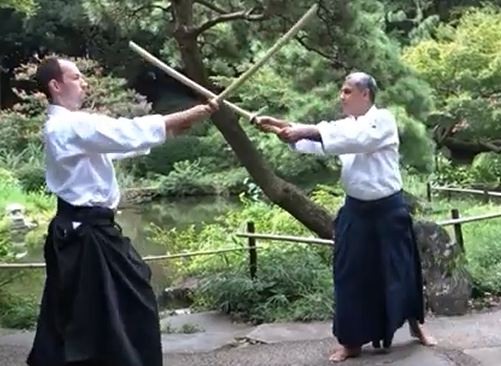
As uchidachi delivers his shomen, orient toward the center and kiri-otoshi directly.
The cut does not block.
It resolves decisively.
Uchidachi Logic
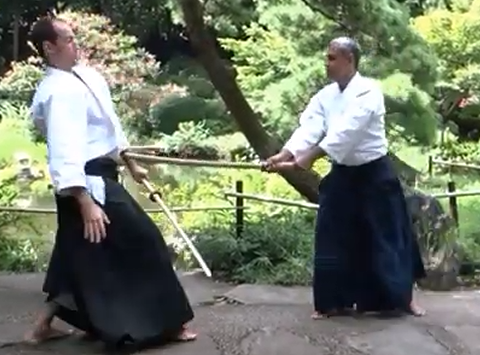
Recognize the instant of release.
The moment contact disappears, so does information.
From the kirikaishi rise into jōdan and execute shomen.
Principle
The winner is not the first to attack.
The exchange remains contested until the final instant. Victory belongs to the practitioner who resolves the contest by occupying the centerline decisively.
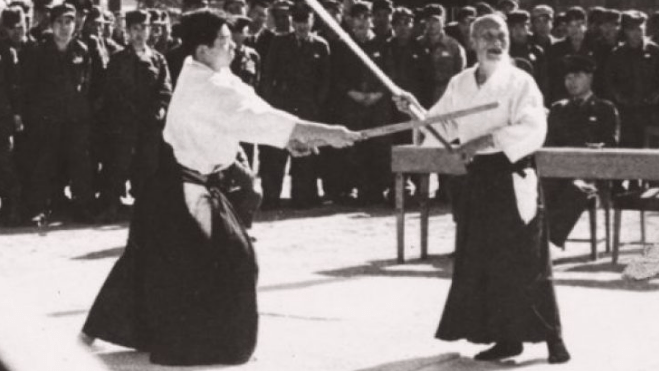
This also is a refinement by Chiba sensei of Saito’s original presentation.

The key distinction is uchidachi’s conclusion: to drive through with renzoku uchikomi versus Chiba’s kiri-otoshi. The distinction is pedagogical.
Saito concludes with renzoku uchikomi, continuous, driving pressure. The final cut does not guarantee victory because structure degrades, timing slips, and both practitioners remain present. Under those conditions, the only thing that matters is the ability to continue without collapse.
Renzoku uchikomi is uninterrupted viability. Do not stop. Do not disconnect. Do not assume success. The fight does not end when you believe it should. It ends when continuation is no longer possible.
Chiba ends all kumitachi with kiri-otoshi. Not as flourish. As doctrine.
Where Saito allows the exchange to continue, Chiba imposes a demand: at some point, continuation is failure. Pressure alone is not enough. Persistence, without resolution, becomes evasion. Kiri-otoshi is not simply a cut. It is the refusal to remain in uncertainty. Chiba is not more aggressive. He is more absolute.
Done without proper intention and orientation, renzoku can degrade into mechanical continuation, chasing without control, pressure without conclusion. The practitioner never finishes.
Kiri-otoshi demands: precision, timing and structural dominance. But if you miss the moment there is nothing behind it but collapse. Kiri-otoshi provides clarity, you cannot hide your failure. Chiba sensei refined the kumitachi for pedagogical clarity.
Ultimately, renzoku assumes the fight continues. Kiri-otoshi denies that assumption. Saito teaches how not to stop. Chiba teaches that, eventually, you must.
The lesson I take from Chiba sensei’s refinement is: at some point, continuation is failure. Or in my voice:
You cannot win by defending
There must be: a moment of truth, a final line, a decision, and he imposes that across all kumitachi by adopting the same conclusion: kiri-otoshi.

