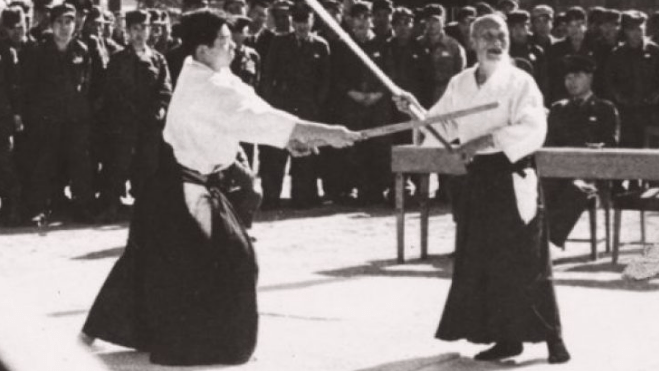
Initial Conditions Both practitioners begin in migi-hanmi, seigan-no-kamae. Neither possesses initiative. Both share the centerline equally, each capable of attacking or receiving without commitment. Uchidachi then deliberately lowers the sword into gedan-no-kamae. This is not defensive withdrawal. It is 誘い (sasoi) an invitation. By voluntarily abandoning the upper line while preserving posture, distance, and balance,Continue reading “1st KUMITACHI”
Tag Archives: aikiken
4th KUMITACHI
This is aiki-ken. It assumes coherence: both players recognize initiative, distance, and line. Real encounters do not grant that clarity. Entries will be broken, timing will be stolen, and the first mistake will often be the last. The 4th kumitachi teaches a specific response to a thrust. A straight thrust can be decisive, but itContinue reading “4th KUMITACHI”
JO v BOKKEN
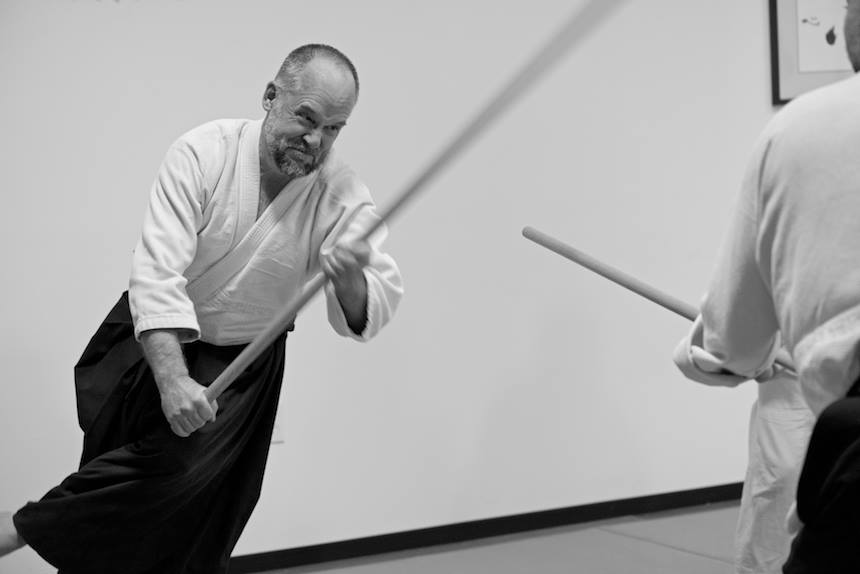
Cautionary Reminder This is aiki-weapons theory. It is designed to teach harmonious action, ki-musubi, not the full spectrum of combat efficacity. The emphasis on sequential action and clean initiative exchange presumes an encounter between near-equals, where both partners participate in the developmental logic of the drill. Actual combat is rarely so orderly. Real engagements fractureContinue reading “JO v BOKKEN”

