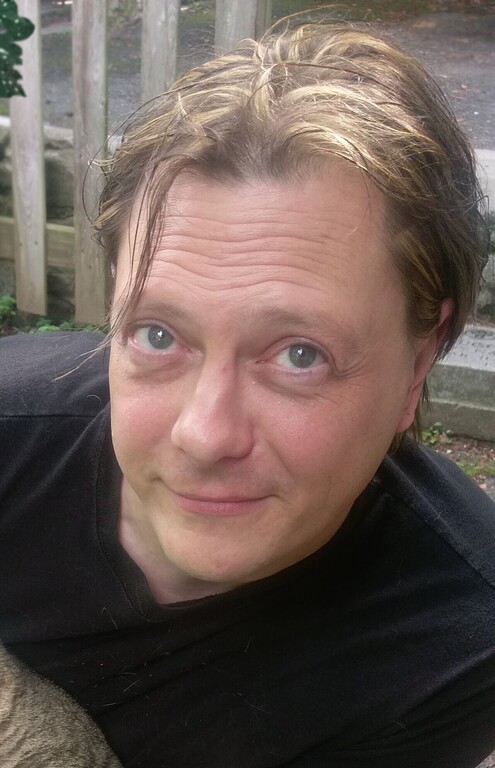
I struggle to create a post about Chris. He died Wednesday, March 13th, 2024. I have put this off for over a year. Time to reflect.
He would have appreciated dying on the 13th. It would have been more appropriate had it been a Friday, but so it goes. Halloween was his true new year. It was the one night the world caught up with his imagination. He loved the gothic and the grotesque: vampires, werewolves, black magic, and all things that blurred the border between play and darkness. He wore the macabre lightly, as aesthetic, a reminder that mortality has better art direction than life.
He died of a brain aneurysm, an abrupt and surprising way to go and only 55, but he treated every day since he had been diagnosed with stage 4 pancreatic cancer in 2020 as a gift.
I’ve struggled to write this because friendship isn’t just what happened, it’s what keeps unfolding afterward, refusing to stay in the past. The past feels suddenly unfinished, all those late-night calls, half-made plans, and stupid jokes turn into a kind of living echo. A friendship like ours wasn’t dramatic or tidy. It stretched across years and miles, changed shape, disappeared for a while, then came back like a book you’d once loved, forgotten on a shelf, and opened again to find your own handwriting in the margins.
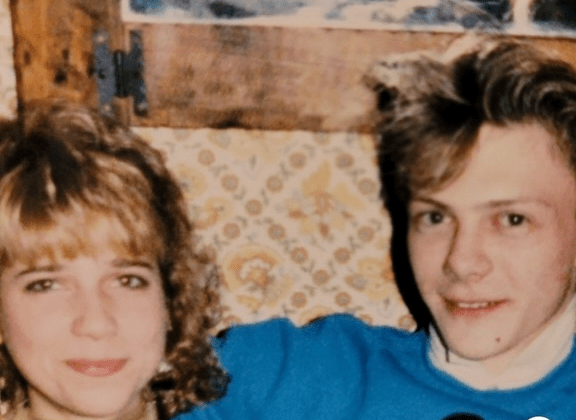
I met Chris in 7th grade. He remembers that I saw he had a copy of Centaur Isle by Piers Anthony on his desk and I mentioned it was the fourth in the series, which he hadn’t realized. I recall that he had a Player’s Handbook for D&D. Whichever is the correct book, it was fantasy that brought us together. Because the towns we grew up in had always been sparsely populated, the regional school was a combined middle and high school (grades 7–12) and was fed by three towns, Warren, Morris, and Goshen: WAMOGO. So 7th grade was an incredibly exciting year, gathering new people and creating new social dynamics for new teens.
Ken Kolpa and I were already best friends. I had met him in 4th grade when I moved to Goshen. Chris made the triad. We were constant companions throughout high school. D&D defined us for years, but as Ken abandoned us for girlfriends, Chris and I spent more time without him.
Our headquarters was Chris’s house, a small mid-1700s structure in Morris that leaned under the weight of age and history. The floors creaked, the walls bowed, and the dining room table always felt slightly off-level, but that only made it better. It was the hearth of our youth. Around that table, crowded shoulder to shoulder with dice and maps and rulebooks, we built entire worlds. The house remains part of the geography of my imagination.
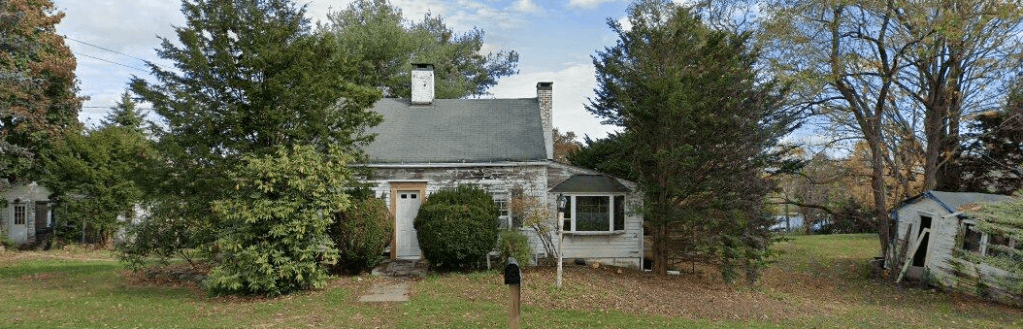
His mother, Patricia, was a magnificent cook. Her food was legendary, and it was also a kind of trap.
Patricia ruled the house like a benevolent queen who never yielded the throne. No girlfriend was ever quite good enough, and her love came with invisible strings. She kept Chris close with obligation and guilt he never escaped. It’s unfair and true in equal measure: she fed us all but also insisted that staying was safer than leaving. Chris became the caretaker, the dutiful son who looked after his parents far too long. The house that had once been our creative refuge became his anchor.
But Chris tried to escape. With a driver’s license and the family cars, we explored the meandering roads of northwestern Connecticut trying to get lost and finding random cliffs to scale. It’s hard to capture the importance of high school friendships. We formed each other’s core; grounded beliefs and concepts of self that endure. Six formative years culminating with a graduation trip the three of us took to Cancun.
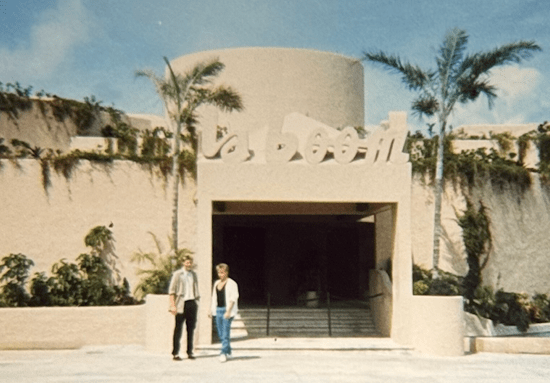
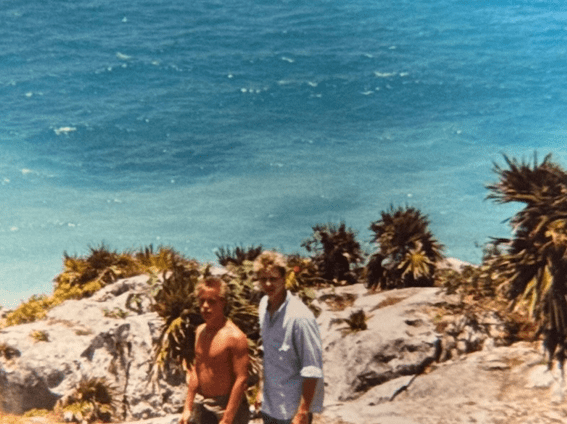
I left for Oregon. Chris and Ken stayed in Connecticut.
Throughout my four years at college, I returned to Connecticut every summer, so we stayed close, but Ken joined the Army, so it was me and Chris again. After graduating college, I briefly returned before leaving for Salt Lake City and then back to Oregon.
Chris attended UCONN on and off and we began to drift apart as I focused first on Aikido, then on career. We got together for the major events: Ken’s wedding, my sister’s, then mine. But we never had another grand adventure together. Just unrealized plans and dreams.
Ken drifted first. He wanted accomplishment, movement, evidence that life was progressing. To him, Chris seemed stuck. Their friendship fractured on that fault line: ambition versus inertia. I tried to play the diplomat between them for years, but the distance eventually calcified and then became mutual resentment.
Chris made imagination a place you could live in. He legitimized it, gave it provenance, a kind of intellectual home that he kept alive longer than any of us could sustain. But where imagination had once been his liberation, it gradually became his insulation. He had more plans than actualized achievements, though his ideas were often grand and fully formed. He’d draft business concepts, video series, travel itineraries, entire worlds and then hesitate at the threshold. The cost of leaving that crooked house, and his mother’s orbit, was higher than he could pay.
That’s how adulthood creeps up, with distance that feels temporary until it isn’t. We assumed there’d always be another trip, another visit home, another chance to reconnect. The truth is, friendship is a kind of geography and you don’t notice you’ve crossed a border until you look back and realize how far the terrain has changed.
In 2018 we started communicating more regularly, and after his cancer diagnosis, almost daily. A three-hour time zone separation was perfect. Chris was ever the night-owl, so we found time to talk both before and after my workday.
In 2020, Chris wrote me a long letter, part confession, part manifesto. He admitted how much time he had lost caring for his parents and how it had narrowed his life, but he refused to let the rest of his years slip the same way.
You don’t have a health issue of this magnitude and not have it change you. I chose to have it change me for the better. I’ve done more artwork, writing, and reading in the past few months than I have in years… It is admirable to take care of one’s family, but not at your own expense.
He spoke about the games he was designing with Mike, the round table he wanted to build for his friends, the swords he meant to gift us all. It was classic Chris; wistful, practical, and mythic in the same breath. He closed with the words:
Thank you for the many years of friendship and camaraderie we’ve shared. I love you as a brother.
Reading it now, I realize he’d already written his own benediction.
When he was diagnosed, I expected fear. Instead, he laughed and said, “Guess I’m on the clock now.” That was Chris. A man who faced death with the same ironic grin he used when the dice betrayed him in D&D.
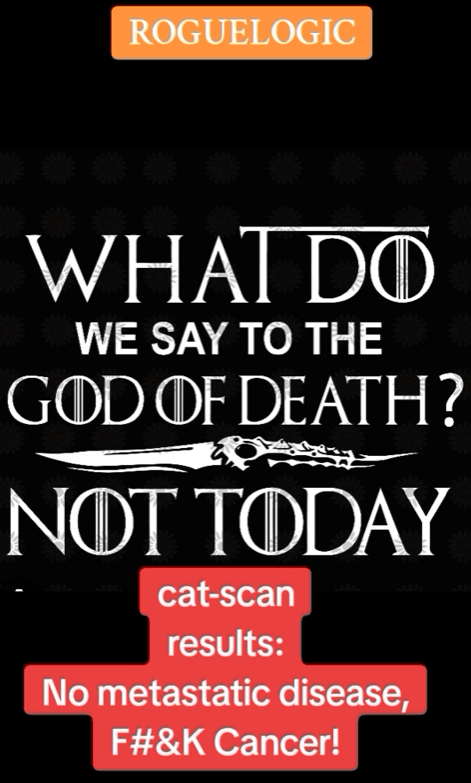
Cancer’s death-sentence brought focus and resolve. He beat it and then finally started producing content to build his brand. He published on TikTok and YouTube playlist is found >here< His TikToks weren’t about dying; they were about noticing. Primarily they were political polemics, but just as often, and truer to himself, they were comics and music. He didn’t find meaning in suffering. He made meaning out of living despite it.
Chris, to my surprise, was a huge Pink fan. He went to her concerts whenever he could. And his tribute to her But We Lost It is a perfect summation:
Chris always knew he would die alone. Maudlin, but right. Yet that fact didn’t darken his spirit. His last recorded message reminded us to:
“Be happy every single day of your life… That’s it, everybody. Live your life like you have nothing left, ’cause that’s the way we all are. And remember me for, well… just being me.”
I miss you, my friend.
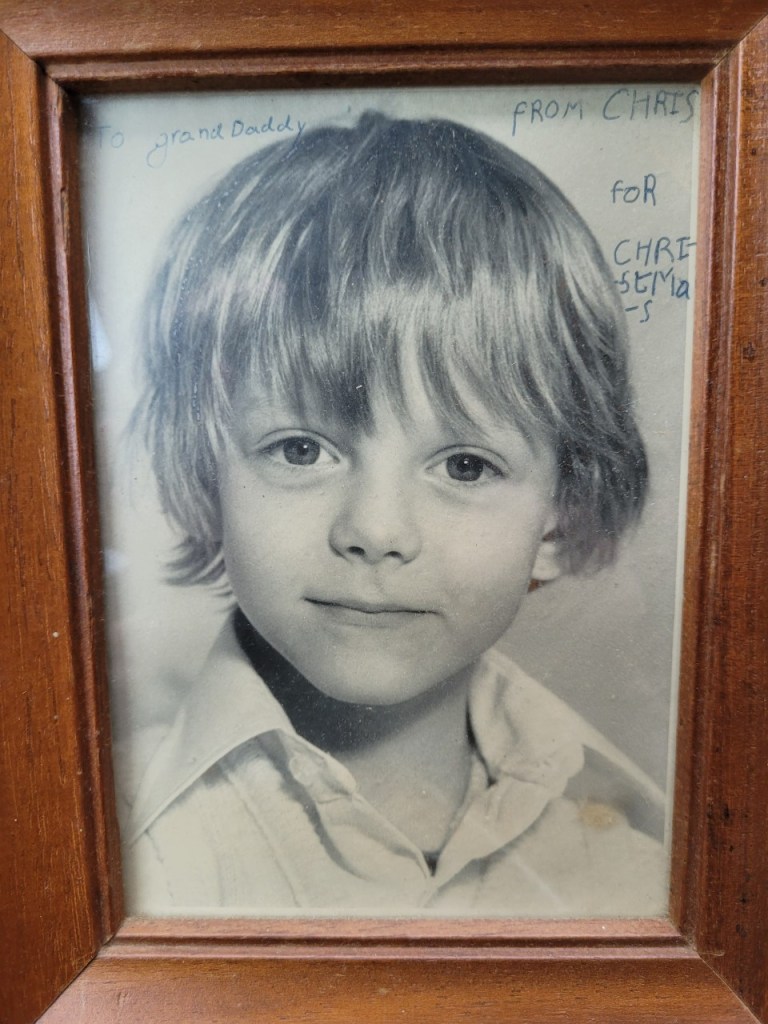
__________________________________________
Obituary written by Leslie Allmand
Christopher John Adams
Saturday, November 30th, 1968 – Wednesday, March 13th, 2024
Christopher Adams, 55, passed away peacefully in his home March 13th, 2024. Born November 30th, 1968, to parents John and Patricia Adams, Chris was a lifelong resident of Morris, graduated from Wamogo Highschool and went on to complete a bachelor’s degree in English at UCONN. He was an entrepreneur and aspiring content creator.
How does one go about describing someone like Chris? To say he was loved by his family and friends is surely an understatement, and to describe his love for them in return seems impossible. Generosity, positivity, empathy, kindness; there aren’t enough words in the dictionary to do him any justice, it seems. Regardless, the impact he made on this earth rivals that of history’s greatest heroes.
In 2020 Chris was diagnosed with stage 4 pancreatic cancer with a lamentably grim prognosis. But having far too many engagements (friends to visit, dogs to walk, hikes to take, pub trivia to attend, cats to cuddle, and comics to collect) he decided survival was the only course of action. After all, how would the already fat raccoons in his yard get their daily junk food fix? Certainly not from the garbage cans. Who would carry on the tradition of feeding homemade nectar to the hummingbirds he and his mother began so many years ago? And were his keys supposed to just misplace themselves? Upon whose clothes would his cats now generously deposit their discarded hair? Who would leave the accumulative list of to-dos continuously not done? No, dying simply wouldn’t do, and so Chris lived. And he lived fully, prosperously, unapologetically.
A fierce protector of all living things, his animal and human companions alike could rest easy knowing Chris was only a phone call away. Wherever there was trouble, wherever there was need, Chris would appear. It’s ironic considering the myriad comic book superheroes he cherished, he never realized he was one himself. If a lovingly tattered black coat counts as a cape and carrying everything but the kitchen sink in his cargo pant pockets is a suitable substitution for a utility belt, then consider him Batman.
When Chris wasn’t busy saving the world, he was sweetly savoring time with friends and family, reveling in the nourishment of nature, sharing stories of strength and inspiration on TikTok, and unashamedly spoiling his cats. And everyone else’s cats. And dogs. And whatever other four legged, eight legged, no legged, furry, feathery, scaley creature he could shower with love.
No doubt Chris’s passing has left an unfillable hole in our hearts. But we move forward, carrying with us the many ways in which he touched our lives. With every moment we choose to live life to its fullest, we honor his memory. It can be said with certainty that Chris would want us to be kind to each other, be kind to ourselves, be kind to animals, and find peace.
Chris is predeceased by his father John, and is survived by his mother Patricia, his wife Cody, sister-in-law Angelina and parents-in-law Roger and Ruth Carillo, as well as his beloved cats Basil, Leopold, and Oscar.