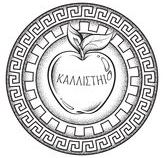
It all started with an apple. Overlooked and uninvited to the wedding, Eris hand-grenaded a golden apple labeled “For the fairest” among the goddesses, Hera, Athena, and Aphrodite. Each thought it was intended for her and, ever-competitive, they all demanded a judgement for the apple to be awarded.[1] Zeus, in his wisdom, was not about to choose between them, so he delegated the task to the Trojan princeling, Paris, who was then living as a shepherd on Mount Ida.
At the time, Paris did not know he was a prince, but he was brazen and demanded to view the goddesses nude to better judge. How can one select amongst perfection? He could not decide on their immortal beauty alone, so each of the goddesses plied Paris with bribes. Hera, as queen of the gods, offered power – control of Europe and Asia both. Athena offered martial skill and wisdom as her gifts. Aphrodite offered the love of the most beautiful woman on Earth. Paris, the horny fool, chose Aphrodite as the winner and in so doing doomed two continents to eternal discord.
Troy was a strategic site situated on a plain near the base of the Hellespont [2] (Dardanelles) that controlled access to the Black Sea. Anaximander defined this boundary between Asia and Europe and, with only minor shifts, the separation has held since 600 BC. The Hellespont remains the divide demarcating Asia (minor) from Europe.
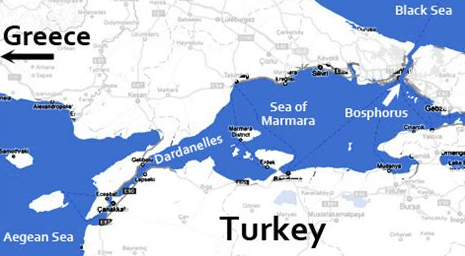
The ancient Greeks freely colonized both Asia and Europe but they also knew there was a greater separation than just geography: the cultural difference between Greek paideia (παιδεία) and Asian despotism was a chasm that could not be bridged.
Tensions between Greece and Turkey are once again heated as they contend over competing sovereign claims of littoral expansion which could yield lucrative energy deposits in the eastern Mediterranean Sea. Predictably, the European Union is backing its historic progenitor.
It is easy to believe that wars are contests over trade routes and natural resources but the ancient Greeks knew better. The casus belli is always more visceral. The Greeks knew that human emotions drive action. Those ancient emotions continue to echo through the millennia.
In the Illiad, a chain of emotionally charged decisions initiated the events. Eris, the goddess of discord, threw the apple out of spite. The vanity and pride of the other goddesses demanded a judgement. And Paris made the damning award out of lust.[3] The hints of the deeper ideological divide are in the myths which start with a wedding feast and end with the sack of Troy.
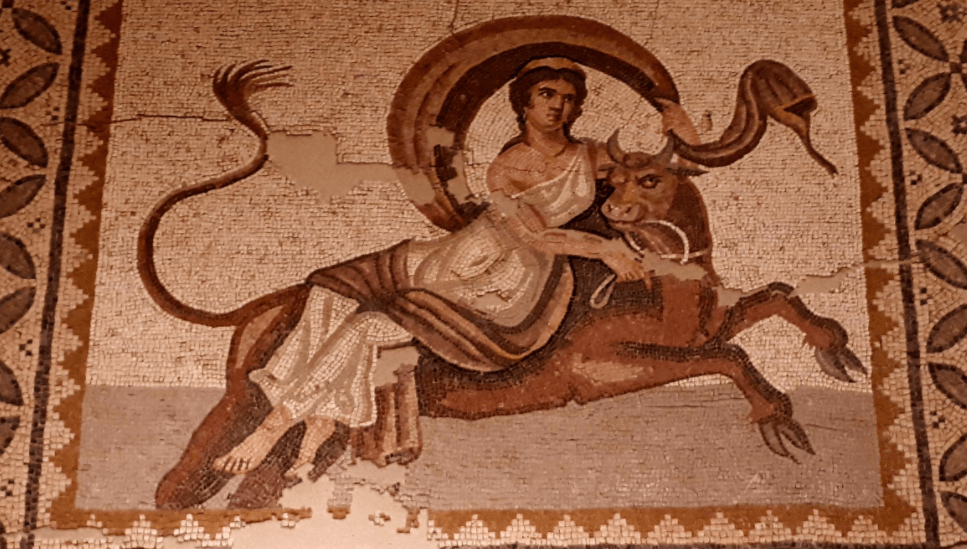
But the divide was established before Troy was founded; and licentious Zeus was the cause. Zeus was taken with Europa, the daughter of the Phoenician King Agenor of Sidon (Tyre, Lebanon). In the form of a bull, Zeus lulled her into mounting and then carried her to Crete. That act of infatuation and bride-theft gave Europe its name.[4]
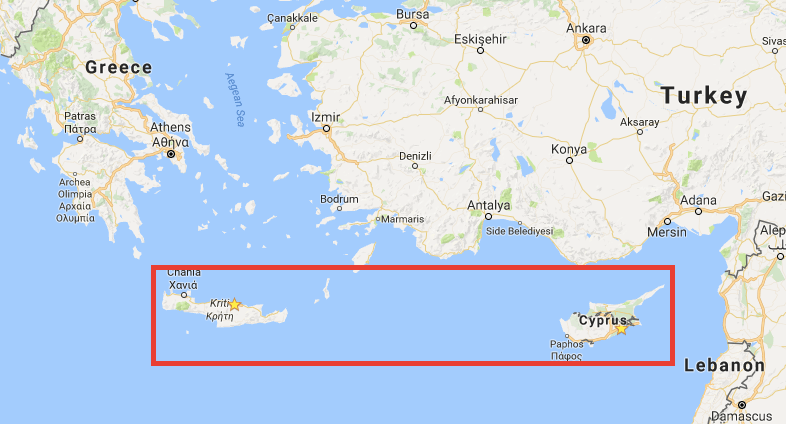
More recent history claims that the tension between Turkey and Greece should be traced back to their dispute over Cyprus, which Turkey invaded in 1974 in response to a failed Athens-engineered coup which sought to unite the island politically with Greece. The southern Greek-speaking Republic of Cyprus became a member of the European Union in 2004. The Turkish controlled north is an un-recognized statelet separated from the south by barbed wire and sandbags. That division is more than an ugly physical barrier. Just like the Berlin Wall, that physical barrier is instantiated philosophical differences. But it started with an abduction.
The ancient Greeks were candid in their self-appraisal. They didn’t foist blame on the “other;” clearly, their god Zeus started it all with the first abduction, so one could make the argument that Paris was just settling the score.
Did Paris abduct Helen? The sources differ. Some claim it was an abduction, others that Helen was infatuated with Paris and left freely, and still others claim that Paris took only her ghost to Troy – that the real Helen was in Egypt the entire time until, returning from the war, Menelaus found her again. This much is certain, Aphrodite promised Paris the love of the most beautiful woman in the world but Helen of Sparta was already married. Running away with another man’s wife when you were a guest in his home is a grave violation of xenia (ξενία).
Such a flagrant violation of a cultural norm shows an Asiatic disregard for what the Greeks understood to be a human universal. But how was it that the typically inter-warring and fractured city-states of Greece came together to support one cuckolded husband in his attempt to reclaim his wife? Because of an oath.
The Spartan king Tyndareus was married to Leda. Zeus came to Leda in the form of a swan, impregnated her and Leda produced the egg that birthed Helen. Her beauty was renown and when she came of age, numerous princes and kings sought her hand, including Odysseus, Ajax (the Greater), Diomedes, and the brothers Agamemnon and Menelaus. With so many august suitors, Tyndareus was reluctant to select one and feared offending them and giving grounds for war. Odysseus promised to solve the problem if Tyndareus would support him in his courting Penelope. Relieved to have a solution, Tyndareus agreed and Odysseus proposed that, before the decision was made on whom Helen would wed, all the suitors should swear a most solemn oath to defend the chosen husband against all others. The decision made, Helen and Menelaus wed, runner-up Agamemnon married Helen’s sister Clytemnestra, and Odysseus won long-enduring Penelope.[5] Thus because of that oath taken by so many Greek kings, when Paris absconded with Helen, Menelaus was able to call on all her former suitors to fulfill their obligation: the war was on.[6]
Ten-years of battle ensued. The Illiad opens with the anger of Achilles, who petulantly (to our modern sensibilities) refuses to join the battle after Agamemnon takes Briseis in compensation for his having to return Chryseis, a priestess of Apollo, to assuage the plague Apollo set upon the Greeks. Pride and demand for recognition of his place among his peers fueled Achilles’ anger and sidelined his spear. Pride and Anger, emotions so powerful that Achilles prays to see his fellow Greeks killed so they feel his wrath and acknowledge his value.
But this too started much earlier. Whose wedding was Eris not invited to attend? The marriage of Peleus, a mortal, to Thetis, a river nymph. And why were the gods in attendance? Zeus coveted Thetis, but he had been warned that a son born to Thetis would overcome his father – much like Zeus had overthrown his father, Cronus. So Zeus – for once – heeded the warning, quashed his lust and married Thetis off to Peleus. Peleus, the father of Achilles, the son of Thetis.
This is the marriage feast that leads inexorably to the sack of Troy. Later writers would posit that Zeus engineered the Trojan war to relieve the earth of the weight of so many heroes. Perhaps that is why Gaia gave Hera the Golden Apples, she knew they would eventually rid her of that manly weight.
The myths provide us with an image of the West exploiting Asia, taking their women, inheriting the best of their culture (Phoenician letters), colonizing their shores, and ravaging their cities. The Illiad is more sympathetic to the Trojans than the Greeks; Hector and Priam are the most noble, self-sacrificing and honorable characters in the book.
The Persian empire, directed first by Darius and then his son Xerxes, will reverse the arrow of invasion and the balance of power. The resurgence of conflict between Asia and Europe inspired Herodotus to write his histories. And Herodotus wrote to impart the lessons learned; to teach, not to simply record:
This is the display of the inquiry of Herodotus of Halicarnassus, so that things done by man not be forgotten in time, and that great and marvelous deeds, some displayed by the Hellenes, some by the barbarians, not lose their glory, including among others what was the cause of their waging war on each other.
Herodotus, The Histories, translation by A. D. Godley. Cambridge. Harvard University Press. 1920
The cause of the hostilities (casus belli) between Greeks and non-Greeks: Herodotus spends the first several books outlining the cultural differences of all the combatants. He shows their differences to familiarize the reader with them and to show the underlying human similarities common to all. Emotions and human nature are constant. And because human emotion is predictably capricious, betrayals become paramount. The first betrayal is by a Greek. Ephialtes of Trachis betrays the Spartans by showing Darius a path to flank Leonidas’s position at Thermopylae (Hist. 7.213). Betrayals will always be a human response and often done not for economic gain but because of ego.[7]
In 2016, the military elite attempted a failed coup against Erdoğan’s government and fled to Greece (and other EU nations). Erdoğan demanded that the officers be extradited to Turkey, but the Greek courts denied the demand. The Economist succinctly summarizes the result:
As with previous challenges to his rule, the coup attempt has left Mr Erdoğan stronger, or at least more autocratic. For years, he suspected an unholy alliance of foreign and domestic foes of conspiring to topple him. Now that he has survived a real coup, Mr Erdoğan may give free rein to his authoritarian instincts and seek new executive powers.
The Economist, July 23, 2016
Xerxes would agree with Erdoğan’s approach, as would Putin.
It is too easy to malign the differences between the West and Asiatic cultures, both Homer and Herodotus were more sensitive and nuanced in their presentation of the combatants, but the differences are pronounced. The Greek legacy is the start of the Western canon. That canon celebrates critical inquiry and the spirit of individual liberty. The Western cannon is now rancorously labeled as oppressor-literature but failing to read and teach it is a very dangerous diminution of critical thinking.[8]
The subtlety of the Western canon is best shown by Virgil in the Aeneid. Aeneas is the last Trojan, escaping the destruction of Troy. He flees West and is the ultimate founder of Rome. Aeneas, the son of prince Anchises and Aphrodite: Aphrodite, the goddess of love whose vanity began the war, saves her son from it. That Aphrodite’s son founds Rome points to its hidden history, Roma (Rome) an anagram for “love” amor. The greatest expansion of the Western Way, the Pax Romana, was born from the seeds of Asia.
The Roman Republic brings brutal pragmatism to the all-too-talkative Greek habit of endless debate, argumentation and internecine battles. There were earlier Greek intimations; Plato started the inquiry in his critical post-hoc analysis of the Athenian defeat by the Spartans (The Republic) and Aristotle continued the inquiry into the ideal form of governance and had his theories tested in real-time by Alexander.[9] Rome refined these lessons and with Stoic resolve cut away everything that was not effective. Cato the Censor’s grammatical imperative “Carthago delenda est!” becomes the rally cry of empire: a normative to make Rome the World City.[10] Rome, the city of love, only rarely closed the Gates of Janus – which remained open during war (Livy 1.19) – but the expansion of empire necessitated a legal structure, common language and infrastructure to unite and rule the amalgam of territories and cultures.
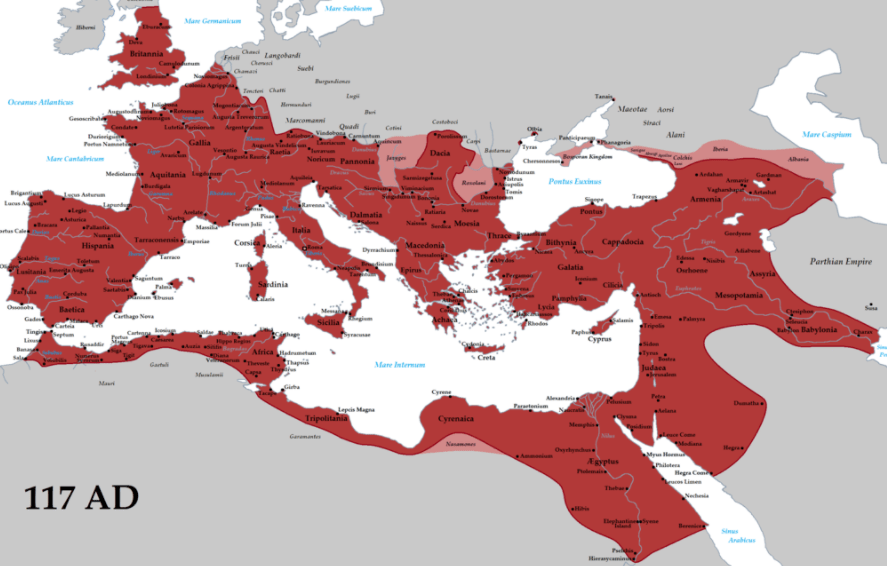
The value of imperialism and its 19th century versions are even more maligned than the teaching of the Western canon. Multiculturalism, pluralism, and the celebration of differences is the deontic modality of today. But that very conversation and criticism is possible only by virtue of the triumph of the West where the virtue of open debate, critical inquiry, and protected speech is celebrated. Lest we forget…
The Eternal City lasted until the 400s, when Visigoth incursions and Germanic revolt reduced Rome to a symbol only with no political or strategic importance. With Constantine I, his conversion to Christianity and fortification of his new capital, the legacy of Rome was solidly seated in the East. The sober Latin culture pendulumed to preference Greek. Following Constantine, Justinian would expand the Byzantine Empire to its greatest extent and once again control most of the Mare Nostrum.
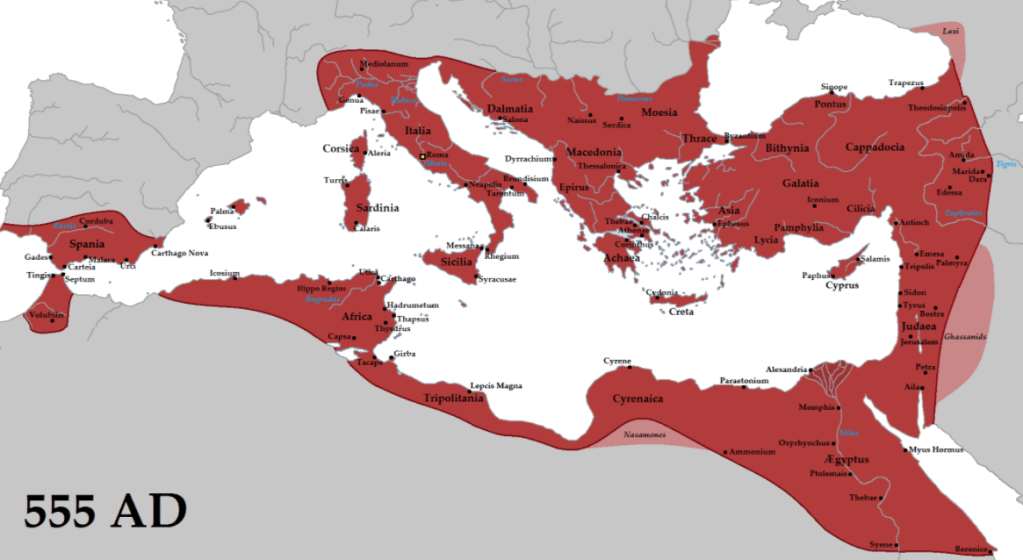
The Byzantine label is one applied by historians looking to make clean distinctions where none exist. Justinian and his empire thought of themselves as Romans – an unbroken continuity.
Byzantine as an adjective carries pejorative connotations, describing a frustratingly complex organization, involving administrative detail and often characterized by deviousness. When applied to architecture, Byzantine is characterized by greater ornamentation than Classical and incorporates more intricate mosaics; the Hagia Sophia, (re)constructed by order of Justinian, is the prime example.
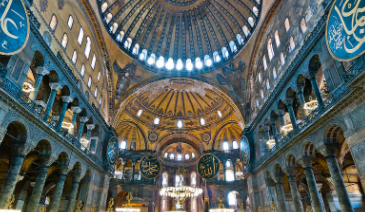
The Hagia Sophia, was dedicated to the wisdom of God, Ἁγία Σοφία, romanized: Hagía Sophía; “Holy Wisdom.” The Byzantine Empire was Christian and therefore hostile to its pagan roots. Nevertheless, Byzantine scribes copied the decaying manuscripts of the ancients, and Constantinople’s libraries safeguarded Greek and Roman texts that were slowly vanishing in the Germanic West. It has been estimated that of all the ancient Greek manuscripts that survive today, more than two-thirds were preserved by Byzantine scribes.
For nearly 1,000 years the Byzantine Empire stood as a bulwark preserving the canon, until on May 29, 1453, Mehmed II [12] stormed Constantinople and triumphantly entered the Hagia Sophia, which he converted to the city’s leading mosque and the center of the Ottoman Empire.
This July (7/10/2020), Turkey’s high court (the Council of State) annulled the 1934 decree that made the Hagia Sophia into a museum. After the ruling, Erdoğan ordered the conversion back into a mosque and transferred the management of the site from the Ministry of Culture to the Presidency of Religious Affairs. UNESCO offered a tepid criticism. Erdoğan is no fool and this act is not an innocuous assertion of national determination.
During the Ottoman era, the sultans preserved the Hagia Sophia as a valued “Symbol of Conquest,” and Erdoğan has boldly replicated the move. On May 29, 2020 (the 567th anniversary of the conquest of Constantinople), the holy Quran’s Conquest Surah was recited in Hagia Sophia. The Greek City Times responded predictably, recognizing it as a consolidation of power.
There is a very dangerous campaign for the hearts and minds of people around the globe. The Greek-Turkey conflict is just one resurgence of an ancient ideological divide, one where freedom of inquiry and liberty in general is pitted against the totalitarian state.[13]
Update – the intolerance continues. A French teacher was beheaded over using images of Mohammad as an example of free speech. The images were from Charlie Hebdo which first incited anger in 2006 with their depiction of a crying Mohammad:

Later images were more provocative and incited a fire-bombing and then the murder of 12 staff members in 2015. Any surprise that Erdogan is leading the charge against France’s Islamaphobia? The defense of free speech is Islamaphobia – or is the condemnation of a beheading a righteous act? Anyone remember the fatwa against Salman Rushdie? Sorry – but your religious sensibilities do not get to limit freedom of expression in the West. As soon as speech is constrained someone is dictating the limits of thought. That is a precept of freedom. If you are offended – remove the beam out of thine own eye. Better still remove thine self from the West. You don’t get to live here and be offended such that you impose your limitations on me.
Virtūs et Honos
____________________
_______________________
Many Syrians fleeing the horrific conflict ravaging their home have been sequestered on the Island of Lesbos. The largest refugee camp in Europe burned:
Aid workers, activists and officials said a series of fires were started intentionally by a group of camp residents who were furious at being forced to quarantine after at least 35 people tested positive for coronavirus at the camp.
New York Times, September 9, 2020
Bite the hand that feeds you? Regardless of the conditions withing the camp, the simple fact is this: when in history has there ever been a mass exodus from the West to the East in search of freedom and a better life?
_______________________
[1] The inscription in Greek was one word: καλλίστῃ Kallistēi (“to the fairest”). The tree of the Golden Apples was given by Gaia to Hera as a wedding gift and guarded by the Hesperides: Aigle (the Radiant), Erytheis (the Red), Hesperie (the Evening), and Arethousa (War-Swift).

To the Pythagoreans the apple was symbolic of the occult. Split open horizontally, an apple reveals a five-point star, the pentagram: the key to the knowledge of good and evil. There is a fun homophone in the Latin for “apple” – malum and “evil” – malus. The wild apple – malus sieversii. But the visual similarity is a false cognate. The Latin adjective, malus, mala, malum does mean bad/evil, but it is pronounced with a short initial vowel. The apple tree, mālus (genitive mālī), has a long initial vowel: they are etymologically different. Latin mālusis a borrowing from Greek: μᾶλον (mâlon, “apple”), μῆλον (mêlon, “apple”). The Latin word for evil has ancient cognates such as the Avestan (Ancient Persian) mairiia (bad person/villain) (Memrise Vocabulary for Young Avestan), Sanskrit मल (mala, “dirt, filth, dust”) and Greek μέλᾱς (mélās) “dark” and figuratively “evil.”
[2] Helle gave her name to the Hellespont when she fell off Chrysomallos, Zeus’ winged ram whose fleece would become the object of Jason’s quest: the Golden Fleece. (Qv. The Golden Bough)
[3] Somewhere, I recall reading that after hearing the tale of the Trojan War, a Chinese sage commented, “All that over one square inch?”
[4] There is a symmetry in taking Europa to Crete. Rhea hid the baby Zeus from his cannibalistic father Cronus in a cave on Mount Dikte in Crete.
For more on Greek anthropology and bride-theft, see the work of anthropologist Michael Herzfeld.
Europa had two brothers, Cadmus, who brought the alphabet to mainland Greece, and Cilix who gave his name to Cilicia in Asia Minor. The Marriage of Cadmus and Harmony (Calasso, 2013) is perhaps the most eloquent book to show the continuity of Greek myths in the modern world.
[5] Tyndareus and Icarius are brothers (Apollodorus, The Library, 1.9.5) and presumably joint-kings. Pausanias tells that Odysseus won Penelope in a foot-race, besting her father Icarius (Paus., Description of Greece 3.12.2). Winning a bride through a foot-race echoes the race of Atalanta (Apollodorus, The Library, 3.9.2) a consummate runner who raced her suitors to maintain her virginity. Melanion won the race only by distracting her by throwing three Golden Apples which she stopped to pick up. And who supplied the apples? Aphrodite. Atalanta, in some sources, was also the only woman to sail with Jason in his quest for the Golden Fleece.
Note that neither Agamemnon nor Menelaus are Spartan-born and marry Spartan women to assume the kingship (vestigial matriarchy, qv. Johann Bachofen and Robert Graves).
[6] Oaths and alliances – the web of connected promises also leads to WW1.
[7] The most infamous betrayal in American record is Benedict Arnold. A Smithsonian article (May 2016) suggests that he betrayed the cause for financial gain, but I am sure the persecution by Joseph Reed (even if perhaps justifiable) was a serious affront to Arnold’s pride and the more direct cause.
[8] The Western canon was eloquently defended by Harold Bloom. But for all his refinement, his defense on aesthetic grounds (and his focus on the more modern writers) was simply wrong.
Reading the very best writers—let us say Homer, Dante, Shakespeare, Tolstoy—is not going to make us better citizens. Art is perfectly useless, according to the sublime Oscar Wilde, who was right about everything.
Harold Bloom, The Western Canon
I too love Wilde, but both Bloom and Wilde are perfectly wrong-headed in their assessment. The best art does instruct, and it instructs profoundly because it can cross cultural boundaries and transcend time. The Western canon portrays the idealism that is a bezoar against poisoning dogmatism.
Roger Sandall wrote a brilliant article on Spengler’s The Decline of the West, which I read in 2006 and surely influenced some of the thoughts expressed here. Sandall shows Oswald Spengler was the inspiration for Lewis Mumford’s The Myth of the Machine – another seminal work that merits more attention than it currently enjoys.
[9] For rhetorical ease, I skip over the obvious expansion of Western culture by Alexander the Great. Through conquest, he spread Greek idealism throughout the Mediterranean Basin and eastward into central Asia, what historians label: Hellenization. Alexander the Great was Macedonian, and therefore a hick by Athenian standards. He was the son of Phillip II of Macedon, a Greek city-state northwest of Athens. Aristotle served as his tutor for several years. In 336 BCE, Phillip was assassinated and Alexander became king. Alexander quickly consolidated his control over all of Greece, and then crossed the Hellespont to invade Ionia (Turkey). In three years, he conquered Ionia, then moved southward through the Levant, into Egypt, and back eastward into modern Iran. He defeated Darius III, ending the Persian Empire. He later did what has never been done again, he went further eastward to pacify Afghanistan (Kandahar, reputedly, is the Pashtun pronunciation of Alexandria), and finally to the Beas river (modern Hyphasis) on the border of northern India.
Although Alexander’s conquests spread Greek culture, the farther east he went, the more he succumbed to the trappings of Asiatic despotism. I recommend the cinematic presentation of Kipling’s The Man Who Would be King. Some revisionist historical approaches will paint Alexander’s conquest as the world’s first experiment in multiculturalism. But it was just an expedient stratagem – Alexander allowed the amalgam of different intellectual traditions (Greek, Persian, Indian, and Egyptian) as a means to integrate an army and allow for an ease of ruling while moving continuously from his power base. I submit, that when his men nearly revolted upon reaching India, Alexander reluctantly turned back, and upon his death, the “cosmopolitan” Empire fractured immediately and would not become truly cosmopolitan until Rome.
[10] The debate over Cato’s exact phraseology does not diminish the historical impact of his position: Carthage was destroyed and the Roman expansion created the Empire that imposed the rule of law, a universal language and currency that allowed for individual freedom, so long as one rendered unto Caesar what is Caesar’s.
[11] Flavius Belisarius (Φλάβιος Βελισάριος, c. 500 – 565).
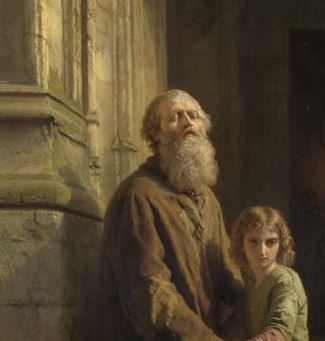
Edward Gibbon covers Belisarius in Chapter 41 – Decline and Fall of the Roman Empire, Vol. 4 [1788]. [All volumes online.] Belisarius, the last Roman, is cuckolded by his wife, betrayed by his Emperor (Justinian) and abandoned to poverty. But Belisarius believed in Rome and knew it was the better alternative. Victor Hanson expands on Belisarius’ great achievements in The Savior Generals (2013).
[12] Vlad the Impaler – the inspiration for Dracula – solidified his reputation for cruelty during his battles with Mehmed II (qv. Night Attack at Târgoviște). The 1992 cinematic portrayal of Bram Stoker’s Dracula makes good use of this as an origin story. A betrayal by God, leads to Vlad rejecting God and taking his own sacrament of blood, thus damning himself to become a vampire.
[13] This is a rather tepid indictment of the differences. The purges in Russia, China, Phnom Penh [remember Comrade Duch], are direct results of Communist totalitarian ideology and general despotism. Whatever the disgusting economically inspired abuses (tribal obliteration and slavery) in the West, the death total is dwarfed by the ideological enthusiasm of the Asiatic east.
The Western way will fail because of our advancing technology as adopted by the liberal elite. Alas! A frightening example of how the soft-brained, well-meaning liberal intellectual class think they know better: The Economist endorses digital ID (September 5, 2020) nonsense as something that merits consideration? Safeguards for privacy? Have they forgotten the Patriot Act? Estonia held up as an exemplar? Fear has made the typically sober staff stupid! This is a sure way to totalitarian control…





 Protective Arts