The Road

Probably not the best choice given the current climate, but I had started Cormac McCarthy‘s The Road a few months before the Covid quarantine began. The additional forced time inside gave me the opportunity to finish the novel.

I had seen the movie, so the angst of not knowing how it would end was not nearly as pronounced, but the book resonates deeply. I have two boys so imagining being with them in a post-apocalypse world still hits hard.

McCarthy has a great command of language and creates moments of evocative elegance despite the bleak subject matter:

No lists of things to be done. The day providential to itself. The hour. There is no later. This is later. All things of grace and beauty such that one holds them to one’s heart have a common provenance in pain. Their birth in grief and ashes. So, he whispered to the sleeping boy. I have you.

The man and the boy continue through the ruined landscape, carrying the fire (the spirit of life). The man is desperate to find something better, he carries hope precisely because of the boy: he perseveres for his son. The man has a warrior’s spirit and determination to prevail, despite adversity and painful moments of self-doubt.

But this is not an easy conclusion. Given the premise of the book, I hate to admit, but I think I would agree with the wife’s decision (tersely summarized in the movie, “This isn’t living, this is surviving”). In the book when she walks out:

She was gone and the coldness of it was her final gift. She would do it with a flake of obsidian. He’d taught her himself. Sharper than steel. The edge an atom thick. And she was right. There was no argument. The hundred nights they’d sat up debating the pros and cons of self destruction with the earnestness of philosophers chained to a madhouse wall.

Fortunately, this Covid-induced isolation is not the end and our choices remain more of grave inconvenience and desperation for secure employment rather than daily life and death in a dead environment.

McCarthy describes what that lowering of the veil would feel like:

He tried to think of something to say but he could not. He’d had this feeling before, beyond the numbness and the dull despair. The world shrinking down about a raw core of parsible entities. The names of things slowly following those things into oblivion. Colors. The names of birds. Things to eat. Finally the names of things no one believed to be true. More fragile than he would have thought. How much was gone already? The sacred idiom shorn of its referents and so of its reality. Drawing down like something trying to preserve heat. In time to wink out forever.

Wow! The slow fade of reality. That passage, to me, is the novel’s heart. The Wittgensteinian collapse of language, the “names of things” fading, signals not just material ruin but ontological decay. The language of Adam reversed. When words lose their referents, meaning dies before we do.

The landscape and environment destroyed by nuclear winter leading to a erosion of reality as words no longer have referents. The language of Adam reversed.

And yet, McCarthy is not nihilistic. He ends with a benediction. The fire endures. Life and humanity are affirmed. Against all reason, The Road insists that love, embodied, not abstract, is the last moral act.

Virtūs et Honos

_______________

Survival and resiliency both require planning. The average American’s response to the Covid pandemic has been to stock up on essentials (toilet paper) and apparently drive Doomsday Preppers to its highest viewing ratings ever.[1] But how do you prepare for a biological pandemic? The pandemic reading lists don’t provide a “how to prepare” guide but rather a survey of how we respond.

Those inclined to take the Bible as scripture (remember Jerry Falwell on AIDs?) will continue to view plague as one of God’s punishments (predictably citing Exodus 9:14, Numbers 11:33, 1 Samuel 4:8, Psalms 89:23). Sophocles and Homer may have connected plague to the divine Apollo, but that was a literary trope more than a thesis. Thucydides dismissed the divine origins of plague and focused on the resulting fear and loss of social conventions with the associated increase in avarice.

No longer a divine punishment, plague remained a morality tale. The good and evil of mankind is exposed through the destruction of normal social associations. Boccaccio and Chaucer lived with plague and well knew its horrible ravages. As a result of the Covid outbreak, I wonder if Daniel Defoe’s lesser known work, A Journal of the Plague Year (1722) and Marry Shelly’s The Last Man (1826) will see a rise in popularity.

The list of more recent pandemic apocalyptic novels grows more scientific (The Andromeda Strain [1969] by Michael Crichton was my first), but the theme remains one of survival after social collapse. None have suggestions on how to prophylatically prepare. And now more than ever, we highly interconnected, global travelling humans with the shared biology of a single species, are universally vulnerable. The ironic beauty of a plague is that its potential (eventuality) should show us that the ultimate preparing is the cultivation of spirit – a reminder to embrace our mortality and learn how to best use our time. A return to Memento Mori.

You too are mortal

There is stoicism in feeling a deeper connection born of an external threat. Being reminded that life is transient, and because it is ultimately fragile, its worth is greater still. This is the way of Bushido. Value life deeply because it will end all too soon.

In that regard, a plague is divine action. An external and eternal reminder that we should be thankful and learn to live.

_______________________

[1] There are well-managed websites that will sell you gear to prepare for biological threats as well as those to help you build you a bunker (and of course you can go upscale).

BROKEN RHYTHM

Another missed Saturday in Covid-mandated isolation. Another opportunity to cross-train solo skills.

If you don’t already own one – a simple speed bag set up is a good investment. A free-standing unit is an inexpensive and portable way to start.

With the bag, start with a standard rhythm to get a pattern and response from the bag. This allows you to develop hand speed and precision, but the disadvantage is that to get a predictable response from the bag, your hand speed and pattern has to be predictable and consistent.

The problem with this is that when you move in accordance with a rhythm, your opponent can time you and counter between the beats. Bruce Lee discussed this and looked to Western fencing for examples and lessons.

In fencing, each movement is a “beat,” and learning a pattern is augmented by breaking complex actions into discrete beats. So do not dismiss patterns and beats, but learn their limits.

Once you master the beats, the next step is to become more random and to incorporate half-beats and broken rhythm.

A good visual and narrative break down is this analysis of Jersey Joe Walcott

Broken rhythm is essentially constantly changing both the tempo and power of what you are doing to confuse your opponent.  

So translate that to a speed bag exercise. First get your basic rhythm down – get the bag to return every time and develop that sense of accomplishment. Then start adding complexity. Throw a couple half speed and/or half strength punches – the bag will respond differently, so your follow up will have to adjust accordingly as well.

Try to randomize the tempo. You will now miss the bag more often because it is not responding predictably. You hit it harder/faster/slower so now you may have to slip it to re-establish time.

Add some footwork. Approach from the left, then right, then double left, etc., keep mixing up the combinations. The standing bag has the advantage over the hanging, because you can throw upper cuts and keep moving.

The goal is to confuse your opponent and when you sense their defense is compromised then follow-up by throwing a flurry of full speed techniques to take advantage of that split second where they’re distracted.  

Move in and out on the bag. Change maai (distance) while throwing a soft punch. Then advance back throwing half speed punches to mimic sneaking back into striking distance: hide behind the guard for you knife fighters. This is a technique to close the gap – a necessary component of any attack art.

Using broken rhythm also allows you to maintain maximum energy while at the same time pushing your opponent’s reserves.  The changes in distance, timing, power all need to change “on the fly,” and is best accomplished when you can anticipate your opponent’s rhythm and avoid becoming rhythmic yourself.

Easy to write, hard to do.

Watch The Game of Death – specifically when Bruce Lee fights Dan Inosanto. Lee gives a lesson on broken rhythm. Here is a link (forgive the soundtrack overlay).

Another aspect of this is non-telegraphic movement. In Aikido we admonish students to relax the shoulders – the power of the sword is not generated by pushing the sword through space, but rather by freeing the shoulders to act as a pivot for the sword itself. Punches also need to have relaxed shoulders to avoid telegraphic “tells.” You can usually observe and know when your opponent is going to throw something by the way they set their feet, hold their arms, from changes in facial expression, and often because they look at the body part they intend to strike.

To help avoid telegraphing, Bruce Lee advised to never “cock” or “chamber” prior to striking (very common in Asian arts) instead, the blows are thrown from “where the hand is,” like a fencer’s thrust.

A great example of this is Michael Jai White showing Kimbo Slice the principles.

Kimbo Slice was a very accomplished fighter, so that he is surprised by Michael White’s ability to hit his hand with a slow throw shows the power of broken rhythm and non-telegraphed action.

Yes these are boxing skills. Boxing is the sweet science precisely because the training and methods have been well researched! The lessons are part of your universal movement skill set.

And best of all, you can practice solo with a minimal investment in equipment.

My set up is an Everlast hanging speed bag with a padded makiwara to do broken rhythm half-beat strikes.

And when you feel comfortable with basic punching and combination drills and have incorporated broken rhythm concepts, then see the universals and see how this will help with the finer motor skills required for Panatukan and knife disarms. Work the basics to refine the higher skills:

Virtūs et Honos

Social Conservatism and Classical Liberalism

Tu ne cede malis, sed contra audentior ito.

Virgil, Aeneid, VI, 95

Do not give in to evil but proceed ever more boldly against it.” So Aeneas is admonished as he enters Dis with the Golden Bough. Ludwig Von Mises adopted this phrase as his motto. It frames the conversational spirit of the post: a warning of the perilous danger of Leviathan; its seductive assurances that it will provide, and its forceful coercion when resisted.

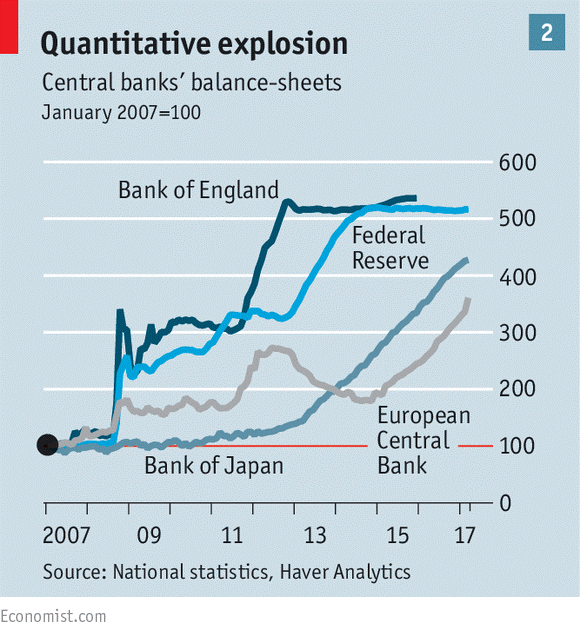
I have forced “free time” with the Covid-quarantine to watch how the so-called leaders are contending with the crisis. We are all living through a period of deprivation that appears to be withering into another Great Depression. And this despite the massive creation of cash from the aether.

The exogenous shock of Covid-19 is further polarizing the political conversation and laying bare the divide between the intellectual class (who can work from home) and the service industries, food processing, and factory workers, who cannot. This will further polarize the political conversation. (Shouting match among children?) But there are real questions:

________________

Lockdown Socialism Will Collapse

Posted on April 20, 2020 by Arnold Kling

I’ve seen headlines about polls showing that people are afraid of restrictions being lifted too soon. To me, it sounds as if they prefer what I call Lockdown Socialism.

Under Lockdown Socialism:

–you can stay in your residence, but paying rent or paying your mortgage is optional.

–you can obtain groceries and shop on line, but having a job is optional.

–other people work at farms, factories, and distribution services to make sure that you have food on the table, but you can sit at home waiting for a vaccine.

–people still work in nursing homes that have lost so many patients that they no longer have enough revenue to make payroll.

–professors and teachers are paid even though schools are shut down.

–police protect your property even though they are at risk for catching the virus and criminals are being set free.

–state and local governments will continue paying employees even though sales tax revenue has collapsed.

–if you own a small business, you don’t need revenue, because the government will keep sending checks.

–if you own shares in an airline, a bank, or other fragile corporations, don’t worry, the Treasury will work something out.

This might not be sustainable.

_________________

Much of what follows is a reminder that what is often lambasted as “traditional” or “conservative” values are pragmatically useful for the individual and therefore at the level of society. I argue that ultimately a libertarian position is the only viable one. I fully admit that I write from a position where I am safely cloistered at home among the elites who are only experiencing deprivation:

dep·ri·va·tion/ˌdeprəˈvāSH(ə)n/

  1. the damaging lack of material benefits considered to be basic necessities in a society.
  2. the lack or denial of something considered to be a necessity.

Fear is a pernicious thing. We train to limit fear to its proper roll – an emotional recognition that we are in danger and therefore need to take action.

The untrained are paralyzed by fear. The trained use it as a catalyst for proper action. Education and training is required to combat fear and lead to more rational outcomes. And I know it is unpopular in this entitled age, but that means a healthy dose of deprivation and self-reliance. Shocker, I know: traditional American values are required.

We have so much material shit and daily conveniences that shelter-in-place orders and figuring out how to make and use a bidet will be seen as a major inconvenience. My sincere hope is that we as a country learn how to deal with inconvenience and learn how to deal with less and learn that we really didn’t need it. Perhaps I am warped, jaded and too simple, but I when I read Shibumi (1979) many years ago several passages resonated. And this one seems very timely:

He thought of Americans as a decadent people whose idea of refinement is fluffy toilet paper.

Sounds almost prescient given current circumstances! And let me be clear, I find Shibumi to be a very indulgent read but in large part because Trevanian reminds us through his protagonist Nicholai Hel of what traditional values were and laments their demise:

It’s not Americans I find annoying; it’s Americanism: a social disease of the postindustrial world that must inevitably infect each of the mercantile nations in turn, and is called ‘American’ only because your nation is the most advanced case of the malady, much as one speaks of Spanish flu, or Japanese Type-B encephalitis. It’s symptoms are a loss of work ethic, a shrinking of inner resources, and a constant need for external stimulation, followed by spiritual decay and moral narcosis. You can recognize the victim by his constant efforts to get in touch with himself, to believe his spiritual feebleness is an interesting psychological warp, to construe his fleeing from responsibility as evidence that he and his life are uniquely open to new experiences. In the later stages, the sufferer is reduced to seeking that most trivial of human activities: fun

But there are other bon mots to be found. The public narrative is equating the Covid-19 outbreak to a war (more like a siege) and Trevanian reminds us that:

It is a property of the American that he can be brave and self-sacrificing only in short bursts. That is why they are better at war than at responsible peace. They can face danger, but not inconvenience.

Despite the war analogy, the vast majority of us are facing inconveniences. We need to take care of ourselves and limit social interactions. Most of us are distinctly not at war, not on the front lines, not contending with potential exposure without sufficient supplies. A narrow segment of the population is definitely at war and contending with real danger. The rest of us are being inconvenienced.

We are seeing incredible acts of bravery from our health care professionals and first responders ‘just doing their job’ and regrettably without sufficient supplies. Why? Because the United States especially has become a just-in-time supply chain – economic efficiency based on trailing consumption data. And that efficiency will be able to respond to the new demand. But it will take time.

Today (3/21/2020) the news and political briefings are trying to assign blame on the lack of governmental preparedness and criticizing that the Federal Government hadn’t directed resources faster. The sheep look to Big Brother for their salvation. How can people so readily clamor for a war-time control of production?

I am deeply worried that this crisis will see us as a people cede even more power and control to Leviathan “for our own good.” Because of a failure to understand definitions we will trade our Natural Rights for “benefits.”

People now talk blithely of “rights.”  I admonish you to read the history on the debate over the Bill of Rights and then read the first ten amendments. Those rights regulate and limit the power of the government to oppress the individual. They are adamantly not right or benefits bestowed upon you by the government. 

All the current rights people seem to discuss today in sophomoric political discussions are entitlements people want the government to benignly bestow upon whatever constituency is in need today. And today we are all in need so the cries for governmental action seem all the more genuine and innocuously necessary.

Balderdash and nonsense.  Government doesn’t exist. Pulling from the work of György Lukács, sociology labels this ontological fallacy reification (Verdinglichung). Look again to the source material.

We the people.  Proper identification of agency, the sum of the individuals collectively agreeing to act together.  We set up a framework by which the general rules are established which afford people opportunities for excellence.  It’s Locke and the Scottish intellectual tradition that informed our foundation. It’s a shame that the anti-Federalists have been forgotten and now we have a hit musical about Hamilton, who deserves our scorn and Burr is relegated to the margins. [1] Thus we need a basic reminder on definitions and principles. You don’t have the right to a guaranteed income, health care, or any other bullshit agenda – those are called responsibilities.  You have a responsibility to take care of yourself (health) and to work hard (generating income).

I am sure that this post will be deemed unrealistic and callously untimely: people are in need and we should be dictating resources through a command and control structure, we are at war, we need the government to take action! Why the lecture on natural rights?

Precisely because this is a teaching moment. We need to remember that you can never fully prepare for a crisis. By definition, if you were prepared, it isn’t a crisis. And I know this for certain: we will never have perfect information and we will never always have ready-at-hand the resources to respond. We can prepare and we can improve our resiliency but that will necessitate learning to be more responsible for ourselves (I mean really, we have to be admonished to wash our hands?) and remembering how to be self-sufficient so that we can then be better prepared to help one another. It starts with you, not at the Federal level. We the people.

Watch what happens in the wake of this pandemic. In short the narrative will move toward a false conclusion:

The paradigm has already shifted and we are no longer in an individualistic reality, but rather a collective reality that demands a massive collective response that only governments can provide at this point. Basically, the burden of payments shifts to government stipends in a state of forced closures.

Not true.

Praxeology – humankind acts. The locus of human action is precisely at the level of the individual. Willing collective action is de facto done either through voluntary decisions of a group of individuals, or it will be done through the coercion, the threat of violence precipitated by the government. Now more than ever as people wait for their paltry checks signed by Mr. Trump, the masses believe that their government is doing something. They have mortgaged the future of your children’s children, and you thank them?

Paul Harvey well summarized the concern in 1965

More context:

Peter Robinson was Regan’s speech writer who wrote the Tear Down This Wall (1987) speech. The Berlin Wall came down shortly thereafter proving President Regan was correct to challenge the Soviets. Regan was criticized for lavish military spending but the arms race exacerbated the fall of the Soviet Union. There was a glimmer of hope that American values would actually be triumphant.

Peter Robinson is now a fellow at the Hoover Institute and hosts Uncommon Knowledge.

The Hoover Institute is labeled ‘conservative’ and I would argue it is accurate. Conservative in the classical sense and understanding, where traditional values are upheld not simply ‘because’ but rather with a reasoned understanding that the traits inculcated by tradition have practical value. Value, meaning these characteristics are critical to the continuation of self-reliance and critical thinking, which are required to be a true member of a Republic. And I use that word with a vivid understanding of Rome’s decline.

Clearly I am living through the careless degredation of traditional values. Use the phrase and I watch proper liberals bristle. To them it smacks of prejudicial, exclusionary, and unthinking adherence to American exceptionalism.

But American exceptionalism has a critical and unique historical importance. At our best, the purposeful exceptionalism is to create an environment that fosters the celebration of individual liberty, self-reliance, and civic engagement. Traditional values.

The framework is best set with a reminder of classical liberalism.

Its all about choices

Milton Friedman is more accessible than Von Mises, Hayek and Rothbard. Friedman’s Free to Choose is worth a read. Hayek is more moderate and eclectic in his arguments, Von Mises is the foundation, but Rothbard is the master of argumentation.

As for these links; I do not agree with every position that is collected here, but I am gladdened that intelligent dialogue still exists.

Accused of being “all talk and no action” in his criticism of Trump, but no active votes against, Sen. Ben Sasse makes an eloquent and intelligently argued criticism of the protracted adolescence and suggested antidotes.

Not children in grown bodies – learn responsibility

I have pointed to the demographic challenges that appear to be just on the horizon. Europe and Japan are early examples and the impacts we will face. Daniel Hannan has cogent observations and lessons to learn from Europe – and of course, I admire his homage to Hayek in his title – The New Road to Serfdom.

Don’t go the way of Europe

For me, the frightening aspect is that the church-going cohort is likely the ones who will continue to breed more prolifically (philoprogenitive!) and therefore gain in political power. Do note his argument on the need for America to “take up the white man’s burden.” Of course that will only foster the belief in a racist agenda, missing the broader point of the argument. Leadership on the global scale is required, and America remains the best alternative. Importantly, Europe does not provide the answer.

The European model of a broad social benefits (entitlement) program is a dangerous path because of its great cost. Hannan sets the warning, but Amity Shlaes provides the historical context for its start in the United States during the Great Depression.

Her work will be much contested

Endorsed by the Mises Society, her work takes a classical liberal approach to scholarship. One that I would expect the Supreme Court to take, but doesn’t, even when approached by otherwise intelligent individuals.

The Supreme Court should be a critical part of the separation of powers. I admit a fascination with the law because it should serve to protect against intrusions into liberty. Scalia, makes common sense reading of language the basis of his approach. [2]

Justice Scalia

However, based on his dissents, it is clear Scalia imposed his moral predilections into his opinions. Understandable, but his textual approach allowed him his own interpretive latitude when the Constitution was silent on an issue: abortion being the most notable.

With my libertarian views and belief in a highly restricted federal government, as I would argue most of our Founders envisioned, Mr Trump is a travesty. His inarticulate presentations, marginal lexicon, and monumental egoism makes him a cruel joke. This interview with Scott Adams scares me.

Scott Adams – the creator of Dilbert

Scott makes an argument that Trump is actually a highly persuasive. All the more reason to not allow the demos to vote.

There is the potential that people are in fact getting dumber, or more specifically, that there is an increasing divide in levels of intelligence created by demographic isolates. The intellectual elite tend to find one another in college or at work, so they marry each other with a higher frequency than ever before.

Too sensible to be plausible?

No longer the boy next door model where people might marry the wrong sort – socially. Like marries like and leads to an increasing intellectual divide – as measured by IQ. A very controversial and hotly contested theory. Not a Hoover institute interview – but a complimentary one:

Of course the Academy thinks I’m a racist – it’s science stupid

Charles Murray betrays a nostalgia for the traditional American – the boot strap blue collar class given his “Do you live in a bubble?” quiz that clearly has an indictment of the elites’ divorce from the real (ensconced in a bubble). I scored 37 – on a 0-100 point scale where 0 = bubble and 100 = factory floor. Reviewing his questions, my rural upbringing and friends in the military “saved” and grounded me, whereas my education and elitist reading and media consumption push my score towards Aristophanes’ cloud-cuckoo-land.

I’ve lived through all this and seen it before

________________________

[1] I admit a certain geographical predisposition to Burr. His older sister Sarah (“Sally”) married Tapping Reeve who founded the Litchfield Law School in Litchfield, Connecticut. Burr studied law with Reeve before he put his studies on hold to join the Continential Army.

[2] I asked my Uncle Tony, a former attorney, his perspective on Scalia and the Warren Court.

“I read your Bantam entry on reparations and legal research. 

Reminded me of the interview with Scalia who comes off to me as reasonable and thoughtful and almost convinces me to read his book.  I very much doubt I will get around to it.   

But probing your post, especially given your interest in Everett’s thesis I wonder did you flirt with the ambiguity of language?   I know too little of the legal mindset of the Warren court Scalia references which seems like it augmented the activist spirit for social change and added implied normative ‘oughts ‘ where they were not written. 

Was that an era of just doing ‘the right thing’ or did it derive from some philosophical uncertainty about language?   It would seem anachronistic if the later since Derrida came after the Warren court and I cannot imagine they read de Saussure or Wittgenstein who I think gets (unfairly) blamed for language ambiguity. “

The Warren Court was an example of ‘mischance’. Warren had been attorney general of California during the war, and was responsible for the Japanese internment camps. The folks in Orange County loved it – and he became Republican candidate for governor, and won. When Eisenhower ran in 1952 – the Republican Party needed to clear the bench – Taft (on the right) was steamrollered out of consideration, but Warren (slightly to Ike’s left, perhaps) couldn’t be handled quite so cavalierly. Eisenhower needed California – so Warren was promised a Supreme Court appointment, and, just for frosting, Nixon was selected as vice president, so he could be replaced in the Senate by somebody even more right-wing. Everybody was happy, since the guy who had locked up all those Japs was considered a reliably right wing Republican.  But along came the post war generation of blacks and women – demanding rights and causing a huge rumpus. Eisenhower did pretty well, all in all, and Warren did even better – inventing rights left and right – ‘separate but equal?’ GONE (Brown v Board of Education), abortion rights? Hey! It doesn’t say anything about it in the Constitution, but it must be a natural consequence of the ‘right of privacy’ which (also not explicitly stated) was (probably) implicit in the constitution, Roe v Wade, etc., etc. and Ike (God bless the old soldier) backed them up – sent troops to walk a little girl to school, etc. The problem was that the 81st Congress, like today’s Congress was sitting on its hands with its collective thumb up its collective butt. Things were getting tense – 1968 didn’t just pop up like a mushroom – it had been building. The postwar generation was getting pretty antsy – and so the Warren Court (not just Warren but other famous liberals left over from Roosevelt’s appointments) found ways to ease us through a potential political, or even Constitutional, crisis. It was a bit fast and loose, but it was, at least, focused on late 20th century realities.

I don’t think Justice Scalia was much concerned with scholastic arguments about the meaning of language. He was a legal thinker, not an academic philosopher. And ultimately he was more concerned with preserving a kind of ‘classical’ world, where lawyers, and judges, modestly adhered to the strict language of the Constitution, and any prior decisions that he happened to believe were properly derived therefrom.

Conservatives have always had a problem with reality – and this is particularly true of the Federalist Society – a weird organization of right wing lawyers – determined to dominate the court system – as they do, today. Supreme Court judges used to be vetted by the American Bar Association – a generally conservative but not very ideological bunch. Do you wonder why old time patricians, like Holmes and Taft, which used to be the automatic choice for high court appointments, are no longer found on the short lists? Beginning with Reagan, the vetting function has been taken over by the Federalist Society. Scalia is the idol of the Federalist Society – and of the Hoover Institution at Stanford University.

Who was the most recent old line Protestant to sit on the Court? I think it was that guy from Vermont – possibly the last person who wasn’t looking for some way to either evade (or shore up) some shaky innovation of the Warren Court. And, whereas in the sixties and seventies, people looked to the Supreme Court, and the Ninth Circuit, for progressive law-making, they now want to avoid the courts at almost any cost. Civil Rights? Hmm… Abortion rights – nuh-uh…(Roe v. Wade is going down, baby!)

As long as the ladies and the Jews are in the minority, the Court will not be able to counterbalance those judges (all of them RC’s – although of course it’s not relevant) previously vetted by the Federalist Society for their ‘limited government’ views – and, maybe as a bonus, the cultural agenda of the Bishop of Rome.

This is not to suggest that Scalia was stupid or obstinate, or evil minded. He was an exceptionally intelligent and articulate (Catholic) jurist, but his relationship with present day realities was different from the New Deal and Warren jurists. He was a witty and charming man. Most issues that the Court has to decide don’t involve cultural divides – but his views on ‘original intent’ (which he didn’t entirely invent – there had always been ‘strict constructionist’ judges on the Court) put a gloss of intellectual respectability on the agenda of the ‘limited government’ cultists.

I’m sure his book is worth a read, and I’d read it myself except I don’t want to risk being persuaded by thoughtful, wrongheaded, writing. Did you notice how much more appealing Scalia was than the cheese-eating schlemiel from the Hoover Institution? It struck me as the difference between a real thinker and a pathetic ‘true believer’.

Don’t put too much reliance on the historicity of the foregoing – it is mostly a rant – the value of which may be measured by the fact there is now an Antonin Scalia School of Law – and (regrettably) no school of law named after your uncle.