The keys to effective training – these are the ‘secrets’ of any art. The more I study and train, the easier it is to see connections where I once saw only differences: Moving beyond techniques to see concepts; to see connections among the arts.
The metaphor of a ‘key’ is a powerful one – for me it evokes both the guide and the shortcut. By way of context, think of the guide as in the Key to the Name of the Rose and the Keymaker in the Matrix Unloaded for shortcuts. Of course a key also simply serves to unlock something protected and secreted away.
Secrets. We are all on a quest to learn the secrets of our respective art. As predictable as the hero’s journey outlined by Joseph Campbell, martial art movies follow the path from the ordinary world through the initiation phase and back to the return.

Bruce Lee simplified this path of progression with his observation:
Before I studied the art, a punch to me was just like a punch, a kick just like a kick. After I learned the art, a punch was no longer a punch, a kick no longer a kick. Now that I’ve understood the art, a punch is just like a punch, a kick just like a kick. The height of cultivation is really nothing special. It is merely simplicity; the ability to express the utmost with the minimum. It is the halfway cultivation that leads to ornamentation. Jeet Kune-Do is basically a sophisticated fighting style stripped to its essentials.
It is far too easy to remain mired in the Ordinary World – under the protected guidance of a Mentor (stage 4) and dallying with the liminal state of entering the Special World (stage 5) where techniques are secrets to be learned and mastered, and sometimes validated when used against enemies (stage 6). I have mused in other posts that it very well may be that actual combat is required to transition through stages 8 to 12 (with 10 to 12 being by far the most difficult: re-acclimating to the Normal World). But rigorous training and sober reflection can, I suggest, provide a path to a full return where a punch is just a punch. The veil of secrets falls away to reveal universal simplicity.
All this is nothing more than a pre-amble to a recent post by Master Keating which I copy here so that it can be easily accessed. The title to his article in my opinion is too narrow, for the outline can be broadly applied. I suggest studying the framework and applying it to whatever specific art you may be learning to master.
______________________________
- Quadrant Play: The doorways of discovery. Technical guidance
- Progression style training / Understanding the complete picture
- Logic Flows i.e.,: “Logic Chains” / logic, deduction, reasoning
- Concept over Technique / By knowing one thing we thus know ten
- Understand the law of opposites / Yin-yang
- We value Line over technique, weapon, or target
- Understanding The Five Universal Movements
- Understanding the Five Universal ways of Attack
- Using the geometric patterns correctly
- The mystical but very real “Laws of Karma”
These keys give a student of martial arts freedom instead of slavery. Mastery is discovered by the student versus having it dictated to them by a teacher. One quickly becomes their own master, teaching themselves effortlessly, flawlessly. The enlightened ancients who first created the true keys of self-mastery did so to help their fellow-men. Later these keys were hidden away and obscured. And in this manner the knowledge of the keys to self mastery has been twisted to create servitude amongst men versus freedom. By openly teaching the Keys of Self Mastery we can create true “Masters” once again. Such people benefit society. By denying our pupils such vital knowledge and abilities we create far less skillful people called “followers.” Not so beneficial to the public mindset. It is truly the old “teach a man to fish” parable in real life.
More depth on the Keys of self Mastery await below:
Quadrant Play: Understanding the pathways that are available once contact is made with the opponent by reading the pressures and being familiar with lines leading into each of the 4 quadrants – the four gateways. Which of the four quadrants do you choose? In the high-speed environment of the fight you do not choose. The opponent tells you where to go by the energy and line they themselves use. Learn to read that line and you’ll know the correct quadrant to take. This is not a difficult thing, although it takes time to learn. Proper quadrant play helps to build the critical key called “line familiarity.” A real, but somewhat illusive attribute. Relax and feel the pressures given by the opponent, learn to read those energies. Understand their intent through “touch intuition.” Energy is a type of pressure you feel. Stinging pressure, like a slap is different from the smashing pressure of a hard punch. A circling pressure is felt to be different from that energy given as a linear pressure. Sometimes when learning to be sensitive to these pressures you are made to train blindfolded. This heightens awareness.
Progression Thinking & Training: The method of learning or teaching through permutations. In martial arts, the notion of permutation relates to the act of arranging all the members of a set into some sequence or order, or if the set is already ordered, rearranging (reordering) its elements, a process called permuting (in a logical manner)
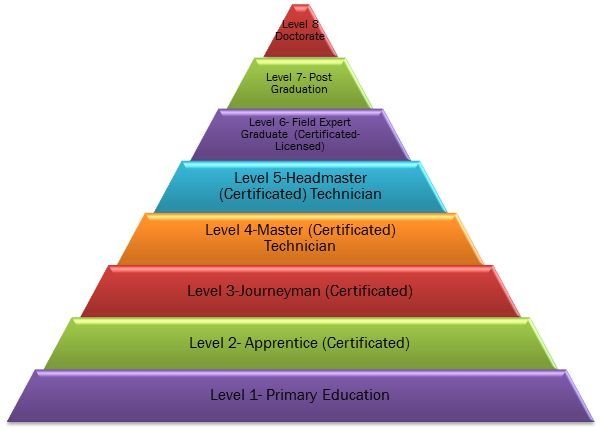
Martial art Learning progressions are typically categorized and organized by subject area, such as striking or as in sinawalli training. They map out a specific sequence of knowledge and skills that students are expected to learn as they progress through their martial education. Learning progressions describe in words and examples what it means to move over time toward more expert understanding of your chosen art. Learning progressions depict successively more sophisticated ways of thinking about an idea that might reasonably follow one another as students learn. From knowing one thing, you can know many things from using progression thinking. What’s more, while most dojo learning standards describe what a student should have learned by a specific stage in their education, learning progressions focus on the building blocks that contribute to mastering a particular skill. The good news is that learning progressions in karate, kung fu and escrima have been employed decades. The ancients knew how to relate to people and get the most out of them. Tried-and-true progressions exist for some martial arts (not all), and we know they work. We can thus use this established approach to benefit our understanding of more complex skills. And not just of the skills themselves, but also of how students demonstrate them at various levels of ability.
Logic Chains: Using logic chains (flows) are part of a problem solving methodology. Deduction, reasoning ability and understanding what fits and what does not. In both business and personal spheres, I’ve noticed that the most successful people seem to be the ones who can get those with opposing or unrealistic viewpoints to adopt new understandings and grow. When trying to convince someone to try your martial method or to adopt a new outlook, consider the three main pieces of the logic chain:
Piece 1) Identify an in-arguable fact or sentiment: this affirmation must be widely accepted as truth or common knowledge (or at least accepted by the recipient).
Piece 2) Identify the end goal or action: this is the message you are trying to get across.
Piece 3) Identify the “Keystone,” turning point, the pivot, revelation, adoption: the intermediary moment or action that the idea realistically catches on, bridging the gap from “what is real today” and “what is feasible tomorrow.
Conceptual Thinking: Conceptual thinking is the kind of thinking that allows a person to “see” something that others may miss. It tends to be creative, and instead of working on detailed analysis, instead looks at the bigger picture. It emphasizes ideas and shifting perspective. Analytical (technical) thinking, as I am currently defining it, is the kind of thinking that instead of focusing more on the big picture, instead focuses on a smaller scale with making detailed analyses of an issue and using these detailed analyses to create knowledge. Conceptual thinking is also a form of critical thinking. Not everyone can do this. The root of anything you seek to learn about or master can be swiftly exposed via conceptual thinking. The master’s well trained eye skilled in this particular KEY cannot be deceived or lead astray. Laser-like focus and thorough belief in this way of doing things takes one to the pinnacle of true ability quickly. This skill uses the law of opposites at times to draw it’s conclusions from seemingly thin air (at least to the uninitiated). The ability to analyze hypothetical situations or abstract concepts to compile insight is a true gift in the study of advanced martial methods. Conceptual thinkers have an astute understanding of why something is being done. They can think at an abstract level and easily apply their insights to the situation in real-time. In martial arts settings this provides access to spontaneity, creativity and leadership. Today’s martial arts path to mastery requires imagination, innovation, and vision. Countless experts and masters have deemed this the Conceptual Age and I agree. If the Information Age was data, knowledge, and the left brain, the world has moved beyond it, and into a place where concepts feed everything else.
Conceptual thought is the road to mastery and unless this element is understood your quest can bottom out here. Technical thinking is too limited. It is a swamp of quicksand and dead ends that freeze forward motion. Conceptual thought is a clear playing field that is open for your exploration and exploitation. It encourages forward motion in all aspects of your martial arts career.
Law of Opposites: Knowing and following this principle can guide one to new skills and new powers. Another tool of discovery the Law of opposites can open doors otherwise sealed. The Law of opposites is seen in Kung fu arts as Yin & Yang. But a much deeper grasp of this concept must be gained in order to fully see, experience and live the law of opposites. As a type of “predictor” in tactical situations this law shall always guide thee well. Knowing “both sides” is good, like knowing yourself and knowing the enemy. Law of opposites is intelligence gathering at it’s finest. Think about how one ferret’s out the small “combat indicators” that tell us whether the enemy will fight or not.
Just like a battery has two polar opposite terminals, there are two polarities of intention manifestation. Once you understand how the Law of Polarity works, you can bring the right kind of energy to your intentions, and combine that with their content (i.e. the thing you’re aiming to achieve) in a way that maximizes chances of success.
The Line over all else: Learn to relate only to the universal planes of motion which govern all action in this dimension. There are eight planes of motion. Knowing this secret eliminates the difficulty of doing what is “right”. The line is concept, the technique is analytical. Line familiarity increases overall spontaneity and natural flow. LINE also falls in with Logic chains and Quadrant work. Line encompasses all empty hand, all weapons and basically all of life in its many forms. LINE flows well into the “predictor” mode again because by knowing the present line, we also now “know” the coming (future) lines even before the enemy makes them. Understanding the line is also a study of comparative body mechanics. These body mechanics accompany certain lines. Through practice the body mechanics of the enemy act as “signals” telling you where to be and not be. You know the enemy, but they do not know you.
Line is literally “life” in this game of bloody strife.
The Five Universal actions: If you know these and grasp the secrets they contain then 90% of all martial arts styles will become known to you immediately. Like a Taoist “transmission” or a type of instant enlightenment. A state of ultimate realization. Yes, this particular KEY is that profound my friend. Do not doubt this for one minute, the lesson learned is an awesome thing to possess for one’s such as we. Learn these simple action’s, apply liberally and often as needed. Pure growth for the martial mind and body to absorb. A lifetime of study and a blessing from the creator when fully realized! Earn your keys when you learn these! Conceptual thinking skills are required for understanding and unlocking the secrets held by this five count universal code. Please note how often that one key of self-mastery will dovetail perfectly with another key of self mastery. This “system” is then seen as series of independent, interlocking keys that work together as coefficients. The five universal positions seen as one!
The Five Universal ways of Attack: This is yet another way to get past technique or style. This is back to critical thinking. Know these five conceptual gems and understand combat at its root level. There are no others. Some variations to these five exist. But any and all strategic attacks are based upon these five ways. When attacked, you identify it swiftly adding the appropriate counter. When attacking you flow from one to another as called for. You know where you are at all moments. These five ways of attack are like a GPS system for personal combat awareness. The reference points, the tactical tricks and easy to understand examples we teach deliver a rock solid level of skill and confidence that cannot be denied. The Five Attacks are: SDA, ABC, ABD, PIA. HIA – Single direct attack, Attack by combination, Attack by drawing, Progressive Indirect attack, Hand immobilization attack. Sounds simple right? Ok, now start attempting to use this code. Watch fight clips, monitor yourself in your training and learn to identify what’s going on in the damn fight! It’s an exercise. Begin now, study the fight. Even tiger versus lion fights. All creatures will use these conceptual elements as per natures calling. You will be glad you have this knowledge, but you must earn it. This is about SELF knowledge right? So go for it! I’ve given you more than enough to get you in the zone. Read my words and allow them to take thee deeper into the self. Embrace self-mastery as the true way, the only way and remain humble in your quest.
Use of Geometric Principles: Is the branch of mathematics concerned with the properties and relations of points, lines, surfaces, solids, and higher dimensional analogs. These can be upper or lower body elements. They can also be cerebral elements that are present yet unseen. Geometry is magic in simple form. Geometry is mathematical in its basic nature. Angles, cornices, archways, glyphs, sigils, sacred signs and footwork platforms are all unique forms of geometry we see every day. Learn where and how geometry is used to guide us in our martial quest. Then geometry becomes a friend and leads us to greater understanding of all that which we do. The geometry of motion is kinematics. Lines, Angles, two and three-dimensional shapes and relationships in space are the elements of both geometry and dance.
We make connections to the principles of geometry with our bodies in motion. Our skeletal system is a series of bones (lines) that meet at joints (angles). In this manner when we make a shape with the body we describe a geometric configuration. Also we describe geometric patterns as we travel through the space (like making a 90 degree turn)
In fact the entire art can be taught using only geometric symbols. The universal nature of this art knows no limits. It goes beyond language and words. It can be taught in the language of the sword. By this I mean through motions made with the sword which relate to figure eights, circles, spirals and loops. The “flower” itself contains many petals and deceptions. It is strong in the corners and rules the flanks. The florete – high speed, sword spawned aerial geometry.Proper footwork and body mechanics are all geometry in motion. Together they place the opponent in jeopardy of being harmed and they masterfully place us at a safe advantage from being harmed! Knowledge of such material is the reason we train. Not for the mere physical exercise.
The Laws of Karma:
(Its laws and its mannerisms)
Karma to the ears of a westernized person sounds mysterious, perhaps even questionable. But when we relate it to the scientific aspect called “cause and effect” it takes on a clearer role for our minds to grasp. The so-called “Karmic law” is actually several laws. More on the many karmic laws HERE.
They act to guide us in our thoughts, actions and considerations as we go through life. At some point in your life that energy you have put forth will be reflected back to you. Karma will return to your person in some way, no one knows how or when though. The karmic return will happen whenever the universe finds the time to complete its karmic cycle. The law of attraction and the law of karma are very similar. Though they are still different. The Law of Attraction states that you are always attracting like a magnet to you, as a result of your thoughts and karma, you receive back what you put out. One good way to grasp the intricacies of karmic law is to watch how karmas manifest inside and around you. Life is a living textbook on the laws of karma. You can observe how life so often creates exactly what you most desire or fear. Watch as the most vehement persecutors in any situation seem to inevitably become the persecuted. Notice how your own good actions can lighten your heart and create an opening for more goodness to enter your life. The winds of new karmas become still when you enter into a state of inner peace. You can find inner peace by allowing your thoughts and actions to flow through you unsullied by selfish desires or ego-based motives. When your surface waters are clear, you have a chance to see more clearly what is really at the core of your being — the great light of your spiritual soul.
By now you are asking “how does this relate to the study of martial arts”? It relates in many ways. We must look closely and identify where Karma enters the martial mainstream picture. Karma can effect your personal development in whatever art you study. Most of us devote a small portion of our lives to the study of martial arts. We may love them and value them. But in most cases we simply do not give enough attention (time) to them. So for them to work to a higher degree we must do that by creating circumstances that are conducive to that goal. Put in a little sloppy work here and there and see what comes. Step up and do some serious flight time with your chosen art and see what comes to you. There will be no comparison. One brings mediocre results. The other leads to expertise and mastery. Karma works in chains of circumstances. One can become affected by another person’s Karma. Some Karmic traits and conditions can be passed along, much like a common flu bug. Other traits not so much. Some men learn martial arts in order to become bullies. To dominate their fellow-men. The result of this behavior leads to dramatic karmic backlash. Other men learn and teach martial arts to benefit themselves and their fellow men. That path has a Karmic payback that is quite enviable. It brings many rewards. But takes years and years to earn and develop. Karmic cycles are very strong in martial arts circles.
One must understand these elements and follow them. Mystically they will bring you to Mastery in your chosen art or path. All that is required from you is to do “the right thing” at the right time. The rest of it is on Karma auto-pilot. Karma is at work even when you are not. As one of the Laws of Self Mastery, Karma is a difficult subject to explain in that context. It must be approached obliquely. For each person it can be a different experience. So no one explanation is worthy. Only experience can show the truth about Karma. Be aware of your actions. They can impede your growth or they can accelerate your growth – interaction with others on a positive level is mandatory to succeed. Eyes up and out, look high to think in a positive lofty manner.
_________________________
The challenge is – as it always is – that the uninitiated will become confused by the mystical or magical overtones. Purposeful obfuscation? Sometimes. There must be tests to ensure that only the worthy progress. After all there is a path to initiation and a price to be paid! And once the trick of the magician is revealed how often do we dismiss it as ‘too simple.’ Yet it fooled us. (Isn’t that what a feint is supposed to do?) And so it is with your progression in the martial arts. You are learning a language – a highly sophisticated language of universal patterns (Chomsky’s deep structure or universal grammar – and follow that concept to Snow Crash).
 Protective Arts